Is Astrology Real? What a Practicing Astrologer Says to Skeptics
Is astrology real? This question has lingered in the minds of skeptics and seekers alike for centuries. In my experience, it's akin to asking whether music or...
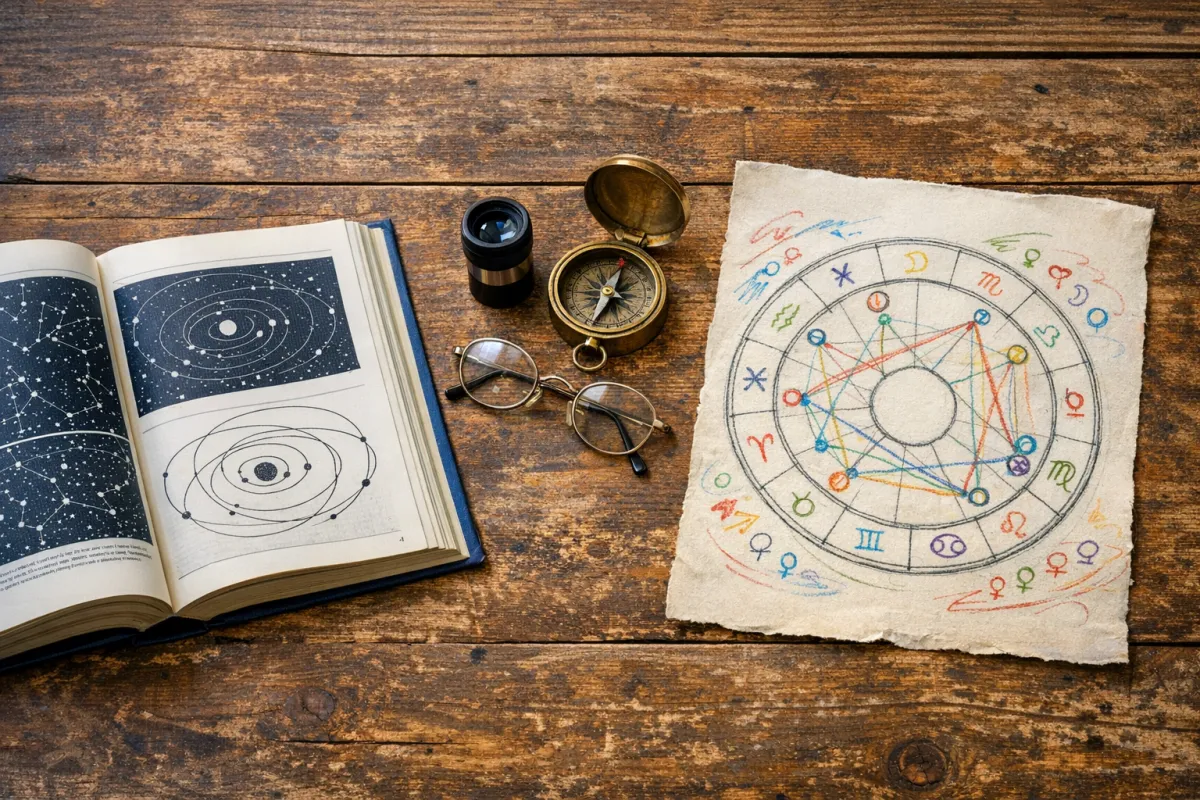
Is astrology real? This question has lingered in the minds of skeptics and seekers alike for centuries. In my experience, it's akin to asking whether music or poetry is real. We may not measure them with the same yardsticks used for concrete science, but their profound impact on human experience is undeniable. Astrology, much like these art forms, serves as a lens through which we can explore the intricate tapestry of life. It sheds light on our identities, relationships, and paths forward in ways that are uniquely resonant. But what does it really mean for astrology to be "real"? And how do we grapple with this notion in the face of skepticism?
Understanding Skepticism: Common Misunderstandings
Many skeptics approach astrology with preconceived notions that often arise from misunderstandings. One common critique is the Barnum effect—the idea that astrological readings are so general they could apply to anyone. However, this notion overlooks the complexity embedded within a true astrological chart. When Venus at 22° Scorpio conjuncts Pluto in the 8th house, it tells a story far more nuanced than a simple personality trait. It's about transformation, intensity, and hidden desires manifesting in one's relational sphere.
Then there's the argument of confirmation bias, suggesting people see what they want to see in astrological interpretations. While it's true that our perceptions can color our understanding, astrology, when practiced with rigor, offers insights that often confront us with uncomfortable truths rather than just reaffirming our desires. In my practice, I've seen countless clients challenged to reconsider their life paths and relationships because of revelations in their charts.
A final critique often targets the precession of the equinoxes—how can astrology be valid if the stars have shifted over millennia? This criticism misses the essence of astrology's symbolic nature. Astrology isn't astronomy; it doesn't claim to be anchored in celestial bodies' current positions but rather in their archetypal roles within an age-old system. Understanding this distinction is crucial for appreciating astrology's real utility.
Astrology's Nuances: The Role of Specific Chart Elements
Consider a chart where Mercury retrograde at 15° Pisces squares Neptune at 16° Sagittarius in the 9th house. This aspect alone invites a deep exploration of one's communication patterns and philosophical outlooks. Mercury retrograde is often misunderstood as merely troublesome; however, its square to Neptune challenges us to navigate confusion with empathy and adaptability. It's about crafting narratives that transcend literal interpretations and embrace spiritual insights.
The interplay of houses further amplifies this nuance. With Neptune in the 9th house, we delve into themes of higher education and long-distance journeys—both physical and metaphysical. The presence of Mercury in Pisces suggests a proclivity for abstract thought, pushing one to seek wisdom beyond conventional means. This configuration is less about predicting events and more about understanding underlying motivations and potential growth areas.
Astrology's potency lies not just in isolating aspects but in weaving them together into a cohesive whole that reflects life's complexity. In doing so, it facilitates a deeper comprehension of personal narratives and future possibilities. This multidimensional approach is often where skeptics falter—they look for singular answers in a practice that thrives on interconnection.
The Personal Journey: From Skepticism to Practice
I remember vividly my own transition from skepticism to practice. Initially drawn to astrology through curiosity rather than conviction, I was a hardliner for evidence-based belief systems. My turning point came when I explored my birth chart's intricate patterns: a Sun at 10° Capricorn tightly conjunct Saturn in the 3rd house, demanding a life path defined by discipline and articulate expression. These revelations resonated deeply with my life experiences.
One client story that stands out involved a woman with Mars at 5° Leo opposing Uranus at 6° Aquarius across her 5th and 11th houses. She initially came to me seeking insight into her persistent career struggles. As we explored her chart, the tension between individual creativity (Mars in Leo) and collective innovation (Uranus in Aquarius) became apparent—a theme manifesting as her feeling caught between personal ambition and social expectations.
This realization prompted her to pivot towards a career that allowed her to lead creative projects within community frameworks—a path she hadn't considered due to her previous singular focus on climbing the corporate ladder. Her chart didn't dictate this decision; instead, it illuminated possibilities she hadn't consciously acknowledged.
Astrology's Real-World Application
While astrology may not offer empirical "proof" as understood by scientific standards, its real-world applications are profound for those willing to engage with its language meaningfully. In practice, I've seen astrology serve as a reflective tool that aids individuals in navigating life's uncertainties more mindfully. Consider how transits like Jupiter's return—every 12 years—offer opportunities for growth by aligning life changes with broader cycles of expansion.
Astrology also fosters self-awareness by providing context for our actions and reactions. A natal Mars square Pluto might explain intense power struggles or deep-seated drives within relationships or career paths. Rather than dismiss these as mere personality flaws or random occurrences, astrology invites us to engage with them as part of our evolutionary journey.
Case Study: Unraveling Personal Myths Through Astrology
A recent client, a man with Venus at 14° Aries square Saturn at 16° Capricorn in the 7th house, came seeking clarity on his recurrent relationship challenges. With Venus square Saturn, there's often a tension between desire and perceived limitations or fears of inadequacy. Through our sessions, he realized how his upbringing instilled a belief that love must be earned through achievement. This insight didn't solve his relationship issues overnight but empowered him to approach love more authentically, challenging the myth that his value depended solely on success.
Another story involves a woman who discovered a Yod configuration involving her Moon at 20° Cancer, Neptune at 22° Sagittarius, and Pluto at 21° Libra. Known as the "Finger of God," a Yod signals intense focus on a life area requiring adjustment. Her Yod pointed to relational dynamics (Pluto in Libra) and personal fulfillment (Moon in Cancer). By embracing Neptune's call for spiritual growth, she began to prioritize her emotional well-being alongside her partnership needs. This subtle shift reframed her experiences of dissatisfaction into opportunities for soulful connection.
These personal stories illustrate how astrology serves as a narrative tool, unveiling subconscious patterns and life themes. While skeptics might dismiss these as coincidences, those who've experienced such breakthroughs often find astrology's symbolic language uniquely potent in facilitating self-discovery. By confronting personal myths through their charts, individuals can reframe their stories, turning perceived constraints into catalysts for growth.
Ethical Considerations: Avoiding the Pitfalls
Practicing astrology ethically requires awareness of common pitfalls that can mislead clients. One major concern is deterministic interpretations—presenting chart elements as immutable fates rather than potential pathways. In my practice, I emphasize astrology's role in highlighting choices rather than dictating outcomes. This approach respects clients' agency while providing insights into their possible life directions.
Another ethical challenge lies in ensuring clients understand astrology as a complementary tool rather than a replacement for professional advice, especially in health or legal matters. While astrology offers profound psychological insights, it should never substitute for qualified expertise in these areas. Misinterpretation here not only misguides but risks significant harm, undermining astrology’s credibility among skeptics.
A final ethical nuance involves respecting clients' beliefs and readiness for introspection. Not everyone is prepared to confront deep-seated patterns that astrology might reveal. As astrologers, our role isn't to persuade skeptics but to offer insights when sought. This respect for personal journey ensures astrology remains a supportive rather than invasive experience.
Applying Astrology in Daily Life
For those open to exploring astrology's practical benefits, integrating its principles into daily life can foster significant growth. Begin with a focus on transits—current planetary movements affecting your natal chart. For instance, if Saturn transits your 10th house of career, it may be time to reassess professional goals and embrace responsibilities that align with long-term visions. This isn’t about predicting specific events but understanding energetic shifts guiding personal evolution.
Another practical application involves synastry—comparing charts to explore interpersonal dynamics. Understanding how your Moon interacts with a partner's Mars could clarify emotional responses or conflict patterns within the relationship. Such insights promote empathy and constructive communication by revealing hidden dynamics not immediately apparent through rational analysis.
Finally, incorporate lunar cycles into your routine for enhanced self-awareness. Observing how new moons catalyze beginnings or how full moons highlight completion phases can deepen your connection to natural rhythms. This practice aligns decision-making with energetic currents rather than arbitrary timelines, fostering harmony between inner impulses and outer actions.
Astrology thrives not as an answer to life's questions but as a tool for deeper inquiry and self-awareness. Whether you're skeptical or curious about its utility, Shymea's Oracle feature provides personalized insights into your chart's nuances. Meanwhile, Cosmos offers real-time transit updates to help you navigate these influences effectively. Embrace these resources as guides on your journey toward greater self-understanding and intentional living.
Curious how this shows up in your chart? Shymea reads your exact birth chart — ten planets, twelve houses, every aspect.
Get my free birth chart