Zodiac Signs by Date: The Complete Guide to All 12 Signs and Their Exact Date Ranges
There's a pervasive myth in astrology that continues to perplex both newcomers and seasoned enthusiasts: the idea of being born on the "cusp" of two zodiac...
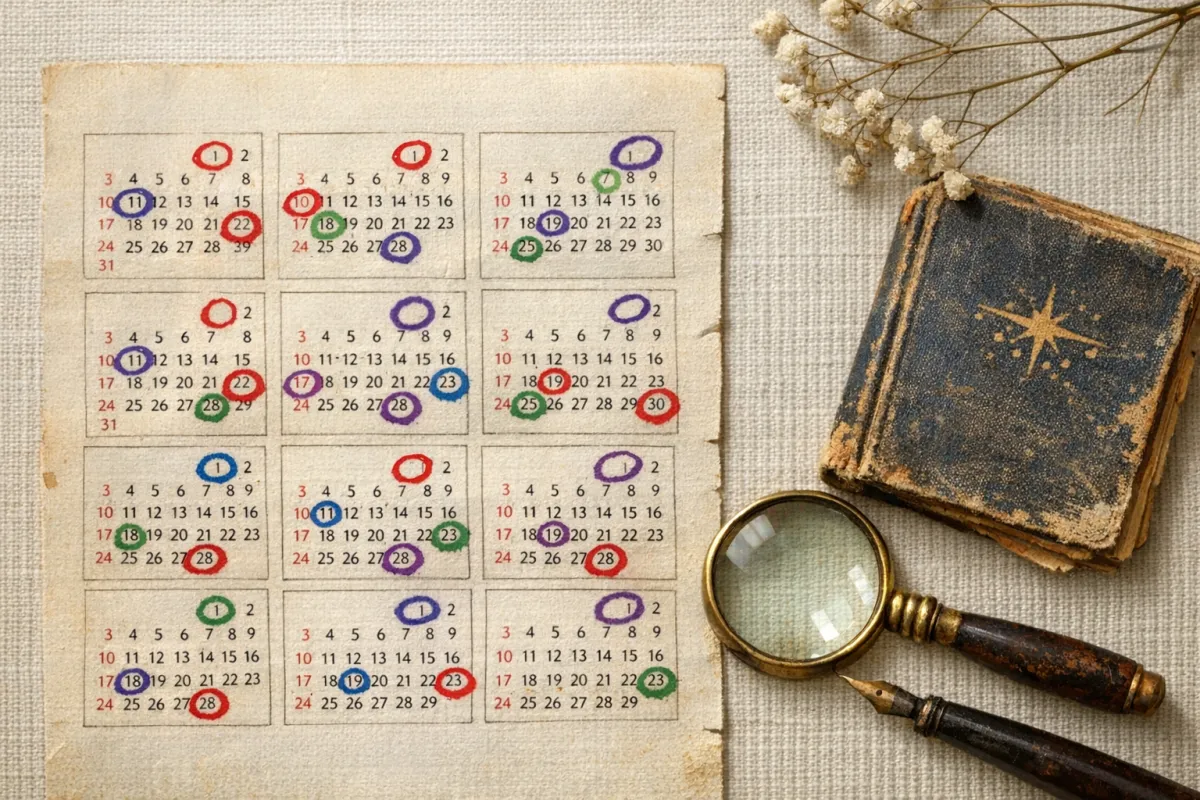
There's a pervasive myth in astrology that continues to perplex both newcomers and seasoned enthusiasts: the idea of being born on the "cusp" of two zodiac signs. Many believe that if their birthday falls near the end of one sign and the start of another, they embody traits of both signs. I've heard this from hundreds of clients, but here's the truth: at any given moment, the Sun is in one specific sign, not straddling between two. Your Sun sign is determined by the position of the Sun at your exact time of birth. This is why understanding zodiac signs by date, and the precise moment when each sign begins, is crucial. It's time to dismantle this myth and explore the real zodiac calendar.
Astrology Signs Dates: What Most People Get Wrong
The confusion about zodiac signs dates often stems from a misunderstanding of how astrological calendars work. Most people rely on generalized date ranges, like "Aries runs from March 21st to April 19th," without considering the nuances of astrological timing. The reality is more fluid; each year, the transition dates can shift slightly due to the Earth's orbit and leap years. For instance, while Aries typically starts around March 21st, it might actually begin late on March 20th in some years. These subtle shifts are why consulting an ephemeris or a detailed astrology chart is vital for precise information.
I've had clients who were convinced they were on a cusp because their birthday fell on a transitional date. One memorable case was a woman born on May 20th. She believed she was part Taurus and part Gemini. However, her birth chart showed that she had the Sun at 29°58' Taurus, firmly placing her in Taurus territory. Degrees matter—a lot. The boundary between each sign isn't a grey area but a clear delineation marked by degrees in astrology.
What nobody tells you is that having planets at critical degrees, like 29° or 0°, carries its own unique energy. A planet at 29°, also known as an anaretic degree, can feel intense and urgent, while a planet at 0° brings fresh energy and potential for new beginnings. These degrees add layers to our understanding of zodiac signs beyond just dates.
Zodiac Calendar: Specific Chart Examples
Let's walk through an example that shows how dynamic these transitions can be. Imagine someone born on September 22nd at noon in New York City. In 2023, this person would have their Sun at approximately 29° Virgo. Come midnight, however, the Sun moves into 0° Libra. This shift highlights how knowing your exact time of birth is essential for accurate astrology readings. A mere 12 hours can alter your Sun sign completely.
Take another example: December 21st, frequently cited as the start of Capricorn, can also be Sagittarius depending on the year and time zone. If you were born in Sydney, Australia on December 21st, 2022, your Sun might still be at the tail end of Sagittarius (29°) before tipping into Capricorn later that day. This showcases why astrology isn’t just about broad strokes but fine details.
For those learning astrology, understanding these subtle shifts requires more than just memorizing dates. It involves engaging with natal charts and ephemerides—a practice I always encourage my clients to explore deeply. These tools illuminate how planets like Mercury or Venus may also hover near these transition points, adding further complexity to one's chart.
The Role of Degrees and Houses
The importance of degrees extends beyond just determining your Sun sign. Each degree within a zodiac sign aligns with specific themes and qualities. In practice, I've observed how clients with several planets clustered around early or late degrees often navigate life with heightened awareness or urgency related to those planetary energies. For example, having Venus at 0° Cancer versus Venus at 29° Gemini offers vastly different expressions of love and attachment.
One client came to me feeling torn between adventurous Sagittarian impulses and practical Capricorn sensibilities. Her chart revealed a Sun at 0° Capricorn with Mercury trailing behind at 28° Sagittarius in her ninth house. This configuration explained her philosophical yet structured approach to life—she wasn't two signs but one complex individual shaped by both placements.
Degrees also play into how houses manifest in a natal chart. A planet at 29° may emphasize the culmination or lessons learned within that house's domain, while a planet at 0° signifies the potential for fresh starts and exploration within that area of life. It's this layer of detail that turns astrology from a simple hobby into a profound tool for self-discovery.
Real-World Applications
In practice, understanding these nuances can profoundly affect how we view our astrological charts and ourselves. Imagine navigating life believing you're split between two signs only to realize you have a defined astrological identity with intricate subtleties guiding your way. The relief many feel upon seeing their full chart with precise planetary positions is palpable—a sense of alignment replaces long-standing uncertainty.
Another real-world application involves relationship dynamics. I've seen couples misinterpret compatibility because one partner believed they were on the cusp when their chart actually painted a different picture entirely. With tools like Shymea's Birth Chart feature, uncovering these truths becomes straightforward, empowering individuals to engage with astrology more meaningfully.
The Complexity of Sign Transitions: A Deeper Dive
Consider the intricate dance of the Sun moving through the zodiac, which I've seen create confusion even for seasoned astrology enthusiasts. Take another client I worked with who was born on October 23rd. Traditionally associated with Scorpio, this date can vary greatly depending on the year and location. In her birth year, the Sun was at 0° Scorpio by the afternoon, but earlier in the day, it was still at 29° Libra. Her Libra Sun imbued her chart with diplomatic and balanced traits, but she felt a deep Scorpionic pull, likely due to other planets influencing those energies.
Another situation involved a client born on February 18th—often listed as the last day of Aquarius. In his case, he was born with the Sun at 29°59' Aquarius, literally just moments before it slipped into Pisces. He always felt more aligned with Aquarian innovation and independence rather than Piscean sensitivity. His chart reflected that nuanced reality, reinforcing that knowing one's exact time of birth can clarify these seemingly contradictory experiences.
The complexity doesn't end with the Sun. For example, Mars or Venus at these transitional degrees can influence behavior and relationships significantly. A client with Mars at 0° Leo might express assertiveness very differently than someone with Mars at 29° Cancer. These shifts create diverse life experiences even among those sharing similar sun sign dates, a testament to the zodiac's intricate depth.
Misinterpretations and Ethical Considerations
A frequent misconception involves the belief that being born near a sign transition makes one inherently "dual-natured," a term often misapplied without considering the broader chart context. This oversimplification can lead individuals to misunderstand their true astrological profiles. While it's tempting to use terms like "cusp" or "on the edge," they divert attention from what truly matters: the precise degree of your Sun and how it interacts with other chart elements.
Ethically, astrologers must emphasize accuracy over convenience. In my practice, I've encountered individuals who relied on generic horoscopes based on inaccurate zodiac signs dates, leading to misconceptions about their personalities and life paths. As astrologers, we have a responsibility to guide clients toward understanding their unique charts rather than adhering to oversimplified labels or generalized interpretations.
Practical Strategies for Accurate Zodiac Understanding
For those eager to delve deeper into their astrological makeup, investing in an accurate natal chart is indispensable. Using ephemerides or reliable astrology software can clarify where each planet resides in your personal zodiac calendar. This approach moves you beyond basic sun sign descriptions into a more holistic understanding of your chart's dynamics. It's more than just knowing when each sign starts; it's about appreciating how these transitions affect your life story.
Engaging with professional astrologers who emphasize degree-specific analysis can further deepen your exploration. I've guided clients through this process countless times, helping them uncover unexpected strengths or challenges linked to seemingly minor planetary details. Recognizing these subtleties fosters self-awareness and empowers you to make informed decisions aligned with your authentic self.
To navigate complex astrological landscapes effectively, consider keeping a journal of how transits impact your mood and actions. This practice enhances your ability to recognize patterns and align your life rhythmically with celestial movements, an invaluable skill in embracing astrology as a tool for personal growth.
If you're curious about how your birth date influences your astrological identity beyond generalized zodiac signs dates, Shymea's Birth Chart feature provides the precision you need. It offers detailed insights into every aspect of your chart—illuminating the hidden dimensions that make you uniquely you.
Curious how this shows up in your chart? Shymea reads your exact birth chart — ten planets, twelve houses, every aspect.
Get my free birth chart