Do Zodiac Signs Really Determine If Someone Will Cheat? An Astrologer's Honest Answer
One of the most persistent myths I've encountered in astrology is the idea that zodiac signs alone can predict whether someone will cheat. It's a notion as old...

One of the most persistent myths I've encountered in astrology is the idea that zodiac signs alone can predict whether someone will cheat. It's a notion as old as astrology itself, and it frustrates me to no end. When people ask me, "Are Aries more likely to be unfaithful?" I have to respond with an emphatic no. A zodiac sign does not determine fidelity. If only relationships were as simple as checking someone's Sun sign before trusting them! But they aren't, and here's why that's actually a good thing. It means you're not fated to repeat past mistakes based on your birth chart. The truth is, astrology can reveal patterns and potentialities, but it doesn't strip us of free will or ethical responsibility.
What Most People Get Wrong
Here's what nobody tells you: infidelity is a complex human behavior that can't be reduced to just a zodiac sign. Yet, I often hear people say things like, "Well, Gemini is so flighty, of course they cheat." Or "Scorpio? They must be sneaky!" These are reductionist views that ignore the nuanced tapestry of one's entire natal chart. I've seen Geminis in long-term, committed relationships and Scorpios with unwavering loyalty. While the Sun sign offers insight into one's core identity, it doesn't encapsulate your whole personality or moral compass.
People love to focus on Sun signs because they're easy to understand, but this misses the depth available in astrology. A natal chart is composed of multiple layers: planets, houses, aspects, degrees—each contributing to a person's disposition and choices. For example, you might have Venus at 22° Scorpio squaring Mars in Aquarius at 24°. This aspect might create tension between desires for intimacy and independence, but it doesn't dictate betrayal. It's merely one piece of a much larger puzzle.
Another point often misunderstood is that challenging aspects like squares or oppositions are not inherently negative. They are opportunities for growth and awareness. I've heard this from hundreds of clients: "I don't want any squares in my chart." But these tensions can push us towards greater understanding and fulfillment if we're willing to engage with them consciously. It's about how you handle these energies rather than the energies themselves.
Beyond Sun Signs: The Role of Venus and Mars
The real insight into relationship dynamics lies in the positioning of Venus and Mars in a chart. Venus at 15° Capricorn conjunct Uranus in the 5th house can indicate a need for excitement in love that might lean towards unconventional or even unstable relationships. However, this doesn't mean someone with this aspect is doomed to infidelity. With self-awareness and effort, they can channel these energies into passionate, thrilling yet committed partnerships.
Mars also plays a crucial role here. A Mars-Pluto conjunction at 17° Libra in the 7th house could indicate intense sexual energy within partnerships. While this might suggest power struggles or control issues if left unchecked, it could also transform into deeply meaningful connections if both partners are willing to work through their issues together.
And let's not forget Neptune's influence on Venus or Mars aspects—this can sometimes cloud judgment or create idealized notions of love that don't hold up under real-world scrutiny. For instance, Venus square Neptune could lead someone to fall for an illusion rather than a reality, potentially opening pathways to cheating if they're not careful. But again, awareness and honesty can mitigate these tendencies.
The Ethical Dimension: Astrology as Guidance, Not Fate
A client once came to me in distress because they discovered their partner had Venus conjunct Uranus at 10° Sagittarius in their natal chart. They were convinced this meant imminent betrayal because "everyone says Uranus makes people unpredictable." In our session, we explored the chart more deeply and discussed how such placements could encourage freedom within relationships rather than deceitful behavior. By understanding each other's needs for space and autonomy, they were able to strengthen their bond rather than let fear dictate their actions.
This brings us to an essential but often overlooked point: astrology should never be used as an excuse for bad behavior. Each chart aspect offers potential positive expressions as well as challenges—how we choose to live them out is up to us. Just because someone has certain astrological placements doesn't absolve them from ethical considerations or personal growth.
Astrology should serve as a tool for self-reflection and better understanding in relationships rather than a deterministic force that removes agency. When clients come to me worried about their partner's fidelity based solely on a natal aspect or transit, I always encourage them to look deeper—not just at the astrological influences but at the whole relationship dynamic.
Real-World Application: Navigating Relationships with Astrology
I once worked with a couple where one partner had Moon square Venus at 13° Leo in the 8th house, indicating potential emotional fluctuations impacting their sense of security in love. Rather than using this as justification for fears of infidelity, we explored how these energies played out in their communication styles and emotional needs. They found ways to express vulnerability without resorting to defensive tactics that could lead them astray from each other.
The key lies in using astrology as a guide rather than a verdict. When you see potential challenges indicated by aspects or transits—such as a Mercury retrograde passing over your partner's Sun—it opens up an opportunity for dialogue about misunderstandings rather than an assumed betrayal brewing beneath the surface.
Understanding Composite Charts in Relationship Dynamics
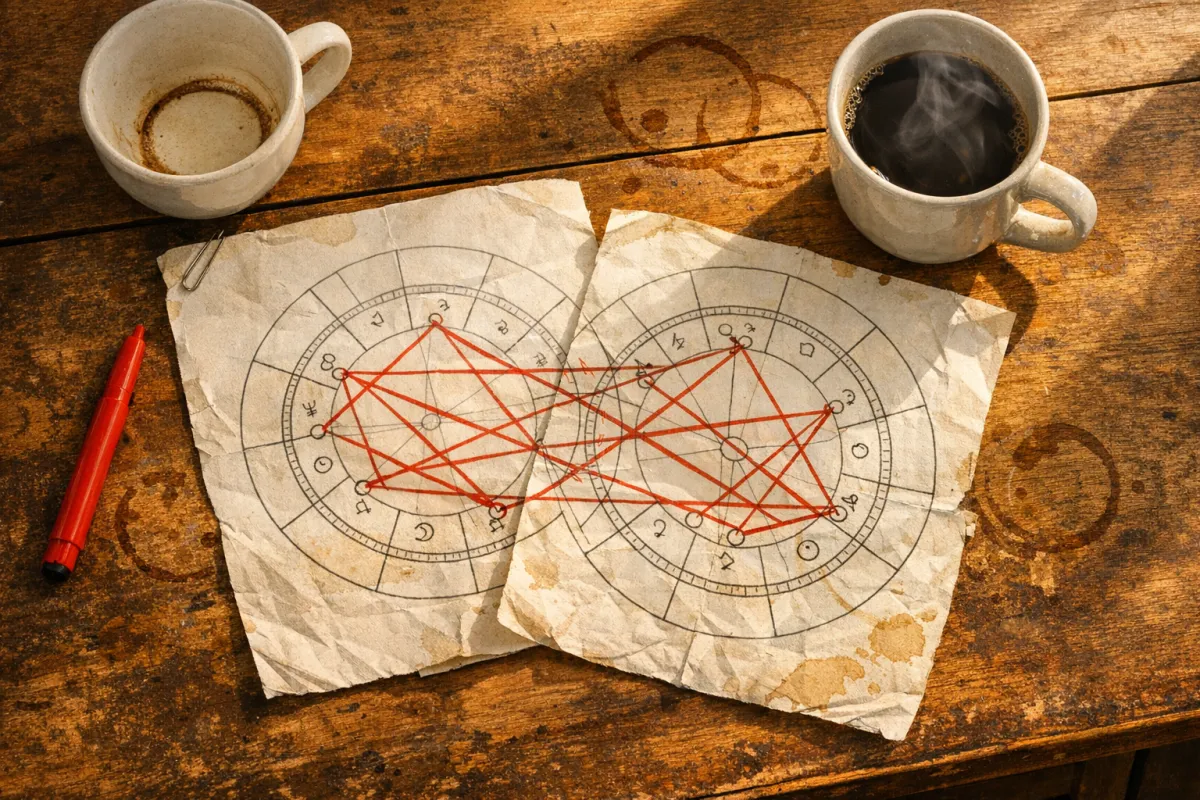
In one intriguing case, a couple came to me concerned about a recurring theme of jealousy and mistrust. When we examined their composite chart, we found the Sun at 12° Scorpio square Saturn at 10° Leo. This aspect suggested a shared fear of vulnerability, manifesting as emotional walls that each built against the other. Rather than assuming their problems stemmed from inherent unfaithfulness, we discussed how their mutual defenses hindered authentic connection. By exploring how Saturnian caution could be transformed into a foundation for commitment rather than barriers, they learned to approach their insecurities collaboratively, thereby fortifying their bond.
A composite Venus in Gemini conjunct the Moon in the 3rd house can offer another angle, suggesting a need for intellectual stimulation within the relationship. I advised another couple with this aspect to focus on enriching their communication as a way to mitigate any fears of boredom leading to infidelity. By prioritizing mutual interests and engaging in stimulating dialogues, they diffused potential tensions that could have otherwise morphed into suspicion or wandering eyes. The key was recognizing how each could fulfill the other's need for mental rapport, thereby strengthening their emotional and physical connection.
Even challenging aspects like Mars opposite Neptune in a composite chart, which might suggest idealism clashing with reality, aren't doomsayers for infidelity. Another client pair found themselves oscillating between romantic fantasy and disillusionment. Instead of allowing this dynamic to spiral into distrust, we discussed how they could ground their dreams in shared goals. When Mars' drive combined with Neptune's vision, they realized they could co-create a life that satisfied both practicality and aspiration without the need for external escapism.
Navigating Misconceptions: Cheating and Astrological Blame
A common pitfall is to scapegoat specific astrological placements as the root of relationship turmoil. I've had clients point to Mercury retrograde or Venus square Saturn as inevitable triggers for betrayal. While these transits can introduce challenges such as miscommunication or emotional distance, they don't dictate infidelity. The misconception lies in seeing these influences as deterministic rather than opportunities to address underlying issues. It's important to remember that astrology should highlight areas for growth, not serve as scapegoats for complex human behaviors like cheating.
There's also a tendency to overemphasize challenging aspects and overlook harmonious ones that can counterbalance them. For instance, a Venus trine Jupiter aspect in a natal chart can bring optimism and warmth to relationships even if other aspects present difficulties. Understanding the full scope of astrological influences helps avoid the pitfalls of reductionist interpretations that fail to capture the multifaceted nature of human relationships. Unfaithfulness is not encoded in one's chart but arises from unmet needs or unresolved conflicts that astrology can help identify and address constructively.
Practical Steps: Applying Astrology to Strengthen Relationships
Astrology offers valuable insights into relational dynamics if used with mindful intention rather than fatalistic assumptions. One practical step is leveraging synastry charts to understand how your planets interact with those of your partner. This approach allows you to pinpoint areas where you naturally harmonize or may encounter friction, providing a roadmap for nurturing strengths and addressing weaknesses together. For example, recognizing Mars-Venus interactions can help balance passion with tenderness, while acknowledging Saturn-Moon contacts can guide discussions on emotional security.
Another effective strategy is using transit analysis for timing sensitive conversations or decisions within a relationship. A client concerned about potential infidelity during a Venus retrograde was encouraged to use this period for introspection and reassessment rather than confrontation or drastic action. By reflecting on their relational patterns and desires during this transit, they were able to engage in open discussions about mutual expectations once Venus turned direct again, avoiding reactive decisions that might have been regretted later.
Embracing astrology's guidance means consistently revisiting both individual and shared charts as living documents rather than static verdicts. As planets move and progressions unfold, new layers of understanding emerge. Encouraging couples to view astrology as a dynamic tool empowers them to adapt and grow together through life's inevitable challenges rather than seeking simplistic answers in astrological placements alone.
If you're curious about how your own relationship aligns astrologically, Shymea's Synergy feature provides an insightful analysis of planetary interactions between two charts, offering guidance tailored to your unique dynamic without reducing love's complexity to mere zodiac stereotypes.
Curious how this shows up in your chart? Shymea reads your exact birth chart — ten planets, twelve houses, every aspect.
Get my free birth chart