The Best and Worst Zodiac Matches for Love — According to a Real Astrologer
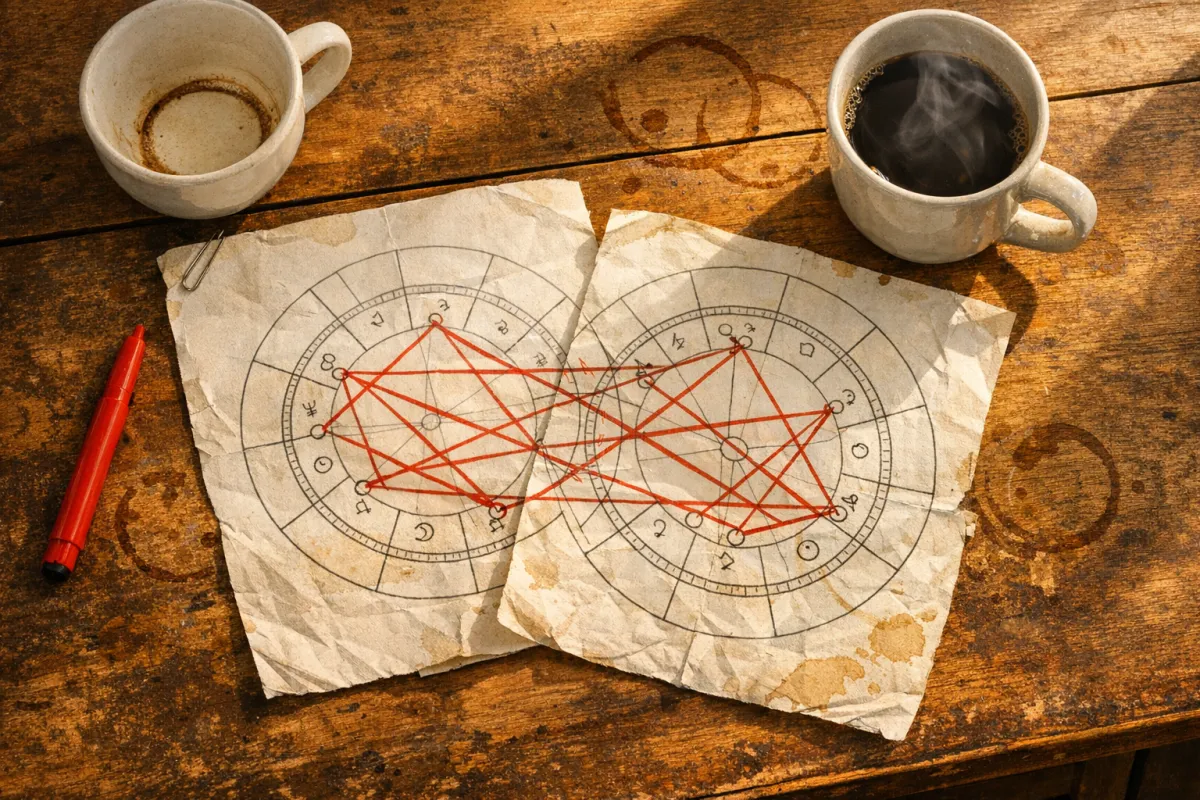
She sat across from me, birth chart spread out, and said the words every astrologer dreads: "So, tell me, what's the best zodiac match for love?" I sighed...

She sat across from me, birth chart spread out, and said the words every astrologer dreads: "So, tell me, what's the best zodiac match for love?" I sighed internally. A decade and a half of practice has taught me that the search for "best" and "worst" zodiac compatibility is more complex than any clickbait article would have you believe. In my experience, a trine sign might offer ease and comfort, but sometimes too much comfort leads to stagnation. Square signs challenge us to grow, but not everyone is up for the work it requires. Opposite signs? They might draw you in like a magnet but can just as easily repel you if you're not careful.
Understanding What Most People Get Wrong
The notion of best zodiac matches often leads people astray because it's overly simplistic. Compatibility isn't about finding your perfect mirror; it's about finding the kind of tension or ease you need to grow. I've had clients who thought their Sun sign was everything, ignoring the complexities of their Moon, Venus, and Mars placements. One client came to me distraught because her Sun in Sagittarius was square her partner’s Virgo Sun, convinced this meant inevitable disaster. What she overlooked was her Venus at 15° Libra beautifully sextiling his Mars in Leo. Sometimes what looks like a challenging aspect can be offset by harmonious interactions elsewhere in the chart.
Another misconception is equating 'easy' with 'best.' Trines—120-degree aspects—are harmonious but can become lazy if neither party makes an effort. I've seen trine relationships where both partners felt so at ease that they neglected growth entirely. It's often in the squares—90-degree aspects—that real development occurs. A relationship between Taurus and Aquarius might look like a recipe for disaster on paper. But when I delved into their individual charts, I found she had a Moon in Aquarius at 10° that squared his Taurus Sun at 12°. This dynamic forced them to confront emotional truths they’d both been avoiding.
The third thing people get wrong is ignoring house overlays in synastry charts. Houses reveal where energy plays out in life: Are your lives aligned in daily routines or long-term dreams? A client once believed her relationship was doomed because her partner’s Mars was square her Sun. But his Mars landed in her 7th house of partnership at 23° Cancer, adding vigor and passion exactly where it mattered most. It's these kinds of layers that turn astrology from a rigid science into an art form.
Trine Signs: When Ease Becomes Ennui
One of my clients, let’s call her Jane, came to me complaining about her partnership with a Capricorn Sun. Her own Sun was in Virgo at 18°, creating a trine with his Capricorn Sun at 19°. On paper, this looked fantastic. But Jane confessed they rarely argued, and while that sounds idyllic, it left her feeling uninspired. Both shared Earth Suns but lacked fire elements elsewhere in their charts to inject passion into their relationship. The trine facilitated stability but also fostered complacency.
I urged Jane to examine other aspects in her chart that might introduce some dynamism. She found it in her Venus at 21° Leo squaring his Mars at 22° Taurus—a clear indication that some tension could be activated for growth. I advised her to lean into those moments of conflict as opportunities to bring vigor back into the relationship.
Trines between Sun signs can offer natural understanding, but without complementary aspects involving Venus or Mars, for example, relationships can lack excitement. I remember advising Jane to explore activities neither had tried before—something as simple as a spontaneous road trip could ignite the spark missing from their placid routine.
Square Signs: Growth Through Friction
Squares are often feared but misunderstood aspects. Rachel, another client of mine, initially hesitated when she discovered her Scorpio Moon at 25° squared her partner’s Aquarius Mercury at 26°. She worried about emotional disconnects and communication breakdowns. But what I explained was that this square offered them fertile ground for growth if they embraced it consciously.
Their synastry chart revealed more complexity: Her Scorpio Moon fell into his 9th house of higher learning and philosophy while his Mercury resided in her 3rd house of communication and local environment. Their differing communication styles encouraged them to explore broader perspectives together. The friction made them confront personal beliefs they never questioned before meeting each other.
Rachel began seeing the square not as a barrier but as an invitation to deepen understanding. They started engaging in philosophical discussions that challenged their mental frameworks and enriched their bond. This kind of friction, though uncomfortable initially, led them both toward personal growth.
Opposite Signs: The Magnetic Pull
Then there's the allure of opposite signs—a mysterious dance of attraction and repulsion. Take Tom and Lucy, both clients whose opposite Suns made them hesitate about entering a relationship: Tom with a Taurus Sun at 8° and Lucy with a Scorpio Sun at 9°. Initially, both were skeptical—opposite signs are notorious for their push-pull dynamic.
The magnetic pull between opposites comes from their innate ability to mirror each other’s strengths and weaknesses. In Tom's case, Lucy's Scorpio Sun illuminated hidden depths he hadn’t explored within himself. Meanwhile, his grounded Taurus energy offered her stability she desperately needed amidst emotional turbulence.
In synastry charts, opposite signs offer potential for balance if approached with awareness and effort. Lucy learned to appreciate Tom’s steadfastness by understanding how it anchored her more volatile tendencies. Their relationship became an alchemical blend of energies that neither took for granted but instead worked diligently to maintain.
Beyond the Sun: Other Crucial Players in Compatibility
In the intricate world of zodiac love compatibility, Mars and Venus often wield as much influence as the Sun. Consider a couple I worked with, both of whom had Sun signs that should've blended beautifully—Pisces and Cancer, both water signs. However, their relationship was fraught with tension. It turned out that his Venus was in Aries at 28°, squaring her Mars in Capricorn at 27°. This dynamic set the stage for fiery passion but also frequent clashes over independence and security needs. When Venus and Mars interact, they reveal how love and desire play out, offering layers that Sun sign compatibility alone can’t explain.
Another couple I consulted thought their Libra-Scorpio Sun signs were incompatible due to Scorpio’s intensity seemingly overwhelming Libra’s need for harmony. But their synastry told a different story: her Mercury in Scorpio at 13° was trine his Neptune in Pisces at 14°, creating a channel for deep, intuitive communication. This aspect allowed them to navigate emotional waters with an understanding that went beyond words. It was this invisible support that kept their relationship thriving amidst apparent zodiac mismatches.
Don't underestimate the Moon's role either. Emotional needs and instinctive responses are governed by the Moon, and when your Moon forms harmonious aspects with your partner’s planets, it can soothe even the tensest Sun sign interactions. A client came to me concerned about her Leo Sun clashing with her partner's Taurus Sun. Yet her Moon in Gemini at 19° was sextile his Sun, providing an emotional bridge that made day-to-day life joyful and engaging despite occasional ego-driven conflicts.
The Perils of Oversimplification
One pitfall many fall into is relying solely on a basic "best zodiac matches" list without understanding the full astrological picture. Yes, Cancer might feel naturally at home with Pisces, but what if that Cancer has an Aquarius Moon at 15°, yearning for freedom in a relationship? This isn’t a sign of doom; it’s a cue to explore how emotional needs align—or don’t—with sun sign compatibility. Relying solely on Sun signs for relationship guidance is akin to reading only one chapter of a book.
Astrology is not a deterministic science but rather a tool for gaining insight into relational dynamics. Many times, I've heard clients declare their relationship doomed after reading about "worst zodiac compatibility" online. Yet, more often than not, their synastry charts tell a richer, more hopeful story. Ethical astrology requires us to look beyond surface-level impressions and consider the complex interplay of planets and houses.
Applying Astrological Insight in Real Relationships
To truly make use of astrological insights in relationships, one must first embrace self-awareness. Understand your own chart before diving into someone else's. A client once asked how her Capricorn practicality could coexist with her partner's Sagittarius spontaneity. I suggested she examine her natal Saturn aspects—her Saturn in Libra sextiled his Jupiter in Sagittarius at 20°, enabling them to balance structure with adventure effectively.
It's also helpful to discuss charts openly with your partner. Knowing each other's strengths and challenges can remove blame from misunderstandings and foster mutual growth. A couple found peace when they realized their Mercury placements were inconjunct—her Virgo Mercury at 6° and his Aquarius Mercury at 5°—meaning they had to develop unique communication strategies rather than expecting natural alignment.
Finally, use astrology as a guide rather than gospel. Relationships are living entities that require conscious engagement beyond natal charts. While synastry can highlight potential pitfalls or strengths, real-life effort determines the outcome. An informed approach can transform perceived "worst zodiac compatibility" into a thriving partnership with deliberate action and open-heartedness.
If you're curious about how planetary interactions affect your relationship dynamics, Shymea's Synergy feature offers deep insight into synastry charts—uncovering aspects that might otherwise remain hidden beneath surface-level zodiac love compatibility.
Curious how this shows up in your chart? Shymea reads your exact birth chart — ten planets, twelve houses, every aspect.
Get my free birth chart