Part 5: Aspects · Chapter 15 of 36 · 10 min
Aspects: the geometry of conversation
An aspect is an angular relationship between two chart factors.
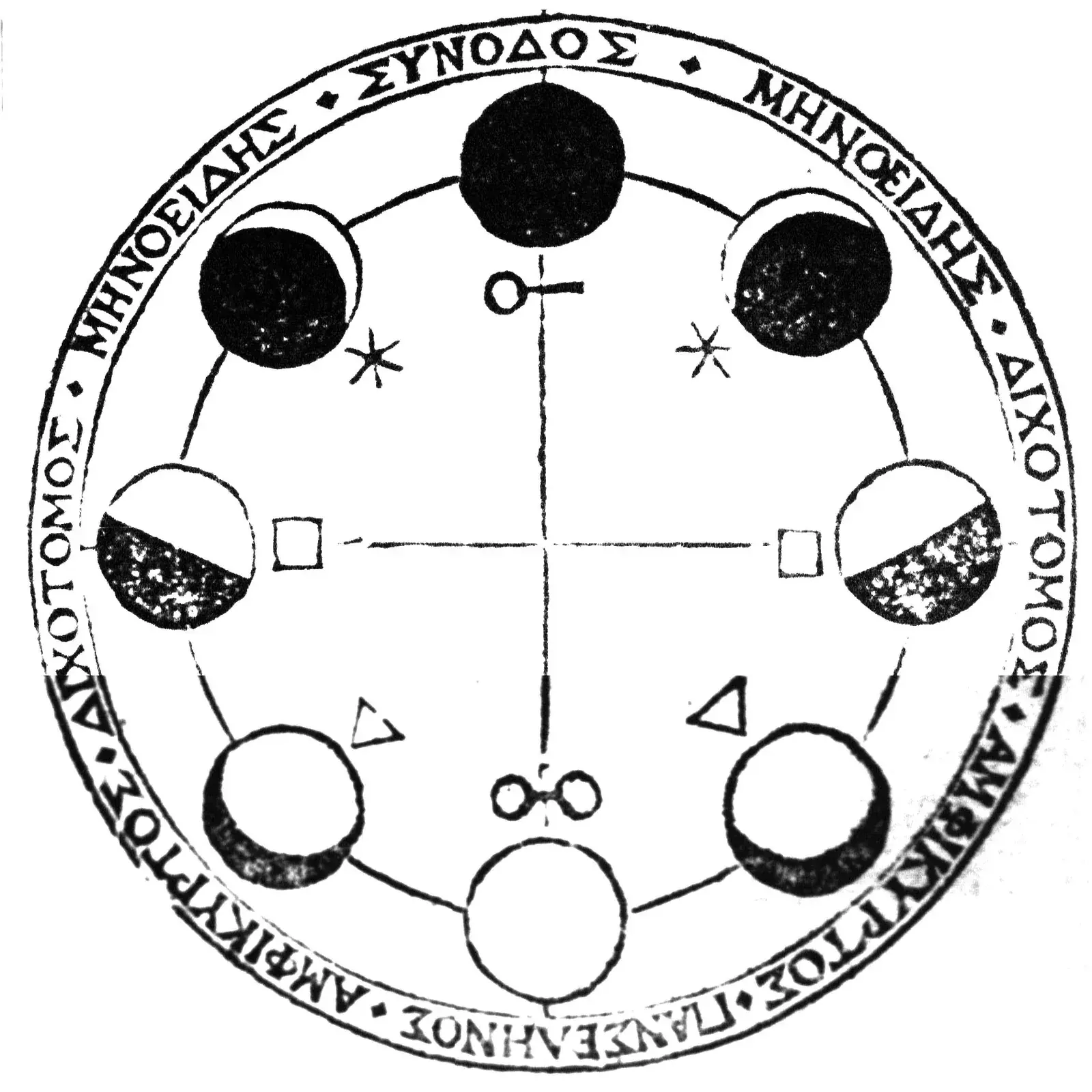
An aspect is an angular relationship between two chart factors. It tells you how their functions meet: whether they merge, cooperate, interrupt, pull apart, or keep asking each other to adjust.
The word conversation is useful because an aspect is relational. Venus does not become Saturn when they form a square. Venusian concerns—pleasure, attraction, reciprocity, taste—meet Saturnian concerns such as limits, standards, responsibility, and time. The resulting exchange may be awkward, productive, restrained, durable, or several of these at once.
The metaphor has a limit. Planets are not speaking entities, and the line on a chart is not a physical cable. Geometry is being given symbolic meaning. Keep the measurement and the interpretation distinct.
What the chart is measuring
Most Western astrology calculates aspects using ecliptic longitude: a planet’s position around the zodiac, measured from 0° to 360°. In felt terms, this is where the planet sits along the chart’s circular track.
Aries begins at 0°, Taurus at 30°, Gemini at 60°, and so on. A planet at 10° Aries has a longitude of 10°. A planet at 10° Cancer has a longitude of 100°. Their separation is 90°, so they form a square.
To find the shortest angular distance between two positions, use:
d = min(|L₁ − L₂|, 360° − |L₁ − L₂|)
The second part matters near 0° Aries. A planet at 359° and one at 1° are 2° apart, not 358° apart.
Standard chart aspects usually ignore celestial latitude, which measures how far north or south of the ecliptic a body sits. Two planets can therefore share nearly the same longitude while being less close in the visible sky. Parallels and contra-parallels use another coordinate, declination, and should be treated as a separate technique.
The five major forms
These five aspects carry most of the interpretive weight in modern Western practice:
| Aspect | Exact angle | Conversational form | Common felt experience |
|---|---|---|---|
| Conjunction | 0° | Merger | Two functions occupy the same seat and are difficult to separate |
| Sextile | 60° | Opening | Functions can assist one another when you engage them |
| Square | 90° | Friction | Functions press at cross-purposes and require active response |
| Trine | 120° | Flow | Functions cooperate with little internal resistance |
| Opposition | 180° | Polarity | Functions face each other and seek balance, alternation, or encounter |
A conjunction is sometimes classified separately because there is no angular distance: the planets are together rather than looking across the circle. In practical chart reading, it belongs with the major aspects.
None of these geometries is inherently good or bad. A trine can describe fluent ability, but fluency may go unexamined. Mars trine Jupiter can coordinate action with expansion; it can also overextend smoothly. A square can produce strain, yet strain creates movement. Saturn square Mercury may slow speech or thought, but the same contact can support disciplined editing and careful reasoning.
The familiar labels hard and soft refer to resistance, not moral value. Hard aspects demand negotiation. Soft aspects reduce friction. Reduced friction is pleasant when the functions are useful and less helpful when they amplify excess.
Oppositions often become visible through other people because one end is easier to recognize outside yourself. This is projection: meeting a disowned or less conscious function through someone else. Projection is one expression, not the definition of an opposition. You may instead alternate between both ends or learn to hold them together.
Orbs: how close counts as close
An aspect is exact only at its stated angle. An orb is the margin allowed around that angle—the breathing room within which the conversation is still considered active. A separation of 92° is 2° from an exact square, so the square has a 2° orb.
Orb rules differ among traditions and astrologers. They are conventions, not properties that astronomy has confirmed. For this course, begin with:
- Conjunction and opposition: 6°
- Square and trine: 5°
- Sextile: 4°
- Quincunx: 3°
- Other minor aspects: 1°–2°
When the Sun or Moon participates, you may allow up to 2° more, with 8° as a sensible ceiling. Use 4°–5° for a planet aspecting the Ascendant or Midheaven when the birth time is dependable. Keep aspects to the lunar nodes and asteroids within about 2°–3°; these are calculated points or small bodies, and generous orbs quickly fill the chart with noise.
Traditional systems may assign each planet a moiety, meaning half of its permitted orb, then combine the two allowances. That is a coherent alternative. Do not mix it silently with aspect-based orbs.
Closeness suggests interpretive salience, not measurable force. An exact aspect deserves attention. A wide one may still matter when it repeats a theme found elsewhere, but widening the orb to rescue an appealing interpretation reverses the method: the story starts choosing the evidence.
Worked mini-example
Suppose a chart contains:
- Sun at 14°22′ Taurus in the second house, moving 0°59′ per day
- Saturn at 17°05′ Leo in the fifth house, moving 0°06′ per day
Convert each position to absolute longitude:
- Sun: 30° + 14°22′ = 44°22′
- Saturn: 120° + 17°05′ = 137°05′
Subtract:
137°05′ − 44°22′ = 92°43′
A square is 90°, so the orb is:
92°43′ − 90° = 2°43′
This is comfortably within the 5° working orb.
The aspect is also applying: its distance from exactness is decreasing. The Sun is closing the gap by about 53′ per day, so exactness would occur in a little over three days if those rates remained steady. A separating aspect is moving away from exactness. You need actual motion data to tell the difference. The shortcut of following whichever planet is faster can fail near stations or during retrograde motion.
Some astrologers read applying aspects as more immediate and separating aspects as more familiar or already in process. That distinction can add texture, but it is not an established measure of intensity and should not be used as a simple life-stage clock.
Now interpret the contact. The Taurus Sun in the second house seeks a stable center through chosen values, sustained effort, and tangible competence. Saturn in Leo in the fifth house brings standards, restraint, and time into authorship, visibility, play, or creative work. The square says these agendas do not coordinate automatically.
One expression might sound like: I do not want to show what I make until it proves its value. That can become excessive self-gatekeeping. It can also produce patient craft, where creative expression acquires structure through revision. The chart does not tell you which expression must occur. It gives you a durable question: how can standards shape expression without making worth depend on flawless performance?
This aspect does not, by itself, establish a particular relationship with a parent, guarantee blocked creativity, or predict deprivation. Those claims import a story that the geometry cannot carry alone.
Reading an aspect as syntax
An aspect works best as grammar rather than as a compound label. Use five steps:
- Give each planet a verb. Mercury names, compares, and connects. Mars initiates, cuts, and pursues. Saturn defines, limits, and consolidates. Verbs keep the reading alive.
- Let the aspect connect the verbs. A conjunction merges them. A sextile offers cooperation. A square makes each interrupt the other. A trine lets one recruit the other readily. An opposition makes them answer across a divide.
- Use signs for method. Signs describe how each function operates. Mars in Cancer protects and responds indirectly; Mars in Capricorn plans and applies effort strategically. The aspect remains the same, but its manner changes.
- Use houses for location. Houses show where the exchange becomes concrete. Mercury opposite Moon across the third and ninth houses may concern immediate information versus wider meaning. Across the fourth and tenth, private belonging and public responsibility become the stage.
- Check the rest of the chart. Repeated themes, planetary condition, house rulership, and closeness to angles can make one aspect more central. A single line should not overrule the chart around it.
Avoid noun-like verdicts. Venus square Saturn does not mean unlovable. It says that pleasure and relationship meet standards, caution, delay, or limits. This may appear as careful commitment, selective taste, loyalty built over time, or withholding until enough proof exists. You need context and lived testimony to know which form has substance.
An aspect is mutual, though the roles are not identical. In Mercury opposite Saturn, Mercury’s movement meets Saturn’s demand for definition, while Saturn’s rules are repeatedly questioned or articulated by Mercury. Neither planet is merely the victim of the other.
Degree aspects and sign relationships
Do not assume that planets in compatible signs automatically form a close aspect. Two planets at 2° and 27° Gemini are in the same sign but stand 25° apart; under degree-based rules, they are not conjunct.
The reverse also occurs. A planet at 29° Gemini has an absolute longitude of 89°. One at 1° Libra has a longitude of 181°. Their separation is 92°, making a 2° square even though Gemini and Libra are normally trine by sign. This is an out-of-sign aspect: the exact degrees create one geometry while the signs suggest another.
A whole-sign approach treats every planet in geometrically related signs as connected regardless of degree. That is a different method, not a calculation error. Choose your framework and state it. Quietly switching between degree aspects and whole-sign relationships makes almost any interpretation possible.
Minor aspects and larger figures
Once the major aspects are clear, minor aspects can add precision.
The quincunx, at 150°, is commonly read as adjustment between functions that do not share an easy operating rhythm. They may work beside each other without natural coordination. Keep the orb tight; otherwise the word adjustment becomes broad enough to fit nearly anything.
The semisquare at 45° and sesquiquadrate at 135° describe finer forms of friction. The quintile at 72° and biquintile at 144° are often associated with deliberate pattern-making, craft, or specialized arrangement. These meanings are less standardized than those of the major aspects. Treat them as supporting detail, not as rescue devices for a thin reading.
Several aspects can form an aspect pattern, meaning a closed geometric conversation among three or more factors. A T-square contains an opposition with a third planet squaring both ends; that third planet is the apex, where the contradiction concentrates. A grand trine joins three trines, allowing energy to circulate with ease. A grand cross combines two oppositions and four squares, creating several simultaneous demands for coordination.
Verify every component by degree and orb. Software can draw a persuasive shape from settings you would never accept by hand. A pattern exists because its relationships hold, not because the picture looks elegant.
Common corrections
- Do not read square as failure or trine as reward. These words describe friction and flow. They do not issue verdicts.
- Do not interpret signs as if they were the actors. Planets perform functions. Signs style those functions. Houses locate them. Aspects relate them.
- Do not inflate an orb because the symbolism feels apt. Human beings can recognize themselves in broad language. Calculate first.
- Do not treat applying as powerful and separating as weak. Exactness, repetition, planetary prominence, and the full chart all matter. Motion adds nuance.
- Do not trust angle aspects when the recorded birth time is approximate. The Ascendant and Midheaven can shift noticeably within minutes, depending on latitude and zodiacal position.
- Do not begin with every asteroid and minor aspect switched on. More lines do not create more accuracy. They often reduce your ability to rank what matters.
- Do not turn an aspect into an event claim. Sun square Saturn is a symbolic relationship between functions, not proof that a specific external circumstance occurred.
Historical basis and evidentiary limits
The major aspects have a long Western lineage. Ptolemy discussed sign relationships underlying the sextile, square, trine, and opposition in the Tetrabiblos. In the seventeenth century, Johannes Kepler argued for additional divisions of the circle, including the quintile family, from geometric and harmonic principles.1 These sources document how the doctrine developed. Longevity does not establish a causal mechanism.
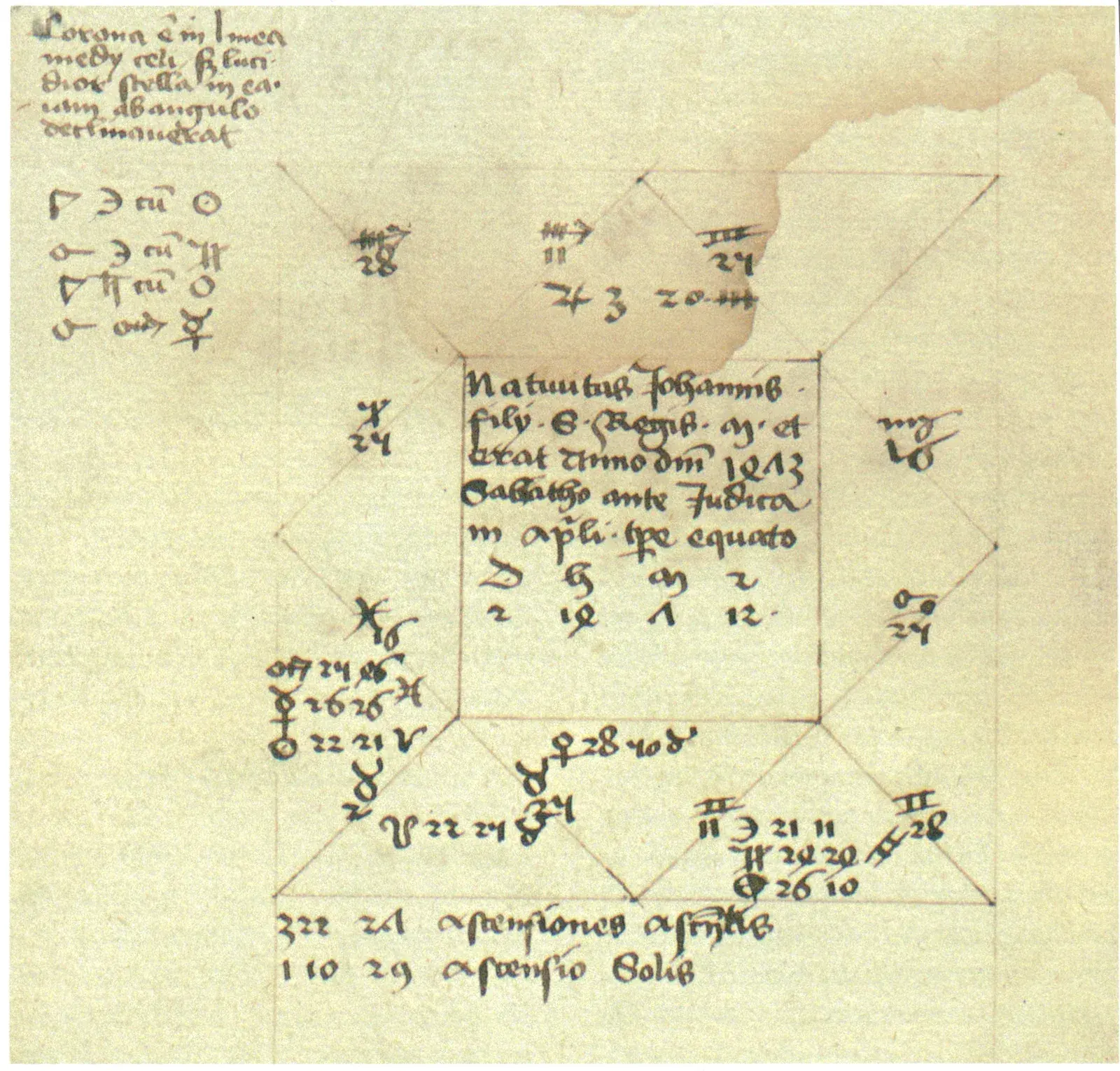
No physical process has earned scientific acceptance as an explanation for natal aspects producing personality traits or life events. Controlled testing has also not established aspect interpretation as a reliable personality-assessment method. In a prominent double-blind study, astrologers did not match natal charts to California Psychological Inventory profiles better than chance.2 The study has methodological critics and does not settle every reflective use of astrology. It also does not support presenting chart interpretation as externally validated measurement.
You can still use aspects as disciplined symbolic inquiry: calculate accurately, distinguish observation from inference, ask whether the language fits lived experience, and allow disagreement to change the reading. Personal resonance is real as an experience. It is not automatically evidence for a celestial cause.
The angle is calculated. The meaning is negotiated. An honest astrologer keeps those statements adjacent.
Notes
- Claudius Ptolemy, Tetrabiblos, Book I, section commonly titled Of the Aspects of the Signs; Johannes Kepler, Harmonices Mundi, Book IV (1619).
- Shawn Carlson, A Double-Blind Test of Astrology, Nature 318 (1985), 419–425.
Practice
Choose one chart and switch off its aspect lines.
- Select five pairs of planets. Convert their positions to absolute longitude and calculate the shortest separation by hand.
- Name any major aspect, its exact angle, and its orb. Reject contacts outside the working limits.
- For one applying or separating aspect, check the planets’ actual motions rather than guessing from their usual speeds.
- Interpret one aspect in four sentences: planetary functions, aspect geometry, sign methods, then house locations.
- Write the most tempting absolute claim about that aspect. Replace it with a question that allows more than one lived expression.
Finish by restoring the software lines and comparing them with your calculations. If they differ, inspect the orb settings before changing your arithmetic.
Key terms
aspect · ecliptic longitude · orb · exact aspect · applying aspect · separating aspect · conjunction · sextile · square · trine · opposition · quincunx · out-of-sign aspect · whole-sign aspect · aspect pattern
Check your reading
Three questions from this chapter’s worked example and its common mistakes. Two of three marks the chapter complete.
Sun at 14°22′ Taurus and Saturn at 17°05′ Leo. Aspect and orb?
How do you tell whether an aspect is applying or separating?
Which statement matches the chapter's corrections?