Part 6: Reading a Whole Chart · Chapter 18 of 36 · 12 min
Reading a whole chart: a worked example, start to finish
A whole-chart reading is an act of weighting.
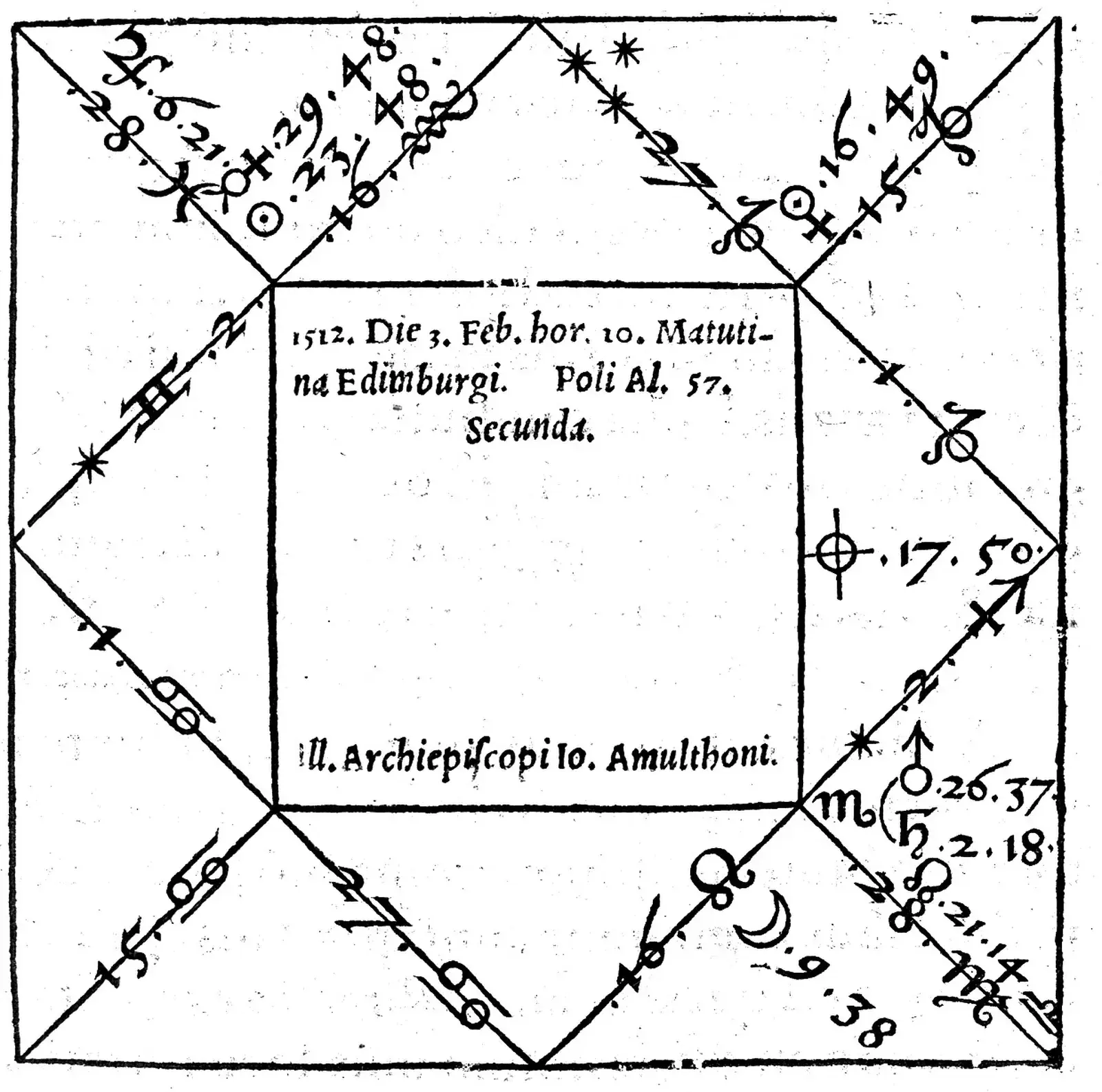
A whole-chart reading is an act of weighting. A chart can yield dozens of technically valid observations; a person cannot use dozens at once. Your task is not to give every placement equal airtime. Find the few features that organize the others, then let quieter factors change the tone, pacing, and setting.
Astrology here is a symbolic language, not a device that dictates a life. A responsible interpretation can be checked against lived context, and it leaves room for history, circumstance, and choice. Exact technique matters because it keeps you from mistaking a clever association for a supported claim.
Set the frame before you interpret
This is a constructed teaching chart. The time is treated as reliable, and we will use whole-sign houses. Virgo rises, so Virgo is the first house, Libra the second, and so on. The Midheaven happens to fall in the tenth sign here; that will not always be true in whole-sign work.
| Point | Position | House |
|---|---|---|
| Ascendant | 13°50′ Virgo | 1st |
| Midheaven | 11°02′ Gemini | 10th |
| Sun | 22°41′ Aquarius | 6th |
| Moon | 24°08′ Leo | 12th |
| Mercury | 18°56′ Aquarius | 6th |
| Venus | 7°30′ Capricorn | 5th |
| Mars | 10°58′ Gemini | 10th |
| Jupiter | 11°46′ Aries | 8th |
| Saturn | 20°17′ Taurus | 9th |
| Uranus | 3°48′ Aquarius | 6th |
| Neptune | 27°00′ Capricorn | 5th |
| Pluto | 3°02′ Sagittarius | 4th |
For this reading, use the five major aspects: conjunction, sextile, square, trine, and opposition. An orb is the permitted distance from exactness, so it tells you how tightly two points are in contact. It is an attention measure, not a moral ranking.
Use up to 8° for aspects involving the Sun or Moon, 6° for other planet-to-planet aspects, and 3° for a planet contacting an angle. Keep those limits steady. A generous orb used only when a desired interpretation needs it is not nuance; it is special pleading.
We are not given planetary motion here, so we will not call any aspect applying or separating. Degree positions alone do not establish that. It is a small restraint, but it matters. A chart is already rich enough without inventing data.
1. Record facts before you make adjectives
Start with a fact sheet. A sign tells you the style of a planet’s expression; a house tells you the area of life where it tends to show up; an aspect tells you what two functions must negotiate; rulership tells you where a planet’s business is managed.
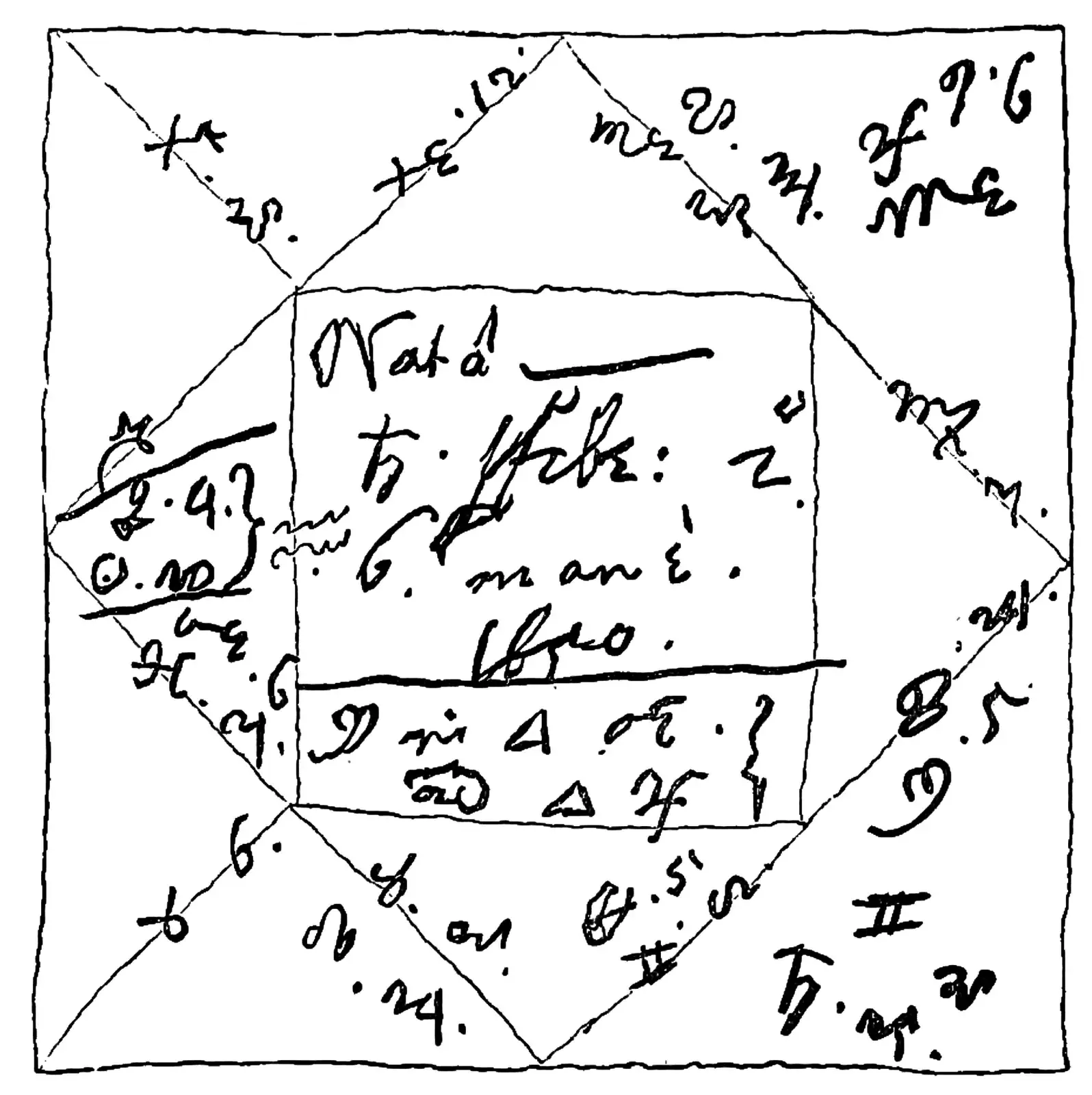
The first notes for this chart are these:
- Virgo rises, making Mercury the chart ruler. The chart ruler is the planet that manages the Ascendant’s sign, so it describes the chart’s main route into life.
- Mercury is in Aquarius in the sixth house, conjunct the Sun by 3°45′.
- Mars is angular: it is conjunct the Midheaven by 0°04′ and square the Ascendant by 2°52′.
- The Sun at 22°41′ Aquarius opposes the Moon at 24°08′ Leo by 1°27′.
- Saturn at 20°17′ Taurus squares both lights: the Sun by 2°24′ and the Moon by 3°51′.
- Mercury squares Saturn by 1°21′.
- Mars sextiles Jupiter by 0°48′.
- Venus squares Jupiter by 4°16′.
Do not begin with Virgo rising = orderly, Aquarius Sun = unusual, Leo Moon = dramatic. Those are fragments. In this chart, Virgo rising matters because Mercury rules it, and Mercury sits beside the Sun while receiving a close square from Saturn. The rising sign is the door; Mercury tells you what is happening just inside it.
2. Find what is loud enough to organize the chart
Angular means close to one of the four major chart angles: Ascendant, Descendant, Midheaven, or lower meridian. An angular planet tends to become conspicuous. It is easier to see in the person’s manner, visible roles, or the way life gets organized around them.
Mars deserves immediate attention. It is only 0°04′ from the Midheaven, an extremely close contact. It also squares the Ascendant by 2°52′. Mars is therefore tied to both public direction and immediate presentation.
The Midheaven is not a single occupation label. It describes visible contribution, public trajectory, and the kind of effort that becomes noticeable. Mars there points to directness, initiative, friction, assertion, and the need to act. In Gemini, Mars works through words, links, multiple tasks, questions, debate, and quick changes of focus. This can show up as a person whose visible work involves movement between ideas, people, or systems.
But Mars in Gemini is ruled by Mercury. That is the correction many readings miss. Mars does not get to tell its story alone. Its action must report to Mercury in Aquarius in the sixth house: thought applied to systems, methods, daily responsibilities, skill, maintenance, and useful problem-solving.
Jupiter sextile Mars by 0°48′ supports Mars strongly. A sextile is a cooperative link, often requiring participation before its value becomes obvious. Jupiter in Aries in the eighth house can add appetite for initiative in situations involving trust, shared stakes, confidential work, or intense collaboration. Still, Mars on the Midheaven remains the louder fact. Exactness matters, but angularity gives exactness a stage.
3. Read the luminaries as a living tension
The Sun and Moon form an opposition with a 1°27′ orb. An opposition places two needs across from each other. It does not mean one side is wrong. It means the person is repeatedly asked to hold both ends of a polarity rather than living from only one.
Here, the Sun is in Aquarius in the sixth house and the Moon is in Leo in the twelfth. The Sun describes conscious purpose and vitality; in felt terms, it is where you want to stand behind your effort. The Moon describes instinctive response and replenishment; in felt terms, it is what needs room before you can remain steady.
The sixth and twelfth houses make this opposition less theatrical than the signs alone might suggest. One side is concerned with contribution, routines, work that must be done, and the maintenance of competence. The other asks for time away from display, private processing, and contact with what cannot be made productive on command. Moon in the twelfth does not prove secrecy or isolation. It does suggest that not every meaningful response wants immediate exposure.
Saturn squares both lights, creating a fixed T-square. A T-square is an opposition in which both ends square a third planet. It creates pressure because three functions keep calling on one another. Fixed signs add persistence. The issue does not evaporate merely because attention moves elsewhere.
Saturn is the apex of this configuration at 20°17′ Taurus in the ninth house. Saturn signifies structure, limits, endurance, standards, and the work of making something reliable. In Taurus, it wants tangible proof and repeatable results. In the ninth house, it puts weight on the frameworks by which a person learns, teaches, studies, makes meaning, or decides what can be defended.
The central question may sound like this: how can daily effort, private response, and a serious standard of truth cooperate without one becoming the tyrant of the others? That sentence is not a prediction. It is a chart-based question, supported by the Sun–Moon opposition and Saturn’s close squares to both.
Mercury also opposes the Moon, though more widely, at 5°12′. It falls within our luminary orb but carries less force than the 1°27′ Sun–Moon opposition. It adds a useful detail: plans, language, and analysis need ongoing contact with feeling. If thought becomes the only authority, the Moon will keep asking to be heard by another route.
4. Trace the ruler network
A dispositor chain follows sign rulers from one planet to another. Think of it as an organizational chart. It does not tell you what will happen. It tells you which planetary functions keep receiving the work of other planets.
Under the rulership convention used here:
- The Sun in Aquarius reports to Saturn.
- The Moon in Leo reports to the Sun, then to Saturn.
- Mercury in Aquarius reports to Saturn.
- Mars in Gemini reports to Mercury, then to Saturn.
- Jupiter in Aries reports to Mars, then Mercury, then Saturn.
- Venus in Capricorn reports to Saturn.
- Saturn in Taurus reports to Venus.
Saturn and Venus are in mutual reception: each occupies the other’s sign. Venus is in Saturn’s Capricorn, and Saturn is in Venus’s Taurus. Mutual reception means two planets have a direct working relationship even if they do not form a major aspect. It can make their themes easier to combine.
This makes Saturn important in three separate ways. Saturn is the apex of the T-square. Saturn receives the Sun, Mercury, Mars, Jupiter, and eventually the Moon. Saturn is also tied closely to Mercury and the Sun by square. When several techniques point to the same planet, you have earned a central claim.
Do not reduce Saturn to heaviness. In this chart, Saturn is paired with Venus by mutual reception. Venus in Capricorn in the fifth house gives form to pleasure, affection, creative work, taste, and play. Saturn in Taurus can give durability to what Venus values. The combination can describe someone who takes making seriously, or who wants enjoyment to have shape and substance rather than being disposable.
Venus squares Jupiter by 4°16′. That is a real contact, though not a headline above Mars on the Midheaven or the tight fixed T-square. It adds friction between restraint and enlargement, between careful form and the impulse to take up more room. Because Jupiter routes through Mars, Mercury, and Saturn, it does not overturn the chart’s central emphasis on standards and method. It complicates it.
Uranus and Pluto form an exact sextile within 0°46′, but it is an outer-planet-to-outer-planet contact without a close tie to an angle, luminary, or chart ruler. Record it. Do not promote it above the personal architecture. A whole-chart reading accounts for everything; it does not make every item equally important.
5. Let houses connect instead of becoming separate departments
Now connect the house stories.
Mars in the tenth house describes visible initiative. Its ruler, Mercury, is in the sixth house, so public action is fed by daily skill, systems, training, editing, problem-solving, or sustained work behind the scenes. Mercury squares Saturn in the ninth, so the work wants a framework: knowledge that can be checked, standards that can be taught, principles that survive scrutiny.
This is stronger than saying, separately, that Mars is ambitious, Mercury is intelligent, and Saturn is serious. The chart says something more specific: visible action is likely to work best when it rests on practiced competence and a framework the person can stand behind.
Jupiter in the eighth sextile Mars adds another channel. Collaboration, confidential exchanges, research that requires trust, or work involving shared responsibility may become places where initiative expands. The chart does not promise a particular setting. It describes a style of engagement that may become available in the right context.
The fourth-house Pluto and the fifth-house Neptune are not ignored. They simply do not carry enough close contact to the chart’s core to lead the first reading. If later conversation reveals a major issue around home, early foundations, creative imagination, or longing, you can return to them. First readings need a spine.
6. Build claims with receipts
Before writing polished prose, make a brief claim ledger. Each sentence should have chart evidence behind it.
| Supported claim | Receipts |
|---|---|
| Visible roles may require fast, verbal, adaptive action. | Mars in Gemini, tenth house, conjunct Midheaven by 0°04′. |
| Action is tied to work methods and disciplined thinking. | Mars ruled by Mercury in the sixth; Mercury square Saturn by 1°21′. |
| Private needs and visible contribution require conscious balance. | Sun–Moon opposition by 1°27′ across sixth and twelfth houses. |
| Standards, study, and durable frameworks are central. | Saturn apex of T-square; Saturn receives major dispositor chains; Saturn in ninth house. |
| Creative pleasure is not separate from structure. | Venus in Capricorn, mutual reception with Saturn, fifth-house placement. |
Notice the language: may require, is tied to, requires balance, is central. These are proportionate claims. They are neither vague praise nor a fixed script.
Here is how the notes become a first whole-chart reading:
You are likely to meet the world by noticing what needs sorting, improving, or making useful. Virgo rises, but Mercury gives the more important detail: your way of organizing life is closely tied to the Sun in Aquarius and to sixth-house work. Thought is not merely private here. It wants application.
Mars on the Midheaven gives this chart a visible engine. You may be recognized for initiative, quick response, argument, advocacy, or the ability to move between competing ideas. Yet Mars is in Gemini and answers to Mercury, so force alone is not the point. Your strongest action is likely to come through language, technique, coordination, and clear methods.
Saturn gives the chart its governing pressure. It squares the Sun, Moon, and Mercury while receiving much of the ruler network. This can make questions of competence, evidence, education, and durable standards hard to treat casually. The task is not simply to work more. It is to build methods that are solid enough to support your effort without making every moment answer to an impossible standard.
The Sun–Moon opposition shows a real rhythm between contribution and withdrawal from display. Part of you wants to participate, solve, and be useful; another part needs room to process without immediate performance. Saturn keeps that rhythm active. When the private side is ignored, work can become all structure. When structure is ignored, the chart’s strong need for meaningful contribution has nowhere to land.
Venus and Saturn in mutual reception keep this from being a chart of duty alone. There is also a wish to make, enjoy, cultivate, and give form to what you value. The Venus–Jupiter square suggests that pleasure and ambition may sometimes pull at different speeds. Neither needs to win permanently. The chart is asking for proportion.
That reading has a center: Saturn-managed action and competence. It has a polarity: contribution and private processing. It has modifiers: Venus’s need for form, Jupiter’s enlarging impulse, Mars’s public speed. Nothing essential has been left out, but nothing has been inflated merely because it appears in the chart.
Corrections that keep a whole reading honest
- Do not lead with the Sun sign. The Sun matters greatly, but here its meaning changes because it is in the sixth house, opposed by the Moon, squared by Saturn, and ruled by Saturn.
- Do not treat all exact aspects as equal. Uranus sextile Pluto is closer than Venus square Jupiter, yet Mars conjunct the Midheaven has greater practical weight because it contacts an angle.
- Do not let a T-square become the entire personality. The fixed T-square is central, but Venus–Saturn mutual reception and Mars–Jupiter sextile show resources, style, and movement within it.
- Do not turn houses into literal forecasts. A tenth-house Mars describes visible action; it does not name one occupation. An eighth-house Jupiter describes intensity around trust and shared stakes; it does not name one event.
- Do not invent application or separation. You need motion data, not just zodiacal degrees.
- Do not confuse coherence with sameness. A chart can hold serious standards, quick action, private needs, pleasure, and ambition at once. The work is to show how they relate.
Stop when a new sentence merely repeats an earlier claim with different keywords. A reading becomes clearer when it knows what not to say.
Practice
Practice
Choose a chart with a dependable recorded birth time and use one house system throughout.
- Write a fact sheet with the Ascendant, chart ruler, luminaries, angular planets, and every major aspect within your stated orbs.
- Circle no more than three features that repeat through more than one technique: aspect, angle, rulership, house placement, or mutual reception.
- Trace the dispositor chain for the chart ruler, Sun, Moon, and any angular planet.
- Write a 180-word reading using five claims only. Put the degree, aspect, house, or ruler evidence in brackets after each claim.
- Cross out any sentence that has no receipt. Then cross out one more sentence that is technically true but not structurally important.
Keep a second column for lived context. A phrase that does not meet the person’s actual conditions is not rescued by prettier symbolism.
Key terms
whole-chart reading · orb · angularity · chart ruler · dispositor chain · mutual reception · T-square · luminary opposition · whole-sign houses · aspect hierarchy
Check your reading
Three questions from this chapter’s worked example and its common mistakes. Two of three marks the chapter complete.
Why does Mars conjunct the Midheaven outrank the closer Uranus–Pluto sextile in the worked chart?
What is a claim ledger?
When should a whole-chart reading stop?