How Western Horary Astrology Judges One Question
One question, one chart, and the traditional rules that judge it.
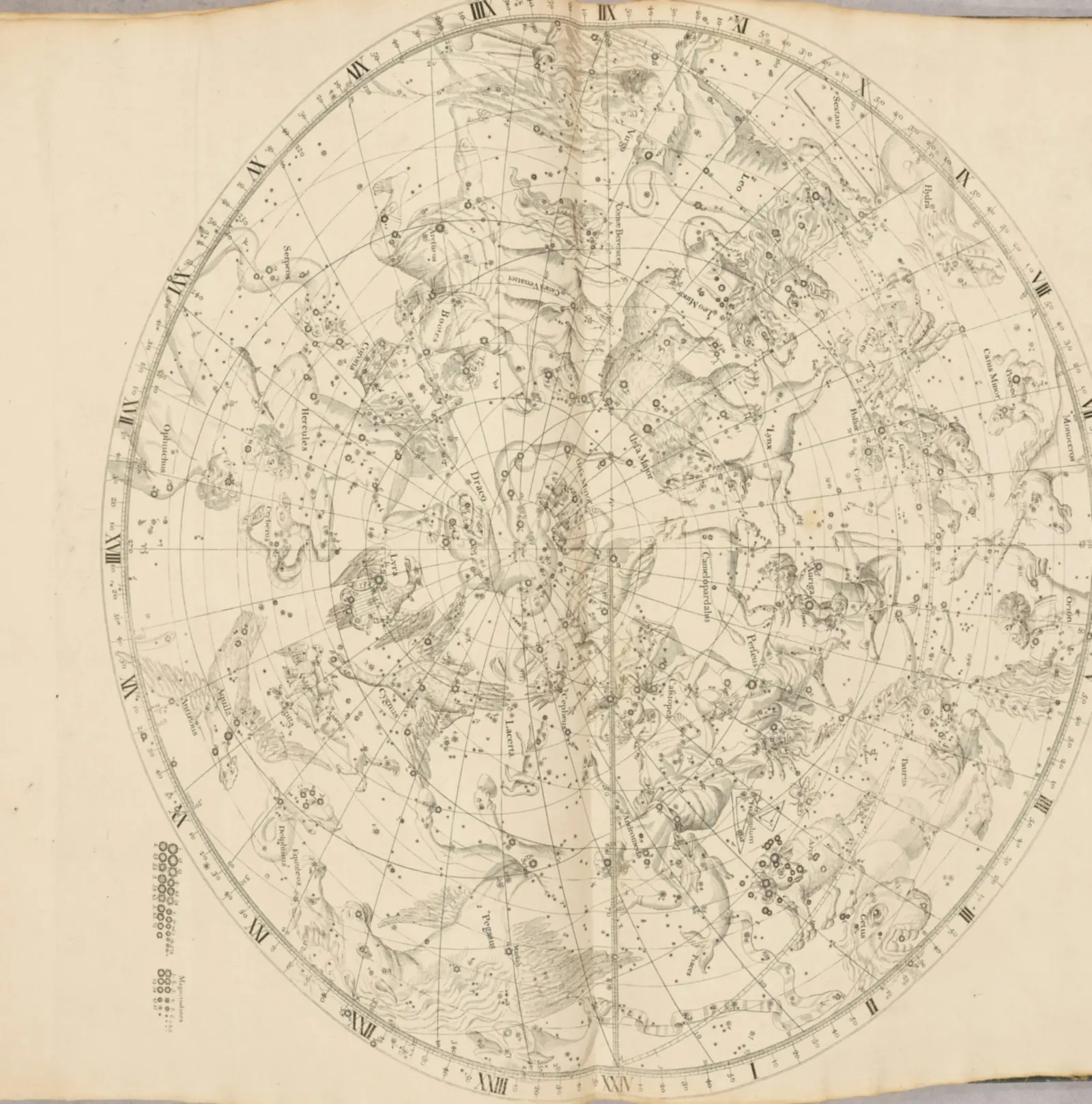
Western horary astrology starts with a live question, not a birth chart. The practitioner casts a figure for the exact minute the question is asked, then judges that figure using traditional rules. In the Lilly tradition, the main reference is Christian Astrology, published by William Lilly in 1647.
This is a method for one matter at one moment. It is not a generic horoscope, a personality profile, or an AI model improvising a response. The chart supplies positions; the rules determine which planets represent the people or matters involved, whether they can connect, and how much weight each testimony deserves. Even a careful judgment has limits: it describes testimony in the figure, not an unbreakable guarantee about events.
Start with a single, live question
A useful horary question names one outcome and, when relevant, a time boundary. Will I receive an offer for this position by 30 June? is narrower than What will happen in my career? Will this person contact me within four weeks? is different from asking about that person’s feelings, intentions, and future in the same chart — which is exactly the discipline required when asking a horary question about an ex. A bundle makes the significators ambiguous and invites the judge to select whichever testimony fits.
The question should be genuinely live, not a prompt chosen merely to test the system. Recasting the same matter repeatedly after disliking a result creates competing figures, not clarity. If the wording is vague, clarification comes first. Horary does not require natal birth data, because the question moment—not a natal promise—is the anchor.
Cast the figure for the minute
Traditional horary treats the time as part of the question. The chart is cast for the exact minute the question is asked and understood, using the relevant location for the Ascendant, house cusps, and angles. Recording the minute matters: the Ascendant and house cusps can shift, and those cusps assign the topics of the chart.
The figure is not chosen after the outcome is known. It is a snapshot of the circumstances surrounding the question. Astronomical positions are calculated first; the traditional judgment begins after the figure is cast. That distinction matters. Calculation supplies the chart. Rules supply the judgment.
Assign roles: the significators
The first task is to identify the significators—planets carrying specific roles in the matter. The ruler of the Ascendant represents the querent, while the Moon is generally a co-significator of the querent and the unfolding event. The ruler of the relevant house represents the quesited: the person, object, situation, or outcome being asked about.
For another person or partner, the 7th house is usually relevant. Career or public position commonly belongs to the 10th. Owned resources belong to the 2nd, while home, property, and the matter’s eventual outcome often involve the 4th. Exact house choice follows the wording of the question rather than a fixed list.
This prevents a common mistake: choosing Venus simply because a question sounds romantic, or Jupiter because the hoped-for answer sounds positive. The ruler of the house cusp has priority. Natural significators, such as Venus for affection or Mercury for messages, can add context, but they do not automatically replace the house rulers.
A significator is not a personality label. Its condition describes strength, access, movement, restriction, or role within this particular figure.
One technique in depth: application, reception, and perfection
A core Lilly technique is application: do the main significators move toward a meeting, and can that meeting perfect the matter?
An applying aspect occurs when one planet is moving toward an exact conjunction, sextile, square, trine, or opposition with another. When the aspect becomes exact, the connection has perfected in the narrow technical sense of being completed. If either significator changes sign, turns retrograde, or is overtaken by another development before perfection, the story can change. Actual motion and speed matter, not a simple count of symbols.
An applying aspect between the ruler of the 1st house and the ruler of the 10th can show a route between the querent and a career matter. But an aspect alone is not a verdict. A square may perfect through effort or obstruction. An opposition may show contact with separation, conflict, or a poor exchange. A trine can fail to deliver if a significator is too weak to act. Easy and hard aspects describe the manner of contact; they do not automatically mean yes or no.
Reception is the second half of this technique. A planet is received when the other significator falls in one of its essential dignities: domicile, exaltation, triplicity, term, or face. If Mars is in a sign ruled by Venus, Venus receives Mars. Mutual reception exists when each planet occupies a dignity of the other. Reception can show capacity to accept, support, or make use of the connection.
Essential dignity asks whether a planet has resources through its sign-based condition. Accidental dignity asks whether it can act in the current circumstances: angular rather than cadent placement, direct or retrograde motion, speed, visibility, combustion, and other situational conditions all matter. A significator may be strong by sign but placed in a weak house, or well placed by house while lacking essential strength.
Imagine the ruler of the Ascendant applying to the ruler of the 10th with reception. That is stronger testimony that the two sides can connect than the same aspect with no reception. If the career ruler is cadent, retrograde, or badly debilitated, the matter may be delayed, revised, or unable to deliver what was sought. These are readings of condition, not claims about an employer’s private thoughts.
When the two main significators do not apply directly, the Moon’s next applications become important. Translation of light occurs when a faster planet separates from one significator and applies to the other, carrying a connection between them. Collection occurs when a slower planet receives applications from both significators. Prohibition, frustration, or refranation can interrupt a proposed perfection.
The judge therefore follows a sequence: who moves, who receives, what obstructs, and whether the aspect perfects in time. That is more disciplined than counting favorable-looking planets.
The trials before judgment
Before assigning a result, Lilly includes considerations before judgment, sometimes called the trials. They test whether the figure is fit to judge and whether the matter is ripe.
An Ascendant in the first degrees can point to a question still forming. An Ascendant in the final degrees can show a matter already advanced or too late to alter. Saturn in the 1st or 7th house may warn that the querent or judgment is burdened, unless Saturn is itself a relevant significator. A void-of-course Moon, or a Moon under severe affliction, can show little movement or a poor basis for a clean judgment.
These are cautions, not automatic refusals. The same placement may be meaningful if it describes the matter. The judge also considers whether the question is sincere, whether it has been asked repeatedly, and whether the chart describes the circumstances. A traditional practitioner does not cherry-pick a favorable aspect while ignoring the trials. Sometimes the honest conclusion is that the chart should not be forced.
Honest limits
Horary is a symbolic rule system, not a guarantee machine. Even a strong perfection is testimony under the rules, not a promise that every detail will unfold exactly as imagined. Timing is especially conditional: degrees, sign modality, house strength, retrogradation, and real-world context can all affect a traditional estimate. People change their minds, facts remain hidden, and circumstances develop beyond the figure.
For high-stakes health, legal, or financial matters, horary should not replace qualified professional guidance, documents, evidence, or consent. It is a method for examining a defined question—not a license to outsource responsibility or control another person’s choices.
Rule-based horary at Shymea
Shymea’s Decide follows this narrower horary method. It casts a chart for the exact minute of the question and judges it with Lilly’s 1647 rules: significators, dignities, applications, and the trials. No AI participates in the verdict. The output is YES, NO, or ASK AGAIN, with a confidence indication and the chart figure. Confidence describes how cleanly the rules line up; it is not a statistical guarantee.
Shymea’s Ask is a separate AI product. It interprets derived chart placements in conversation; it does not cast a horary judgment or replace this rule-based method. Keeping the engines separate matters: horary is not a canned response to the wording of a starter question.
For a clean figure, keep the question singular, record the exact minute and location, and allow the chart’s cautions to count. A forced answer is less traditional than ASK AGAIN.
Common questions
- What makes horary astrology different from natal astrology?
- Natal astrology begins with a birth chart and considers life patterns. Horary astrology casts one chart for the exact minute a live question is asked, then assigns significators and judges the matter through traditional rules.
- Does horary astrology need my birth time?
- Not for this method. The anchor is the exact question moment and the relevant location for the chart. The question should still be specific, sincere, and singular.
- What are significators in horary astrology?
- Significators are the planets assigned to the people or matters in the question. The Ascendant ruler and Moon generally represent the querent; the ruler of the relevant house represents the quesited.
- Does a trine automatically mean yes?
- No. An applying trine can show an easy connection, but the planets’ dignities, house strength, reception, timing, and the trials must also support perfection. No single aspect guarantees an outcome.
- Is Shymea Decide powered by AI?
- No. Decide uses a pure rule-based horary method. Its verdict is judged internally through Lilly’s 1647 rules, and its result is `YES`, `NO`, or `ASK AGAIN` with the figure and confidence.
- What does ASK AGAIN mean in horary?
- It means the figure does not support a clean judgment at that moment—for example, the matter may not be ripe or the chart may be difficult to judge. It is not an invitation to repeatedly recast the same question.
Sources
- William Lilly, Christian Astrology (London, 1647) — Facsimile of the 1647 first edition at the Internet Archive — the primary source for the rules described here.
Every technique on this page needs one thing first: a chart computed from your exact birth date, time, and place.