Stellium combos · 2nd house · Capricorn
2nd house stellium in Capricorn: you were born budgeting
Some people get a piggy bank. You got a spreadsheet, a five-year plan and strong opinions about interest rates.
Photo: Shopify Partners / Burst
At a glance
Astrologers read it as patient, practical money sense and self-worth built through effort. About 1 in 93 charts have it, 5th of 144 pairs.
- Rising sign
- Sagittarius rising
- How common
- 1 in 93 charts#5 of 144 pairs
Capricorn
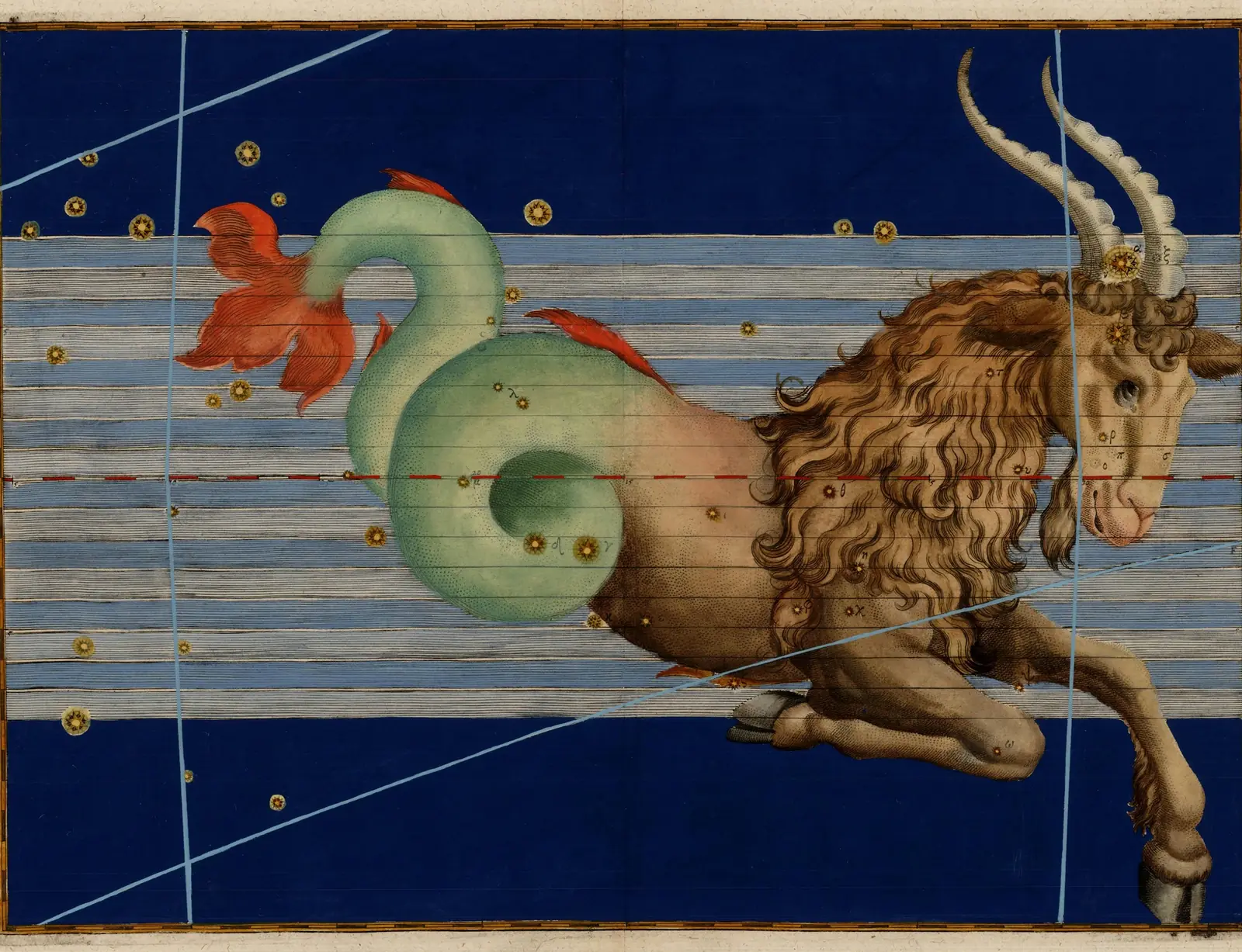
What a 2nd house stellium in Capricorn means
Try this today
- Write down three things you own that you would keep in a fire. That list is your 2nd house.
- Separate what you earn from what you are worth, on paper, once. Capricorn mixes them up.
- Set one savings goal with a date. This stellium likes a finish line.
The 2nd house is the house of what you own and what you value: income, savings, possessions, and the quieter question of what you think you are worth. Capricorn is the sign of structure, time and earned results. Stack three or more planets there and money stops being an afterthought.
The traditional read is a builder. You tend to want things that last, you trust slow growth over lucky breaks, and spending feels better when it has a purpose. Self-worth tends to be tied to competence, which is a strength and, on bad days, a trap.
The twist is the rising sign. Only Sagittarius rising gives a Capricorn 2nd house in whole-sign houses, so the person people meet is loose, funny and up for an adventure. The careful accountant shows up when the bill comes.
The sky behind it
644 sampled charts.
Day to day
Money, talent and the slow build

In daily life this often looks like steady habits: a budget that actually gets used, a side project that turns into an income over years, a habit of researching big purchases until friends stop asking. Astrologers also tie the 2nd house to your talents, the skills you can sell, and Capricorn favours the ones that improve with practice.
There can be a scarcity streak. Even with enough, a Capricorn 2nd house may feel it is never quite enough. Naming that feeling helps more than checking the balance again.
This is a reflection, not financial advice. A chart can describe your attitude to money; it cannot pick your investments.
Who is in the cluster
The Saturn, Uranus and Neptune generation
This is one of the most common combos on the list, and the reason is generational. Neptune is part of 69.7% of these stelliums, Uranus 55.4%, and the single commonest line-up is Saturn, Uranus and Neptune at 22.7%. All three slow planets sat in Capricorn together around 1988 to 1991.
That means many people with this placement share the outer-planet part with classmates born the same year. What changes from person to person is whether your Sun, Moon, Mercury, Venus or Mars joined in. A further 26.1% have no outer planets in the cluster at all: those are winter birthdays, late December to mid January.
The sky behind it
| Planet | Share |
|---|---|
| Neptune | 69.7% |
| Uranus | 55.4% |
| Saturn | 46.7% |
| Mercury | 40.1% |
| Sun | 38.0% |
| Venus | 34.9% |
| Moon | 19.4% |
| Mars | 18.6% |
| Jupiter | 18.2% |
| Pluto | 4.2% |
| Planets | Share |
|---|---|
| Saturn, Uranus, Neptune | 22.7% |
| Sun, Mercury, Venus | 7.5% |
| Moon, Uranus, Neptune | 4.3% |
| Venus, Uranus, Neptune | 3.1% |
Who was born with it
Peaks with births in the late 1980s and 1990s
The 1990s carry this combo at 2.72% of charts, with the 1980s next, which lines up with the Capricorn stays of Saturn, Uranus and Neptune. Before that it was far scarcer: 0.25% in the 1970s.
If the Sun is part of the stellium, a Sagittarius rising puts it well below the horizon. 97.6% of those land between 2 am and 8 am, the small hours of a winter morning.
The sky behind it
| Decade | Rate | Share |
|---|---|---|
| 1950s | 0.33% | 5.1% |
| 1960s | 0.72% | 11.3% |
| 1970s | 0.25% | 3.9% |
| 1980s | 1.91% | 29.7% |
| 1990s | 2.72% | 42.1% |
| 2000s | 0.51% | 7.9% |
Old rules
The Gate of Hades, guarded by Saturn
Hellenistic writers gave the 2nd house a strange name: the Gate of Hades, because it rises just after the 1st and is still dim below the horizon. Later it became the house of livelihood and possessions, the meaning most people use today.
Capricorn makes Saturn the house ruler, while Jupiter, your chart ruler as a Sagittarius rising, has its fall in Capricorn. That pairing is the heart of this placement. The rising sign wants to spend on experiences; the 2nd house wants a spreadsheet. Mars, exalted in Capricorn, adds drive to earn.
Capricorn is the 2nd most common sign for a 2nd house stellium in our sample, and it ranks 2nd among Capricorn's twelve houses. 31.5% of these clusters hold four planets or more, much of it from the late-1980s run of Saturn, Uranus and Neptune through the sign. Money habits from those years tend to be careful ones.
Opposite house
Cancer on the 8th: shared money and trust
Across from your Capricorn 2nd sits a Cancer 8th, the house of shared resources and emotional exchange. The lesson astrologers point to is balance: what you build alone versus what you let others hold with you.
Do you have it?
Capricorn in your 2nd?
11.4% of Sagittarius risings have it.
Your rising sign
Quick answers
Is a 2nd house Capricorn stellium good for money?
Astrologers see discipline and patience here, which suit long-term saving. It describes attitude, not outcome, and it is not financial advice. Plenty of people with this stellium simply worry about money more than they need to.
Why do people born around 1990 have Capricorn stelliums?
Saturn, Uranus and Neptune all spent time in Capricorn between 1988 and 1991. With three slow planets already there, almost everyone born then has a Capricorn stellium somewhere; the rising sign decides which house.