Part 2: The Signs · Chapter 5 of 36 · 13 min
The twelve signs II: Libra through Pisces, as motivations
A sign is not a costume you put on. It is a style of wanting: the kind of situation a function keeps trying to create, protect, understand, or improve.
Motivation is directional
A sign is not a costume you put on. It is a style of wanting: the kind of situation a function keeps trying to create, protect, understand, or improve. Motivation here does not mean a private wish you can always name. Much of it works beneath deliberate choice. It is the directional pressure behind a response.
This distinction keeps astrology from becoming a list of personality adjectives. Libra is not simply nice. Scorpio is not simply intense. Sagittarius is not permanently cheerful, Capricorn is not automatically ambitious, Aquarius is not obliged to be unusual, and Pisces is not condemned to vagueness. Each sign has a more precise concern.
The interpretive basis is transparent. Start with element and mode. Air works through distinction, language, and relationship between ideas. Water registers feeling, attachment, and atmosphere. Fire seeks vitality, significance, and reach. Earth attends to material consequence. Cardinal signs begin movement, fixed signs sustain it, and mutable signs adjust to changing conditions. Then consider the planet involved and the house where it operates.
These are symbolic categories, not measured psychological variables. No reliable empirical evidence shows that a sign placement produces a personality or event. Astrology can still be used as a disciplined language for noticing patterns, especially when its claims remain modest and testable against lived experience. A chart should give you better questions, not permission to stop looking at the actual person.
For every sign in this chapter, ask three things: What does it treat as worth pursuing? What problem does it keep trying to solve? What does the mature expression look like when the motive is not being overdriven?
Libra — making relationship workable
Libra is cardinal air. It begins movement through comparison, conversation, and agreement. Its core motive is proportion in relationship: making a shared situation fair enough, balanced enough, and clear enough to proceed.

Libra notices the space between people. Who has been heard? Who has set the terms? Is one person carrying the practical burden while another receives the credit? Is the stated rule being applied evenly? This is not merely politeness. It is an instinct for the architecture of encounter. A Libran response often asks, How can both sides be accounted for without pretending they want the same thing?
Imagine two housemates choosing a date for repairs. One has a flexible schedule; the other works nights. Libra motivation notices that treating both people identically may not be fair. The question becomes not Who gets their way? but What arrangement respects the actual conditions? At its best, Libra can negotiate without dissolving into approval-seeking. It can offer a clean no because a real agreement requires real consent.
A common mistake is to equate Libra with indecision. Weighing is not indecision. It becomes indecision when the weighing continues after the relevant factors are already visible, usually because choosing would disappoint someone or end an appealing possibility. Another mistake is to equate harmony with justice. Libra can be seduced by a smooth surface, yet mature Libra knows that an unspoken imbalance will eventually make the relationship less peaceful.
With Venus in Libra, affection and value may seek reciprocity, elegance, and mutual regard. Mars in Libra may act by negotiating, comparing options, or responding to the other person’s position. Mercury in Libra may understand an argument by seeing its counterpart. The planet tells you what function is operating; Libra tells you why it keeps consulting the space between positions.
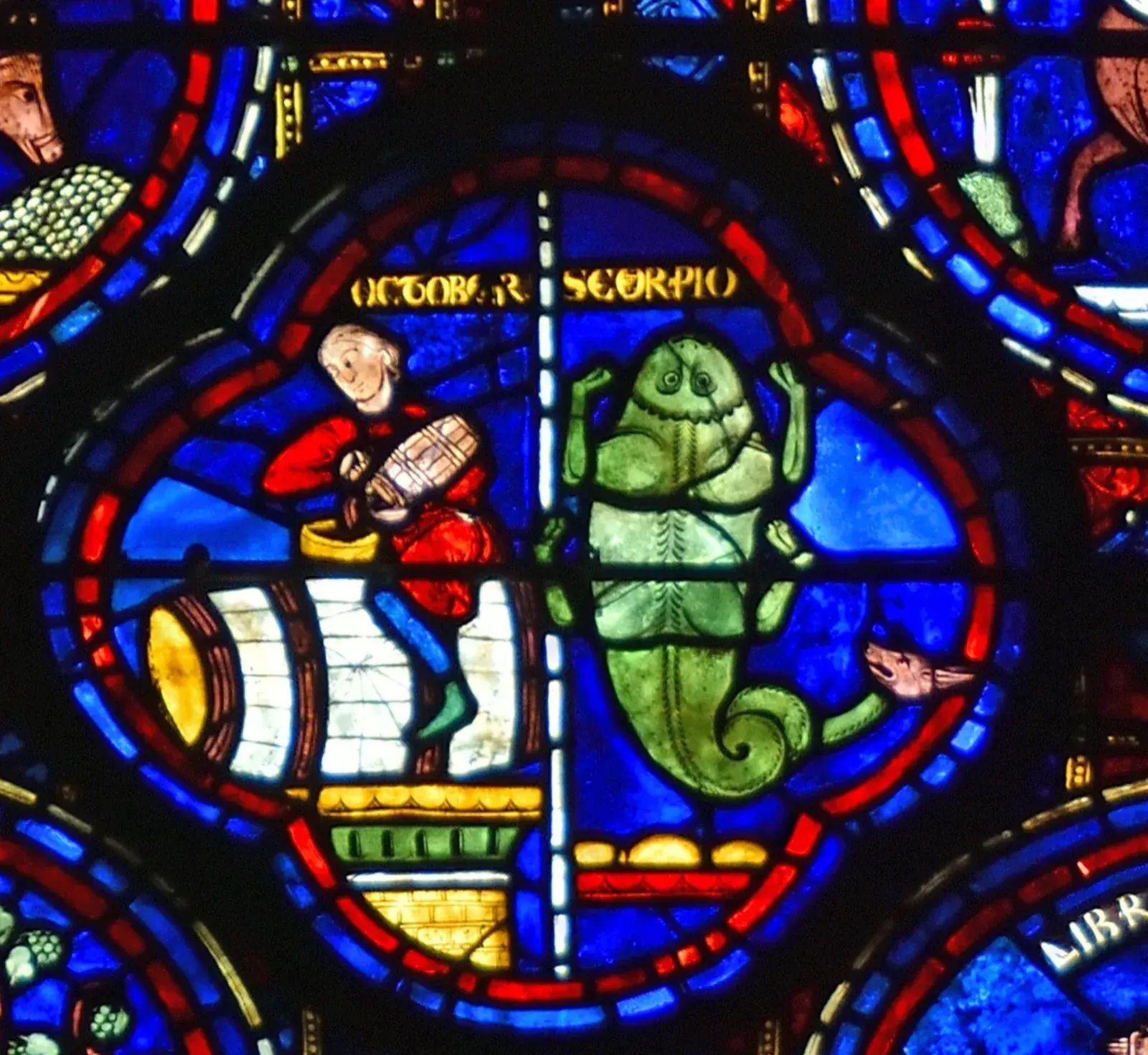
Scorpio — making involvement matter
Scorpio is fixed water. It sustains emotional attention long enough to discover what is binding, what is vulnerable, and what has real consequence. Its core motive is depth: involvement that can survive honesty and carry weight.
Privacy is not the same as secrecy. A Scorpio emphasis may care about the difference between what is shared casually and what is entrusted. It may want to know whether a promise has substance, whether loyalty remains present when convenience disappears, and whether a relationship can hold difficult truth without turning it into spectacle. Intensity, in this sense, is sustained attention rather than dramatic volume.
Suppose a friend says they are fine while their actions suggest otherwise. Scorpio motivation notices the mismatch. It may ask directly what is happening, or wait until the person is ready to speak. Its better expression does not interrogate or manufacture tests. It names the terms of trust and lets the other person answer. The motive is not to possess every secret. It is to know what kind of bond is actually present.
When strained, Scorpio can turn discernment into suspicion. It may withhold information to gain leverage, treat vulnerability as a bargaining chip, or keep a private record of injuries. The correction is not forced openness. It is a more honest agreement about privacy, loyalty, and repair. A person with strong Scorpio symbolism can be remarkably straightforward; a guarded person is not automatically deep.
Traditional Western astrology links Scorpio with Mars, while modern practice often adds Pluto. These are historical lenses, not physical causes. Venus in Scorpio may bond selectively and value emotional candor. Mercury in Scorpio may investigate what lies beneath a statement. The Moon in Scorpio may need time and trust before feeling fully visible. The shared motive is meaningful involvement, but the planet shows which part of life wants it.
Sagittarius — widening the frame
Sagittarius is mutable fire. It adapts by looking for significance, a wider comparison, or a principle that can place separate facts in a larger frame. Its core motive is expansion of understanding.
Travel can express Sagittarius, but it is not required. Study, teaching, satire, philosophy, comparative research, and the simple habit of asking what else might be true can all serve the same motive. Sagittarius wants more than a pile of observations. It wants a map that makes the observations intelligible.
Picture a disagreement about a new process at work. Gemini might gather more examples and ask how the process functions in each case. Sagittarius asks what principle the process serves and whether the principle still holds when circumstances change. Its gift is synthesis and candor. It can see possibility where a narrow reading sees only precedent.
Under strain, the larger frame becomes the only frame. A useful perspective turns into a universal verdict. Enthusiasm outruns detail. Directness becomes bluntness, and freedom becomes refusal of consequence. The correction is not smaller thinking. It is proportion: a claim should be no larger than the evidence supporting it. Mature Sagittarius can say, This is the meaning I see, and here is where the comparison may fail.
Jupiter is the traditional Western association for Sagittarius, with emphasis on growth, confidence, and interpretation. Mercury in Sagittarius may prefer the governing idea to the exhaustive list. Venus may value shared outlook and intellectual openness. Mars may act through advocacy, exploration, or teaching. The sign’s motive is not constant movement; it is a life that keeps making room for a more capacious understanding.
Capricorn — making effort endure
Capricorn is cardinal earth. It begins concrete structure. Its core motive is to make effort accumulate into something reliable, accountable, and durable over time.
Capricorn asks what can be built, maintained, and entrusted. It notices limits, deadlines, standards, and the cost of neglect. This does not make it cold. Restraint can be a form of care for an outcome. A person who checks the foundation before decorating the house is not less imaginative; they are attending to what will let the house remain standing.
Consider a group project with generous ideas and no clear owner. Capricorn motivation asks who is responsible for each part, what must happen first, and what standard will tell everyone the work is complete. Its famous relationship with ambition is secondary to this deeper concern: can desire become practice, and can practice become competence?
A common mistake is to confuse Capricorn with status. Rank can be a visible measure of responsibility, but it is not the same as substance. Under strain, Capricorn may use authority as a substitute for trust, postpone enjoyment until some undefined milestone, or assume that worth must be demonstrated through output. It may carry duties nobody assigned because being needed feels safer than being supported. Mature Capricorn sets limits that let work continue without consuming the person doing it.
Saturn is Capricorn’s traditional association in Western astrology. Sun in Capricorn may develop identity through mastery, stewardship, or taking the long view. Mars may act methodically and conserve effort for the result that matters. Venus may value reliability over display. The sign is not a command to achieve. It is the motive to give form to intention and to respect time as an active ingredient.
Aquarius — improving the arrangement
Aquarius is fixed air. It holds a principle steady long enough to test it against the needs of a group, a network, or a future situation. Its core motive is greater freedom through better structure.
Aquarius is often described as unusual or detached. Both labels are too small. Novelty is a tool, not the motive. Aquarius wants to know whether the arrangement itself is helping people think and act, or whether it has become a custom that protects its own existence. Libra repairs the interaction between people; Aquarius questions the design of the room in which the interaction keeps failing.
Suppose a workplace rule creates an unnecessary burden for a small number of people. An Aquarius response may notice that the exception is not a nuisance but evidence of a flawed design. It asks whether the rule can be changed for everyone rather than privately softened for a few. This can be humane, though its humane quality may arrive through systems rather than personal warmth. Warmth can be structural.
Under strain, Aquarius can become contrarian for the pleasure of opposition, or so abstract that actual people disappear behind a theory. It may prize independence while quietly needing an audience for its difference. It may belong to a group by rejecting every other group. Mature Aquarius lets principles meet particular lives. A good system is not good because it is elegant; it is good because people can live inside it with more room to breathe.
Saturn is Aquarius’s traditional association, while modern Western practice often adds Uranus. The two lenses emphasize structure and disruption in different proportions. Mercury in Aquarius may classify patterns across many cases. Mars may fight for reform or refuse an imposed role. Venus may value friendship, intellectual equality, and room to remain distinct. The sign’s motive is not isolation. It is participation without surrendering independent thought.
Pisces — responding to the whole
Pisces is mutable water. It adapts through empathy, imagination, and sensitivity to the atmosphere surrounding an event. Its core motive is contact with the whole: sensing what has been left out when life is divided into neat categories.
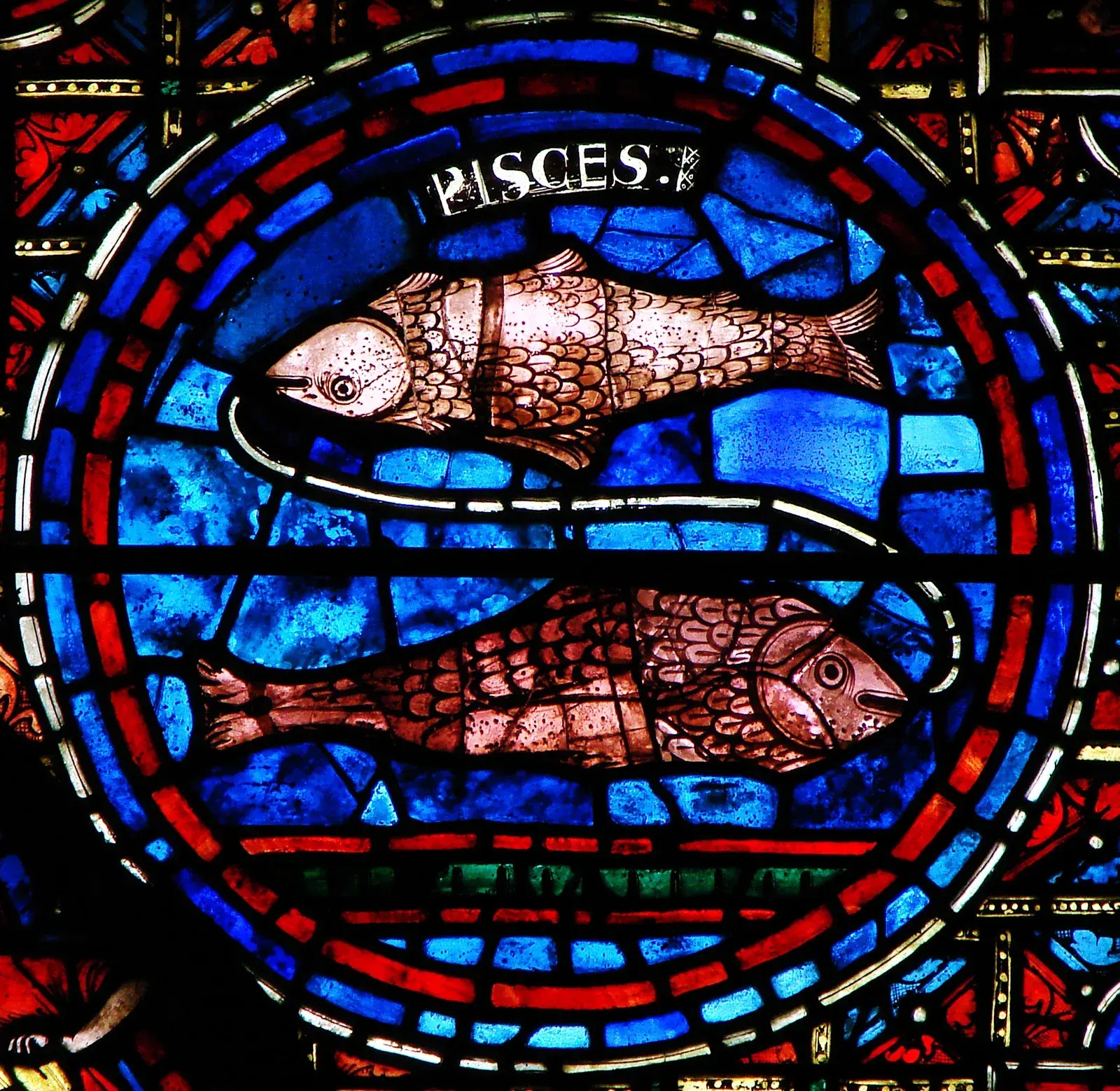
Pisces does not require vagueness. A musician who hears how separate notes alter one another, a writer who feels the common thread between strangers, or a friend who notices the emotional weather of a room may all be working through Pisces motivation. Its attention is porous. It receives context that a more sharply bounded approach might miss.
Porosity is a capacity, not an incapacity. It allows compassion, artistic perception, symbolic thought, and a response to suffering that is not limited to what can be measured immediately. Yet permeability needs form. Under strain, Pisces may take an impression for a fact, drift between commitments, overpromise from genuine goodwill, or try to rescue someone instead of respecting their agency. It may avoid clarity because clarity feels too hard-edged, even when clarity would be kind.
Mature Pisces does not erase difference in the name of unity. It imagines another person’s experience without claiming ownership of it. It can say, I sense more here, and I still need to check what is actually true. Boundaries do not cancel compassion; they give compassion a shape that can last.
Jupiter is Pisces’s traditional Western association, and modern practice often adds Neptune. Moon in Pisces may absorb atmosphere and need periods of quiet separation. Mercury may think through image, association, and implication. Mars may act through care, art, or a response to what others overlook. The shared motive is receptivity to the larger field of feeling, not permanent confusion.
The opposite signs as working partners
The six signs in this chapter each face an opposite sign. An opposition is not a contest between the correct sign and the defective one. It is a polarity: two necessary questions that can pull attention in different directions.
- Aries and Libra: What do I want, and what do we owe one another? Aries protects initiative; Libra protects reciprocity.
- Taurus and Scorpio: What must remain steady, and what must be shared deeply enough to change us? Taurus protects continuity; Scorpio protects meaningful exchange.
- Gemini and Sagittarius: What are the relevant facts, and what do they mean together? Gemini protects observation; Sagittarius protects synthesis.
- Cancer and Capricorn: What keeps people held, and what gives the group a reliable form? Cancer protects belonging; Capricorn protects structure and responsibility.
- Leo and Aquarius: What wants to create from the center of one person, and what serves the wider group? Leo protects personal radiance; Aquarius protects collective possibility.
- Virgo and Pisces: What needs sorting and repair, and what cannot be understood apart from the whole? Virgo protects discernment; Pisces protects connection.
When both ends are prominent in a chart, the work is not to pick one and silence the other. A Libra placement may need Aries’ decision. A Capricorn placement may need Cancer’s care. Pisces may need Virgo’s sorting; Virgo may need Pisces’ tolerance for what cannot yet be reduced. The tension becomes useful when you can name both questions without turning either into a moral verdict.
Corrections that keep readings honest
A sign is not a behavior. Libra can be decisive. Scorpio can be open. Sagittarius can stay in one place. Capricorn can be playful. Aquarius can be affectionate. Pisces can be exact. Their motives may still show through the reasons and conditions surrounding those acts.
An element is not a mood. Water does not mean constant sadness, air does not mean emotional absence, fire does not mean loudness, and earth does not mean dullness. Element describes the kind of information a sign privileges and the way it tends to respond.
The Sun sign is not the whole person. The Sun describes a central organizing function, but the Moon, rising sign, planets, houses, and aspects add other motives and pressures. Mars in Pisces and the Moon in Pisces share a sign motive while doing very different work.
Do not moralize the sign. Every motive has a clean expression and an overcorrection. The answer to Libra is not more Libra forever; it may be a clear decision. The answer to Scorpio is not forced disclosure; it may be a direct agreement. The answer to Pisces is not hardness; it may be a boundary that protects care.
Use symbolism to generate questions, not certify facts about another person. Direct observation, conversation, consent, and relevant expertise outrank a chart. If the chart says one thing and the person’s life says another, the chart does not win by mystical authority.
Worked mini-example: Mars in Libra square Saturn in Capricorn
Consider a hypothetical chart with Mars at 15° Libra and Saturn at 17° Capricorn. Mars describes assertion, effort, and the way a person moves toward a result. Saturn describes limits, standards, responsibility, and the work of making something hold. Libra motivates Mars through negotiation and fairness. Capricorn motivates Saturn through structure and accountability.
To check the aspect, convert the positions to zodiacal longitude. Libra begins at 180°, so Mars at 15° Libra is 195°. Capricorn begins at 270°, so Saturn at 17° Capricorn is 287°. The difference is 92°. A square is 90°, so the aspect has a 2° orb. Orb means the distance from exactness allowed when identifying an aspect. Conventions vary by astrologer and by planet; 2° is a close, usable orb for this two-planet square, not a universal cutoff.
The interpretation is not Mars makes someone indecisive. A better reading is that action wants a fair process while responsibility wants a firm structure. In a committee, this person might spend too long accommodating every position, then impose a deadline abruptly when the project begins to slip. The friction is between relational calibration and executive limit-setting. Both motives are legitimate; they simply do not arrive at the same speed.
A more developed expression might be: state the decision criterion, invite relevant responses, set a time for input to close, and then decide. That gives Libra a real process and Capricorn a real structure. Without the houses, we cannot say which area of life carries the pattern. Without the rest of the chart, we cannot say how easily the person expresses it. One aspect supplies a focused question, not a complete biography.
Practice
Choose one recurring, ordinary situation from the past week: making a shared decision, responding to a difficult disclosure, explaining an idea, finishing an obligation, changing a group arrangement, or caring for the atmosphere around you.
Write three short answers:
- What result was I trying to make possible?
- Which sign motive from Libra through Pisces best describes that aim?
- What would the overcorrection of that motive look like in the same situation?
If you have a chart, choose one placement in one of these signs. Record the planet, sign, house, degree, and one close aspect. Write a hundred-word interpretation using this order: the planet’s function, the sign’s motive, the house’s setting, and the aspect’s pressure. Do not use trait labels such as nice, intense, lucky, cold, unusual, or vague. Replace them with observable questions: What does the person keep weighing? What kind of trust do they require? What larger frame do they seek? What must endure? What arrangement do they want to revise? What atmosphere do they register?
Then ask the opposite sign one question. Libra asks Aries for a decision. Pisces asks Virgo for a distinction. Capricorn asks Cancer what needs care. Let the second question sharpen the first rather than cancel it.
Key terms
motivation · element and mode · Libra · Scorpio · Sagittarius · Capricorn · Aquarius · Pisces · polarity · planet-sign distinction · aspect · orb
Check your reading
Three questions from this chapter’s worked example and its common mistakes. Two of three marks the chapter complete.
Mars at 15° Libra and Saturn at 17° Capricorn. Which reading does the chapter endorse?
What does the chapter say an element describes?
If the chart says one thing and the person's life says another, which wins?