Part 2: The Signs · Chapter 6 of 36 · 11 min
Elements and modalities: temperament before detail
Before you decide what a placement means in a particular area of life, notice its climate.
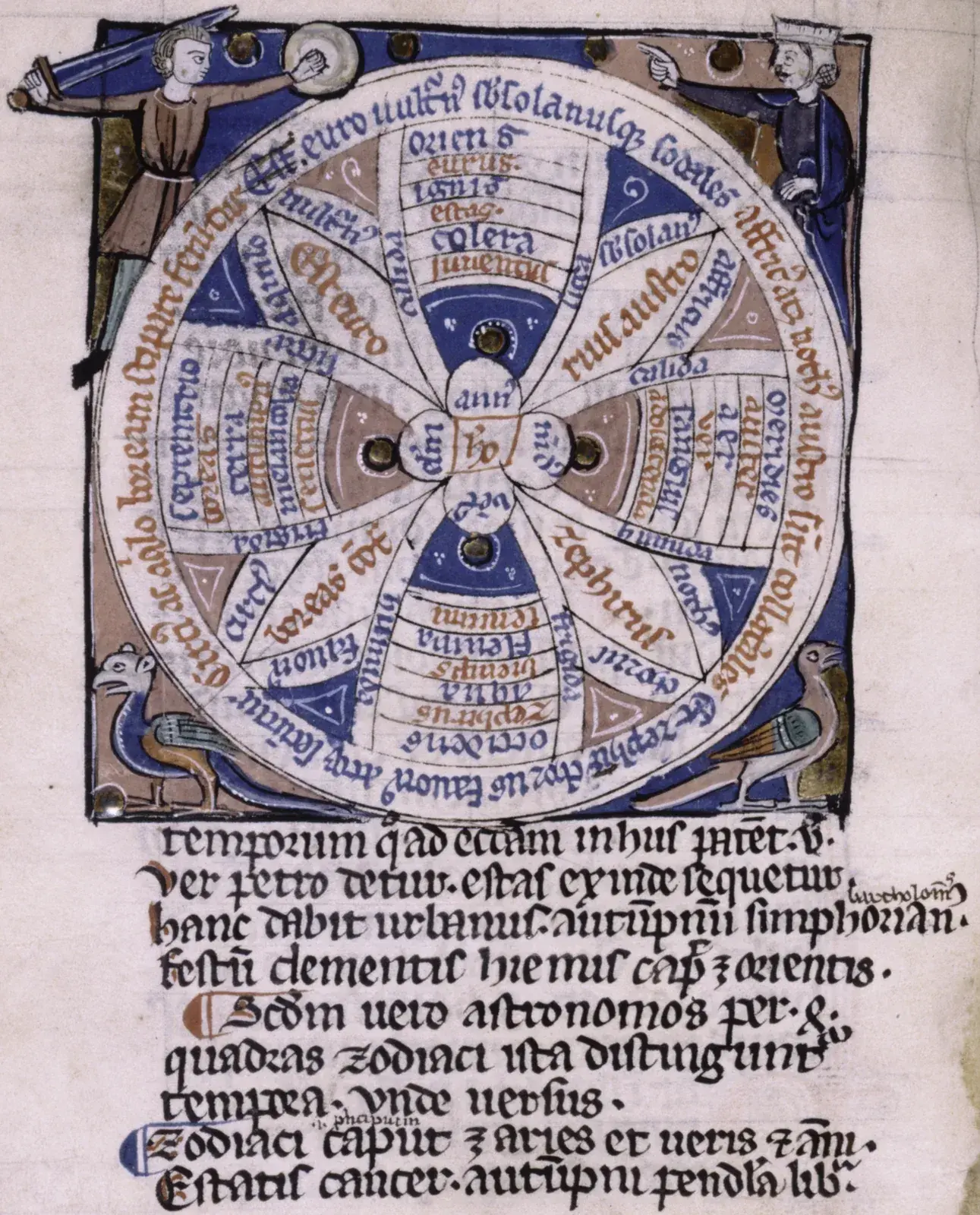
The grid beneath the signs
Before you decide what a placement means in a particular area of life, notice its climate. Elements and modalities give you that climate. They do not tell you everything. They tell you the kind of material a placement works with, and the pace at which it tends to meet change.
Element answers: what makes this function feel real? Modality answers: what does this function tend to do when something needs to begin, continue, or alter? A planet describes a function. Its sign gives that function a style. Its house gives a setting. Its aspects show the other functions it must negotiate with. Elements and modalities sit inside the sign layer, but they help you hear the sign before its stereotypes take over.
The four elements and three modalities are inherited symbolic classifications, not physical substances and not a validated model of personality. There is no reliable empirical evidence that positions at birth produce a person’s temperament. That limit matters. In this course, the grid is used as an interpretive discipline: make a claim specific enough to test against repeated behavior, distinguish it from fact, and revise it when it fails. Vague recognition costs nothing.
The elements: four kinds of contact
The elements are fire, earth, air, and water. They are not rankings. None is more evolved, sensible, warm, or capable than another. Each names a different route by which experience becomes meaningful.
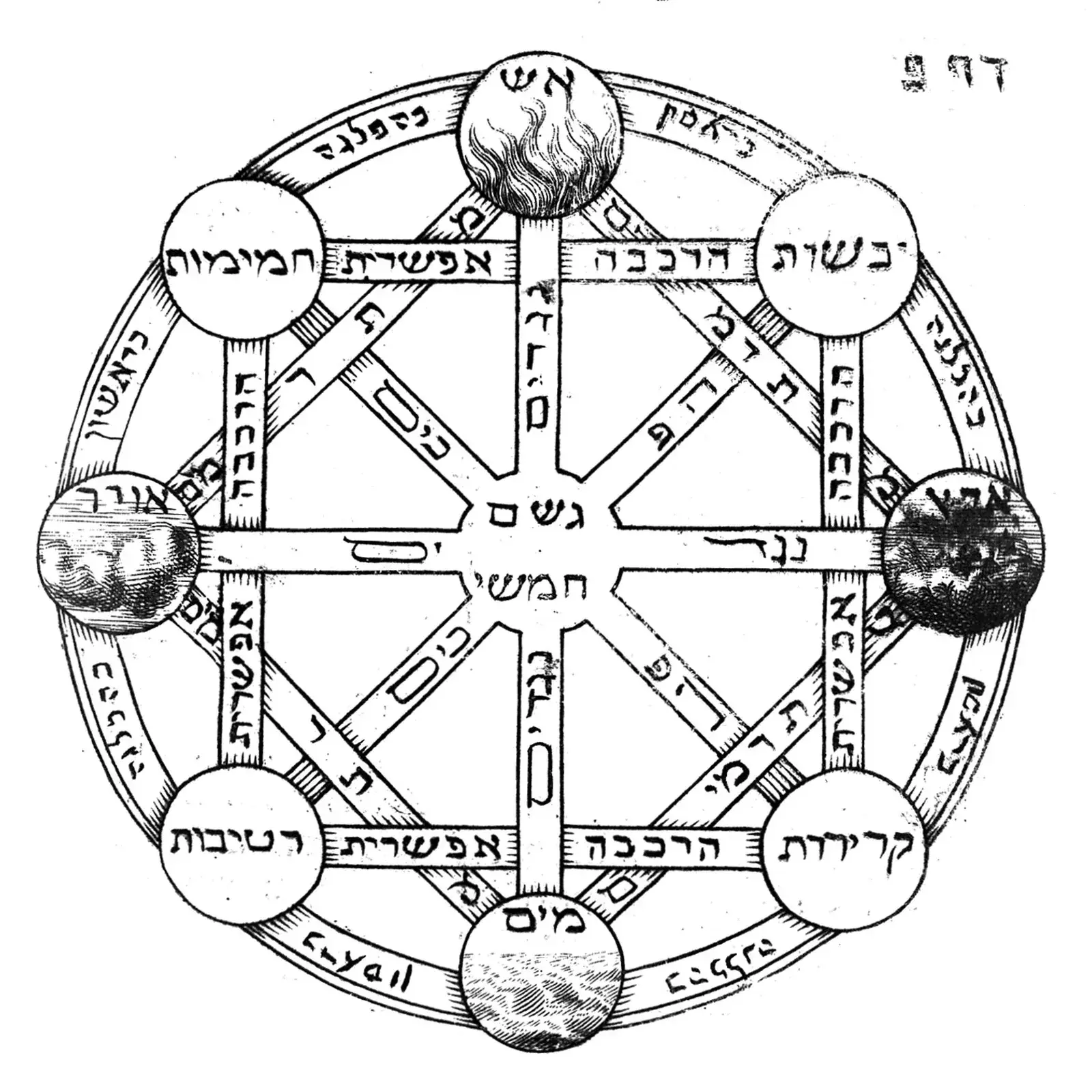
Fire makes contact through impulse, choice, expression, pursuit, and visible engagement. Fire asks what can be done now. It often needs a live edge: an aim, a risk, a creative assertion, a reason to move. Felt from the inside, fire can be the irritation of sitting with an idea too long when it wants an outlet. It is not synonymous with anger, volume, or constant confidence. A quiet person can have strong fire if action, conviction, and self-directed effort organize their responses.
Earth makes contact through matter: time, labor, skill, maintenance, evidence, resources, and tangible result. Earth asks what will hold up. It notices what something costs, what it requires, and whether it can be repeated. Felt from the inside, earth can be relief when a vague plan becomes a usable sequence. It is not dullness, materialism, or an inability to imagine. Earth imagination often arrives with a measuring tape in its pocket.
Air makes contact through naming, comparison, exchange, pattern, and relation between ideas. Air asks what connects to what. It notices distinctions, social currents, language, alternatives, and the movement of information. Felt from the inside, air can be the need to talk something through before deciding what one thinks. It is not intelligence itself, nor is it detachment in every context. Air can care intensely; it often approaches care through understanding, dialogue, and perspective.
Water makes contact through felt stakes: attachment, memory, mood, trust, imagination, and the unspoken current between people. Water asks what this means to those involved. It notices atmosphere and emotional residue. Felt from the inside, water can be the awareness that a fact has landed somewhere and changed the room. It is not irrationality, passivity, or superior sensitivity. Water can be exacting, strategic, and highly observant.
A useful correction belongs here: elements describe style, not capacity. A chart with little water in a basic count does not indicate little feeling. A chart with much air does not certify intellectual brilliance. A chart with much earth does not guarantee practical success. The language becomes useful only when it stays close to the actual function being described.
Take Mercury, the function involved with perception, language, sorting, and exchange. Mercury in a fire sign may state an idea while it is still hot, thinking through declaration or debate. Mercury in an earth sign may test an idea by asking whether it works, what it costs, and what evidence supports it. Mercury in an air sign may compare options, gather viewpoints, and make links quickly. Mercury in a water sign may notice tone, implication, memory, and what has not been said. The planet remains Mercury. The element changes its working medium.
The elemental signs are:
| Element | Signs |
|---|---|
| Fire | Aries, Leo, Sagittarius |
| Earth | Taurus, Virgo, Capricorn |
| Air | Gemini, Libra, Aquarius |
| Water | Cancer, Scorpio, Pisces |
The modalities: three ways of moving
Modality, sometimes called mode, describes how a sign meets time and change. It is less about speed than people assume.
Cardinal signs initiate. They meet a threshold by setting something in motion: an action, decision, contact, structure, or change of conditions. Cardinal energy is not always loud. A person can initiate by quietly filing the form, naming the issue, setting a boundary, or proposing terms.
Fixed signs sustain, concentrate, and stabilize. They work by holding a value, building continuity, deepening investment, or keeping something intact long enough to matter. Fixed energy is not mere stubbornness. It can be loyalty, craft, endurance, consistency, and the refusal to abandon a worthwhile process at the first inconvenience.
Mutable signs adapt, translate, distribute, and revise. They respond to variation by adjusting sequence, language, method, or perspective. Mutable energy is not weakness or indecision. Its strength is calibration. It notices that the situation has changed and that the old response may no longer fit.
The modal signs are:
| Modality | Signs |
|---|---|
| Cardinal | Aries, Cancer, Libra, Capricorn |
| Fixed | Taurus, Leo, Scorpio, Aquarius |
| Mutable | Gemini, Virgo, Sagittarius, Pisces |
The twelve signs are combinations of element and modality. This is why Aries and Leo, though both fire, do not move in the same way; why Taurus and Capricorn, though both earth, do not seek security by the same method.
| Element | Cardinal: initiate | Fixed: sustain | Mutable: adapt |
|---|---|---|---|
| Fire | Aries starts an effort or assertion | Leo keeps a creative intention alive | Sagittarius extends action through exploration and possibility |
| Earth | Capricorn establishes structure and responsibility | Taurus preserves what works and gives it continuity | Virgo adjusts method by observed result |
| Air | Libra begins contact, exchange, or terms | Aquarius holds a principle, system, or group logic | Gemini moves among facts, voices, and connections |
| Water | Cancer establishes belonging and emotional shelter | Scorpio concentrates investment and private intensity | Pisces lets feeling, image, and response change form |
A modality is not a moral diagnosis. Cardinal is not automatically leadership. Fixed is not automatically resistance. Mutable is not automatically inconsistency. You are looking for a preferred response to movement, not a character grade.
This is also where astrology can become more precise than sign slogans. Capricorn is cardinal earth, not simply ambitious. It often initiates through structure, timing, responsibility, and practical authority. Gemini is mutable air, not simply talkative. It adapts through language, circulation, juxtaposition, and quick shifts of frame. The element tells you the medium; the modality tells you the motion.
Counting without reducing
Temperament, in this chapter, means a recurring default in how the chart gathers experience before a particular topic puts it under pressure. You begin with distribution. Which elements receive repeated emphasis? Which modalities recur? What is conspicuously sparse?
For an initial natal count, use the Sun, Moon, Mercury, Venus, Mars, Jupiter, and Saturn. This gives you seven placements that move at different personal and social tempos. Keep the Ascendant visible, but mark it separately at first: it is an angle, not a planet.
The outer planets matter. Their sign placements are simply less discriminating for an opening temperament count because many people in the same age group share them. An exact outer-planet aspect to a luminary or personal planet can be highly specific; that is a different kind of evidence and deserves its own attention. Starting with seven planets is not an exclusion. It is a way of keeping the first question clean.
Make two columns beside each placement: element and modality. Count each once. Do not begin by weighting, because weighting can hide the pattern you are trying to see. On a second pass, you may give added importance to the Sun, Moon, Ascendant, chart ruler, angular planets, or very tight aspects. If you do, state your rule. A weighting system is a choice, not an objective fact.
A planet close to an angle is more conspicuous in lived presentation. A planet in a tight aspect may carry more pressure or availability than several loosely connected placements. A count therefore gives you a distribution, not a final authority. A chart with an even elemental count can still have a strongly fiery presentation if the Sun, Mars, and Ascendant are all bound together by close aspect. Numbers locate the question. Geometry and context refine it.
A missing element or modality deserves especially careful language. Say that it is absent from the sample you counted. Do not say it is absent from the person. A lack is a question, not a verdict. It may show a style that is less immediately available, less emphasized in the sign layer, or expressed through houses, aspects, rulers, relationships, and learned practice rather than simple sign repetition.
Worked mini-example: a cardinal concentration
Use this instructional figure. It supplies only the points needed for this exercise.
| Point | Position | Element | Modality |
|---|---|---|---|
| Sun | 18° Aries | Fire | Cardinal |
| Moon | 3° Capricorn | Earth | Cardinal |
| Mercury | 24° Aries | Fire | Cardinal |
| Venus | 9° Taurus | Earth | Fixed |
| Mars | 16° Cancer | Water | Cardinal |
| Jupiter | 27° Libra | Air | Cardinal |
| Saturn | 20° Aquarius | Air | Fixed |
| Ascendant | 12° Libra | Air | Cardinal |
First, count the seven planets without the Ascendant.
- Fire: 2 — Sun and Mercury
- Earth: 2 — Moon and Venus
- Air: 2 — Jupiter and Saturn
- Water: 1 — Mars
- Cardinal: 5 — Sun, Moon, Mercury, Mars, Jupiter
- Fixed: 2 — Venus and Saturn
- Mutable: 0
The elemental distribution is nearly even. You should not force a grand claim that this is chiefly a fire, earth, or air chart. The clearer pattern is modal: five of the seven planets are cardinal. The Ascendant adds another cardinal-air marker, reinforcing the visible tendency to meet circumstances by initiating, setting terms, responding to thresholds, or changing conditions.
That does not mean the person is always active, always decisive, or incapable of patience. It means initiation is overrepresented in this declared sample. Fixed earth appears through Venus in Taurus, and fixed air through Saturn in Aquarius, giving continuity and principle a place in the pattern. Mutable signs are not represented among the seven planets, so extended adaptation and revision are not highlighted at this layer. They may still appear elsewhere in the chart and in the person’s developed habits.
Mars is the only water placement in the initial count. Do not turn that into a statement about emotional quantity. It tells you that water enters this pattern through Mars: action can be informed by attachment, mood, belonging, memory, or the need to respond when something personal is at stake.
Now use degrees. With a working orb of 6° for major planetary aspects, the Sun at 18° Aries forms a square with Mars at 16° Cancer. The separation is 88°, which is 2° from the exact 90° square. This is close. The chart’s self-directed purpose and its mobilizing action meet through friction and demand active coordination. It can describe a quick move toward action when a purpose feels engaged. It does not authorize a claim about hostility or a permanent temperament flaw.
The Sun also forms a sextile with Saturn at 20° Aquarius. The separation is 58°, 2° from the exact 60° sextile. This offers a close line of cooperation between self-direction and structure. In lived terms, the chart may find usable form through responsibility, systems, consistency, or a clearly defined role. Sextiles are available connections, not automatic gifts; they tend to work when consciously used.
Sun and Mercury are 6° apart in Aries. Some astrologers would read that as a conjunction under their Sun-Mercury allowance; others would require a tighter orb. State the rule you use rather than concealing it. An orb is a tolerance around exact geometry, not a magic radius.
The modal count and the aspects answer different questions. The cardinal concentration describes the chart’s repeated style of movement. The Sun-Mars square describes a close relationship between two functions. Geometry is not character; it is a relationship between functions.
Notice one further discipline: this figure gives an Ascendant but no house cusps or other angles. Do not invent a house narrative from incomplete information. A chart does not reward filling empty boxes.
Common mistakes that flatten the grid
Treating element as identity. Saying someone is an air person or a water person may be convenient shorthand, but it often conceals more than it clarifies. Name the placements producing the impression. Air in Mercury is different from air in Mars. Water in the Moon is different from water in Saturn.
Confusing modality with aspect. Signs of the same modality have a sign-based relationship, but actual aspects require degree-based geometry. A planet at 29° Aries and another at 1° Cancer are both in cardinal signs, yet they are 62° apart, not within a normal square orb. Sign pattern provides background; degrees determine whether an aspect is actually present.
Reading absence as deficiency. No mutable placements in a seven-planet count does not mean someone cannot adapt. It means mutability is not emphasized in that particular sample. Look for adaptation through Mercury, house emphasis, aspects, rulers, and what the person repeatedly does when circumstances shift.
Counting outer planets as though they carry equal individual specificity in sign. A cluster of outer planets can make an element look dominant because an entire generation shares it. Separate the generational background from the placements that differentiate one chart from another.
Making the count outrank everything else. Three planets in one element can matter less than a luminary on an angle in a tight aspect. Counts establish texture. They do not overrule a chart’s strongest geometry.
Turning modalities into praise and blame. Cardinal can become premature. Fixed can become entrenched. Mutable can become scattered. Each can also become exactly what a situation needs. The question is not which mode is best. The question is whether the mode fits the task at hand.
Detail comes after you know what kind of detail changes the reading. That order protects you from a pile of disconnected claims.
Practice
Practice
Choose a natal chart and make a first-pass table for the Sun, Moon, Mercury, Venus, Mars, Jupiter, and Saturn. Record each sign’s element and modality. Count both distributions, then add the Ascendant in parentheses rather than folding it into the first total.
Find one close major aspect among the Sun, Moon, personal planets, Jupiter, and Saturn. Calculate the actual separation in degrees and state the orb from exactness. Write 80 to 120 words connecting the modal pattern with that aspect, using provisional language.
Then write one counterexample: a way the person may show the less-emphasized element or modality. Keep it. An interpretation that cannot survive a counterexample is not yet useful.
Key terms
element · fire · earth · air · water · modality · cardinal · fixed · mutable · temperament · orb · aspect · angularity · distribution
Check your reading
Three questions from this chapter’s worked example and its common mistakes. Two of three marks the chapter complete.
In the worked example, what was the clearer pattern among the seven planets?
A planet at 29° Aries and one at 1° Cancer are both cardinal. Are they square?
No mutable placements among the seven planets means what?