Part 3: The Planets · Chapter 7 of 36 · 11 min
The planets I: lights and personal planets
A planet is best read as a function before it is read as a character.
The chart’s nearer voices
A planet is best read as a function before it is read as a character. It does something. The Sun organizes. The Moon regulates. Mercury connects. Venus appraises. Mars mobilizes. Signs show the manner of that action, houses show where it becomes concrete, and aspects show what other functions assist, redirect, or complicate it.
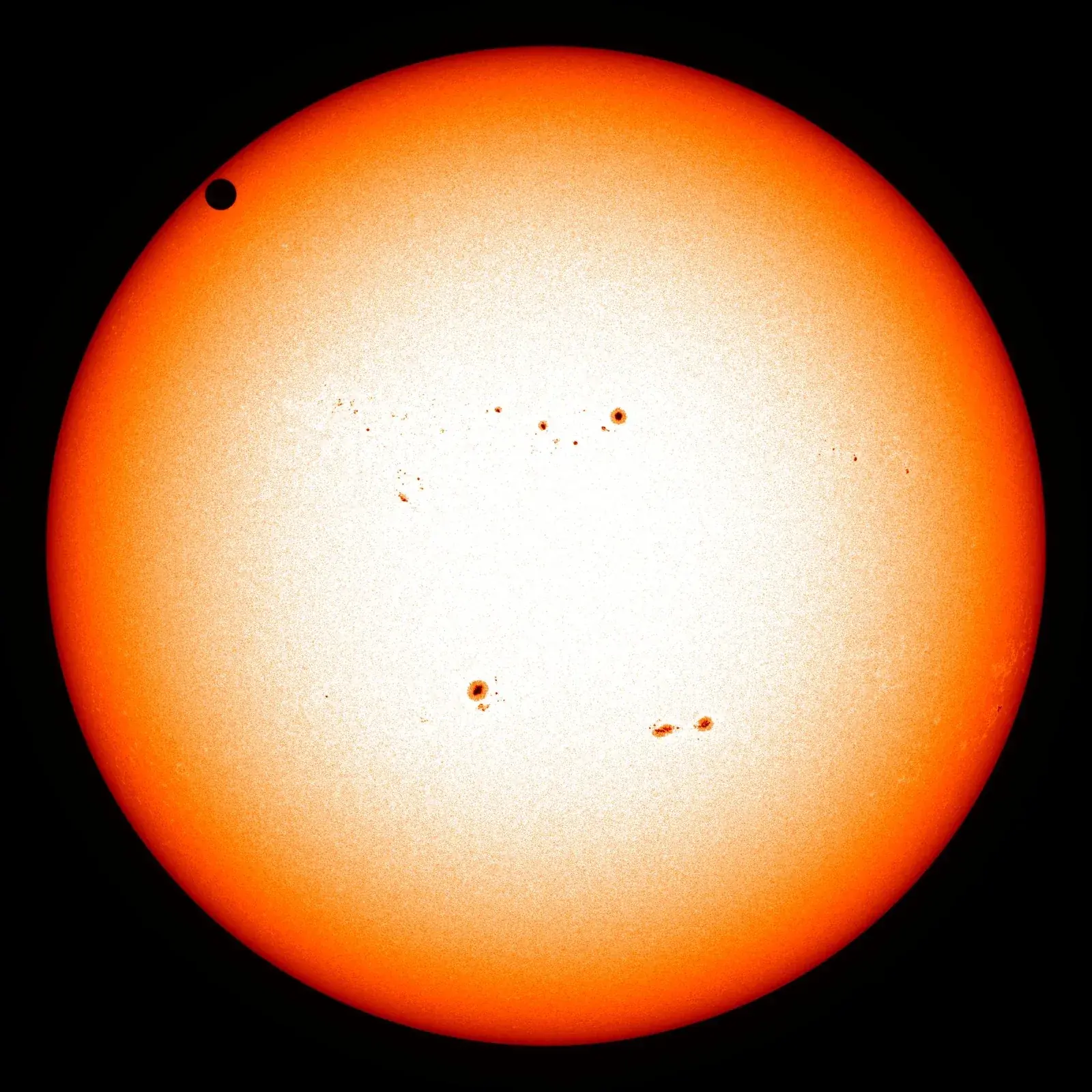
The Sun and Moon are called the lights or luminaries, meaning the two bodies that visibly light Earth’s sky. Astronomically, the Sun is a star and the Moon is Earth’s satellite. Astrology keeps the older category because a chart is geocentric: drawn from an Earth-centered viewpoint. Mercury, Venus, and Mars are planets in both astronomical and astrological language.
Astrologers often call these five the personal planets. The label is imperfect. It does not mean they belong solely to your private life, or that the remaining planets are impersonal. It means their cycles are relatively quick and their symbolism tends to describe close-range functions: attention, appetite, emotional adjustment, choice, expression, effort. They are the parts of the chart you can often catch in the act.
Use a simple grammatical order:
- Planet: what function is operating?
- Sign: how does it try to operate?
- House: in what field of life does it become visible?
- Aspect: what other function changes the conditions?
A placement is therefore not a sealed personality type. Venus in Scorpio is not “an intense lover.” It is the Venus function of attraction and evaluation working through Scorpio’s preference for depth, privacy, testing, and consequential exchange. In the third house, that pattern may appear in conversation, study, local ties, or the handling of information. An aspect from Mars could make the evaluation quicker and more confrontational; one from Saturn could make it slower and more selective. The symbol gains meaning through structure, not adjective stacking.
The Sun: coherence and authorship
The Sun appears to complete the zodiac in one year. Its astronomical centrality, reliable light, and daily visibility helped produce long-standing associations with authority, vitality, rank, and purpose. You can find versions of these associations in Ptolemy’s Tetrabiblos and Vettius Valens’s Anthology. Modern astrology added a stronger emphasis on identity and individual self-expression.
In practice, the Sun describes the function that gathers life around a central allegiance. It asks what you can stand behind, cultivate, and make recognizably yours. When the Sun is engaged, experience often carries a plain feeling: This matters enough for me to be seen doing it. That may involve leadership, but it may also mean craftsmanship, parenthood, research, devotion to a cause, or quiet mastery.
Take the Sun in Capricorn in the fourth house. The organizing principle is Capricornian: patient construction, accountability, endurance, respect for consequences. The fourth-house setting places that work around home, ancestry, privacy, land, or the foundations beneath public life. One person might become the steady keeper of family history. Another might need a carefully structured private life before public work feels possible. Neither example follows from the sign alone.
The Sun is not the whole personality. It does not automatically describe your father, your occupation, or how confident you seem. A heavily aspected Sun may need to negotiate visibility and purpose with several other functions. That does not damage the Sun. It makes coherence an active task rather than an assumed condition.
The Moon: regulation and response
The Moon orbits Earth in about 27.3 days relative to the stars. Its phase cycle takes about 29.5 days from new Moon to new Moon. That second measure is called the synodic cycle: the repeating relationship among Sun, Earth, and Moon. The Moon moves roughly thirteen zodiacal degrees per day, so an uncertain birth time can materially change its degree, aspects, house, and occasionally its sign.
Astrologically, the Moon describes regulation: how you receive experience, register changing conditions, form habits, and return to a workable inner rhythm. Emotion belongs here, but “emotions” is too broad by itself. The Moon is also appetite, familiarity, attachment, memory, and the ordinary repetitions through which life becomes livable. You notice it in what settles you enough to respond rather than merely react.
Suppose the Moon is in Sagittarius in the second house. Regulation may depend on room, candor, forward movement, and a sense that present circumstances connect to a larger meaning. In the second house, this can become visible through possessions, skills, time, and the handling of personal resources. The person may feel steadier when resources permit exploration or study. Under pressure, the same placement might chase possibility faster than it establishes continuity. “Restless” would be a thin reading; the useful question is what kind of space restores proportion.
The Moon does not equal the mother. It can symbolize experiences of receiving care, giving care, dependence, and belonging, but those experiences may involve many people. Nor does a Moon sign certify emotional maturity. Habit can be supportive or limiting. Familiarity is not the same as wisdom.
Mercury: distinction and exchange
Mercury completes an orbit around the Sun in about eighty-eight days. From Earth, it never appears more than roughly twenty-eight degrees from the Sun; this apparent separation is called maximum elongation, meaning the farthest Mercury can seem to stand from the Sun in the sky. A natal Mercury must therefore be in the Sun’s sign or a neighboring sign. A chart showing a Gemini Sun with Mercury in Scorpio contains an error.
Mercury notices differences, names them, connects them, and passes them along. It describes attention, language, classification, imitation, questioning, trade, and the movement of information. Its felt action is the moment when a blur becomes separable: this, not that; this leads to that. Speaking is Mercurial, but so are listening, coding, editing, mapping, translating, and strategic silence.
Mercury in Cancer in the ninth house may learn through context, memory, narrative, and emotional relevance. In the ninth house, those methods meet philosophy, higher education, publishing, religion, law, or long-distance cultural contact. Such a Mercury might make abstract material intelligible through lived stories. It might also protect inherited ideas because they carry belonging. Neither tendency says anything final about intelligence.
Mercury is not an intelligence score, and its sign does not tell you whether someone is honest. The old image of Mercury as messenger and trickster describes flexibility around boundaries and categories. It is not permission to label a person deceptive. Aspects matter: Mercury with Mars may sharpen response; Mercury with the Moon may bind thought to mood and memory. The result can be skill, strain, or both.
Venus: attraction and appraisal
Venus orbits the Sun in about 224.7 days and never appears more than roughly forty-seven degrees from it. It is seen as a bright morning or evening object, never at midnight high overhead. Its beauty to the naked eye, together with older cosmologies of fertility and union, contributed to its astrological associations with pleasure, accord, adornment, and relationship.
Venus is the function that appraises: what seems desirable, proportionate, welcome, or worth maintaining. It governs attraction, taste, reciprocity, pleasure, social tact, and the terms on which contact feels agreeable. Its simplest felt question is Do I want to move closer, and what would make closeness worthwhile? This includes romance, but also friendship, art, hospitality, diplomacy, and value judgments.
Venus in Virgo in the sixth house may express regard through precision, useful attention, repair, and competent service. It might remember the detail that makes another person’s work easier. It may refine beauty by editing away excess. The same pattern can become overcorrection when care is offered without consent or when affection is made conditional on flawless performance.
Traditional astrology gives Venus in Virgo a low essential dignity, a score describing how readily a planet was thought to act through a sign. That doctrine can identify genuine friction between Venusian ease and Virgoan scrutiny. It is not a verdict on love, attractiveness, or relationship prospects. Venus also does not certify kindness. Charm can welcome, appease, bargain, or manipulate. What someone likes is not proof of how they behave.
Mars: effort and separation
Mars orbits the Sun in about 687 days. Iron oxides give its surface the reddish appearance that helped older cultures associate it with heat, bloodshed, and conflict. Those visual associations help explain the symbolism; they do not establish a causal mechanism. From Earth, Mars also makes periodic apparent backward loops, which can keep it in one zodiacal region much longer than usual.
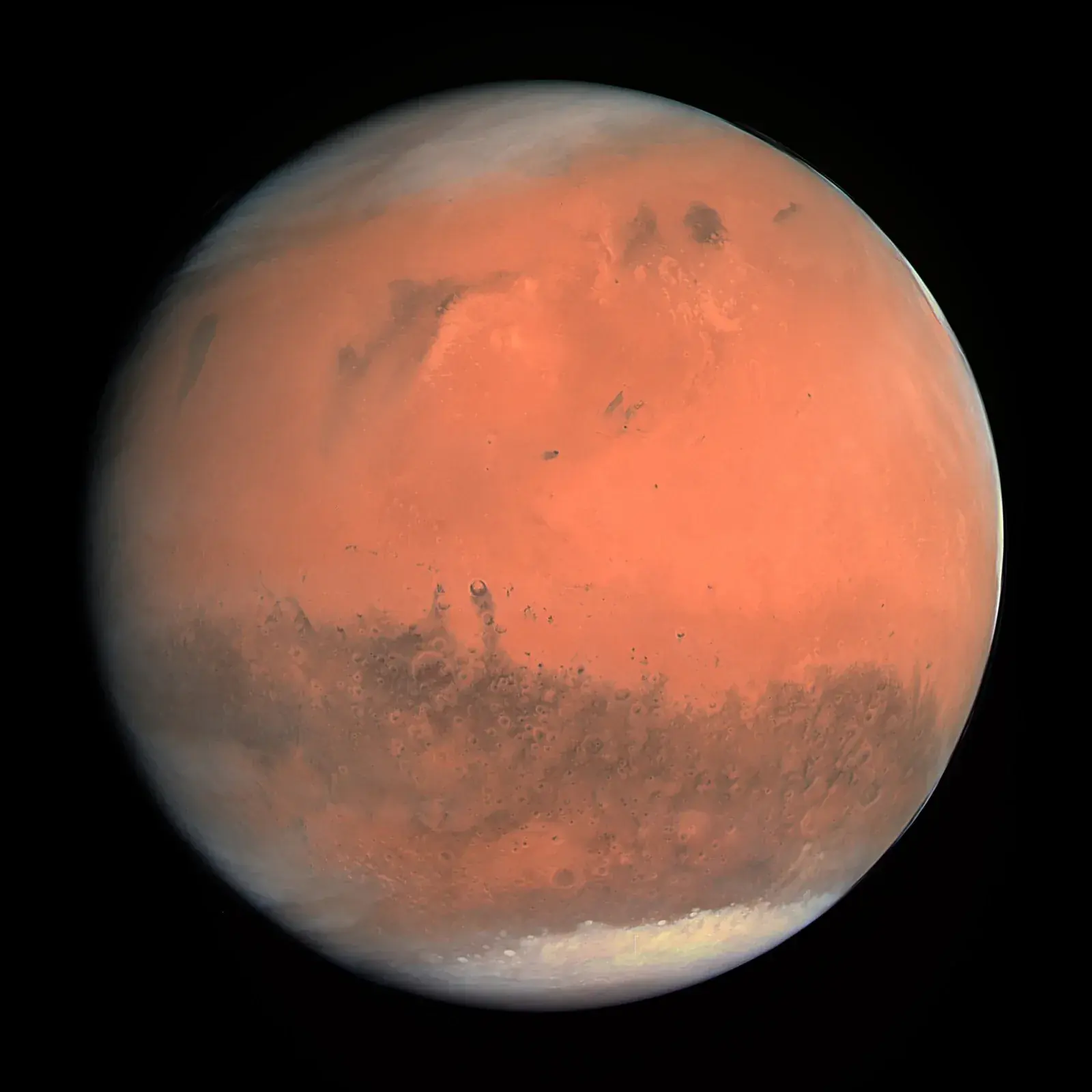
Mars mobilizes. It pursues, cuts, refuses, competes, presses, and protects a boundary. You feel it when energy acquires direction: No; this; now. Mars includes anger and conflict, but it also describes initiative, physical effort, courage, decisive separation, and the willingness to endure friction for a desired result.
Mars in Libra in the first house acts through comparison, strategy, negotiation, timing, and awareness of another party. In the first house, that style becomes visible in immediate conduct and self-presentation. The person may be skilled at finding leverage without needless force. Delay may reflect calibration rather than weakness. Yet prolonged calibration can also store pressure until action becomes abrupt.
Mars is not men, masculinity, or violence. A forceful Mars does not excuse harmful conduct, and a restrained Mars does not mean helplessness. Anger is information, not an instruction. The house shows where effort and friction often gather; the sign shows the preferred method; aspects show what supports or interrupts action.
Worked mini-example: five functions in conversation
Consider a hypothetical chart using whole-sign houses and these placements:
- Sun at 14° Gemini, tenth house
- Mercury at 11° Gemini, tenth house
- Moon at 20° Pisces, seventh house
- Venus at 22° Cancer, eleventh house
- Mars at 19° Virgo, first house
For transparency, use working limits of 8° for conjunctions and oppositions, 7° for squares and trines, and 5° for sextiles. An orb is the distance from an exact aspect angle. These limits are conventions, not measurements of a physical force.
Convert the placements to 0–360° zodiacal positions: Sun 74°, Mercury 71°, Moon 350°, Venus 112°, Mars 169°. Sun and Mercury are 3° apart, giving a conjunction with a 3° orb. Moon and Mars are 181° apart, giving an opposition with a 1° orb. The Sun is 84° from the Moon, a square with a 6° orb, and 95° from Mars, a square with a 5° orb. Venus is 122° from the Moon, a trine with a 2° orb, and 57° from Mars, a sextile with a 3° orb.
Start with function and setting. The Gemini Sun in the tenth house seeks coherence through naming, comparing, explaining, and circulating ideas in public life. Mercury’s close conjunction recruits attention and language into that solar task. This could support teaching, writing, coordination, advocacy, or any visible role that depends on handling multiple lines of information. It does not prove eloquence or a particular profession.
The Pisces Moon in the seventh house regulates through sensitivity to relational atmosphere, ambiguity, and unspoken context. Mars in Virgo in the first acts through correction, sorting, and practical intervention. Their close opposition sets up a recurring negotiation: receiving another person’s complexity versus acting from one’s own immediate judgment. At one time the person may wait for every nuance, then act sharply when delay becomes intolerable. At another, they may rush to fix a problem and only later register its relational meaning.
Because the Sun squares both ends of that opposition, the three form a T-square: an opposition whose tension is routed through a third planet. Public Gemini functions may become the meeting point. Naming the disagreement, gathering facts, or creating a shared account could help. Under strain, the same Sun-Mercury emphasis might produce excessive explanation or turn every conflict into a performance of competence.
Venus offers another route. In Cancer in the eleventh house, it values trusted affiliation, continuity, and protective friendship. Its trine to the Moon suggests that relational sensitivity and social warmth can flow together readily. Its sextile to Mars suggests opportunities to convert care into practical action. These easier aspects do not cancel the T-square. They show available forms of cooperation.
A responsible reading now asks for lived evidence. What happens first during disagreement: absorption, correction, explanation, or alliance-building? Which response works, and which merely repeats? The chart supplies a pattern to examine. It does not supply the answer in advance.
Corrections that matter
- Do not turn planets into assigned people. The Sun may describe authority without being the father. The Moon may describe care without being the mother. Venus and Mars do not divide a chart into women and men. A person can carry any planetary function.
- Do not confuse pleasant with good. Venus can smooth over necessary disagreement. Mars can make a clean protective refusal. Easy-flowing aspects can support complacency; friction-producing aspects can support sustained skill. Moral character cannot be read from aspect geometry.
- Do not let one keyword swallow the placement. A Taurus Moon is not simply comfortable, a Gemini Mercury is not automatically clever, and a Scorpio Mars is not inherently dangerous. Ask what the function is doing, by what method, in which house, and under which aspects.
- Do not use dignity as a grade for the person. Traditional dignity schemes describe a planet’s fit with a sign under a particular historical doctrine. They can sharpen interpretation, but “strong” does not mean virtuous and “weak” does not mean defective.
- Do not treat orb as a dose meter. Astrologers usually give closer aspects more emphasis, especially when the lights are involved. There is no established empirical scale by which a 1° square produces a fixed amount more effect than a 5° square. Precision should make interpretation testable, not grandiose.
Receipts and limits
The astronomical periods and elongations used here are available through NASA’s Solar System Exploration fact pages and the Jet Propulsion Laboratory’s ephemeris resources. Historical planetary associations can be compared in Ptolemy’s Tetrabiblos, Book I; Valens’s Anthology, Book I; and William Lilly’s Christian Astrology, Book I. They disagree in places. Modern identity-centered language developed much later, with early twentieth-century writers such as Alan Leo providing a visible bridge.
Controlled research has not established natal astrology as a reliable method for matching people to personality profiles. Shawn Carlson’s double-blind test in Nature 318 (1985) found performance consistent with chance; Geoffrey Dean and Ivan Kelly reviewed broader problems in the Journal of Consciousness Studies 10 (2003). Bertram Forer’s 1949 experiment showed how readily people accept broad personality descriptions as uniquely apt. That effect is not specific to astrology, but astrologers are not exempt from it.
These limits leave room for disciplined symbolic reflection, not certainty. Use exact chart data, state your interpretive rules, seek counterexamples, and let the person’s life outrank the symbol. Symbolic resemblance is not a mechanism.
Practice
Choose your own chart or a reliable sample chart. For the Sun, Moon, Mercury, Venus, and Mars, write four short lines:
- Function: name the planet’s action without using a personality adjective.
- Method: describe how the sign performs that action.
- Setting: name two concrete house topics where you could observe it.
- Condition: identify the closest major aspect and calculate its orb.
Then write one possible expression that seems skillful and one that seems limiting. Keep both conditional. For example: Mars in Libra may pursue a result through negotiation; this can become tactical fairness or prolonged avoidance of a direct refusal.
Check one claim against lived evidence. Also seek one counterexample. If the Moon is near a sign or house boundary, verify the recorded birth time before interpreting it. End by revising any sentence that assigns gender, morality, intelligence, or guaranteed events to a placement.
Key terms
luminaries · personal planets · planetary function · Sun · Moon · Mercury · Venus · Mars · maximum elongation · orb · essential dignity · T-square
Check your reading
Three questions from this chapter’s worked example and its common mistakes. Two of three marks the chapter complete.
In the worked example, what geometric figure do the Sun, Moon and Mars form?
Which correction does the chapter make about planets and people?
What did Shawn Carlson's 1985 double-blind study in Nature find?