Part 3: The Planets · Chapter 8 of 36 · 10 min
The planets II: social and outer planets
Jupiter and Saturn sit at the hinge between private character and shared order.

Scale and evidence
Jupiter and Saturn sit at the hinge between private character and shared order. Astrologers call them the social planets because they describe your participation in systems larger than the household: education, institutions, authority, belief, responsibility and public belonging. Jupiter asks what gives life room and meaning. Saturn asks what can last.
Uranus, Neptune and Pluto are usually called outer or transpersonal planets. Transpersonal means that their symbolism includes forces you do not author alone: technologies, collective ideals, political pressure, cultural upheaval and the mood of a generation. Their sign positions move slowly and are shared by large age groups. They become more personally distinctive through house placement, angularity and close aspects to the Sun, Moon, Mercury, Venus or Mars.
Keep two kinds of evidence separate. Orbital periods and discovery dates are measured facts. Astrological meanings are inherited interpretations, revised through practice and debate. Controlled research has not established a reliable causal mechanism for natal astrology or consistently replicated chart interpretation to scientific standards. Use these planets as disciplined symbolic language, checked against lived facts, rather than as machinery producing certain outcomes.
The astronomical figures below are rounded from NASA and JPL planetary data. They establish timing, not astrological meaning.
Jupiter: increase, permission and meaning
Jupiter takes about 11.86 years to orbit the Sun. Its astrological action is enlargement. In felt terms, the room gets bigger: you see another possibility, gain confidence, meet a wider audience or find a principle that makes experience coherent.
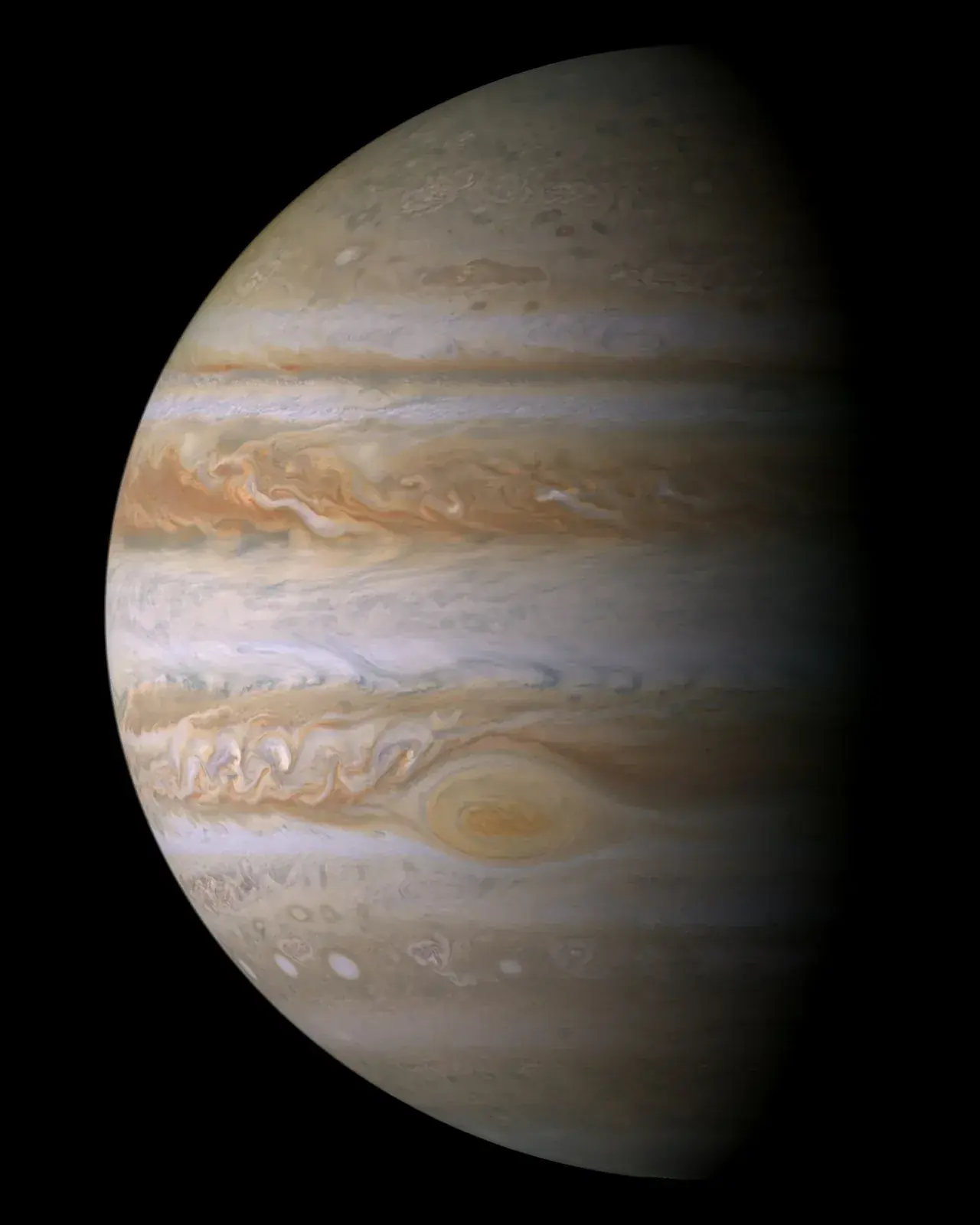
Increase is not automatically helpful. Jupiter can expand knowledge, generosity and trust. It can also expand appetite, waste, certainty and self-importance. An enlarged problem is still Jupiterian. Traditional astrology calls Jupiter the greater benefic, meaning that its tendency is to support, connect and increase. That is a tendency, not a guarantee of comfort.
Suppose Jupiter is in Virgo in the second house. Growth may come through useful skills, careful inventories and improving how resources are handled. The same placement can overinvest in optimization or tie self-worth to being useful. It does not promise wealth. The chart describes a style of expansion, not a prize.
In aspect, ask what Jupiter gives permission to do. Jupiter square the Sun may show large ambitions and resilient confidence, but confidence can outrun preparation. Jupiter trine Mercury may make broad connections and communicate readily, yet it may also skip details because the larger point feels obvious.
Jupiter traditionally rules Sagittarius and Pisces. Many modern astrologers give Pisces to Neptune while retaining Jupiter as its traditional ruler. State which system you use. Rulership is a technical relationship, not ownership.
Saturn: limits, consequence and craft
Saturn takes about 29.46 years to orbit the Sun. Its core actions are limiting, defining, separating and consolidating. You feel Saturn where time has weight: the deadline is real, the material resists you, another person has boundaries, or repetition is required before skill becomes dependable.
Traditional astrology calls Saturn the greater malefic. Translate that soberly. Saturn tends to withhold, cool, delay or separate. Those actions can hurt. They can also protect concentration, establish standards and stop excess. A wall may confine you or hold up the roof.
Saturn in the third house can describe guarded speech, demanding schooling or an early sense that words carry consequences. With practice, the same placement can produce an exact editor, patient teacher or careful witness. None of those outcomes is automatic. Family conditions, education and choice matter.
Hard Saturn aspects are not sentences, and easy aspects are not effortless gifts. Saturn square Mercury may feel like severe self-editing or difficulty trusting your own account. Worked consciously, it can support disciplined thought. Saturn trine Mercury can make structure come naturally, but natural structure can harden into intellectual rigidity.
Saturn traditionally rules Capricorn and Aquarius. Modern astrology often assigns Aquarius to Uranus, while traditional and some contemporary astrologers retain Saturn. You do not improve a reading by silently switching systems whenever one interpretation sounds better.
Jupiter and Saturn work as a pair. Jupiter asks what is possible; Saturn asks what is sustainable. Jupiter without Saturn can become inflation. Saturn without Jupiter can become sterile maintenance. Their conjunction cycle averages about 19.86 years and is used in mundane astrology to examine shifts in institutions and collective priorities. Historical correspondence may be suggestive, but it is not proof of causation.
The outer planets
The outer planets were added to Western astrology after telescopic discovery. Uranus was identified in 1781, Neptune in 1846 and Pluto in 1930. Their meanings developed afterward through mythic naming, observed correlations, cultural projection and argument among astrologers. A neat historical match can teach you something, but hindsight is generous. Given enough selective examples, any century can be made obedient.
Uranus: discontinuity and autonomy
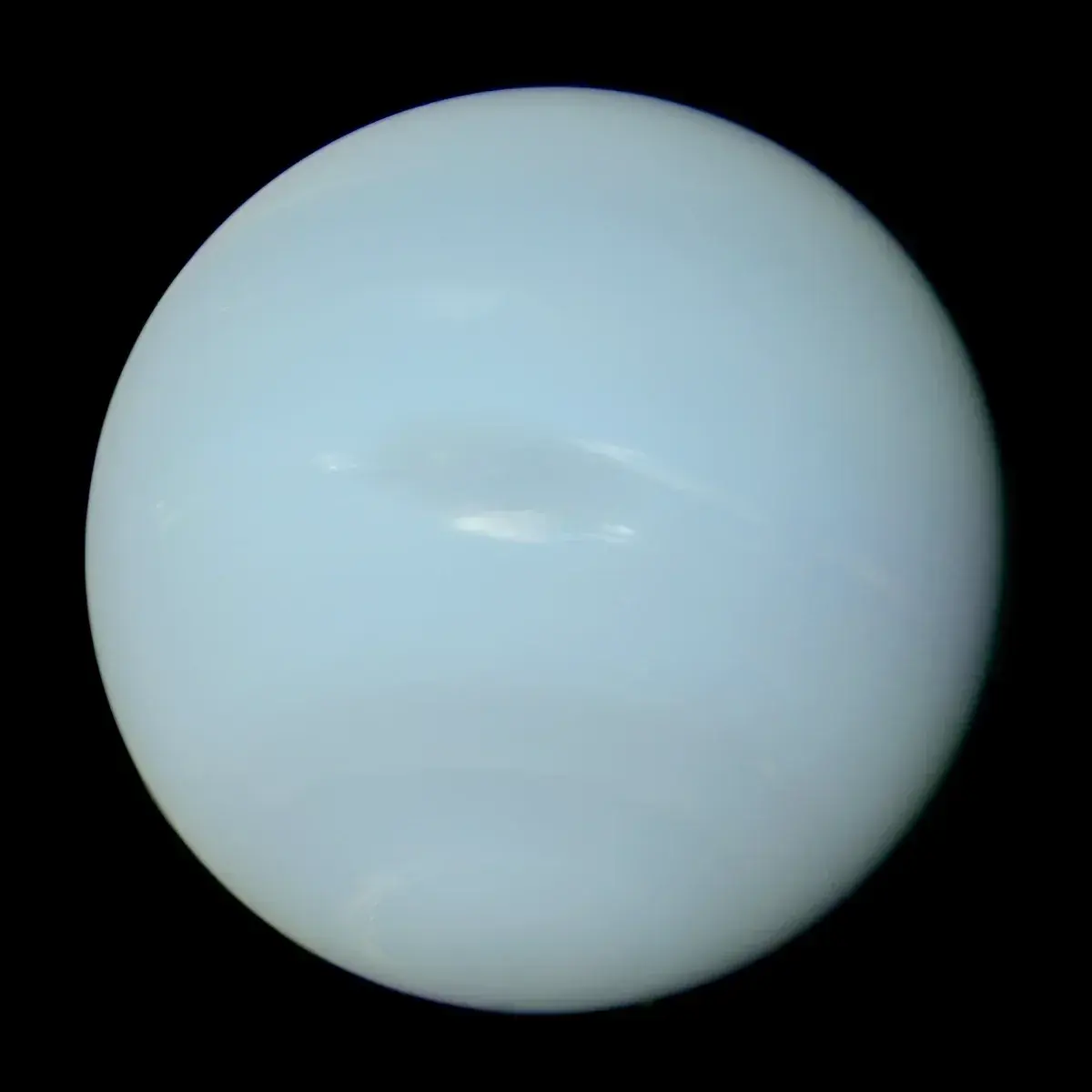
Uranus takes about 84 years to orbit the Sun. Astrologically it signifies a break in continuity: interruption, invention, revolt, sudden recognition and the refusal to keep performing an exhausted script. In felt experience, the old arrangement becomes electrically difficult to inhabit. Space is needed now.
Uranus is not liberation by default. Disruption may release a stale pattern, or it may replace steady commitment with compulsive novelty. Innovation can serve people or simply dazzle them.
Uranus conjunct the Moon, especially within a few degrees, may describe rapidly changing emotional rhythms, unusual domestic arrangements or a strong need for breathing room in close bonds. It does not prove an unstable childhood. A responsible reading asks what actually happened and how the person learned to create belonging.
Because Uranus spends roughly seven years in a sign, Uranus by sign describes a cohort’s style of experimentation more than an individual personality. A close aspect to the Moon makes that broad signature intimate. House placement shows where the need for revision is encountered.
Many modern astrologers assign Uranus rulership of Aquarius. This is a modern convention, not an uncontested fact.
Neptune: permeability, image and longing
Neptune takes about 164.8 years to orbit the Sun. Its action is to make boundaries permeable. Image seeps into fact. Longing colors perception. Separate experiences merge through music, devotion, imagination, empathy, glamour or confusion.
Neptune can support artistry and profound receptivity. It can also describe vagueness, idealization, misplaced trust and difficulty locating a firm edge. Calling every Neptune contact spiritual merely gives uncertainty a flattering costume.
Neptune square Venus may accompany great sensitivity to beauty and a tendency to love an image, possibility or atmosphere. It can also indicate unclear expectations in relationships. It does not prove deception, nor does it identify a destined partner. Concrete questions improve the reading: What was promised? What occurred? What did you assume without asking?
Neptune remains about fourteen years in each sign, so its sign describes a shared cultural ideal and a shared style of disillusionment. Personal emphasis comes through a close aspect, an angular house or rulership of an important chart point.
Modern astrology commonly assigns Neptune to Pisces. Jupiter remains the traditional ruler.
Pluto: concentrated power and irreversible revision
Pluto takes roughly 248 years to orbit the Sun. Its highly eccentric orbit means it can spend about twelve years in one sign and more than thirty in another. The International Astronomical Union classified Pluto as a dwarf planet in 2006. Astrological practice did not depend on its astronomical category in the first place; planet here functions as astrological shorthand.
Pluto signifies concentration, compulsion, power, taboo, elimination and deep revision. You feel it where casual participation is no longer possible. Something has acquired enough pressure that hidden motives, control patterns or buried material demand recognition.
Pluto conjunct Mars can describe formidable persistence, strategic action and intense contests over agency. It gives no basis for labeling someone violent. Pluto in the fourth house may focus attention on power and secrecy within family history, but it does not supply the history. Ask before filling in the blank.
Do not use Pluto to predict literal death or catastrophe. Such claims exceed what a chart can establish and can do lasting harm. Pluto symbolism is usually more useful when applied to endings of roles, control strategies and forms of attachment that can no longer remain unchanged.
Pluto’s sign is strongly generational. Its house and close personal aspects show where that generational pressure enters individual life. Modern astrologers often assign Pluto to Scorpio; Mars is Scorpio’s traditional ruler.
Reading slow planets without making them louder than the chart
Use the basic grammar precisely: the planet shows the action, the sign its style, the house the field of experience and the aspect its relationship with another function. For slow planets, change the order of emphasis. Begin with close aspects to personal planets and angles. Then consider house placement and angularity. Read the sign as a generational background unless the rest of the chart makes it personal.
Orb discipline matters. There is no scientifically validated universal orb table, so choose a policy and apply it consistently. A workable natal policy is to allow up to 5° for major aspects between an outer planet and a personal planet, giving greatest weight to contacts under 3°. For outer-to-outer aspects, 3° is usually enough unless the configuration is tied closely to an angle or personal planet. Wider contacts can be noted without being treated as dominant.
Retrograde motion is common among slow planets. It is apparent backward motion caused by changing positions between Earth and the planet. Large portions of each generation have Uranus, Neptune or Pluto retrograde. Retrograde does not automatically mean blocked, internalized or unusual. A station is more technically relevant in timing because the planet remains near one degree for longer. Duration is observable; psychological volume is an interpretation.
Worked mini-example: a mutable T-square
Assume a chart with Virgo rising, using whole-sign houses:
- Mercury at 14°18′ Gemini in the tenth house
- Uranus at 13°41′ Sagittarius in the fourth house
- Saturn at 16°02′ Pisces in the seventh house
Convert each position to absolute longitude. Mercury is at 74°18′, Uranus at 253°41′ and Saturn at 346°02′.
Mercury and Uranus are 179°23′ apart. An exact opposition is 180°, so the orb is 0°37′. Mercury and Saturn have a shortest separation of 88°16′, giving their square an orb of 1°44′. Uranus and Saturn are 92°21′ apart, so that square has an orb of 2°21′. All three contacts fit comfortably within the stated policy. Mercury opposes Uranus, and Saturn squares both: a T-square with Saturn at the apex.
The geometry comes first. Mercury describes speech, interpretation and exchange. In Gemini and the tenth house, these functions are agile, visible and connected with public contribution. Uranus in the fourth opposes Mercury, introducing tension between public language and private or inherited scripts. Saturn in the seventh becomes the focal point: one-to-one commitments, accountability and other people’s limits are where the pressure gathers.
One possible felt expression is alternating between abrupt originality and severe self-editing. Another is learning to say disruptive things in a form that others can answer and use. The mutable signs seek adaptation, but adaptation is not the same as endless accommodation.
A careless reading might announce domestic instability and difficult relationships. The chart has not earned those claims. Better questions are specific: Was dissent allowed at home? Do partners slow down or sharpen your speech? Does public work reward originality while demanding exact standards? The answers establish which expression is present.
If the birth time is uncertain, remove the house claims. The degree-based T-square remains; the proposed life areas do not. Technique should contract when the data contract.
Timing the social and outer planets
A transit occurs when a moving planet forms an aspect to a natal position. Slow planets may make the same contact three or more times because of retrograde motion. Treat the sequence as a period of engagement, not three separate verdicts. The first contact may introduce a theme, the retrograde contact may revise it and the final contact may coincide with integration, but real lives do not always follow that tidy order.
Jupiter returns to its natal degree about every twelve years. Saturn returns about every twenty-nine and a half years. Uranus reaches its natal opposition near age forty-two, while Neptune often reaches its first natal square in the early forties. Exact ages vary with natal degree and retrograde cycles. These are developmental timing symbols, not universal crisis clocks.
Jupiter and Saturn formed an exact conjunction on 21 December 2020 at approximately 0°29′ Aquarius in tropical ephemerides. The date and degree are factual. Claims about what the conjunction meant, or whether it caused a social change, remain interpretations.
When judging a transit, rank exactness, duration and natal connection. Then check actual conditions. A slow transit can describe sustained pressure without naming the event that carries it. Precision is not prophecy. It is respect for both the chart and the person.
Common mistakes, corrected
- Jupiter is not simply good, and Saturn is not simply bad. Ask what is being increased and what is being limited. Context decides whether either action helps.
- An outer planet’s sign is not an individual personality badge. Millions of people share it. Look for house placement, angularity and close personal aspects.
- A dramatic symbol does not justify a dramatic claim. Uranus need not mean separation, Neptune need not mean deceit and Pluto need not mean catastrophe.
- Retrograde is not a hidden defect. With slow planets it is routine astronomical motion. Give it extra weight only when the chart supplies a clear reason.
- Do not stretch an orb because an interpretation sounds compelling. Calculate first. Interpret second.
- Discovery-era parallels do not prove planetary meanings. Historical examples are vulnerable to selection and hindsight. Present them as correspondences, not causes.
- Do not turn symbolism into diagnosis. Describe patterns, ask grounded questions and leave room for the person’s own account.
Practice
- In one natal chart with a dependable birth time, list Jupiter through Pluto by degree, sign, house and motion.
- Mark every major aspect these planets make to the Sun, Moon, Mercury, Venus, Mars and angles within 5°. Calculate the exact orb of the tightest contact.
- Choose one social planet and one outer planet. For each, write four lines: its core action, its sign style, its house area and the felt tension or capacity created by its closest aspect.
- Identify what is generational and what makes the placement personal.
- Write two possible expressions rather than one conclusion. End with one factual question that could distinguish between them.
Keep the reading under 150 words. Restraint exposes whether the technique is doing real work.
Key terms
social planets · outer planets · transpersonal planets · Jupiter · Saturn · Uranus · Neptune · Pluto · generational signature · modern rulership · angularity · orb · retrograde motion · station · T-square · Jupiter-Saturn cycle
Check your reading
Three questions from this chapter’s worked example and its common mistakes. Two of three marks the chapter complete.
Roughly how long does Saturn take to orbit the Sun?
Why should an outer planet's sign not be read as a personal badge?
If the birth time is uncertain, what should happen to the worked T-square reading?