Part 3: The Planets · Chapter 9 of 36 · 14 min
Rulership: why every sign has a planetary voice
Rulership is one of astrology’s small words with a large job.
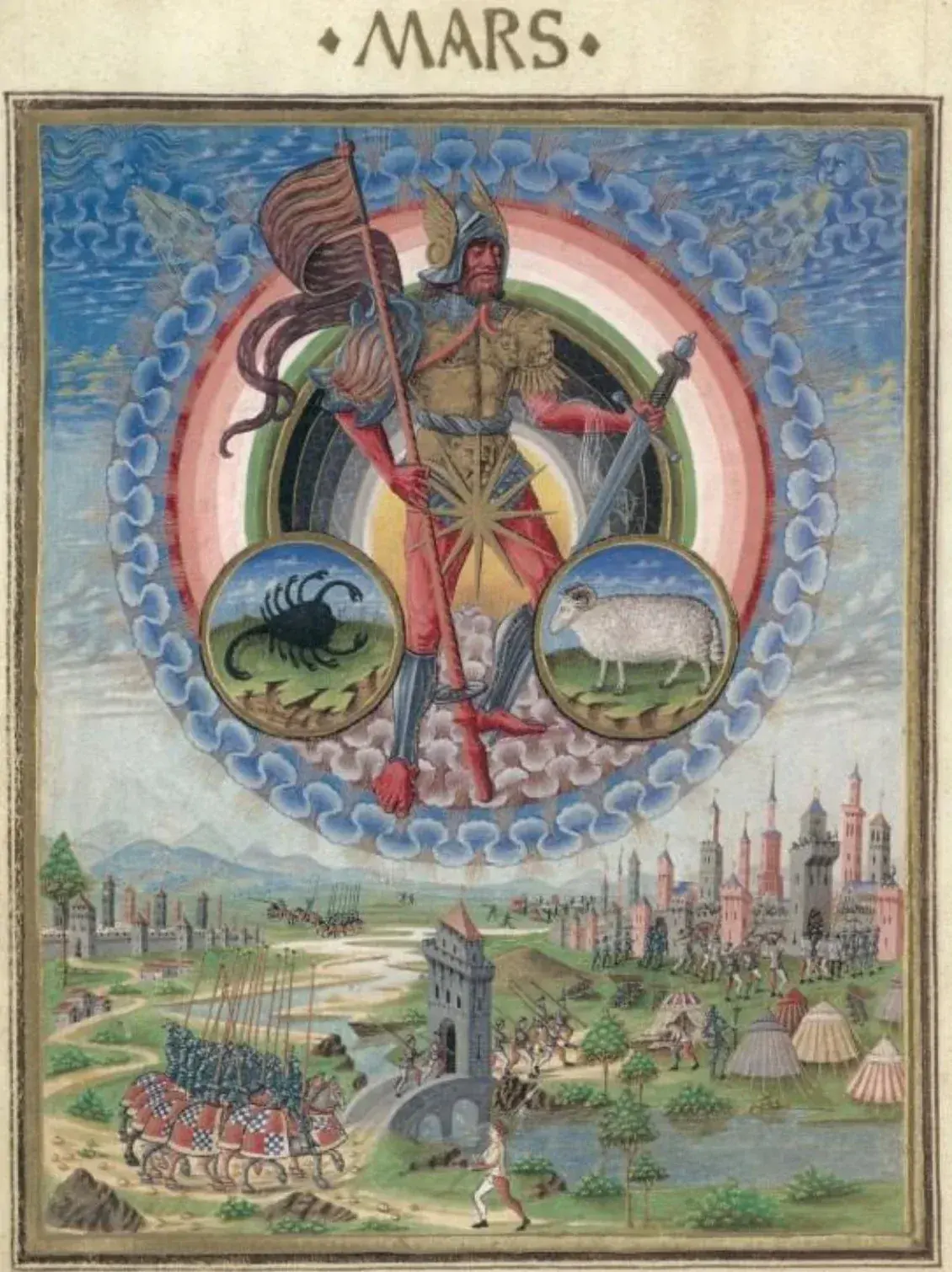
Rulership is one of astrology’s small words with a large job. It does not mean that a planet owns a sign, commands it, or sends a measurable force into it. It means that the sign has a planetary correspondence: a planet whose function gives the sign its particular tone and direction.
At its cleanest, the sign describes the manner of expression, while the ruling planet shows where that sign’s concerns are carried. Aries acts in a Martian way: directly, quickly, with a preference for contact over hesitation. Taurus speaks through Venus: through value, sensation, steadiness, and the art of making something worth keeping. The ruler gives you somewhere to look. That is its practical gift.
A chart reading should show its receipts. Name the sign. Name its ruler. Locate that planet. Then explain how the planet’s sign, house, aspects, and condition modify the original question. If the interpretation cannot point back to those details, it may be a pleasing story, but it is not yet careful astrology.
What a ruler actually is
Every sign occupies 30° of the zodiac. In the Western tradition, each sign is assigned a planetary home, called its domicile. Domicile means home in the plainest sense: the place where a planet’s basic function has a familiar language.
Mars has domicile in Aries in the traditional scheme. This does not make every Aries person aggressive, and it does not turn every Mars placement into an Aries placement. It says that the Mars function — initiative, separation, effort, assertion — has a particularly direct channel in Aries.
The distinction matters. Mars in Cancer is still Mars. It still acts, cuts through, competes, protects, and spends energy. Cancer changes the conditions: action becomes more responsive to belonging, privacy, memory, and the needs of a particular circle. Mars has not been replaced by the Moon. Its action has taken on a different accent.
Likewise, Venus in Aries is still Venus. It still concerns attraction, value, pleasure, agreement, and the ways we make contact. Aries gives Venus a faster and more self-starting manner. Affection may need clarity and movement. Appreciation may be expressed through initiative rather than patience. None of this is a verdict on character. It is a description of style under particular conditions.
The claim here is symbolic, not mechanical. Astrology does not establish that Mars causes a person to act, or that a sign forces a life pattern. Rulership is a disciplined reading device. Its value rests on coherence, repeated observation, and the usefulness of its distinctions. It should help you notice more precisely, not ask you to surrender your judgment.
A useful first sentence is this: the planet describes what is happening; the sign describes how it happens; the ruler shows where to investigate the sign’s expression.
The twelve planetary voices
The traditional rulership scheme uses the Sun, Moon, Mercury, Venus, Mars, Jupiter, and Saturn. In astrology, the Sun and Moon are often included in the broad word planet, although astronomically they are a star and a satellite. The table gives each sign’s traditional ruler and a living question that brings the assignment out of abstraction.
| Sign | Traditional ruler | Living question |
|---|---|---|
| Aries | Mars | What needs to begin, and what action begins it? |
| Taurus | Venus | What is worth sustaining, sensing, and valuing? |
| Gemini | Mercury | How do facts, questions, and messages connect? |
| Cancer | Moon | What needs tending, protection, and a familiar home? |
| Leo | Sun | What wants to create, radiate, and take a central place? |
| Virgo | Mercury | What can be sorted, improved, and made useful? |
| Libra | Venus | What makes exchange balanced, gracious, and fair? |
| Scorpio | Mars | What must be confronted, defended, or changed at depth? |
| Sagittarius | Jupiter | What larger view gives experience meaning? |
| Capricorn | Saturn | What can be built slowly enough to endure? |
| Aquarius | Saturn | What structure needs distance, principle, or revision? |
| Pisces | Jupiter | What can be gathered into a larger whole? |
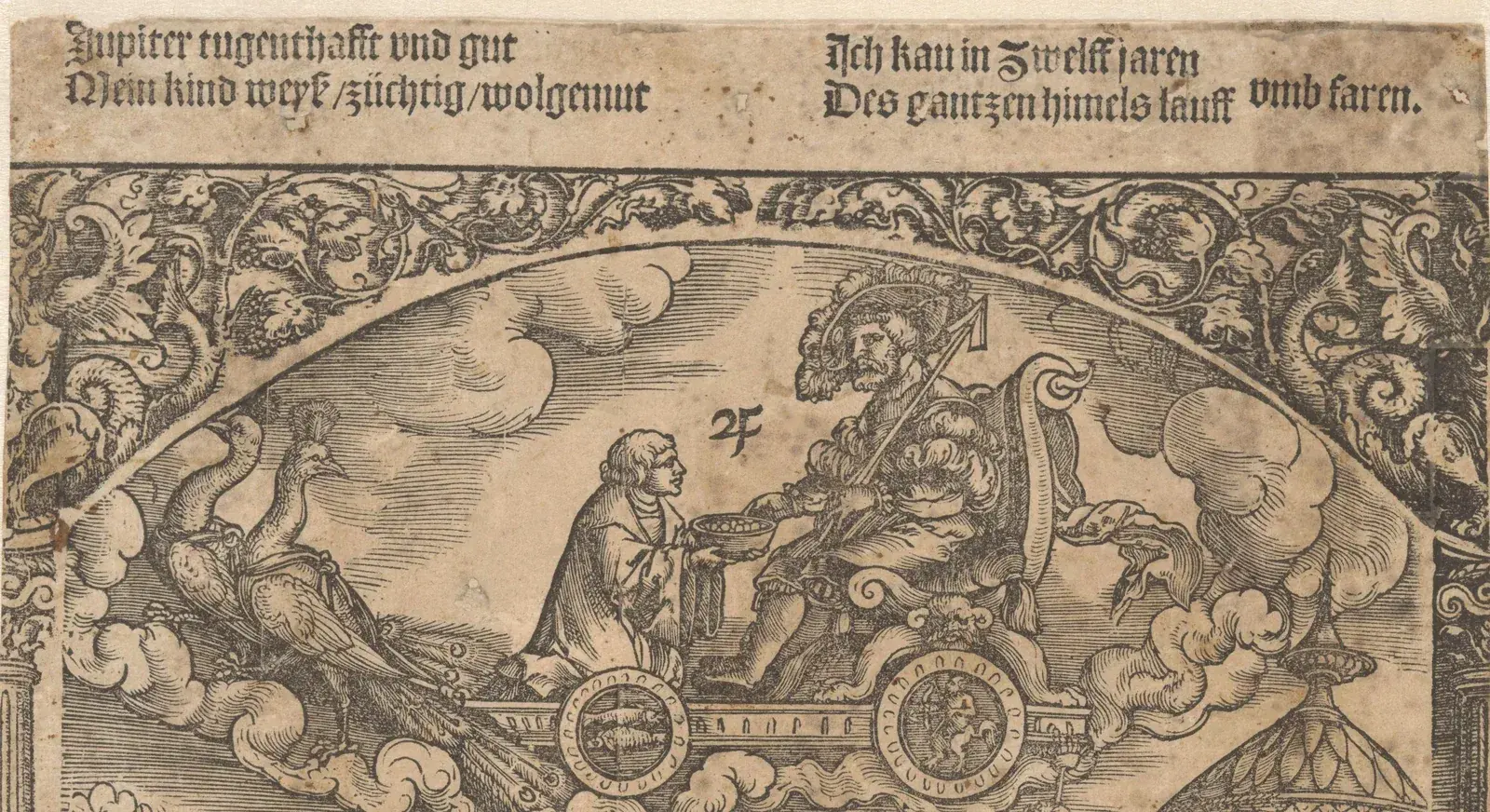
The arrangement has an internal logic. The Sun is placed in Leo and the Moon in Cancer, the two signs next to one another at the center of the older scheme. Mercury receives Gemini and Virgo, Venus receives Taurus and Libra, Mars receives Aries and Scorpio, Jupiter receives Sagittarius and Pisces, and Saturn receives Capricorn and Aquarius. Each of the five planets receives two signs; the two lights receive one each.
This symmetry is part of the historical receipt behind the system. It is not laboratory evidence that the planets produce the signs. It is a carefully built symbolic architecture that has been used, revised, and observed across centuries. You can work within it without pretending it has proved more than it has.
The living questions are not personality labels. Taurus is not simply calm. Gemini is not simply talkative. Scorpio is not automatically secretive. A sign can express through a person, a decision, a relationship, a creative work, or a period of time. The ruler helps you ask what kind of function is carrying the sign, and where that function is located.
Traditional and modern rulership
Uranus, Neptune, and Pluto were added to Western astrology after the traditional scheme had already been established. Many modern astrologers associate Uranus with Aquarius, Neptune with Pisces, and Pluto with Scorpio. The traditional rulers remain Saturn, Jupiter, and Mars respectively.
There is no honest need to pretend that the two approaches are identical. If you use the traditional method, Scorpio is ruled by Mars, Aquarius by Saturn, and Pisces by Jupiter. If you use a modern approach, you may give Pluto, Uranus, and Neptune a secondary or co-ruling role. Some astrologers use the traditional ruler for technique and the modern planet for additional psychological detail. That is often more precise than erasing the older assignment.
The outer planets move slowly and spend years in a sign. Their symbolism often speaks to a generation, a cultural shift, or a background pressure shared by many people. A personal ruler still needs the rest of the chart to become personal. Do not use Pluto as a dramatic substitute for every question about Scorpio, or Neptune as an automatic explanation for every Pisces placement.
Write your method down. A chart can yield different dispositor chains depending on whether Aquarius ends with Saturn or Uranus. That is not a flaw to hide. It is a choice to name.
How to read a ruler
When a sign matters in a chart, use four passes.
First, identify the sign. Is it the sign holding a planet, the sign on a house beginning, or the sign occupied by a transiting planet? The source of the sign matters.
Second, locate its ruler. If Venus is at 14° Aries, Mars is the ruler of the sign holding Venus in the traditional scheme. Mars becomes the next place to look.
Third, read the ruler’s condition. Its sign shows its manner. Its house shows the area of life through which it works. Its aspects show the conversations and pressures it must manage. Its dignity, motion, and proximity to an angle add further information. None of these details erases the others.
Fourth, return to the original question. Do not leave the interpretation at Mars in Cancer or Moon in the fourth house. Bring that information back to the Aries placement, or to the house whose beginning is ruled by Mars.
Suppose the tenth house begins at 4° Cancer. The Moon rules the tenth house, whether or not the Moon itself is in the tenth. If the Moon is in Virgo in the fourth house, the route from public responsibility to the chart’s other topics may involve craft, maintenance, private foundations, family patterns, or the need to make a home base workable. That does not announce a single profession. It describes the channel through which tenth-house matters may be processed.
A planet sitting in the tenth house is an occupant, not automatically its ruler. If Mars is at 20° Aries in the tenth, Mars is visibly active there, but the Moon still rules a Cancer tenth-house beginning. You read Mars as a planet placed in the house and the Moon as the planet responsible for the house’s sign. These are two different facts, and they can describe two different layers of experience.
A ruler can be easy to see without being easy to use. Venus in Libra may have a fluent relationship with its own themes, while Venus in Aries may need to translate its values into direct action. Neither is superior in every chart. The question is whether the planet has a familiar channel, and what the chart asks it to do.
Dignity: fit, not a grade
Rulership is part of a larger vocabulary called essential dignity. The vocabulary can sound medieval because it is. Its usefulness depends on translating it into lived experience.
A planet in its domicile is in its home sign. The Sun is domiciled in Leo, the Moon in Cancer, Mercury in Gemini and Virgo, Venus in Taurus and Libra, Mars in Aries and Scorpio, Jupiter in Sagittarius and Pisces, and Saturn in Capricorn and Aquarius.
A planet in the sign opposite its domicile is in its detriment. The word does not mean damage. It describes a planet working away from its familiar home language. Venus in Aries, opposite its Libra domicile, may have to express connection through independence and clear preference. Mercury in Sagittarius, opposite Gemini, may need to hold broad meaning and detail at the same time.
Exaltation describes a different kind of affinity: a place where the planet’s function is given height, visibility, or a particularly concentrated expression. The Sun is exalted in Aries, the Moon in Taurus, Mercury in Virgo, Venus in Pisces, Mars in Capricorn, Jupiter in Cancer, and Saturn in Libra. The opposite sign is called the planet’s fall.
Exaltation is not a gold star. A planet that performs at full volume can overdo its function. Saturn in Libra may be skilled at proportion and agreement, yet still become overly occupied with maintaining a perfect balance. A planet in detriment may develop a sophisticated craft precisely because its first language is not the language of the sign. Dignity describes fit and emphasis. It does not grade a person.
When you read the ruler of a house, dignity tells you something about the ruler’s available tools. It does not promise an outcome. A domiciled planet may still be caught in difficult aspects, placed in a demanding house, or asked to serve several competing needs. A planet in fall may still produce excellent work, loyalty, insight, or resilience. The chart is not a school report.
Dispositors: follow the sign’s instruction
The ruler of the sign occupied by a planet is called that planet’s dispositor. The word sounds more severe than the technique is. It simply means that the planet in a sign points toward the planet that rules that sign.
Venus at 14° Aries is disposed by Mars. If Mars is at 18° Cancer, Mars is disposed by the Moon. If the Moon is at 16° Capricorn, the Moon is disposed by Saturn. You have a chain: Venus to Mars to Moon to Saturn. Each link tells you where the previous planet’s sign-based expression is being carried.
Sometimes two planets occupy one another’s home signs. Mercury at 20° Taurus and Venus at 20° Gemini form mutual reception: Mercury is in Venus’s sign, and Venus is in Mercury’s sign. This creates an exchange between the two planets. It can help them cooperate, but it can also keep their topics tightly entangled. Mutual reception is a route between functions, not a promise of ease.
If a chain ends with a planet in its own sign, some astrologers call that planet the final dispositor. In the traditional scheme, Saturn in Aquarius can end a chain because Saturn is in its domicile. But not every chart has a final dispositor. Chains may circle back, or modern rulerships may create a different loop. Say what the chart shows. Do not force an ending because the technique sounds complete.
The ruler of the Ascendant is often called the chart ruler. It is the first planet to inspect for the person’s manner of meeting experience, not necessarily the most powerful planet in the chart. If Virgo rises, Mercury is the chart ruler; Mercury’s placement describes an important route into the rest of the chart.
Rulership also works when the sky is moving. A transiting Mars at 10° Libra is disposed by Venus. The current condition of Venus becomes relevant to how that Mars transit is expressed. In a natal reading, the natal Venus remains part of the baseline. This is a secondary layer, not a demand to trace every planet through ten links every time you open a chart.
Worked mini-example: a chain with pressure in it
Consider a partial hypothetical chart:
- Ascendant: 18° Libra
- Venus: 14° Aries
- Mars: 18° Cancer
- Moon: 16° Capricorn
- Saturn: 17° Aquarius
The rest of the chart is omitted on purpose. We will use the traditional rulers and ordinary major-aspect orbs, while noting where the limits are.
Because the Ascendant is 18° Libra, Venus is the chart ruler. Venus at 14° Aries is 4° from the Descendant at 18° Aries. Many astrologers would count that as a conjunction to the angle, though angle orbs vary by school. The careful statement is that Venus is close to the relationship axis. It is not enough, by itself, to write a complete account of partnership.
Venus in Aries is disposed by Mars. Mars at 18° Cancer is disposed by the Moon. Moon at 16° Capricorn is disposed by Saturn. Saturn at 17° Aquarius is in its traditional domicile, so the chain ends there under the traditional method.
The degrees add a second layer. Venus at 14° Aries and Mars at 18° Cancer are 94° apart: a square with a 4° orb. Venus at 14° Aries and Moon at 16° Capricorn are 88° apart: a square with a 2° orb. Mars at 18° Cancer and Moon at 16° Capricorn are 178° apart: an opposition with a 2° orb.
We can now make a grounded interpretation. The chart ruler, Venus, seeks directness and clear movement in Aries. Its closeness to the Descendant puts that Venus function near the way one-to-one contact is experienced. But Venus reports to Mars, and Mars in Cancer acts through protection, memory, and emotional belonging. The 4° square suggests friction between direct preference and protective response. The Moon in Capricorn adds a strong need to contain feeling, manage responsibility, or remain competent under pressure. Its 2° square to Venus and 2° opposition to Mars make the tension more exact.
That is enough to describe a pattern of translation: direct contact meets protective action, while emotional control stands across from immediate desire. It is not enough to say what the person will choose, whom they will love, or how any relationship must end. Saturn in Aquarius gives the chain a final emphasis on structure, principles, and the design of workable boundaries. Under a modern scheme, Aquarius would also point to Uranus, and we would need Uranus’s sign, house, and aspects before making a modern-chain statement. That missing information is a real limit, not an inconvenience to smooth over.
Notice the method. We did not call Venus weak because it is in Aries, nor call Saturn the master of the chart because the chain ended there. We followed the links, calculated the contacts, and kept the claims proportionate to the evidence.
Common mistakes and their corrections
Mistake: treating the ruler as an owner. Saying Aries belongs to Mars can be useful shorthand. It becomes misleading when Mars is treated as a landlord issuing orders. A ruler supplies a symbolic correspondence. It does not control every expression of the sign.
Mistake: collapsing the sign into its ruler. Aries is not Mars with a different name. Aries is a sign with its own texture, pace, and concerns. Mars in Aries is one expression of Mars; Aries on a house beginning is one place where Mars becomes relevant. Keep the layers separate.
Mistake: confusing a planet in a house with the house ruler. The planet occupying the house may be vivid, but the sign on the house beginning still determines the ruler. In a Cancer tenth, the Moon rules even if the tenth also contains Venus, Mars, or no planet at all.
Mistake: switching rulership systems without saying so. If Pluto is traditional ruler, modern co-ruler, or a secondary note in your method, state that at the beginning. Do not use Mars when it supports one interpretation and Pluto when it produces a more dramatic one. Consistency is kinder to the chart and to the person reading it.
Mistake: turning dignity into a moral score. Detriment is not disgrace. Fall is not failure. Domicile is not a guarantee of maturity. These words describe fit between a planet’s function and the sign’s environment. A person is larger than a dignity label.
Mistake: assuming every dispositor chain reaches a final planet. Some chains loop. Some depend on whether outer planets are included. Some begin with a planet whose ruler you have misidentified. Trace the chain slowly and stop when the evidence stops.
Mistake: allowing an orb to make the whole interpretation. A 1° aspect is close, but closeness is not the same as total importance. A 4° square may be meaningful, especially between personal planets, yet its weight depends on the planets involved, the houses, the rest of the pattern, and whether the theme appears elsewhere. Exactness sharpens a statement; it does not write the statement for you.
The mature use of rulership is modest and exact. You are not trying to make a sign explain a person. You are locating the planet that gives the sign a voice, then listening for how that voice changes when it enters the rest of the chart.
Practice
Choose a chart you are studying and use the traditional rulers first. For four planets, write: planet, sign, ruler of that sign, and the ruler’s sign and house. Then trace each dispositor chain until it reaches a planet in its own sign or returns to a planet already named.
For a clean exercise, use these fictional placements: Sun 22° Pisces, Jupiter 7° Taurus, Venus 19° Libra, Mercury 5° Aries, Mars 11° Gemini, Saturn 15° Aquarius. Find the chain from Sun and note where it ends. Find the chain from Mercury and identify the loop. Finally, choose one house beginning in the chart you are reading and write one evidence sentence that includes its sign, ruler, and the ruler’s placement. Keep the sentence descriptive rather than predictive.
Key terms
rulership · domicile · detriment · exaltation · fall · essential dignity · dispositor · mutual reception · final dispositor · chart ruler
Check your reading
Three questions from this chapter’s worked example and its common mistakes. Two of three marks the chapter complete.
Venus in Aries is disposed by which planet under the traditional method?
In a Cancer tenth house that also contains Venus, which planet rules the house?
What does the chapter say detriment and fall describe?