Part 4: Houses & Angles · Chapter 11 of 36 · 10 min
The houses II: the seventh through twelfth
At the Descendant, the chart reaches an edge: another person can answer you back.
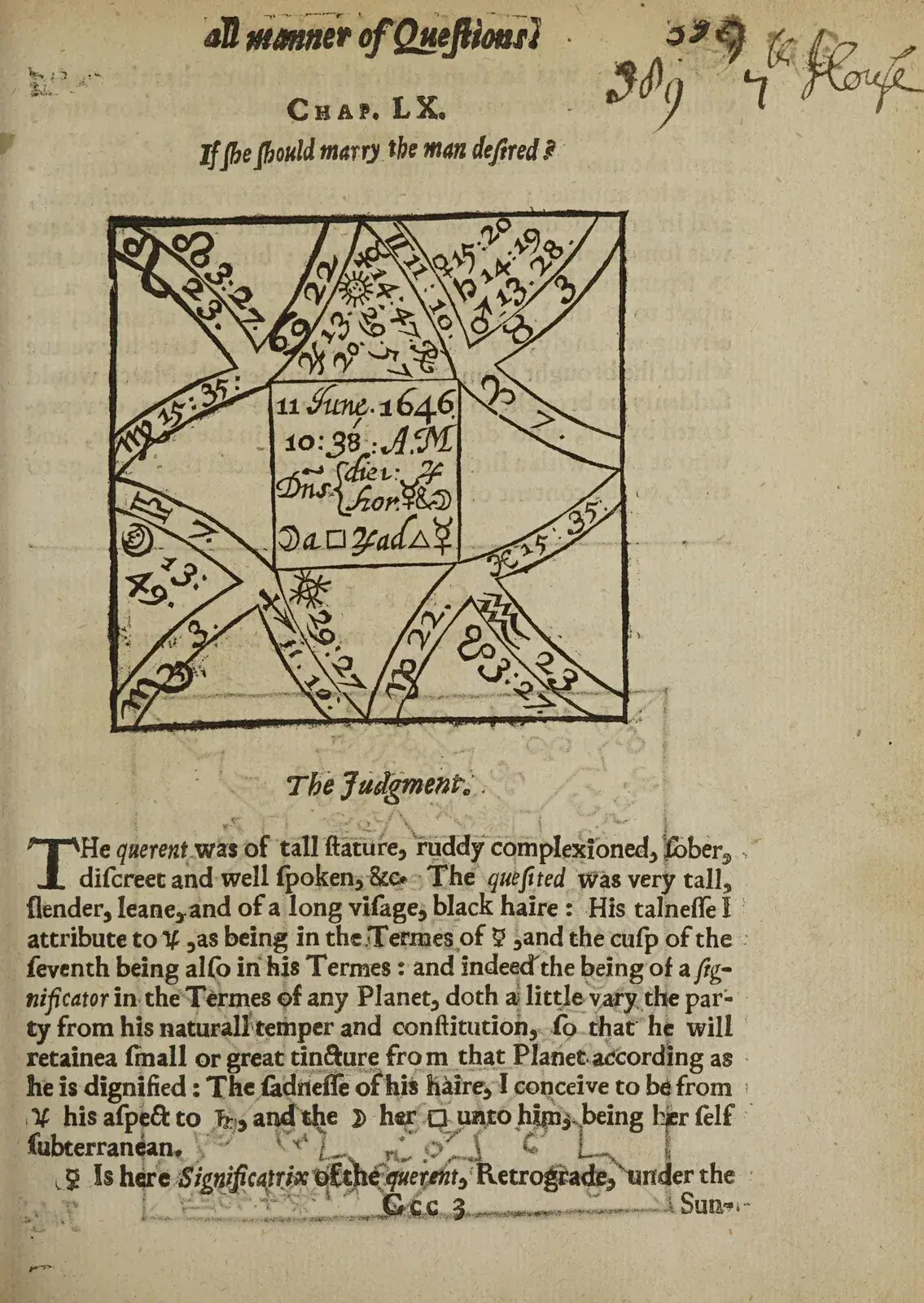
The upper half of the chart
At the Descendant, the chart reaches an edge: another person can answer you back. From there, the houses move through shared stakes, systems of meaning, public responsibility, collective support, and what happens outside ordinary view.
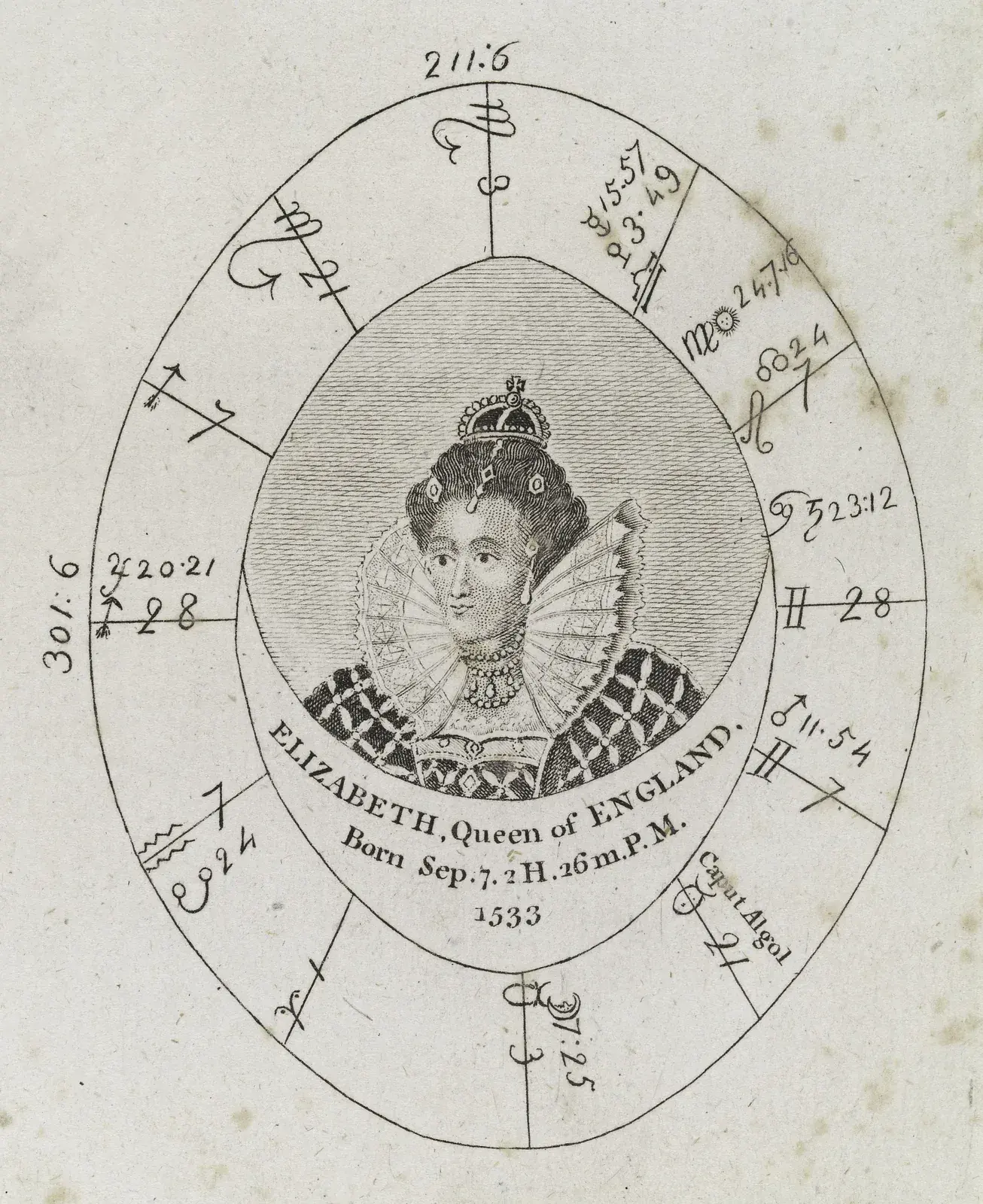
These houses occupy the upper hemisphere, but upper does not always mean public. The tenth can place you before an audience; the twelfth can remove you from one. Hemisphere is background testimony, not a verdict. A house names a field of circumstance. It does not grade your evolution.
A disciplined reading order
For each house, keep five testimonies distinct:
- The house topic tells you where something happens.
- The cusp sign describes the manner in which that field is approached.
- The cusp ruler carries the house into whichever house and sign it occupies.
- Planets inside the house act there directly.
- Aspects describe cooperation, pressure, interruption, and reinforcement.
The seventh and tenth are angular: their topics gain traction and become difficult to ignore. The eighth and eleventh are succedent: they consolidate what follows an angle. The ninth and twelfth are cadent: energy is redirected away from immediate control and toward interpretation, transition, or withdrawal. Cadent does not mean unimportant. It means less available for blunt handling.
Repeated testimony matters more than any isolated symbol. If the tenth-house cusp, its ruler, the Midheaven, and several planets all emphasize communication, you have receipts for a public life shaped by words. One Mercury placement alone would be thinner evidence.
The seventh house: the answering other
The seventh begins at the Descendant, the degree exactly opposite the Ascendant. Astronomically, it is the western setting point. Symbolically, it describes encounters with a distinct counterpart: spouse, business partner, client, consultant, agent, collaborator, opponent, or contractual party.
Marriage and open adversaries seem like strange companions until you notice their shared structure. Both involve another person whose choices matter, whose position is visible, and with whom terms must be negotiated. An open opponent sits across the table. A hidden opponent belongs more properly to the twelfth.
The seventh is not simply everyone you know. Casual neighbors and routine messages belong elsewhere. Seventh-house relationships have a one-to-one structure and usually carry reciprocity, commitment, negotiation, or direct contest.
Projection is often assigned here: you meet a quality through other people before recognizing your own participation in it. Treat that as a hypothesis, not an automatic diagnosis. If Mars occupies the seventh, you may repeatedly encounter direct, competitive people. You may also become more direct in partnership, select relationships that require courage, or conduct one-to-one work in a decisive style. The placement does not prove that anger belongs only to other people.
The ruler shows where relationship matters lead. If the seventh ruler is in the tenth, partnerships may affect reputation, vocation, or public responsibility. If it is in the fourth, partnership decisions may gather around home and family. A strong seventh does not promise marriage, and a difficult aspect does not promise separation. It establishes a recurring field of work.
The eighth house: shared stakes and binding consequences
The eighth is the second house counted from the seventh. In derived-house logic, that makes it the counterpart’s resources. This is the structural basis for its association with jointly held money, debt, taxes, insurance, inheritance, settlements, and obligations that cannot be managed by one person alone.
Its link with mortality follows the same logic. Property, promises, and consequences continue when individual control ends. Older Western astrology therefore gave the eighth a direct association with death and inheritance. A natal eighth house should not be used to announce the timing or manner of death. The symbolism is broader and the technique is not reliable enough for such certainty.
Modern books often reduce the eighth to sex or transformation. Both labels need discipline. The fifth can describe pleasure and erotic play; the seventh describes pairing; the eighth becomes prominent when intimacy creates binding stakes involving trust, exposure, resources, dependency, secrecy, or consequence. Transformation is too vague unless you can say what changes, through which obligation, and at whose cost.
In older whole-sign geometry, the eighth does not form a major aspect to the first. This was called aversion: the two signs lack a direct line of sight. In felt terms, eighth-house situations can involve conditions you cannot manage alone or fully see from your usual position.
Venus in the eighth can seek fairness and mutuality in shared arrangements. Saturn may make obligations weighty, delayed, or carefully structured. Jupiter can enlarge access to pooled resources while also enlarging the scale of what must be administered. None of these planets is a complete outcome by itself. Read the ruler and aspects.
The ninth house: systems that make experience meaningful
The ninth concerns distance in both miles and thought. Its topics include extended travel, universities, advanced study, teaching, publishing, philosophy, religion, divination, ethics, and systems of law. These activities pull you beyond the local facts of the third house and ask what those facts mean.
Its cadent quality redirects action into interpretation. You may enter a ninth-house period by crossing a border, studying under an expert, publishing an argument, changing a conviction, or meeting a culture whose assumptions expose your own.
The ninth is not a truth meter. Jupiter there may widen intellectual or cultural scope, but expansion does not guarantee accuracy. Saturn may produce disciplined scholarship or rigid doctrine. Mercury can compare systems, translate ideas, and teach, yet may also remain busy among competing explanations. Evidence and meaning must remain distinct.
Distance is contextual. A long daily commute can remain a third-house matter because it belongs to routine circulation. A shorter trip that places you inside a foreign institution, language, or worldview may carry ninth-house weight.
The tenth house: visible consequence
The tenth describes vocation, office, rank, reputation, leadership, accountability, and actions for which you become publicly answerable. Career is part of it, but the tenth is larger than employment. A person without a conventional profession still occupies roles that carry authority or visible consequence.
The Midheaven, or MC, is the intersection of the ecliptic with the upper meridian. In many quadrant systems it forms the tenth cusp. In whole-sign houses it may fall in the ninth, tenth, or eleventh. The MC and tenth house are therefore related but not always identical. A ninth-house planet tightly conjunct the MC can bring ninth-house topics into public view without becoming a tenth-house planet.
Planets in the tenth tend to become noticeable through what you do. The Moon can indicate responsiveness to a public, changing roles, or work shaped by collective needs. Mars can make initiative, competition, construction, or conflict visible. Saturn can concentrate responsibility and make standards consequential. Visibility is not the same as fame. Fame requires much broader testimony.
The tenth ruler shows where public work obtains its material. A tenth ruler in the third may draw upon writing, instruction, transport, siblings, or local networks. In the eighth, public responsibility may involve shared assets, confidential obligations, loss, or stewardship of other people’s resources.
Some traditions connect the tenth with a parent, but fixed mother-versus-father formulas vary across texts and cultures. Use biography. The relevant parent is often the one experienced through authority, status, expectation, or public example.
The eleventh house: allies and the shared future
The eleventh describes friends, groups, patrons, colleagues, audiences, associations, and the support that allows a future plan to continue. Older Western authors called it Good Spirit. In whole-sign geometry it forms a sextile to the first house, an aspect associated with available cooperation. As the house following the tenth, it also describes gains, recognition, and alliances that grow from public participation.
Eleventh-house friendship is usually lateral: people stand beside you around a shared interest, cause, profession, or hope. A deeply bonded one-to-one friendship may also activate the seventh. Houses describe structures, not social labels.
The fifth concerns what you create, perform, or enjoy. The eleventh concerns what circulates among peers and receives collective response. A song can be fifth-house creation, tenth-house professional work, and eleventh-house community currency at the same time.
Mercury in the eleventh may connect through conversation and information exchange. Saturn can prefer fewer, durable affiliations or place responsibility inside groups. Uranus may accompany unconventional networks, rapid changes of affiliation, or communities organized around reform. Social media is not automatically eleventh-house material: messaging can be third, performance fifth, reputation tenth, and network formation eleventh.
The twelfth house: what operates outside ordinary view
The twelfth precedes the Ascendant in zodiacal order and is cadent from it. In whole-sign geometry, it does not form a major aspect to the first house. Its topics therefore tend to sit close to life while remaining oblique to direct self-command.
Older texts list hidden opponents, confinement, exile, sorrow, and conditions that reduce personal agency. Modern astrology added the unconscious, retreat, spiritual practice, and self-undoing. Both lists can become careless. The twelfth is not a container for everything painful, mysterious, or unusual.
A sound working definition is seclusion and hidden process. This can include sleep, retreat, confidential labor, backstage work, institutions, life in enclosed settings, private grief, and periods when ordinary participation is suspended. Seclusion may be chosen, required, useful, or draining. The chart must show which.
Self-undoing is not a character verdict. It describes a repeated action whose motive or cost remains outside present awareness. Mars in the twelfth might spend force behind the scenes, train in solitude, suppress anger, or become entangled in conflicts that are not openly named. Jupiter may find meaning in retreat while also overextending rescue roles. Saturn can structure solitude or make isolation feel burdensome.
Hidden opponents are a traditional possibility, not permission to assume secret plotting. Sometimes the symbolism appears as an unseen bureaucratic process, confidential competition, or consequences developing beyond your notice. Literal claims require corroboration from rulers, aspects, timing, and events.
A planet in the twelfth but within a few degrees of the Ascendant can be strongly angular. The angle gives it force; the house gives it a private or indirect route. State the orb and your house convention rather than quietly moving the planet. Privacy is not pathology. Mystery is not evidence.
Worked mini-example: a seventh-house configuration
Suppose a quadrant chart has an Ascendant at 18° Aries, a Descendant at 18° Libra, and an MC at 20° Capricorn. Venus is at 21° Libra in the seventh, Mars at 25° Aries in the first, and Saturn at 23° Capricorn in the tenth.
Venus is 3° from the Descendant. Mars is 7° from the Ascendant. Saturn is 3° from the MC. All three are angular, so the configuration has traction in lived events.
Venus opposes Mars with a 4° orb. Venus squares Saturn with a 2° orb, and Mars squares Saturn with a 2° orb. This forms a T-square: an opposition whose tension is concentrated through a third planet.
Start with rulership. Libra is on the seventh cusp, so Venus rules the seventh and occupies it. Venus is also in domicile, meaning it acts through a style it recognizes: proportion, reciprocity, attraction, and negotiation. This is substantial testimony that one-to-one relationships matter and that the person may have real skill in reading the other side.
Aries rises, so Mars rules the first and is likewise in its own sign. Personal initiative is not weak. The Venus–Mars opposition describes a recurring need to coordinate autonomy with accommodation. Because both planets are capable, the issue is not a simple winner and loser. Two strong capacities can still pull in opposite directions.
Capricorn is on the tenth, making Saturn ruler of the tenth. Saturn occupies its own sign near the MC and squares both ends of the first–seventh axis. Public duties, standards, status, or long-term work become the pressure point through which relationship tensions are organized. Possible expressions include a client-facing vocation, visible collaboration, partnership shaped by demanding schedules, or repeated negotiation between private desire and public responsibility.
This configuration does not by itself promise divorce, delayed marriage, or professional success. Essential condition describes capacity; aspects describe demand. Capacity and pressure can coexist. To choose among concrete expressions, you would look for repeated testimony elsewhere and compare it with the person’s actual history.
Common mistakes to correct
- Turning houses into signs. The seventh is not inherently Libra, the eighth is not Scorpio, and the ninth is not Sagittarius. A Taurus seventh is interpreted through Taurus, Venus, occupants, and aspects—not through an imported Libra script.
- Treating a topic as an outcome. An occupied tenth means public matters are active, not that acclaim is guaranteed. An occupied eighth activates shared stakes, not inevitable wealth or loss.
- Ignoring empty houses. An empty eleventh still has a cusp sign and ruler. If that ruler is angular or heavily aspected, groups and alliances may be central.
- Reading squares as ruin. A square describes incompatible demands requiring action. The result depends on planetary condition, choices, support, and context.
- Collapsing the MC into the tenth. Always note both when your house system separates them. A close MC conjunction remains important from the ninth or eleventh.
- Using the eighth and twelfth as bins for suffering. Name the mechanism. Is the issue shared obligation, mortality, seclusion, hidden process, or reduced agency? Precision keeps symbolism honest.
- Assigning everything to other people. Seventh-house planets also describe how you enter negotiation. Eleventh-house planets describe your conduct in groups. The chart does not remove you from the scene.
Practice
Choose one chart with a reliable birth time. Make six rows, one for each house from the seventh through twelfth. Record the cusp sign, ruler, ruler’s house and sign, occupants, close aspects, and any conjunction to the Descendant or MC.
For each row, write two sentences. The first must name a concrete setting: partnership meeting, shared obligation, course of study, public role, group project, or period of seclusion. The second must describe how the ruler and occupants behave there.
Calculate one aspect orb exactly. Subtract the planet’s position from the exact conjunction, opposition, square, trine, or sextile. Then identify one tempting overstatement and rewrite it as a bounded claim supported by the chart. Keep the version that leaves room for biography.
Key terms
Descendant · angular house · succedent house · cadent house · derived house · shared stakes · Midheaven · public accountability · Good Spirit · aversion · seclusion · T-square · domicile · aspect orb
Check your reading
Three questions from this chapter’s worked example and its common mistakes. Two of three marks the chapter complete.
In the seventh-house example, why is the pattern called a T-square?
Is the seventh house inherently Libra?
An empty eleventh house means what?