Part 7: Moon, Nodes & Condition · Chapter 22 of 36 · 11 min
The lunar nodes without the karma-speak
The lunar nodes are not planets, bodies, or hidden forces in the sky.
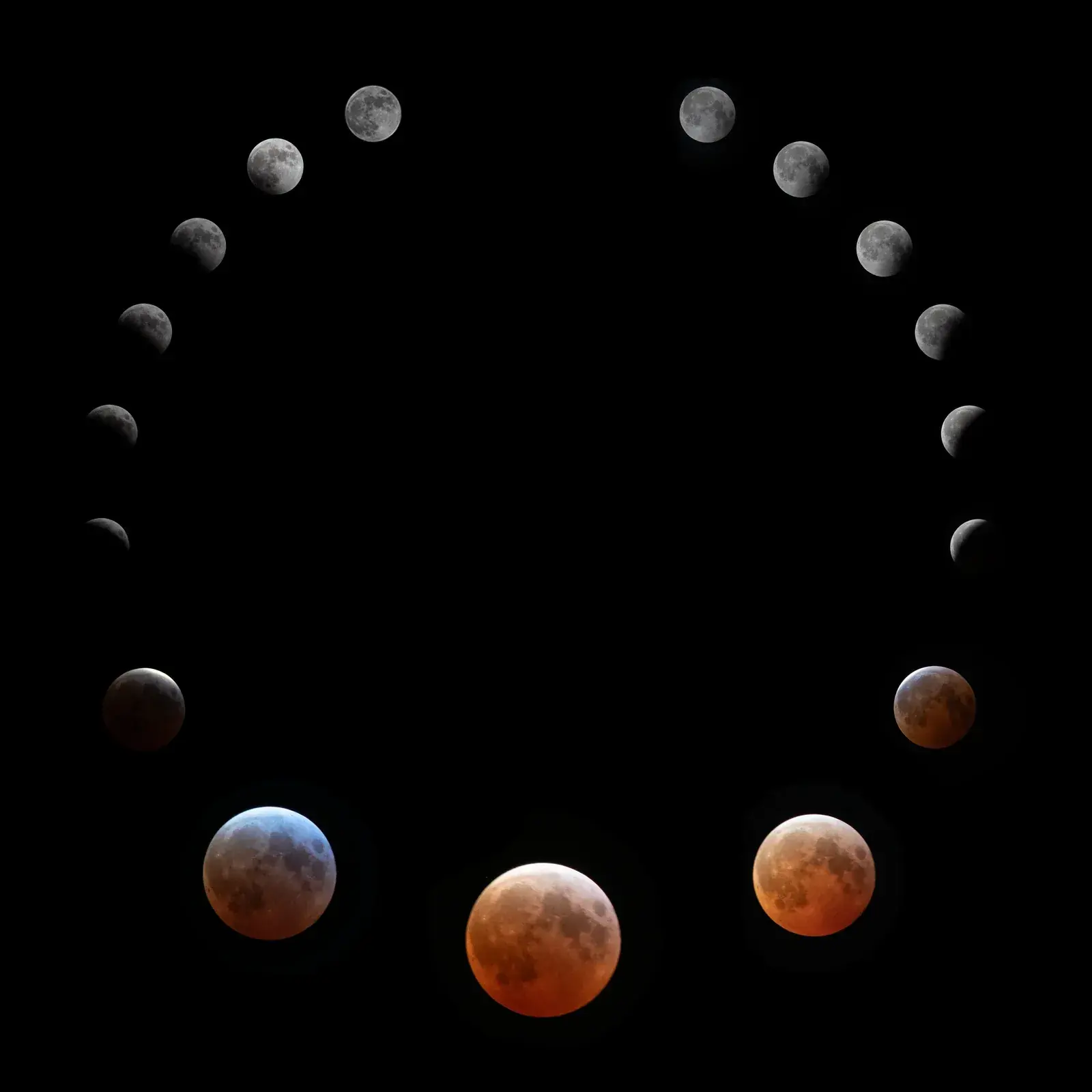
Two points, one axis
The lunar nodes are not planets, bodies, or hidden forces in the sky. They are two calculated points. Yet they are often made to carry an enormous burden: moral debts, fixed assignments, invisible biographies, grand pronouncements about what a person is here to become. Put that burden down.
Used well, the nodes describe a tension between an established way of meeting life and a less automatic counterweight. They can show where you default, what you have ready to hand, and what becomes more available when you make choices with greater consciousness. This is a symbolic reading, not an astronomical fact. A symbol can be useful without being a cause.
The North Node and South Node must be read together. They are always opposite each other by exact degree. If one is at 17° Virgo, the other is at 17° Pisces. They are not two separate topics. They are one line through the chart.
The geometry comes first
The ecliptic is the apparent annual path of the Sun around Earth. Astrology uses this as its main celestial reference line. The Moon's orbit is tilted by a little over five degrees from that line, so the Moon usually travels above or below the ecliptic rather than directly along it.
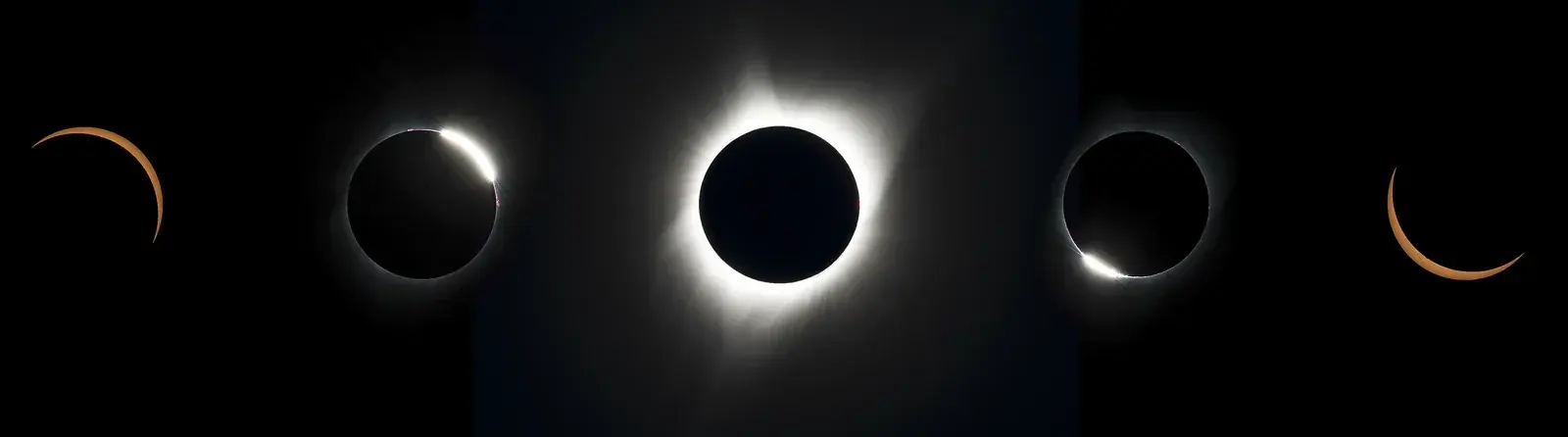
Twice each lunar orbit, the Moon crosses the ecliptic. The point where it moves from south of the ecliptic to north is the ascending node, usually called the North Node. The opposite crossing, where it moves from north to south, is the descending node, usually called the South Node.
This is why eclipses involve the nodes. A New Moon or Full Moon must occur sufficiently near one of these crossings for an eclipse to be possible. The Moon has to be near the ecliptic at the same time that Sun, Earth, and Moon line up. That is geometry, not metaphor.
The nodal axis moves backward through the zodiac most of the time. Its full cycle takes about 18.6 years. That figure comes from the measured regression of the lunar orbital plane. Your ephemeris is the receipt: track the node over years and you will see it move from later degrees toward earlier degrees of the signs.
Most software offers a Mean Node and a True Node. The Mean Node is a smoothed average position. The True Node includes the Moon's short-term orbital irregularities, so it can wobble and occasionally appear to move forward briefly. Neither choice is morally superior or more spiritual. Pick one system, use it consistently, and note the difference when a planet is very close to the node. A separation of more than a degree can matter when you are judging a conjunction.
What the nodes can, and cannot, describe
There is no agreed empirical evidence that a nodal placement causes personality, events, or outcomes. Astrology's nodal language is interpretive. It gives you a way to notice patterns; it does not establish a mechanism behind them.
A practical working model is this:
- The South Node describes an ingrained orientation: a style you can enter quickly, often without much deliberation.
- The North Node describes the balancing orientation: a style that may require more conscious participation, especially when the South Node is doing all the work.
That does not make the South Node bad, spent, or disposable. It often contains real skill, memory, sensitivity, and competence. The familiar is not the same as the limiting. It becomes limiting only when it is the only available response.
The North Node is not a badge for superior behavior. It is not a fixed life assignment. It does not tell you to reject the South Node's sign, house, or planets. A useful nodal reading asks how the two ends can become more flexible and better proportioned.
You may encounter claims that the South Node proves a detailed history before birth, or that the North Node identifies a debt you must repay. A chart cannot verify such claims. If someone holds a personal metaphysical belief, that belief belongs to them; it should not be presented as information extracted from a pair of calculated points.
Read the whole line, not one endpoint
Start with the signs. A sign gives the axis its style: how the tension tends to operate. Then look at houses, which show the areas of life in which that style is most visible. Finally, inspect planets aspecting the nodes and the rulers of the nodal signs. This order keeps you from turning a sign keyword into a verdict.
Take a Taurus North Node and Scorpio South Node. A thin reading might say: move from Scorpio intensity toward Taurus simplicity. That is not wrong, but it is not enough. Taurus and Scorpio both concern value, attachment, survival, trust, and what feels substantial. The question is not whether intensity is bad or simplicity is good. The question is whether a person can build steadiness, name what is enough, and remain close to what matters without making every bond a test of endurance.
Put that axis across the second and eighth houses and the material of the reading changes. The second house concerns personal resources, self-support, and what you can claim as your own. The eighth concerns shared resources, intimacy, dependency, and what passes between people. The axis may describe a repeated negotiation between self-reliance and entanglement. Neither pole is optional. A person needs personal ground and the ability to share.
Opposite signs carry a shared problem from two directions. Virgo and Pisces both ask how discernment and permeability can coexist. Gemini and Sagittarius both ask how facts and larger meaning can remain in conversation. Aries and Libra both ask how initiative and mutuality can stay alive together. This is why reading only the North Node produces flat interpretations.
The house placement needs care. Nodes near a house cusp can change houses across different house systems. If the North Node is within roughly two degrees of a cusp, test the delineation in the house system you are using and compare it with the adjacent house. Do not force certainty where the chart gives you a threshold.
Planets make the axis personal
A planet close to a node gives the axis a specific voice. The planet's function becomes a direct route into the nodal tension.
A conjunction to the North Node can show that the planet's qualities become important when you move toward the less automatic side of the axis. A conjunction to the South Node can show a planet whose style is deeply familiar, immediately available, or easy to repeat. Neither placement is better. The distinction is about entry point.
Because the nodes are opposite, a planet conjunct one node is automatically opposite the other. A planet square one node is square both nodes. Do not interpret that as two unrelated squares. It is one planet standing at a right angle to the whole axis, pressing both ends to respond.
Trines and sextiles can matter, especially when they are close, but they are usually quieter than conjunctions, oppositions, and squares. A trine to the North Node will also be a sextile to the South Node, and vice versa. Such aspects can show an available route between the nodal question and another part of the chart. Ease is not the same as use. A capacity can sit untouched.
Use narrow orbs. For a conjunction or opposition to a node, two degrees is a sound starting point. You may extend to three degrees for the Sun or Moon when other chart factors repeat the theme. For squares, two degrees is usually enough. For trines and sextiles, one to two degrees keeps the interpretation clean. These are working limits, not natural law. Exactness earns attention.
The rulers of the nodal signs matter greatly. If the North Node is in Virgo, Mercury is a primary interpreter of how that nodal side functions. Its sign, house, aspects, and condition tell you where the Virgoan work can actually take hold. The ruler gives the node legs.
Worked mini-example: a Virgo–Pisces nodal axis
Assume an Aries rising chart using whole-sign houses. The relevant placements are:
- North Node at 17°42′ Virgo in the sixth house
- South Node at 17°42′ Pisces in the twelfth house
- Mercury at 19°10′ Virgo in the sixth house
- Moon at 14°20′ Pisces in the twelfth house
- Saturn at 16°54′ Gemini in the third house
- Venus at 18°05′ Capricorn in the tenth house
First, establish the geometry.
Mercury at 19°10′ Virgo is conjunct the North Node at 17°42′ Virgo by 1°28′. This is close and deserves real weight. The Moon at 14°20′ Pisces is conjunct the South Node by 3°22′. That is wider, but still usable for the Moon if the rest of the chart supports it.
Saturn at 16°54′ Gemini is square the North Node. The distance from 16°54′ Gemini to 17°42′ Virgo is 90°48′, so Saturn is square by an orb of 0°48′. It is also square the South Node by the same orb. Venus at 18°05′ Capricorn forms a trine to the North Node by 0°23′ and a sextile to the South Node by 0°23′.
Now read the axis before interpreting any single contact. Virgo in the sixth house emphasizes discriminating attention in daily tasks, routines, practical skill, maintenance, and the small repeated choices that make a life more workable. Pisces in the twelfth house emphasizes privacy, imagination, permeability, retreat, and what operates outside ordinary visibility.
A poor reading would say that this person must leave Pisces behind and become efficient. That strips the axis of half its intelligence. Pisces in the twelfth can describe sensitivity to atmosphere, a rich inner life, comfort with solitude, and an instinct for what cannot be neatly measured. Those are not defects. The issue arises if withdrawal, vagueness, or waiting for a mood becomes the default answer to every demand for definition.
Mercury conjunct the North Node gives the Virgoan side a clear instrument. Language, observation, sorting, naming, recording, asking precise questions, and learning usable methods become ways of meeting the node. This is stronger because Mercury rules Virgo. In a full chart, you would inspect Mercury's aspects and condition closely, but even this small example shows a direct link: the movement toward the North Node is not abstract. It happens through attention to detail and the willingness to say what is actually there.
The Moon conjunct the South Node suggests that the Piscean-twelfth-house response has emotional immediacy. The person may absorb moods before they have words for them, seek quiet when overstimulated, or feel most themselves in private and unstructured settings. Again, none of that needs correction. The nodal work is to let that receptive Moon inform Mercury rather than replace it. Feel the atmosphere, then identify the task. Notice the impression, then test it against details.
Saturn square the axis from Gemini in the third house adds pressure around thought, speech, learning, local environments, and the rules a person uses to organize information. Saturn may show seriousness, restraint, or a heightened sense that words have consequences. Here it does not block the nodes. It asks whether the person can build reliable mental structures without becoming trapped in rigid explanations or scattered data. The square makes the Virgo–Pisces balance more demanding: clear language must remain humane; sensitivity must remain accountable to facts.
Venus in Capricorn in the tenth house offers a close trine to the North Node. Venus may provide an accessible route through craft, public contribution, aesthetic judgment, diplomacy, or a steady relationship to responsibility. Capricorn gives form; Virgo gives method. This can support the North Node's practical side, particularly where visible work benefits from patience and standards. It is a resource, not a command.
The strongest statement in this example is not that the person has one correct path. It is that Mercury, Moon, Saturn, and Venus all give the Virgo–Pisces axis several places to become conscious. A full delineation would test this against the chart ruler, the Sun, the angles, and the wider planetary pattern.
Timing without event promises
A nodal return occurs when the transiting North Node returns to its natal degree, roughly every 18.6 years. A nodal opposition occurs about halfway through that cycle, around 9.3 years after a return. These dates can be useful checkpoints for reflection, especially when other timing techniques repeat the same houses or planets. They do not promise a particular event.
When the transiting nodes contact natal planets, look first at the natal relationship. A transiting North Node conjunct natal Mercury will not mean the same thing in every chart. If Mercury is already tied to the nodal axis, the transit may bring that existing question into sharper view. If Mercury has no natal connection to the nodes, the transit may be quieter.
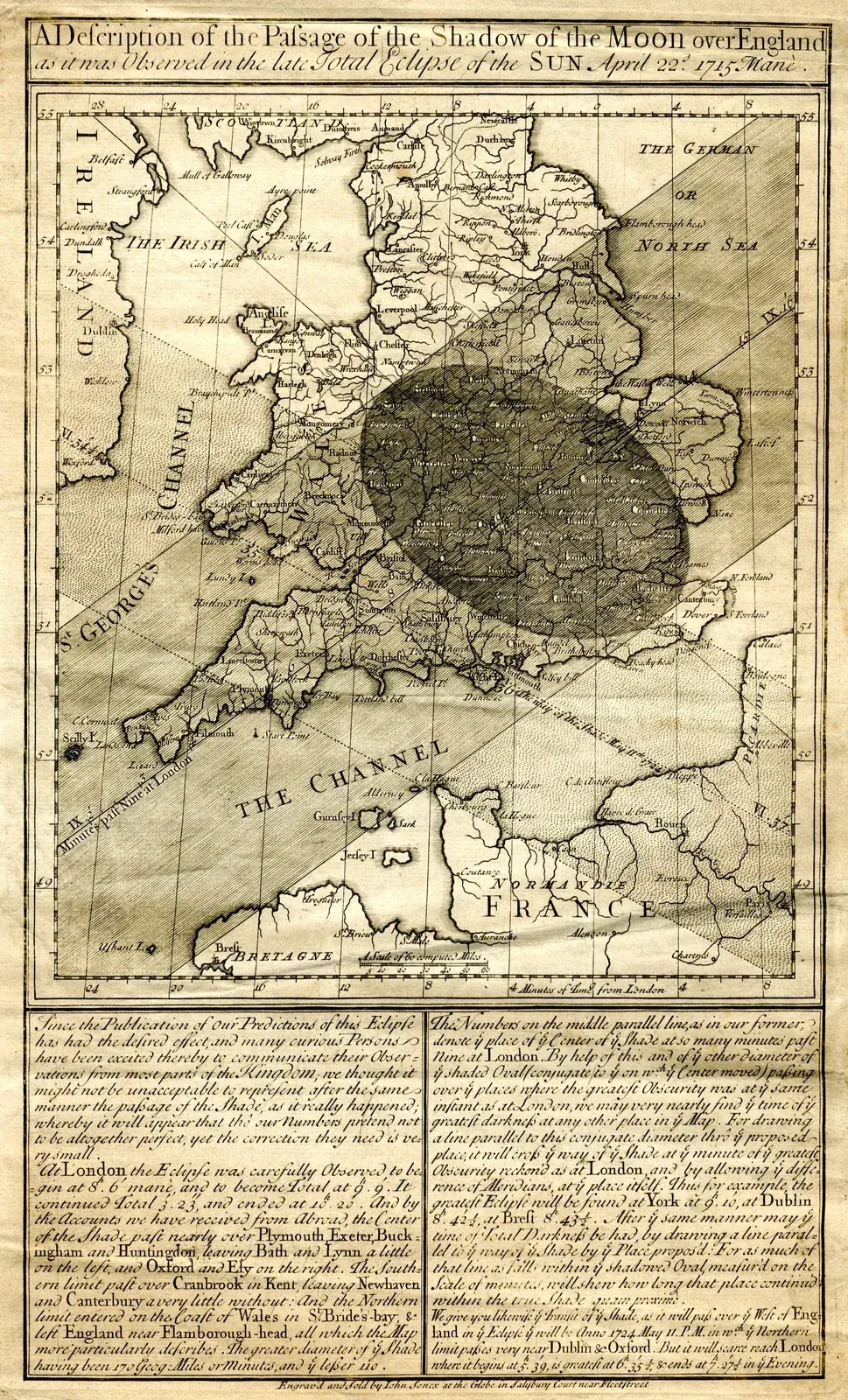
Eclipses deserve the same restraint. They occur near the nodes astronomically, but an eclipse touching a natal node or nodal planet is not a license for dramatic prediction. Note the degree, house, aspects, and repetition across other techniques. Let lived experience supply the scale.
Common mistakes, corrected
Calling the North Node a fixed life assignment. Treat it as a balancing orientation. A chart describes patterns of attention, not a compulsory script.
Treating the South Node as a flaw. The South Node often contains ability. Ask what it contributes before asking where it may become overused.
Reading the North Node without its opposite sign and house. The axis is one structure. Every North Node statement should imply a South Node question.
Using sign keywords as if they were complete interpretations. Virgo is not merely organization; Pisces is not merely confusion. Signs are styles with many expressions.
Ignoring the ruler of the North Node. The node's sign ruler often tells you how the axis becomes active in ordinary life. A node without its ruler is an unfinished sentence.
Using wide nodal orbs. A planet six or seven degrees from a node may be interesting only if other factors make the connection unmistakable. Start narrow. Precision prevents the chart from saying everything at once.
Mixing Mean Node and True Node positions without noticing. If one method puts a conjunction inside your orb and the other puts it outside, say so. Ambiguity is information.
Turning a square to the nodes into a permanent obstacle. A square is friction, involvement, and demand for adjustment. It places a planet in active conversation with both ends of the axis.
Announcing a detailed invisible biography. The chart does not provide evidence for claims about prior identities, debts, or rewards. Keep your language close to what the symbols can actually support.
Language that keeps the reading clean
Use phrases such as may describe, can show, and becomes easier to notice when. They leave room for the person's actual life, which matters more than a clever interpretation. Ask where the South Node pattern feels natural, where the North Node pattern feels less rehearsed, and where both are already cooperating.
The nodes work best when you let them stay modest. Two points can hold a great deal, but they do not need to hold everything.
Practice
- Find your North Node and South Node by exact degree. Record whether your source uses Mean Node or True Node.
- Write the axis as one sentence before interpreting it. Include both signs and both houses. For example: Virgo in the sixth and Pisces in the twelfth asks how practical discernment and private sensitivity can support each other.
- List every planet within two degrees of either node. For each one, calculate the actual orb rather than relying on a chart wheel.
- Identify the ruler of the North Node's sign. Write its sign, house, and closest aspect. Ask how that planet gives the nodal axis a usable form.
- Make two columns. In the South Node column, name three capacities you already recognize. In the North Node column, name three actions that would bring balance without rejecting those capacities.
Keep the language observational. You are looking for patterns you can recognize, not a verdict you must obey.
Key terms
lunar nodes · North Node · South Node · ascending node · descending node · nodal axis · Mean Node · True Node · orb · nodal return
Check your reading
Three questions from this chapter’s worked example and its common mistakes. Two of three marks the chapter complete.
What working model does the chapter give for the South Node?
Saturn at 16°54′ Gemini and the North Node at 17°42′ Virgo. Aspect and orb?
What should you do when Mean Node and True Node give different orb results?