Part 8: Timing · Chapter 26 of 36 · 12 min
Transits: the moving sky against the birth chart
Transits are where astrology meets the calendar.
What a transit is
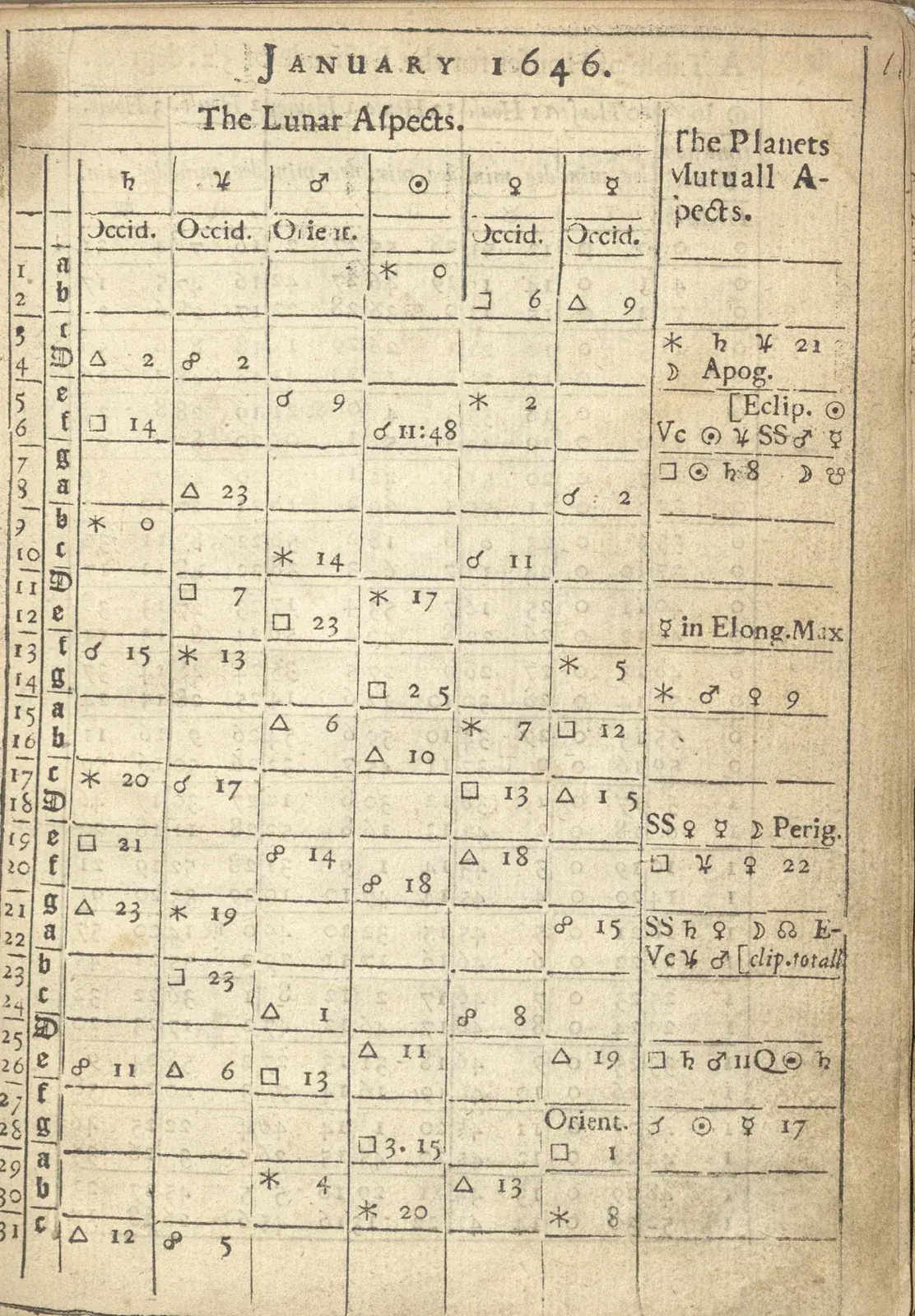
Transits are where astrology meets the calendar. The birth chart gives you a set of planetary positions for one moment. A transit compares those positions with where the planets are now, or with where they will be on a chosen date. The birth chart is the fixed reference; the moving sky supplies the changing condition.
The word against means overlaid, not opposed. You place the current sky over the birth chart and look for meaningful angles between them. If transiting Mars reaches the degree of your natal Moon, that is a Mars-to-Moon transit. If Jupiter crosses the beginning of your tenth house, that is Jupiter transiting a house. One concerns a relationship between two planetary functions. The other describes the part of life through which a planet is moving.
A transit has an astronomical layer and an interpretive layer. Planetary positions can be calculated from observations and numerical ephemerides. The interpretive claim—that a certain contact corresponds with a period of pressure, growth, revision, or clarity—belongs to astrology’s symbolic language. There is no generally accepted physical mechanism by which a distant planet produces a specific personal event, and research has not established a dependable, person-specific predictive effect by ordinary scientific standards. That limit matters. It keeps a symbol from being mistaken for a command.
Astrology can still offer a disciplined way to notice timing. It can help you name a changing emphasis, ask better questions, and compare the language of a chart with the facts of your life. Its usefulness is strongest when you keep the observation honest: what happened, what did not happen, and which interpretation proved too broad to be useful.
The three parts of a transit
Every transit reading needs three pieces.
First, identify the moving planet. This tells you the kind of activity entering the picture. Mars brings effort, urgency, assertion, and the need to act. Saturn brings limits, form, responsibility, and the slow work of making something hold. The planet is not a verdict. It is a style of motion.
Second, identify the natal planet or angle receiving the contact. A natal planet describes a function already present in your chart. Venus concerns attraction, reciprocity, pleasure, taste, and value. Mercury concerns attention, language, sorting, and exchange. The receiving planet shows what part of you is being addressed.
Third, identify the aspect and the houses involved. An aspect is the angular distance between two positions. A square is 90 degrees; a trine is 120; an opposition is 180. The aspect describes how the two functions meet. The houses show where the meeting is likely to become concrete: work, friendship, home, partnership, study, or another field of life.
A useful sentence has this shape: transiting planet, making aspect, to natal planet, while moving through house A and contacting natal house B. For example: Saturn in transit is squaring natal Venus while moving through the fourth house and addressing Venus in the seventh. That sentence is already more precise than Saturn is bad for relationships or Venus is lucky this year.
The natal planet is not a passive receiver. Its sign, house, and natal aspects tell you how it usually operates. A Venus in Taurus does not answer affection in the same way as a Venus in Gemini. A Venus closely joined to Saturn has a different history from a Venus closely joined to Jupiter. The transit changes the current conditions around that natal pattern; it does not erase the pattern or replace it with a new personality.
Planets as felt activity
Technical meanings become useful only when they reach lived experience. Think of the planets as verbs rather than characters with fixed personalities.
- The Sun centers, illuminates, and asks for conscious direction. You notice where you want to stand visibly behind an act.
- The Moon registers, responds, and seeks a workable rhythm. You notice changing needs, moods, and bodily habits without treating each feeling as a final instruction.
- Mercury notices, names, compares, and negotiates. You see the quality of conversations, decisions, messages, and mental noise.
- Venus attracts, values, enjoys, and relates. You notice what you want to keep close and what no longer feels reciprocal.
- Mars initiates, cuts through, protects, and spends effort. You meet questions of timing, boundaries, anger, and action.
- Jupiter enlarges, teaches, trusts, and gives perspective. You may see a wider field, though enlargement can also mean excess.
- Saturn defines, limits, maintains, and tests structure. It makes the cost and the responsibility of an arrangement easier to see.
- Uranus interrupts, separates, and invents. A pattern that once seemed permanent may show its hidden flexibility.
- Neptune softens, imagines, merges, and blurs. Compassion and inspiration can increase alongside confusion or misplaced projection.
- Pluto concentrates, exposes, and reorganizes. A question of power, attachment, or control may become impossible to keep vague.
The slower planets beyond Saturn remain in one sign for years, so their transits are broad periods rather than single afternoons. The faster planets describe shorter pulses. Neither group is automatically more important. A slow transit may describe the background condition; a fast transit can show the day a conversation, decision, or action brings that condition into view.
Aspects and orbs
A conjunction places two bodies at the same longitude. It feels like two activities occupying one room. The contact can be vivid because there is little distance between them, but its expression depends on the planets involved. Mars conjunct natal Mercury may sharpen speech and decision-making; it may also make a conversation too quick to revise.
An opposition places two bodies across the circle. It can show a need to hold two positions at once: independence and partnership, private need and public demand. A square creates a 90-degree meeting. It often feels like friction, not because one planet is malicious, but because two legitimate needs do not fit without adjustment. A trine offers ease and flow. That ease can support skill, though it can also allow a habit to continue without examination. A sextile offers a usable opening that still requires participation. A quincunx, at 150 degrees, often feels like an awkward recalibration: the old settings no longer quite fit, but the new settings are not obvious.
These are descriptions, not moral grades. Hard aspects are not automatically harmful, and soft aspects are not automatically beneficial. A square can force craft. A trine can make a blind spot comfortable. Ask what the geometry requires, rather than deciding in advance whether you should welcome it.
An orb is the distance between an actual aspect and its exact degree. Orbs are working conventions, not invisible force fields. For a first pass, you might use about 1 degree for the Moon and the fast personal planets, 2 degrees for Jupiter and Saturn, and up to 3 degrees for the slow outer planets. A natal Sun, Moon, or chart angle may justify a somewhat wider range, perhaps 3 or 4 degrees, because those points are central in many readings. Keep the system consistent. If every contact receives a 6-degree orb, the sky becomes so crowded that nothing has a clear edge.
An applying transit is moving toward exact contact. A separating transit has already passed the exact degree. Applying contacts often feel like an approaching demand or possibility; separating contacts can show what you are now processing. This is not a rule about when an event must happen. Exactness describes geometry, not a compulsory incident. The meaning may be visible before the exact day or only become clear afterward.
A worked example
Imagine a birth chart with natal Venus at 18°20′ Taurus in the seventh house. Suppose transiting Saturn is at 16°20′ Aquarius, moving direct through the fourth house. We can calculate the aspect instead of relying on a vague impression.
Using 0 degrees Aries as the starting point, 18°20′ Taurus equals 48°20′ of the full circle. Aquarius begins at 300 degrees, so 16°20′ Aquarius equals 316°20′. The difference is 268 degrees. The shorter distance around the circle is 92 degrees, which is 2 degrees from a 90-degree square. Because Saturn is moving toward 18°20′ Aquarius, the contact is a 2-degree applying square to natal Venus.
When Saturn reaches 18°20′ Aquarius, the square is exact. If Saturn later turns retrograde and crosses that degree again, the same natal Venus may receive a second pass. A final direct pass can follow. The three contacts do not mean three separate fated events. They can describe an issue appearing, being reconsidered, and then being given a more settled form.
Now interpret in layers. Saturn concerns form, limits, time, commitment, and responsibility. Venus concerns attachment, pleasure, reciprocity, taste, and value. The square suggests that these functions need a new arrangement. Venus in the seventh places emphasis on one-to-one bonds and agreements. Saturn moving through the fourth places emphasis on home, family patterns, privacy, and the foundations beneath public life.
Possible expressions include a relationship needing clearer agreements about time and responsibility, a private family matter affecting a partnership, or a creative practice asking for a reliable schedule instead of occasional enthusiasm. Someone without a current partner might experience the transit through standards about companionship, a close collaboration, or the question of what kind of connection is worth maintaining. Nothing in the aspect alone announces separation, permanence, or any other single outcome.
Useful questions would be: Which agreement has been left too vague? Where has affection become duty without acknowledgment? What structure would allow pleasure to remain possible? The transit does not answer those questions for you. It makes them harder to avoid.
You would then inspect natal Venus itself. Is it supported by a trine from Jupiter? Is it already under pressure from natal Saturn? Does Venus rule important houses in the chart? You would also check other current contacts. A single transit is rarely the whole picture. The responsible reading remains specific enough to test and open enough to permit more than one ordinary human response.
Speed, stations, and repeated passes
The Moon moves through a sign in roughly two and a half days, so a lunar contact may last hours or a day. The Sun takes about a month to cross a sign. Mercury, Venus, and Mars usually describe contacts lasting days or weeks, though their apparent motion changes. Jupiter takes about a year to cross a sign. Saturn takes roughly two and a half years. The planets farther out remain for still longer periods and may return to the same degree through apparent backward motion.
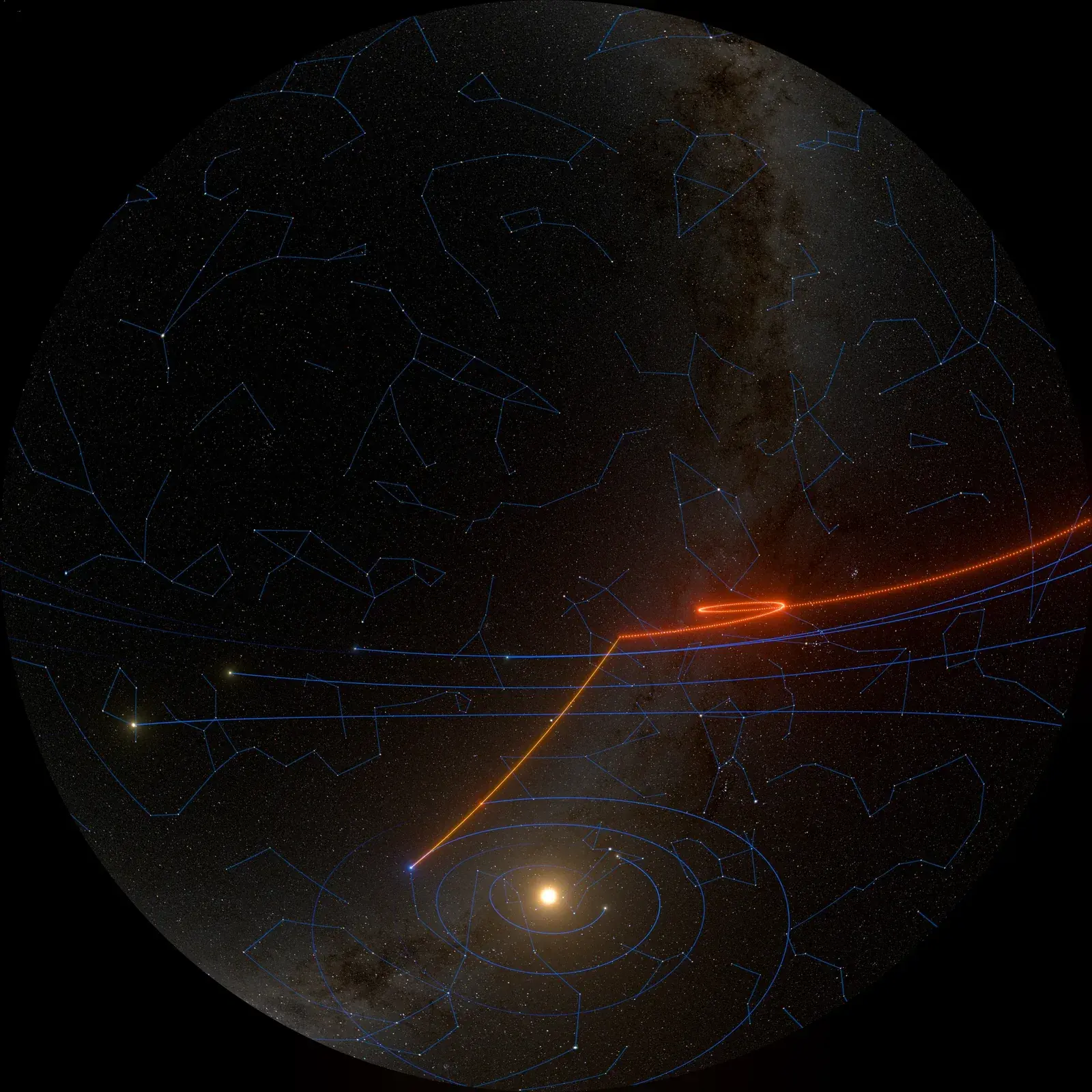
A retrograde period does not mean that a planet has physically reversed its orbit. From Earth, changing positions and speeds create the appearance of backward movement against the background stars. A station is the period when the planet appears nearly still before changing direction. Because its longitude changes very slowly near a station, a transit may remain within a narrow orb for an extended time. The contact may feel prolonged because the timing is prolonged, not because the planet has acquired a special moral force.
An ingress is a planet entering a new sign. It changes the sign context, but it does not automatically create a personal event. A return occurs when a transiting planet reaches the same degree as its natal counterpart. A planetary return can be worth studying, but the label does not make it a universal rite. Read the actual house, aspects, natal condition, and circumstances.
Houses and angles
A transit through a house describes the life area in which the moving planet is currently active. Saturn through the sixth may bring attention to routines, work processes, and the shape of daily obligations. Jupiter through the third may enlarge learning, writing, local contacts, or the exchange of information. These meanings are starting points, not event lists.
Birth time matters greatly for houses and angles. The Ascendant is the eastern horizon; the Descendant is the western horizon; the Midheaven is the chart’s upper angle; the IC marks the lower angle. Their degrees move quickly. A ten-minute error in birth time can shift an angle by roughly 2.5 degrees, even though the natal planetary degrees change very little. If the birth time is uncertain, do not pretend that a transit to an angle is exact. State the uncertainty and use the parts of the chart that remain dependable.
Different house systems can place a planet in different houses near a cusp. The planet’s zodiacal longitude remains the same. Treat house placement as a considered interpretive choice, not as an astronomical fact of the same kind as the degree.
A practical reading method
- Verify the birth date, location, time zone, and daylight-saving setting. Mark whether the birth time is exact, rounded, or remembered.
- Use a reliable ephemeris or astronomy service for current planetary positions. Record the date, time, and time zone used. Numerical accuracy cannot settle interpretation, but inaccurate data can spoil it before interpretation begins.
- List transits to the natal Sun, Moon, planets, and angles. Start with conjunctions, oppositions, squares, trines, and sextiles. Use narrow orbs.
- Mark whether each contact is applying or separating, and note any retrograde or station near the degree. If a contact repeats, record all passes rather than treating the first date as the whole story.
- Read the natal planet first. Its sign, house, rulers, and natal aspects show the pattern being addressed. Then read the transiting planet and the house it occupies.
- Write a few possible expressions in plain language. Include one that would be visible in circumstances and one that would be visible mainly in your response. Keep the wording conditional and concrete.
- Keep a dated record. Before the exact pass, write what you expect to notice. Afterward, record what actually occurred, what did not, and what your original interpretation missed.
That last step protects you from confirmation bias. If you search backward for a match, almost any transit can be made to look accurate. The chart earns trust through careful comparison, not through the ability to explain everything after the fact.
Common mistakes
Reading only the sign is the first. Saturn in Aquarius is a collective description, not a personal transit. You need Saturn’s degree, the natal degrees it contacts, and the houses involved.
Treating every contact as equal is another. A one-degree square from Saturn to the natal Moon deserves more attention than a loose minor aspect from a fast planet. Build a hierarchy: exact slow-planet contacts, contacts to the Sun, Moon, and angles, repeated passes, then shorter personal-planet contacts.
Many readers confuse exactness with certainty. An exact square tells you that two positions meet at 90 degrees. It does not tell you whether the result is a conversation, a deadline, a change of plan, or a private realization. Astrology supplies categories of attention, not a police report from the future.
It is also a mistake to label squares and oppositions bad, or trines and sextiles good. The question is what the contact asks you to do with the available conditions. Ease can support growth; ease can also preserve inertia. Friction can exhaust you; friction can also reveal where a skill needs strengthening.
Another mistake is letting a transit make a decision in your place. If an interpretation tells you that you must stay, leave, spend, refuse, or accept, it has exceeded the evidence. Use the chart to examine timing and patterns. Keep responsibility for action with the person living the life.
Finally, do not make precision perform certainty. A birth time rounded to the nearest hour cannot support a claim about an angle at 20 minutes past the hour. A wide orb cannot support a dramatic conclusion. Honest limits make the reading smaller, but they also make it more real.
A transit gives you a clock, not a script.
Practice
Practice
Choose one natal planet and one three-month period.
- Write the planet’s exact degree, sign, house, and major natal aspects. Note the reliability of your birth time.
- From an ephemeris, list every conjunction, square, opposition, trine, or sextile from the slower planets to that natal degree during the period.
- For each contact, record the orb, whether it is applying or separating, and whether a retrograde pass will repeat it.
- Choose the clearest contact. Write three conditional observations: one about an outer circumstance, one about your response, and one that would show the interpretation was too broad.
- Keep dated notes through the exact pass and for two weeks afterward. Include what did not happen. At the end, revise your language so it describes what you actually observed rather than what you hoped the transit would prove.
Key terms
transit · natal chart · ephemeris · zodiacal longitude · aspect · orb · applying · separating · conjunction · opposition · square · ingress · retrograde · station · return · house transit · chart angles
Check your reading
Three questions from this chapter’s worked example and its common mistakes. Two of three marks the chapter complete.
Natal Venus at 18°20′ Taurus, transiting Saturn direct at 16°20′ Aquarius. What is the contact?
What do three passes of a slow transit mean?
How does the chapter summarise what a transit gives you?