Part 8: Timing · Chapter 27 of 36 · 10 min
Timing I: returns — solar, lunar, Saturn
A return occurs when a moving planet reaches the same zodiacal longitude it held at birth.
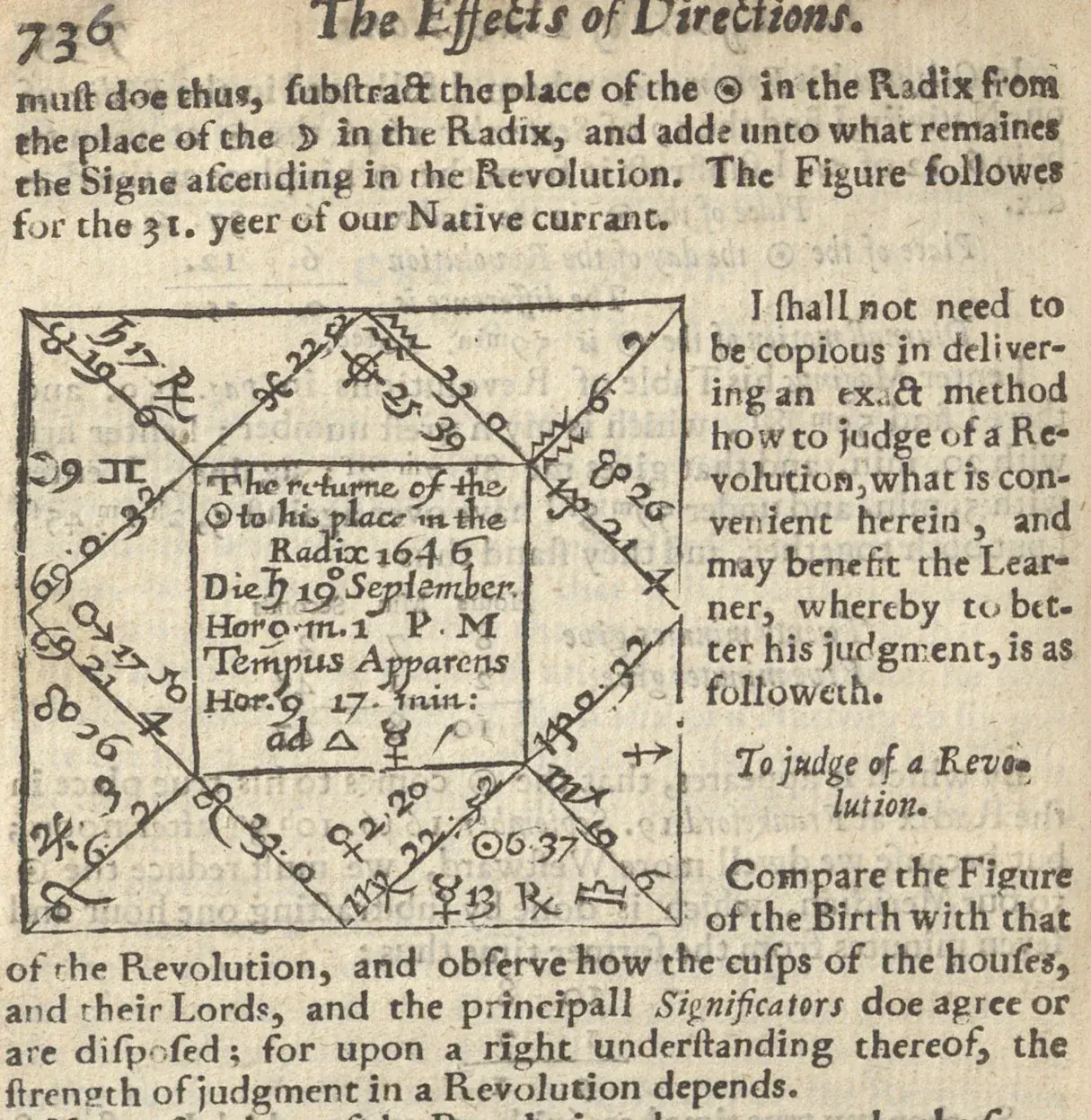
Repetition becomes a clock
A return occurs when a moving planet reaches the same zodiacal longitude it held at birth. Zodiacal longitude is the planet’s degree along the ecliptic, the Sun’s apparent path around Earth, measured in the tropical zodiac. At a solar return, the transiting Sun conjoins the natal Sun. At a lunar return, the Moon conjoins the natal Moon. At a Saturn return, Saturn conjoins natal Saturn.
Same longitude does not mean the whole sky repeats. The returning planet may have different latitude, speed, direction, house placement, and relationships with other planets. The Moon will not necessarily repeat its natal phase. Saturn may arrive while retrograde, its apparent backward motion as seen from Earth. A return is one repeated coordinate inside a sky that has continued moving.
The astronomical recurrence is calculable. An ephemeris provides the receipt: date, time, longitude, speed, and direction. The symbolic claims are less secure. Controlled research has not established that return charts reliably produce or predict particular events. Astrology uses them as structured periods for observation and interpretation, not as proven causes. Keep those two kinds of claim separate. Precision in calculation does not manufacture certainty in meaning.
Exactness and usable time
A return chart is cast for the exact conjunction, not for an approximate day. If your natal Sun is at 14°22′ Taurus, the solar return occurs when the transiting Sun reaches 14°22′ Taurus. Your birthday at midnight is not the return unless the conjunction happens then. The return may fall on the previous or following civil date, depending on the year and location.
An orb is the distance from exactness. You may study a Saturn return within a 3° orb, meaning Saturn is no more than 3° from natal Saturn, but you do not cast the return chart at 3° away. Software solves for exact equality, usually to the minute or second. Save the result in Universal Time as well as local time, and check the historical time-zone conversion. A polished chart with the wrong daylight-saving setting is still the wrong chart.
Exact return time cannot be more trustworthy than the birth data beneath it. The Moon moves roughly 12° to 15° per day, close to half a degree per hour. A natal Moon position based on an uncertain birth time shifts the lunar return moment accordingly. The angles move much faster, averaging about 15° per hour, so return houses can change sharply. False precision is still false.
Solar returns: the annual frame
The Sun returns to the same tropical longitude after approximately one tropical year, about 365.242 days. Because the civil calendar uses leap years and local clocks, the return time changes from year to year. A solar return chart describes the period from one exact solar return to the next. It does not begin automatically at sunrise, midnight, or a birthday gathering.
The exact instant is the same worldwide, but the local chart is not. Changing location changes the Ascendant, Midheaven, and houses because those features describe the sky relative to a particular horizon. A defensible default is the place where you are physically present at the return. Some astrologers retain the birth location as a stable symbolic reference. There is no strong evidence settling this dispute. State your method and use it consistently. Relocating solely to obtain a pleasing Ascendant assumes more control than the technique can support.
Read a solar return in layers:
- The return Ascendant and its ruler. These describe the year’s mode of engagement: how you meet circumstances and where effort gathers.
- The return Sun by house and aspect. The Sun’s sign and degree repeat by definition, so the house is usually more informative. It marks where sustained attention, visibility, or authorship may be required.
- Planets near the angles. Angular means close to the horizon or meridian, where a planet tends to feel harder to ignore. Begin with planets within about 3° of the Ascendant, Descendant, Midheaven, or IC. You can widen to 5° when the birth time is sound, but declare the rule rather than moving it to fit the story.
- The Moon. Its house, sign, and close aspects describe changing needs, habits, and responsiveness through the year.
- Return-to-natal contacts. Overlaying the charts means placing the return planets around the natal chart. Tight conjunctions or oppositions to natal planets and angles often repeat the year’s central concerns.
Use restrained aspect orbs. A 3° maximum for major return-chart aspects is a clean starting point; widen selectively for the Sun and Moon. Applying aspects are moving toward exactness, which can feel like a matter still forming. Separating aspects have passed exactness, often showing material already in motion. These are interpretive distinctions, not guarantees about event order.
A solar return is not a replacement natal chart. Read it against the natal chart and current transits. A dramatic solar return factor unsupported elsewhere may remain background atmosphere. Repetition deserves more weight than spectacle.
Lunar returns: the monthly pulse
The Moon reaches its natal tropical longitude about every 27.3 days, producing roughly thirteen lunar returns in a solar year. Do not confuse this with the 29.53-day phase cycle from one New Moon to the next. A lunar return repeats longitude, not phase. The returning Moon may be full, crescent, or nearly new.
Lunar returns are best used as short frames inside the solar return year. Each chart lasts until the next lunar return. They can show when an annual topic becomes immediate, emotionally absorbing, domestic, social, or simply busy. They do not make every month momentous. Most life is made of ordinary adjustments, and a sound technique must leave room for ordinary time.
Prioritize the lunar return Moon by house and aspect, planets close to the angles, and contacts that repeat the solar return or a major transit. The Moon’s conjunction with natal Moon is automatic and therefore not new information. Ask what else joins it. If lunar return Mars is within 1° of the solar return Midheaven while Mars is also transiting a natal angle, the repetition is worth noting. A lone wide aspect among many is not.
Birth-time quality matters especially here. A one-hour uncertainty can move a lunar return angle by roughly 15° and may change several house placements. When the birth time is weak, use planetary aspects and sign placements more confidently than angles or houses. You do not repair uncertain data by interpreting more loudly.
A lunar return chart may coincide with an event, but the exact return minute need not be the event minute. Think in terms of a month-long emphasis, with transits through the lunar return chart providing possible shorter triggers. Even then, a trigger means a repeated symbolic contact, not a compulsory occurrence.
Saturn returns: the long cycle
Saturn takes about 29.46 years to orbit the Sun. From Earth, its apparent motion includes annual retrograde periods, so the conjunction with natal Saturn may occur once or three times. The first Saturn return commonly develops around ages twenty-eight to thirty, the second around fifty-eight to sixty, and the third around eighty-seven to eighty-nine. These are ranges, not deadlines. Natal degree, retrograde motion, and calendar timing matter more than a slogan about age.
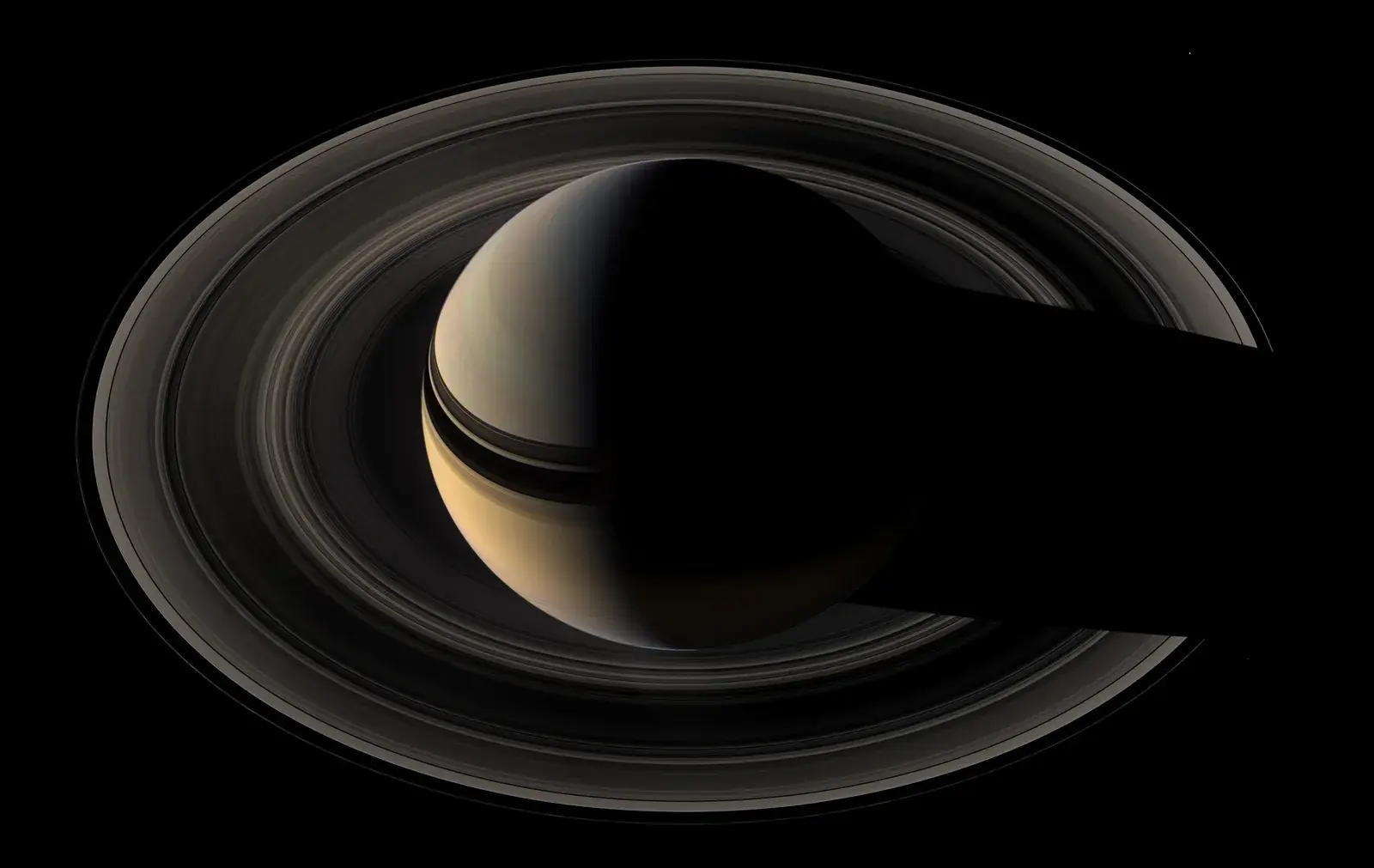
Astrologers associate Saturn with limits, duration, responsibility, structure, authority, consequence, and work that must survive contact with time. In felt terms, Saturn asks what can actually be carried, maintained, refused, repaired, or completed. A return often concentrates attention on commitments already embedded in the natal Saturn house and aspects. It does not guarantee maturity, loss, marriage, career success, isolation, or any other stock outcome. People meet the same cycle under very different material conditions.
For timing, choose an orb before reading events. One practical convention is 3° for the broad Saturn-return season and 1° for concentrated study. An orb is an interpretive tolerance, not a force field. When Saturn moves slowly or stations, it spends longer near one degree. A station is the point where apparent motion changes direction. This concentrates calendar time around the contact; it does not automatically make the symbolism stronger.
Multiple exact passes are common. The direct pass may coincide with an issue becoming visible, the retrograde pass with revision, and the final direct pass with implementation. That three-act pattern is common enough to test but not reliable enough to impose. Sometimes the first pass completes the matter. Sometimes nothing outward happens on any exact date, while a gradual change becomes obvious months later.
You can cast a chart for each exact Saturn conjunction. The difficulty is deciding which return chart deserves priority when there are three. Astrological schools disagree. A sturdy method treats the natal Saturn transit as the spine and uses the exact-return charts as supporting views. Compare them for repeated angular planets, close contacts to natal placements, and the condition of Saturn. Do not force one chart to govern three decades merely because software printed it first.
Nesting the clocks
Returns become more useful when their scales are kept distinct. Saturn describes a long developmental season. The solar return shows the annual setting in which part of that season unfolds. Lunar returns show shorter periods when the topic becomes immediate. Agreement across scales increases focus, not certainty. Three clocks pointing toward home and family still do not tell you whether the manifestation is a move, a repair, a new obligation, a boundary, or quiet consolidation.
Worked mini-example
Consider a fictional chart with natal Saturn at 18°42′ Aquarius in the fourth house and natal Venus at 19°08′ Taurus in the seventh. Saturn and Venus form a natal square with an orb of 0°26′. The fourth house concerns home, family structure, and private foundations; the seventh concerns agreements and close partnerships. The square describes friction between duties at the base of life and the wish for ease, reciprocity, or shared values.
A simplified ephemeris gives these Saturn positions:
- 12 February: 17°42′ Aquarius, direct — 1°00′ applying to natal Saturn.
- 8 March: 18°42′ Aquarius, direct — exact first conjunction.
- 2 April: 19°10′ Aquarius, direct — 0°28′ separating from natal Saturn.
- 11 July: 19°10′ Aquarius, retrograde — 0°28′ applying because Saturn is moving back toward 18°42′.
- 17 July: 18°42′ Aquarius, retrograde — exact second conjunction.
- 22 November: 18°42′ Aquarius, direct — exact third conjunction.
Direction changes the meaning of applying and separating. At 19°10′ direct, Saturn has passed natal Saturn. At the same degree retrograde, it is returning toward natal Saturn. The degree alone is not enough; you need the motion column in the ephemeris.
At each exact Saturn return, transiting Saturn also activates natal Venus. When Saturn is at 18°42′ Aquarius, its square to Venus at 19°08′ Taurus has an orb of 0°26′ and is applying during direct motion. This links the Saturn return to existing questions about partnership, agreements, comfort, and value. It does not create a new natal story.
Now add the solar return for that year. Suppose solar return Saturn is at 18°55′ Aquarius, only 0°13′ from natal Saturn, and the solar return IC is at 19°06′ Aquarius. Saturn is therefore 0°11′ from the IC, the chart’s root angle. This is strong repetition: natal Saturn in the fourth house, transiting Saturn returning, and solar return Saturn almost exactly angular at the IC.
A careful interpretation names the field before naming outcomes. Home structure, family responsibility, living arrangements, private boundaries, and the durability of a partnership agreement are emphasized. Possible manifestations include renegotiating a shared home, taking on a family duty, committing to repairs, or deciding what arrangement can be sustained. No chart chooses among them. Present circumstances and the person’s actions matter.
The exact passes can be logged without forcing a script. Perhaps discussions begin near the first pass, terms are revised near the retrograde pass, and a workable arrangement appears near the final pass. Perhaps the whole matter settles in March. Dated observation decides whether the proposed sequence fits. Retrospective elegance is cheap; records made beforehand are better receipts.
Common mistakes and corrections
- Using the birthday instead of the solar return. Calculate the exact conjunction. The calendar date is only an approximation.
- Treating every return chart as equally strong. Look for tight aspects, angularity, natal contacts, and repetition across timing methods. A crowded chart is not automatically an important one.
- Reading the return chart alone. The natal chart supplies the underlying pattern. The return shows when and how that pattern may be emphasized.
- Overreading what must repeat. The solar return Sun always conjoins natal Sun. The lunar return Moon always conjoins natal Moon. The Saturn return Saturn always conjoins natal Saturn. Their presence is the definition, not the interpretation.
- Assuming three Saturn contacts. Check the ephemeris. Some returns have one exact pass; others have three. A station may bring Saturn close without producing another exact conjunction.
- Making exact dates carry too much. Exactitude is valuable for calculation, but lived developments can spread across the entire orb period.
- Ignoring data quality. Return angles and houses depend on birth time and return location. If either is uncertain, reduce interpretive confidence rather than hiding the uncertainty.
- Collecting only striking matches. Record quiet periods, failed expectations, and alternate explanations. Otherwise memory edits the technique in its own favor.
For each return, keep a table with date, exact longitude, orb, direction, repeated chart factors, and plain observations. Separate what happened from what you think it meant. A clock earns trust by keeping time, not by sounding impressive.
Practice
Choose one accurately timed natal chart. Calculate the next solar return and two consecutive lunar returns, saving both Universal Time and local time. Note how far each solar or lunar return falls from the expected calendar date or interval.
Then locate the nearest Saturn return, past or future. List every exact conjunction and mark Saturn as direct or retrograde. Using a declared 3° season and 1° concentrated orb, identify where Saturn is applying, exact, and separating.
For one solar or lunar return, write only three interpretive factors: one angular placement, one close aspect, and one natal contact. If the chart belongs to a completed period, compare those notes with dated records. Include mismatches. If it is upcoming, write two concrete possibilities and one ordinary outcome that would count as little activation.
Finish with one sentence distinguishing the astronomical fact from the symbolic proposal.
Key terms
return · solar return · lunar return · Saturn return · exact conjunction · orb · applying aspect · separating aspect · retrograde · station · angularity · return-to-natal overlay · tropical year · lunar phase cycle
Check your reading
Three questions from this chapter’s worked example and its common mistakes. Two of three marks the chapter complete.
Should you use the birthday date for a solar return?
Saturn at 19°10′ Aquarius retrograde, natal Saturn at 18°42′ Aquarius. Applying or separating?
Does every Saturn return have three exact passes?