Part 9: Horary & Electional · Chapter 32 of 36 · 10 min
Electional basics: choosing a moment
Electional astrology is astrology done before the fact.
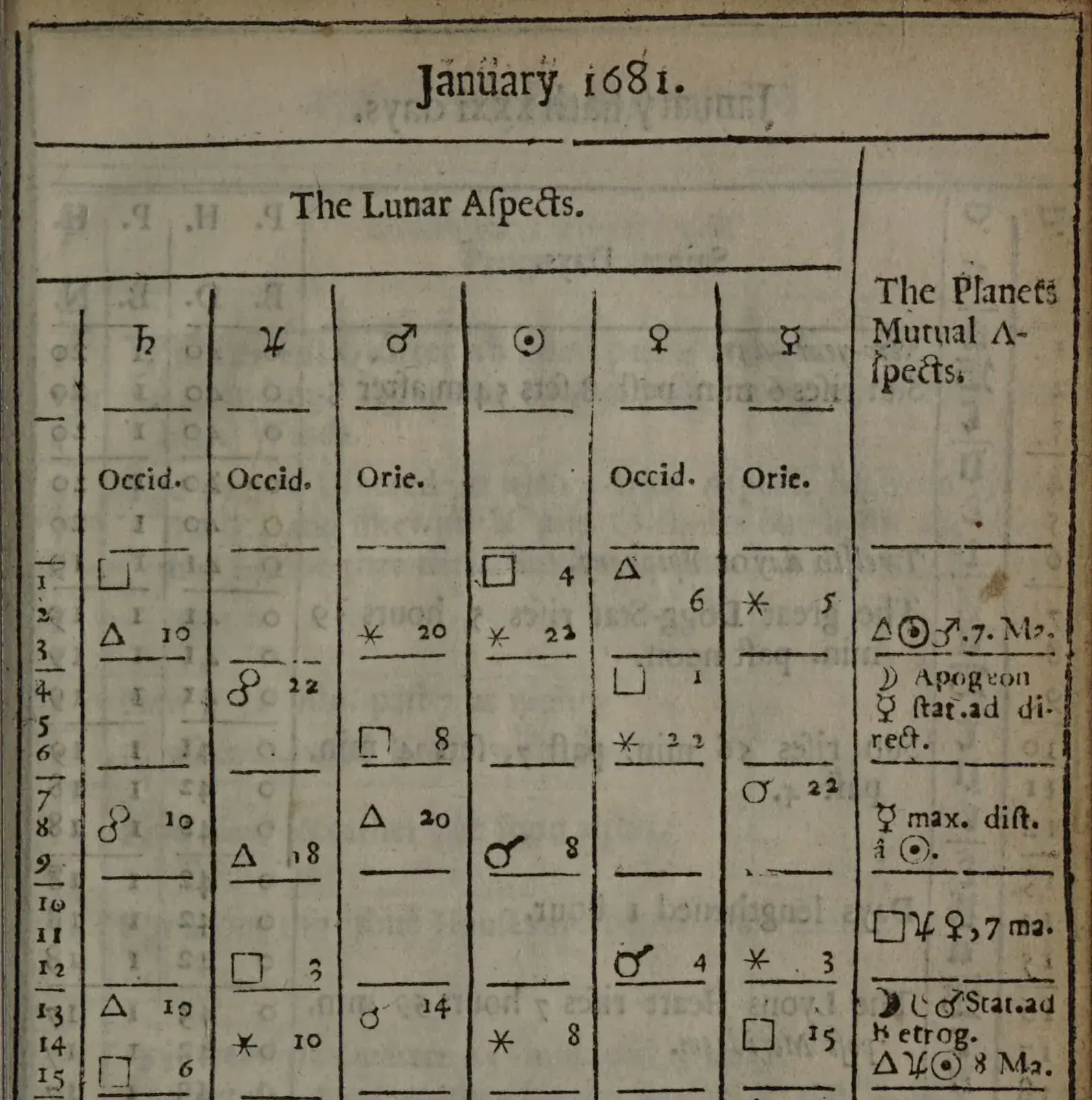
Electional astrology is astrology done before the fact. You choose a feasible time for an action, then treat that beginning as an inception chart: a chart for something entering the world.
The claim must stay modest. There is no robust controlled evidence that selecting a chart causes better outcomes. Electional astrology is a symbolic timing practice, inherited through centuries of Western technique. It can clarify purpose, expose tradeoffs, and help people coordinate a beginning. It cannot repair weak preparation, absent consent, poor conditions, or an unworkable plan.
You elect the start, not the ending.
What exactly is beginning?
An election requires an observable act. Wanting, discussing, drafting, and preparing are usually not the inception unless one of them is the event you mean to study.
For a website, the operative moment might be when the public page becomes accessible. For a newsletter, it might be when the platform accepts the final send command. For a workshop, opening registration and holding the first session are two distinct beginnings. Each can have its own chart because each begins a different process.
Choose the moment that is both meaningful and reasonably under your control. If a platform releases messages over twenty minutes, you cannot honestly claim a single delivery time. You can elect the command that initiates the release and record the distribution interval. Precision should serve honesty, not costume.
Location matters because the Ascendant and houses depend on it. For a human-initiated action, use the location of the person or team performing the decisive act. For an automated publication, astrologers disagree: some use the operator's location, some the organization’s base, and some the server or public activation location. State your method and keep it consistent. A hidden change of method can make almost any chart look convenient.
Record the time zone and daylight-saving status. Earth rotates about 15 degrees per hour, which gives the crude rule that the Ascendant moves roughly one zodiacal degree every four minutes. The real rate varies with latitude and with the signs rising; the Ascendant is a projection onto the ecliptic, not a clock hand moving evenly. Near a house cusp or sign boundary, calculate the chart rather than relying on the average.
Give the election one clear job
Write the purpose as a verb and a visible result:
- Publish the registration page for a community class.
- Begin a recurring studio practice.
- Open a public exhibition.
- Hold the first meeting of a neighborhood group.
- Release a completed piece of software.
A vague aim produces a vague hierarchy. If the purpose is to launch a class publicly, the tenth house may describe the public emergence, the ninth the teaching, the eleventh the participating group, and the third the announcement. Decide which function is primary. You cannot strengthen every house equally.
| Action | Primary house | Common supporting houses |
|---|---|---|
| Public launch or announcement | 10th | 3rd, 11th |
| Class, publication, or formal teaching | 9th | 3rd, 10th, 11th |
| Performance or creative release | 5th | 10th, 11th |
| Community meeting | 11th | 3rd, 7th |
| Moving into a home | 4th | 1st, 2nd |
| Beginning a work routine | 6th | 1st, 10th |
These assignments are interpretive choices, not universal categories built into nature. Different schools sometimes privilege different houses. Name your rationale before inspecting candidate charts; otherwise you may quietly change the question to suit the chart.
A practical hierarchy
Older Western electional authors, including William Ramesey in Astrologia Restaurata, repeatedly emphasize the Ascendant ruler, Moon, and ruler of the relevant house. The ranking comes from astrological lineage, not laboratory testing. It remains useful because it prevents decorative details from outranking the event itself.
1. Protect the Ascendant and its ruler
The Ascendant describes the action taking form. Its ruler acts for the undertaking and for the person initiating it.
Prefer an Ascendant ruler that is direct, reasonably free from the Sun, and able to act through house placement. A planet in its domicile or exaltation has essential dignity: it is operating with familiar tools. A planet near an angle has accidental dignity: it has access to the microphone. Strength of character and ability to act are related, but they are not identical.
Combustion is the traditional condition in which a planet lies close to the Sun, commonly within about 8°30′. The image is literal solar glare: the planet becomes difficult to see. Boundaries vary among authors, so treat the number as a convention rather than a law. If Mercury signifies a publication and sits 2 degrees from the Sun, the chart may describe a message swallowed by a central personality or agenda. That symbolism matters more than the label alone.
Retrograde motion is not an automatic veto. It often fits revision, return, retrieval, or reopening. It is less tidy for an undertaking whose main promise is clean forward movement. A station—a planet barely moving before changing direction—concentrates the sense of a turn. Use that deliberately rather than treating it as generic misfortune.
2. Strengthen the ruler of the target house
For a teaching project, inspect the ninth house and its ruler. For a public launch, inspect the tenth. Ideally, the house ruler is dignified, angular or otherwise effective, and connected to the Ascendant ruler or Moon.
An applying sextile or trine between the two rulers can describe cooperation. A square may still work, especially for a demanding task, but it tends to require effort and correction. Always confirm that the aspect completes. If one planet changes signs before exact contact, the apparent application does not perfect. The chart has shown an approach that fails to become a meeting.
Reception adds context. One planet receives another when the applying planet occupies a sign ruled by the receiving planet. If the Moon at 18° Taurus applies to Venus at 20° Cancer, Venus receives the Moon because Taurus is Venus’s sign. The image is hospitality: Venus has a reason to admit the Moon. Reception helps, but a host that is combust, stationary, or otherwise constrained may have little to offer.
3. Use natural significators as support
Mercury supports writing, speech, software, exchange, and coordination. Venus supports art, rapport, pleasure, and social ease. Mars supports competition, decisive separation, and concentrated effort. Jupiter supports teaching, confidence, generosity, and expansion. Saturn supports limits, durability, accountability, and long construction.
Fit matters more than prettiness. Saturn may be entirely appropriate for beginning an archive intended to last. Mars may suit an athletic contest better than a delicate reception. Neither planet becomes harmless, but neither is simply bad. Mars accelerates and divides. Saturn slows and defines. Keep close hard applications from them away from the Moon and principal rulers unless their function belongs to the task.
Slow outer planets are secondary in a basic election because their zodiacal positions change little within an ordinary planning window. An outer planet within about 1 degree of an angle or principal significator deserves attention; a loose aspect should not displace the condition of the Ascendant ruler or Moon.
The Moon as the event’s sequence
The Moon describes movement from one condition to the next. An applying aspect is still forming; you feel the event leaning toward it. A separating aspect has already perfected; it describes what the event carries in from immediately behind it.
Look at four things:
- The Moon’s sign and house.
- The aspect from which it is separating.
- Its next applying major aspect.
- The final major aspect it completes before leaving the sign.
The final aspect is not a promised outcome. It is better read as the tone toward which the immediate sequence bends.
A void-of-course Moon, in William Lilly’s broad seventeenth-century usage, will not complete another major aspect before leaving its sign. Later schools use different orbs or include outer planets, so software can disagree. State your definition. In elementary electional work, calculate major aspects to the seven traditional planets and note outer-planet contacts separately.
A waxing Moon often suits increase and development; a waning Moon may suit editing, closure, reduction, or release. This is a supporting consideration. A waxing Moon applying to a severely constrained ruler is not rescued by phase alone.
Building the candidate list
Begin with the real window: when the people, equipment, venue, and audience are available. Then work from broad to narrow.
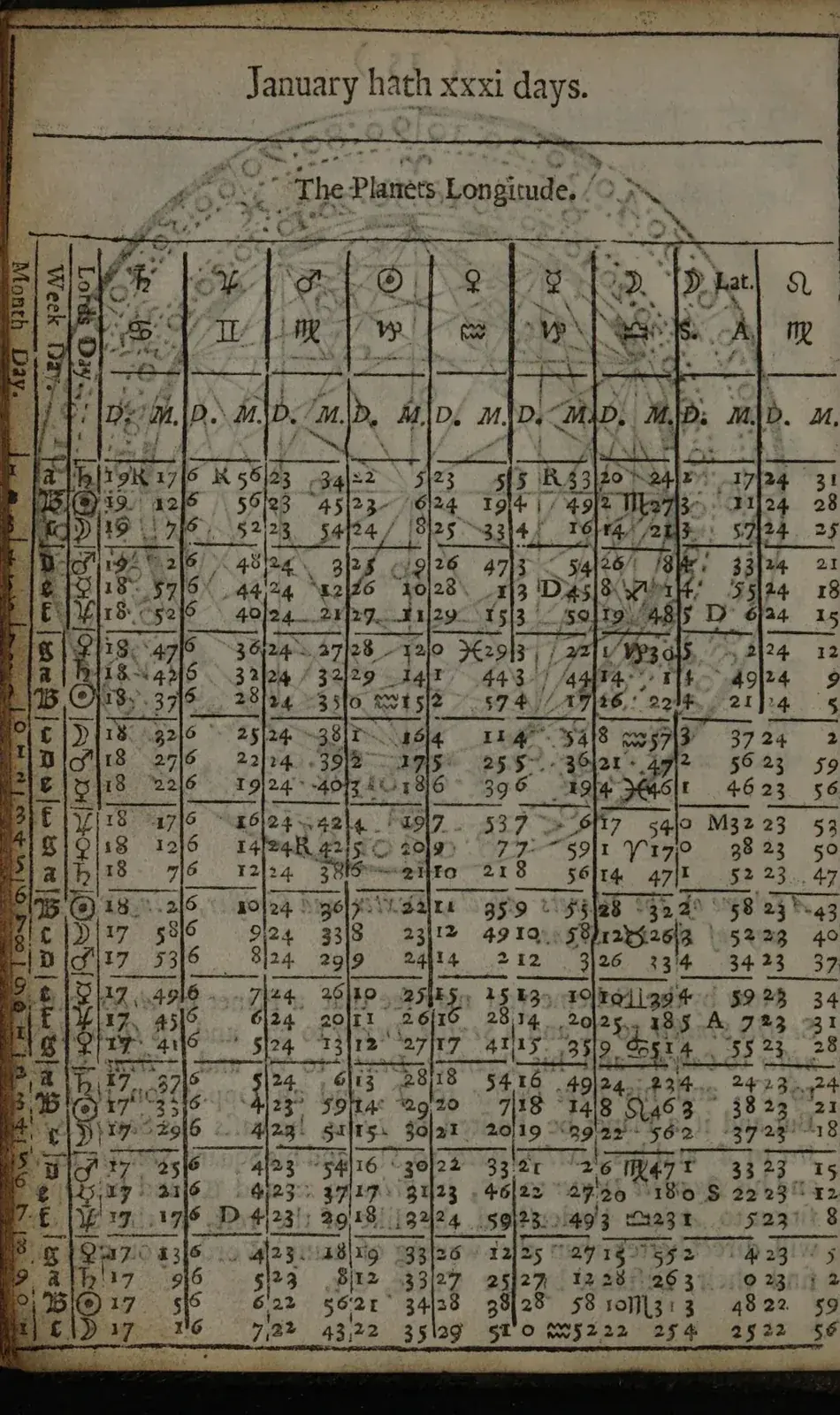
- Scan the dates for lunar sign, lunar applications, planetary stations, and sign changes.
- On the workable dates, move through the hours to place a useful sign on the Ascendant.
- Check the Ascendant ruler, target-house ruler, Moon, and relevant natural significators.
- Verify that desired aspects actually perfect before either planet changes sign.
- Compare the remaining charts for coherence, not numerical perfection.
For a personally significant undertaking, you may compare the election with the natal chart. Keep this secondary. An uncertain birth time makes natal angles and houses uncertain, while a group undertaking cannot harmonize equally with every participant’s chart.
Worked mini-example
Suppose the task is to make registration public for a six-week community writing workshop. The decisive act is the registration page switching from private to public. The feasible window is a weekday morning, and the organizer can schedule activation to the minute.
The following is a constructed teaching chart, not an ephemeris claim for a particular city or date. Whole-sign houses are used, with the Midheaven retained as a degree-sensitive point.
- Ascendant: 18°26′ Virgo
- Midheaven: 15°10′ Gemini
- Mercury: 14°01′ Gemini, direct
- Venus: 2°22′ Taurus, direct
- Sun: 25°17′ Taurus
- Moon: 10°06′ Libra
- Jupiter: 3°40′ Cancer, direct
- Mars: 2°18′ Leo
- Saturn: 1°15′ Aries
Virgo rises, making Mercury ruler of the election. Mercury is in its own sign in the tenth whole-sign house and lies 1°09′ from the Midheaven. It has both essential resources and public reach. It also describes the actual task: publishing information and coordinating registration.
The ninth house of teaching is Taurus. Its ruler, Venus, is at 2°22′ Taurus in its own sign and house. Venus applies to a sextile with Jupiter at 3°40′ Cancer, an orb of 1°18′. Jupiter occupies the eleventh house of groups and has traditional exaltation in Cancer. The teaching ruler is therefore moving toward a supportive connection with a well-resourced planet in the community house.
The Moon at 10°06′ Libra applies to a trine with Mercury at 14°01′ Gemini. The orb is 3°55′. Because the Moon moves faster and reaches the trine before leaving Libra, the aspect perfects. In this constructed chart, it is also the Moon’s final major aspect before changing signs. The immediate sequence ends with contact to the ruler of the election and the public tenth house.
There are compromises. The Moon is in the second house rather than the ninth, tenth, or eleventh, emphasizing material support, equipment, pricing, or registration resources. Mars is in the twelfth, which can describe labor occurring out of public view. Saturn is in the eighth and poorly dignified in Aries. Neither difficult planet is angular or making a close applying hard aspect to Mercury or the Moon, so neither leads the chart.
This candidate passes because its main testimonies tell one story: a communicative ruler is visible, the teaching ruler is capable, the group house is supported, and the Moon moves toward Mercury. It does not promise attendance or a smooth six weeks. The organizer still needs a working page, clear dates, and a class people want.
Common corrections
- Choosing a date but not a time: the angles and house rulers can change substantially within hours. A daily Moon sign is not a complete election.
- Chasing Venus and Jupiter: benefics do not compensate automatically for a weak Ascendant ruler or damaged target-house ruler.
- Rejecting every square: some tasks require pressure, effort, or decisive friction. Inspect the planets involved, their condition, and whether the symbolism fits.
- Treating retrograde motion as universal failure: it may suit a relaunch, revision, reunion, or return. Match the motion to the verb.
- Ignoring perfection: an attractive applying aspect may dissolve when a planet changes signs first. Calculate the sequence.
- Rejecting an early or late Ascendant by rote: that rule belongs more strongly to judgment charts. In an election, 29 degrees mainly warns that a few minutes may change the ruler and structure.
- Optimizing an impossible moment: a chart no one can enact is not an election. It is a diagram.
- Shopping indefinitely: every chart contains tension. Continued searching can become refusal to begin.
Choose a chart whose compromises you can name. A clean beginning is not a flawless sky. It is a moment that fits the act and can be lived.
Practice
Choose one low-stakes action you can complete within the next two weeks: publish a short essay, open responses for a free gathering, or begin a recurring creative hour.
Define the inception in one sentence, including the observable act. Set a realistic three-day window and calculate three candidate times for the same location.
For each candidate, record:
- The Ascendant and condition of its ruler.
- The target house and condition of its ruler.
- The Moon’s separating aspect, next application, and final aspect before changing signs.
- Any aspect that appears to apply but fails to perfect.
- The strongest advantage and the compromise you would accept.
Choose one candidate and perform the action. Keep a brief record of what happened during the first day and first week. Do not score the election only as success or failure. Note whether the chart’s emphasized functions became visible in the way the beginning unfolded.
Key terms
electional astrology · inception chart · election window · event significator · essential dignity · accidental dignity · applying aspect · perfection · reception · combustion · void-of-course Moon
Check your reading
Three questions from this chapter’s worked example and its common mistakes. Two of three marks the chapter complete.
In the workshop election, why does Mercury rule the chart?
Is choosing a date without a time a complete election?
Should you reject every square in an election?