Part 10: Relationships & Place · Chapter 33 of 36 · 12 min
Synastry: two charts in conversation
Synastry begins with a modest act: place two natal charts side by side and notice where one person’s planets touch the other person’s.
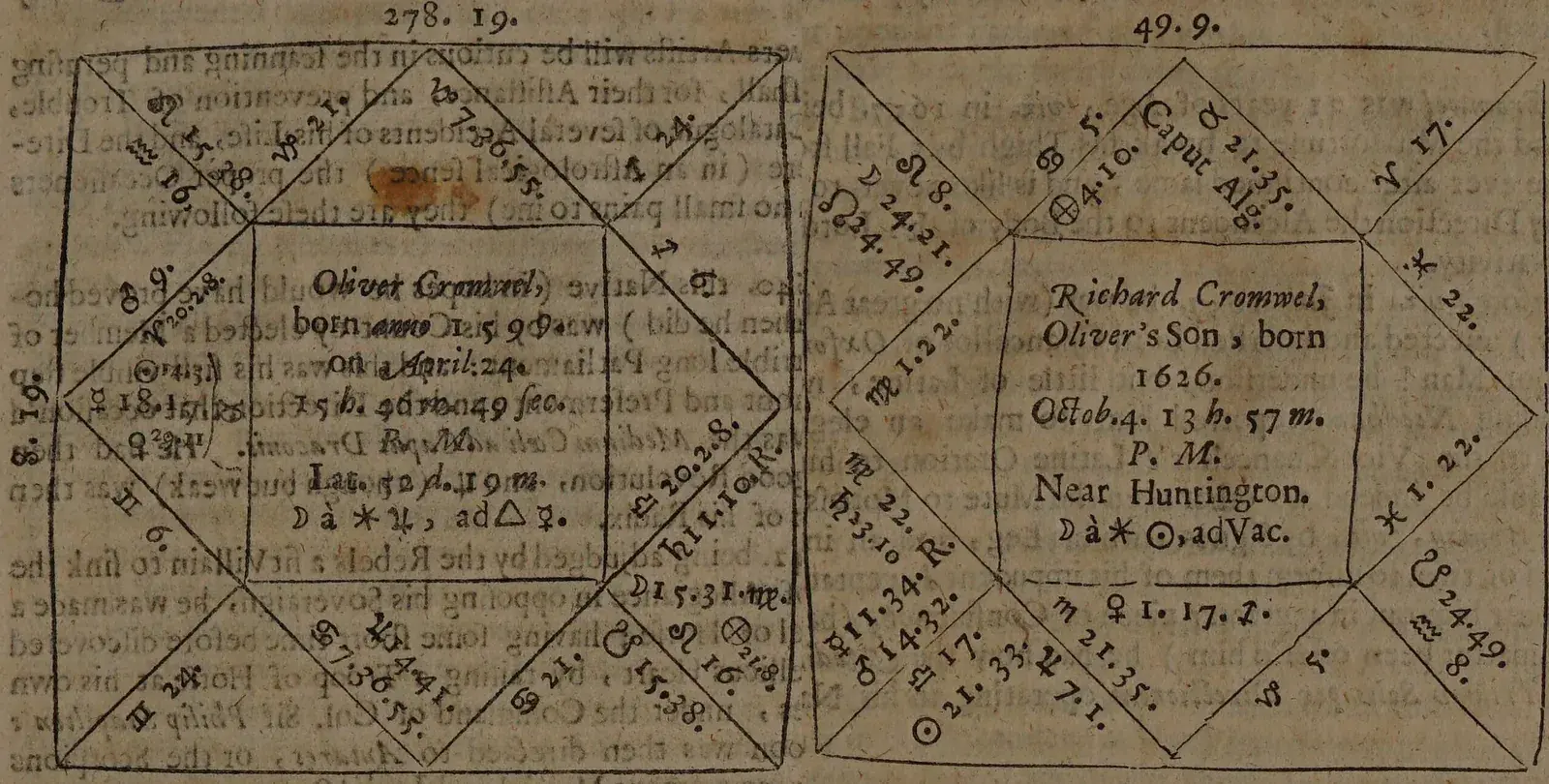
Synastry begins with a modest act: place two natal charts side by side and notice where one person’s planets touch the other person’s. A touch is geometry first. The interpretation comes after.
This matters because synastry is often asked to deliver a verdict: Are we right for each other? Will this last? Who feels more? A chart cannot answer those questions by itself. It can show recurring points of emphasis: where one person’s way of acting meets the other’s emotional rhythm, where affection finds ease, where conversation catches on a rough edge, where both people keep returning to the same subject without quite naming it.
Use the comparison to form better questions. The relationship supplies the evidence.
Two charts, not one verdict
A natal chart describes one person’s symbolic sky at birth. Synastry does not replace either natal chart. It compares them. If your Moon forms an aspect with another person’s Saturn, that contact says something about the meeting between your emotional habits and their way of structuring, limiting, or taking responsibility. It does not tell you that either of you is always emotional or always controlling. The individual charts provide the wider context.
Three layers are useful. A planet describes a function: the Sun shows selfhood and visibility, Mercury shows speech and meaning, Mars shows assertion and pursuit. A sign describes the style of that function. A house describes the area of life in which the function becomes noticeable. An aspect describes the relationship between two functions. In plain language: what is acting, how does it act, where does it show up, and what does it meet?
For example, your Venus at 8° Gemini may speak of affection through wit, questions, variety, and verbal play. If it falls in another person’s 3rd house, they may experience your affection through conversation and daily contact. If it squares their Saturn, warmth may meet caution or a need for defined terms. None of these statements stands alone. The sign, aspect, house, and lived behavior need to agree before the interpretation earns confidence.
Data before symbolism
Synastry is unusually sensitive to bad birth data because it depends on two charts at once. You need the date and place for each person, and a reliable birth time if you want to use the Ascendant, Midheaven, house cusps, or precise Moon contacts.
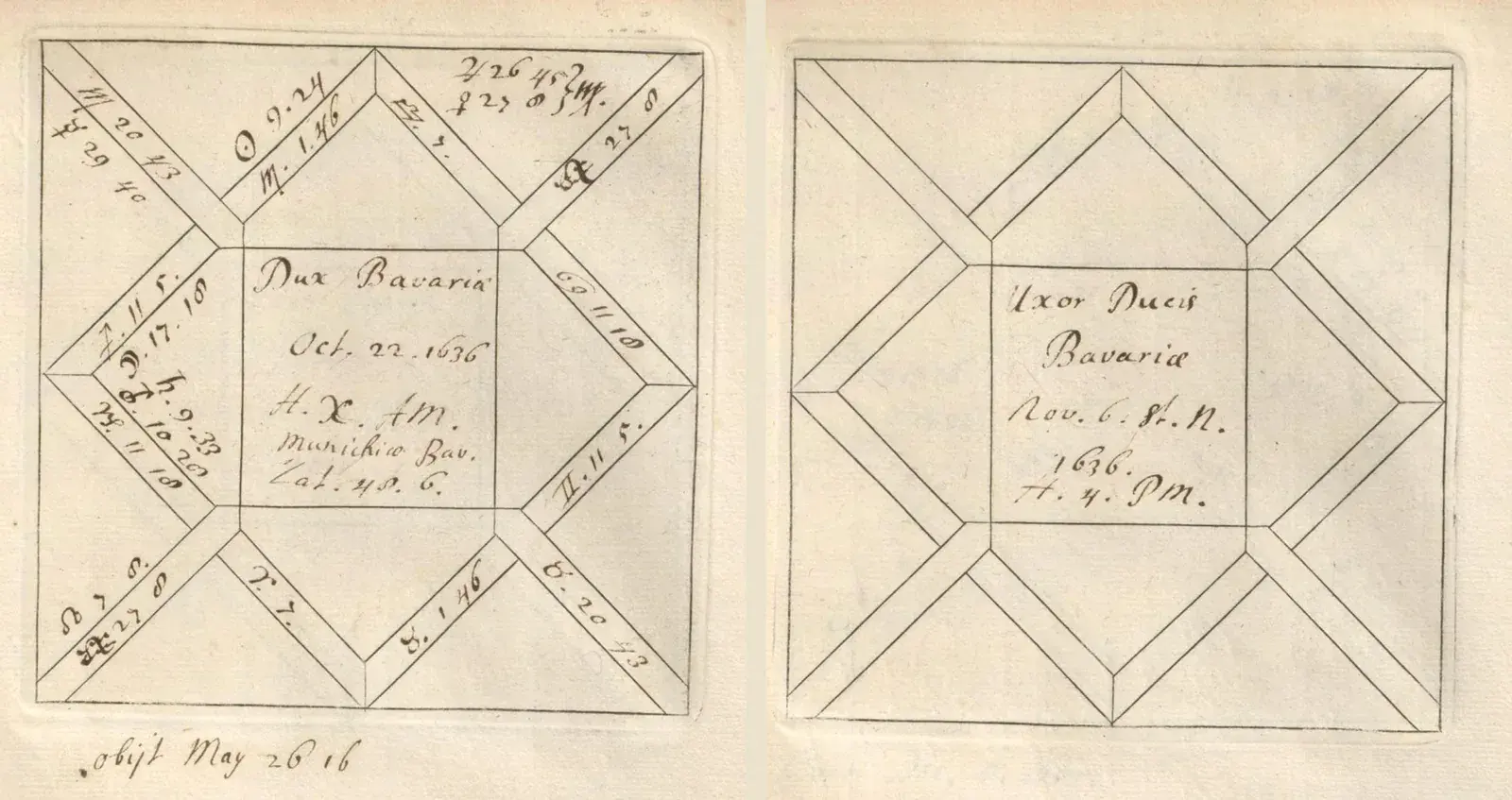
A small time error can move the angles enough to change a house overlay. The Moon moves several degrees in a day, so its exact contacts can also shift. If a birth time is unknown, do not invent an Ascendant or make a confident claim about the houses. Mark the uncertainty. An honest limitation is part of the reading, not a defect to hide.
Use the same zodiac convention and house system for both charts. Changing systems halfway through can make a comparison look more precise while quietly changing its premises. Precision is not the same as accuracy.
What counts as a contact?
An aspect is the angular distance between two planets, measured around the 360° zodiac. The main aspects are the conjunction at 0°, sextile at 60°, square at 90°, trine at 120°, and opposition at 180°. A quincunx at 150° is sometimes used as a secondary aspect and usually deserves a tighter orb.
A conjunction blends two functions into the same patch of sky. It can feel immediate and hard to separate: one person’s Mercury with another’s Sun may make speech central to how identity is seen. A square creates friction and activation; the people keep pressing on one another’s habits. An opposition creates a pull across two poles, often making each person more aware of what the other carries. A trine tends to move easily, while a sextile offers ease that still needs participation. Ease is not automatically intimacy. Friction is not automatically failure.
An orb is the distance from an exact aspect. If one planet is at 22° Libra and another is at 24° Capricorn, the separation is 92°: a square with a 2° orb. The smaller the orb, generally, the more distinct the contact. Think of orb as volume, not morality. A close aspect may be loud; it is not therefore kind. A wider aspect may be subtle; it is not therefore irrelevant.
There is no single law of orbs in synastry. A workable discipline is to allow about 6–8° for contacts involving the Sun or Moon, 4–6° for personal planets, 2–4° for outer planets, and about 2–4° for angles. You may choose differently, but state your rule before you interpret. Do not widen an orb simply because the story is appealing. Same-sign planets are not automatically conjunct, and planets in opposite signs are not automatically opposite. The degrees have to support the claim.
The geometry is symmetrical: if your Mars squares their Saturn, their Saturn also squares your Mars. The experience is not symmetrical in the same way. Your Mars is the planet person, bringing initiative, urgency, and direct action. Their Saturn is the planet person bringing limits, timing, standards, or form. Both people live the contact, but not through the same function.
The planets in conversation
The Sun in synastry concerns recognition: does one person’s presence nourish or challenge the other’s sense of self? The Moon concerns comfort, mood, instinctive response, and the habits that appear before a polished explanation. Mercury concerns how two people exchange information, make meaning, and handle disagreement. Venus concerns attraction, preference, pleasure, appreciation, and the small acts by which reciprocity becomes visible. Mars concerns initiative, desire, assertion, competition, and the way a person moves from wanting to doing.
Jupiter can enlarge whatever it touches, bringing generosity, humor, teaching, or excess. Saturn can make a contact serious and durable, but also marked by delay, judgment, duty, or unequal authority if the people do not discuss the terms. Uranus brings novelty and disruption of routine. Neptune can heighten ideals, tenderness, imagination, and ambiguity. Pluto concentrates attention and pressure, sometimes exposing questions about control, vulnerability, and change. These outer-planet meanings need care. A contact from Uranus, Neptune, or Pluto to another person’s personal planet or angle is usually more individually noticeable than the same outer-planet aspect shared by many people born in one period.
Start with the personal planets and angles. Then ask whether Jupiter or Saturn repeats the same theme. Only after that should you give major weight to an outer planet. A dramatic word attached to Pluto is not a substitute for a close degree and an observable pattern.
House overlays: where the contact lands
A house overlay occurs when one person’s planet falls inside a house of the other person’s chart. The person whose planet is being placed is the planet person. The person whose house receives it is the house person. This distinction keeps the reading relational rather than vague.
If their Mercury falls in your 3rd house, you may experience them as entering your daily mental environment: messages, errands, neighborhood life, study, or the ordinary exchange of facts. If their Venus falls in your 6th house, affection may become tangible through help, shared routines, food, work habits, or attention to practical detail. That placement does not rule out romance because the 6th house is supposedly unromantic. It describes one channel through which fondness may become noticeable.
The 7th house is not a guarantee of partnership. The 8th house is not a promise of sexual intensity or shared resources. The 12th house is not proof of secrecy or hidden hostility. Houses are fields of experience, not labels for another person’s motives. A planet in your 8th may bring honest conversations about trust and dependency; it may also simply make shared obligations more visible. Look at the actual relationship before choosing the dramatic version.
The angles deserve special attention when the birth times are reliable. The Ascendant is the way a person enters a room and meets immediate life. The Descendant describes the style of encounter associated with close others. The Midheaven relates to public direction and visible contribution; the IC relates to private grounding and the inner base of life. A partner’s planet close to one of your angles can feel immediate because it meets a highly exposed point in your chart. That immediacy still does not prove intention or permanence.
A worked mini-example
Consider two charts with no house information supplied.
Person A has the Sun at 14° Taurus, Moon at 3° Aquarius, Mercury at 27° Aries, Venus at 8° Gemini, and Mars at 22° Libra. Person B has the Sun at 16° Cancer, Moon at 20° Libra, Mercury at 25° Capricorn, Venus at 10° Leo, and Mars at 24° Capricorn.
Convert the positions to degrees from 0° Aries. A’s Sun is 44° and B’s Sun is 106°, a separation of 62°. That is a sextile with a 2° orb. A’s Venus is 68° and B’s Venus is 130°, also 62°, another 2° sextile. A’s Mars is 202° and B’s Moon is 200°, a 2° conjunction. A’s Mars and B’s Mars are separated by 92°, a square with a 2° orb. A’s Mercury at 27° is 93° from B’s Mars at 294° when measured by the shorter route around the circle, giving a square with a 3° orb. Finally, A’s Sun at 44° and B’s Venus at 130° are 86° apart, a square with a 4° orb.
What might this sound like in lived experience? The Sun–Sun sextile suggests that the two people may recognize one another’s basic ways of sustaining life. Taurus tends to make things concrete and steady; Cancer tends to track belonging, continuity, and emotional atmosphere. The contact is not a promise of agreement. It is a place where each person may understand why the other values what they value, even when the expression differs.
The Venus–Venus sextile adds an easier meeting around taste and affection. Gemini Venus may enjoy words, variety, and lightness; Leo Venus may enjoy warmth, expression, and visible appreciation. Receipts might include shared humor, an easy exchange of music or films, or a habit of making ordinary plans feel playful. This is evidence of a channel, not proof that every need will be met.
The most active pattern is Mars and the Moon. A’s Mars at 22° Libra sits only 2° from B’s Moon at 20° Libra. A’s initiative touches B’s automatic emotional rhythm. B may feel stirred, encouraged, crowded, or quickly responsive when A acts. A may experience B’s moods as cues to move, intervene, negotiate, or defend. The conjunction can be lively and intimate, but its quality depends on how each person handles speed and sensitivity.
Then Mars squares Mars, and A’s Mercury squares B’s Mars. The repeated Mars theme gives the chart a clear receipt: this pair may not merely disagree; they may disagree about pace, method, interruption, and who gets to initiate. A’s words can press on B’s action. B’s action can cut across A’s thought. One person may call the exchange direct while the other experiences it as pressure. The useful question is not Who is the difficult one? It is What happens in the first thirty seconds after disagreement begins?
A’s Sun square B’s Venus adds a more personal mismatch. B’s Venus may appreciate, evaluate, or seek to shape the way A expresses selfhood. A may feel warmly noticed at one moment and quietly rated at another. Because the orb is 4°, the contact is worth considering, but it should not be inflated into a claim of attraction. The chart shows a meeting between identity and preference. Whether that meeting becomes admiration, irritation, or both must be checked against speech and conduct.
No houses are interpreted here because no birth times or angles were given. Adding a 7th-house or 12th-house story would be invention. The strongest reading remains modest: there is ease around shared values and affection, while action, timing, and emotional response require conscious handling.
Corrections to common mistakes
Mistake: reading by sign alone. Taurus and Cancer are traditionally described as compatible by element and mode, but the exact Sun–Sun sextile above is what gives that claim a place in this comparison. Two planets can share a sign and still be 15° or 25° apart, beyond a useful orb. Sign language suggests style; degree mathematics establishes contact.
Mistake: treating every aspect as good or bad. A trine can make cooperation so effortless that an important issue stays unspoken. A square can force two people to develop a skill they would otherwise avoid. Saturn can describe reliability or judgment. Neptune can describe tenderness or confusion. The planet, aspect, sign, house, and behavior have to be read together.
Mistake: making one aspect carry the whole relationship. A Venus–Mars contact does not erase a persistent Mercury conflict. A beautiful Moon–Sun trine does not cancel disrespect. Look for repetition. If several contacts point to communication under pressure, that theme deserves more attention than a single minor aspect promising charm.
Mistake: confusing the two directions. Your Venus contacting their Mars is not identical to their Venus contacting your Mars. In the first case, your preferences and style of affection may stimulate their initiative. In the second, their affection may stimulate your initiative. A so-called double whammy—both cross-contacts present—repeats the attraction or activation theme, but still does not tell you how either person behaves with it.
Mistake: assigning motives from house overlays. Their planet in your 8th house does not prove that they want access to your resources. Their planet in your 12th does not prove a concealed agenda. The house person’s experience matters, but it is still an experience to describe and discuss, not a verdict about the planet person’s character.
Mistake: giving outer planets too much authority. People of the same age often share broad Uranus, Neptune, or Pluto aspects. A wide generational contact is background. A close aspect to the other person’s Moon, Venus, Mars, Sun, or angle is more specific. Specificity comes from the contact, not from the planet’s reputation.
Mistake: using synastry as a timing tool. Synastry describes the standing pattern between two natal charts. Transits and progressions are used to examine periods when a pattern may become more noticeable. A composite chart is different again: it is calculated from midpoints between the two charts and treats the relationship as a symbolic third figure. Do not use one method as if it were another.
A disciplined reading
Begin with reliable data. List the tight contacts to the Sun, Moon, angles, and personal planets. Note the planet person and house person. Then group the contacts by theme: communication, affection, action, emotional regulation, limits, shared meaning. Ask which themes repeat across aspects and house overlays.
For every interpretation, keep a receipt: the exact planets, degrees, aspect, orb, and—when relevant—the house. Then write an observable sentence. Instead of saying, This is an intense bond, write: When A asks for space, B sends several messages, and A experiences the contact as pressure. The sentence can be checked, discussed, and revised. Astrology becomes more honest when its claims can meet ordinary life.
Western astrology is a symbolic interpretive system, not an established causal account of why people behave as they do. It cannot establish another person’s private feelings, consent, character, or future choices. If the chart seems to say one thing and repeated direct behavior says another, give priority to the behavior. Do not use a difficult contact to excuse cruelty, or an easy contact to ignore incompatibility. A chart can sharpen attention; it cannot perform the conversation for you.
The most responsible synastry reading leaves both people more able to notice what is happening, not less responsible for what they do with it.
Practice
Choose two charts you can discuss with respect. If birth times are reliable, include the angles and house overlays; otherwise leave them out. List up to eight contacts, using a consistent rule: about 6–8° for the Sun or Moon, 4–6° for personal planets, and 2–4° for outer planets or angles.
For each contact, record the exact degrees, aspect, orb, planet person, and house person if relevant. Write one sentence describing a possible lived pattern, then one question that could test it. For example: A’s Mercury square B’s Mars, 3° orb—quick questions may be heard as pressure. Question: What happens when one of us asks for clarification during conflict?
Mark each sentence as observed, reported, or speculative. Keep only the observed and reported material in your interpretation. End by writing one practical question you could ask the other person without mentioning astrology.
Key terms
synastry · aspect · orb · conjunction · square · trine · sextile · opposition · house overlay · planet person · house person · angular contact · double whammy · outer planet · composite chart
Check your reading
Three questions from this chapter’s worked example and its common mistakes. Two of three marks the chapter complete.
A's Mars at 22° Libra and B's Moon at 20° Libra form what?
Are 'your Venus to their Mars' and 'their Venus to your Mars' identical?
Does their planet in your eighth house prove they want your resources?