Part 10: Relationships & Place · Chapter 34 of 36 · 11 min
The composite chart: the relationship as a third thing
A composite chart is a map of the relationship itself.
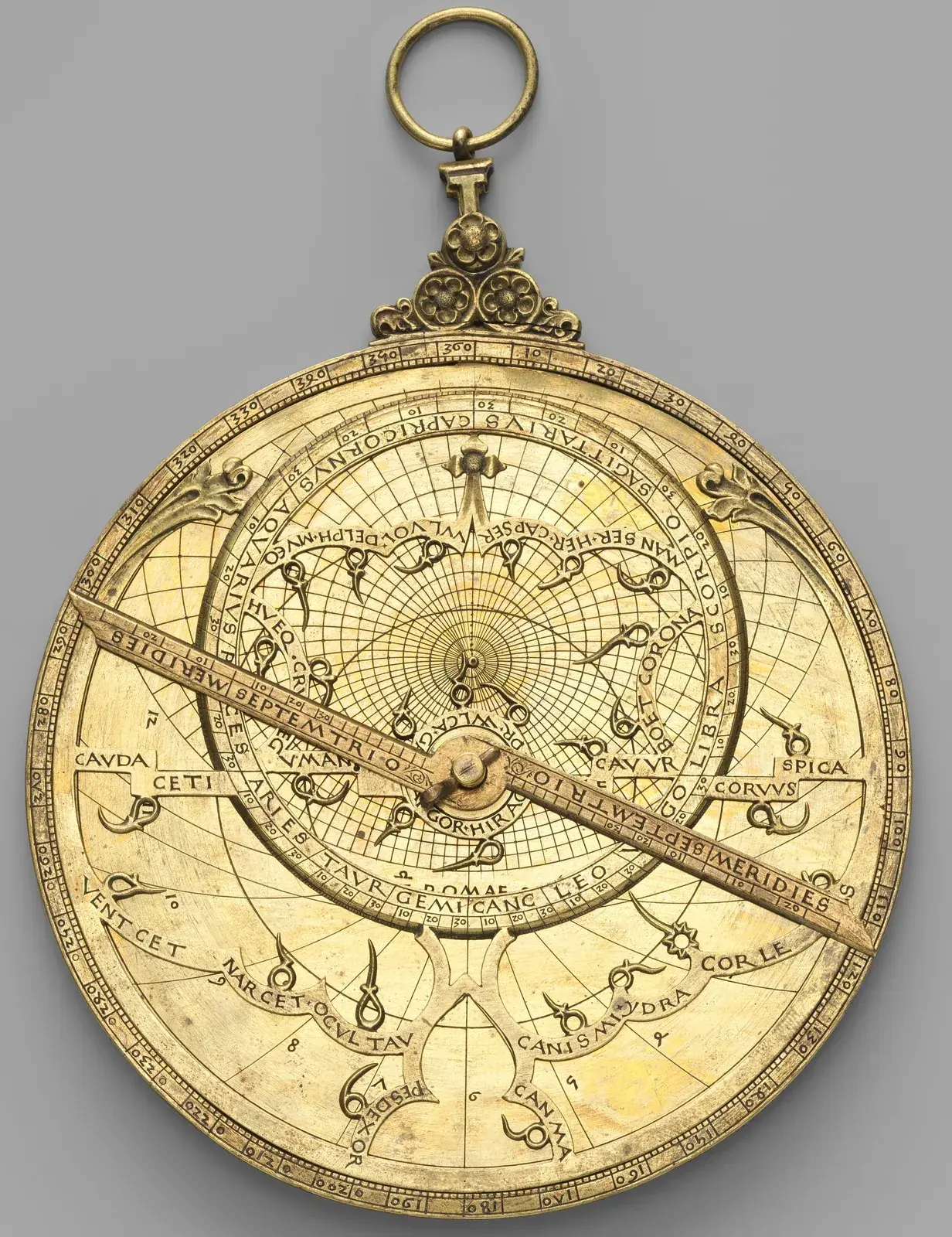
A chart for what happens between you
A composite chart is a map of the relationship itself. Not you. Not the other person. Not a verdict on whether you fit. It describes the pattern that can arise when two natal charts meet and keep meeting.
That distinction matters because relationships produce effects neither person carries alone. One person may be direct in most settings and become cautious with a particular partner. Another may be private by habit and become unusually expressive in one bond. You can see those shifts in ordinary life without needing astrology to explain them. The composite chart gives astrologers a symbolic structure for studying the shared pattern.
Calling the relationship a third thing does not mean it has a body, a will, or a separate consciousness. It means that interaction has its own habits. A conversation between two people develops a tone. A household develops rules, spoken or unspoken. A collaboration develops a pace. The composite chart is designed to describe that tone, those rules, that pace.
It is a useful distinction because natal charts can tempt you to assign everything to character. The composite asks a different question: what does this connection tend to make salient?
The midpoint: the actual construction
A midpoint is the point halfway between two positions on the zodiacal circle. The composite chart takes the midpoint between each pair of equivalent natal placements: Sun with Sun, Moon with Moon, Mercury with Mercury, and so on.
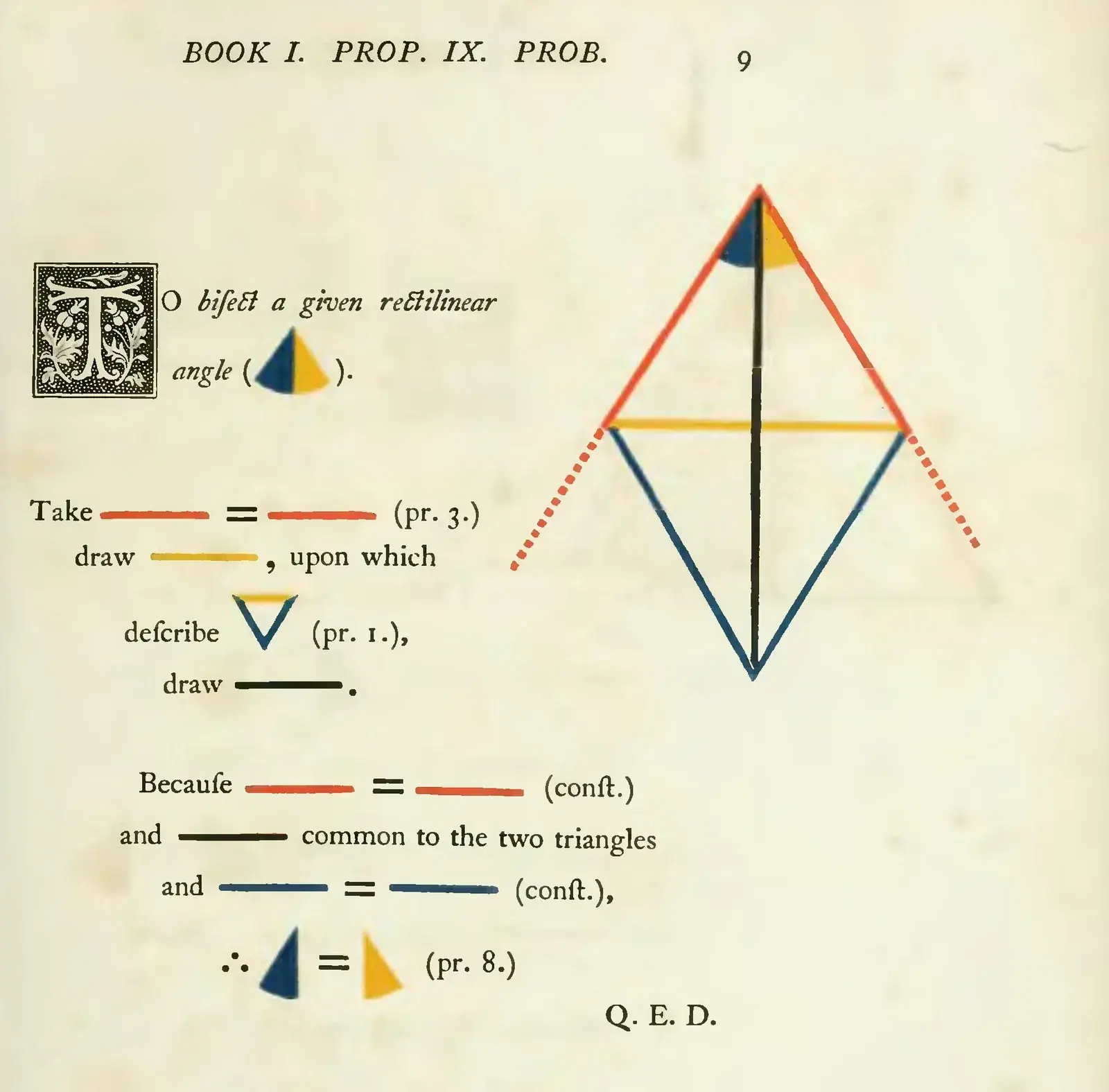
If one person has Venus at 12° Taurus and the other has Venus at 20° Taurus, the composite Venus is 16° Taurus. That is straightforward.
The zodiac is circular, so sign boundaries need care. If one person has Mars at 28° Aries and the other has Mars at 4° Taurus, the shortest distance between them is six degrees. The midpoint is 1° Taurus, not somewhere on the far side of the chart. Software normally handles this correctly. You still need to understand the principle, because a midpoint calculated by treating signs as separate boxes can be wrong by nearly 180 degrees.
Exact oppositions create a genuine technical ambiguity. Between 10° Aries and 10° Libra, both 10° Cancer and 10° Capricorn are equally halfway around the circle. Most programs use a consistent calculation rule and produce one answer. Exact cases are uncommon, but near-oppositions can make a midpoint sensitive. When you encounter one, note the original positions and do not pretend the arithmetic is more settled than it is.
A midpoint composite is not a chart cast for an actual instant in a particular place. Its planets are mathematical averages of natal positions. That is why it belongs in a different category from a natal chart or an event chart.
There is another technique, often called a Davison relationship chart, which uses the midpoint in time and place between two births and casts a chart for that actual midpoint. It can produce similar themes, but it is not the same method. A Davison chart has a date, time, and location; a midpoint composite does not. Keep the methods separate while you are learning. Blending them makes it impossible to know what you are interpreting.
Composite, synastry, and the questions they answer
Synastry compares one person’s natal chart to another’s. It can show that your Mars contacts their Moon, for example: your way of acting meets their emotional responses in a particular fashion. It preserves the two separate people.
The composite chart combines corresponding points into a third chart. Composite Mars is not your Mars or their Mars. It is the relationship’s shared way of moving, initiating, arguing, pursuing, or handling pressure.
This prevents a common mistake. Suppose a composite chart has Mercury square Saturn. Do not tell one person, You are Mercury, and the other, You are Saturn. That is not what the chart says. It may describe a shared communication pattern in which discussions become serious, careful, structured, delayed, exacting, or occasionally constrained. Synastry and lived observation may help you understand how each person contributes. The composite itself does not assign permanent roles.
Use synastry when your question is about contact between two distinct charts. Use the composite when your question is about the relationship’s recurring atmosphere and structure. A strong reading often moves between both, but it does not confuse them.
Astrology has not been established as a scientific measure of compatibility or a reliable forecasting instrument. Composite work is symbolic interpretation, not a device for proving what a relationship is or deciding what anyone must do. Its best use is modest and concrete: it can offer language for patterns you can check, discuss, accept, revise, or reject.
A chart is a lens, not a verdict.
Angles, houses, and the birth-time problem
Most programs calculate midpoint positions for the Ascendant and Midheaven as well as for planets. The Ascendant is the chart’s eastern horizon point; in practice, it sets the orientation and house structure. The Midheaven is the upper meridian point; it often speaks to public direction, visible aims, and the way a connection meets the wider world.
Those points can be useful in composite work, but they deserve a technical warning. They rely heavily on accurate birth times. A few minutes can shift an Ascendant, and the amount of movement varies with latitude. If either person’s birth time is estimated, rounded, or unknown, composite houses and angles become uncertain even when the planetary midpoints remain stable.
Do not build a confident interpretation on a composite Ascendant if one birth time is loose. You can still study the composite Sun, Moon, planets, and their aspects. Leave houses and angles in pencil.
Programs also vary in their handling of composite houses. A standard midpoint composite generally begins with midpoint angles and derives a house framework from them. Different house systems can change house emphasis, especially when a planet is near a cusp. That does not make one system fraudulent; it means house placement is a more conditional layer than an exact planetary aspect.
If you have reliable times, read the houses after the planets and aspects. If you do not, skip them without apology.
How to read the chart without flattening it
Composite interpretation uses the same grammar you have used throughout this course:
- Planet: what function is active.
- Sign: how that function tends to be expressed.
- House: where in the shared life it becomes noticeable.
- Aspect: what other function it has to negotiate with.
In a composite chart, the Sun can describe the connection’s organizing purpose or center of gravity. The Moon often describes its emotional climate and habitual responses. Mercury describes shared language, decision-making, and the movement of information. Venus describes attraction, pleasure, values, and the ways affection is offered or received. Mars shows initiative, friction, urgency, and how the pair acts under pressure.
Jupiter can describe growth, confidence, excess, teaching, or a shared appetite for more. Saturn describes structure, agreements, maintenance, standards, delays, and the work of making something durable. Uranus brings change, surprise, autonomy, and departures from routine. Neptune can show imagination, idealization, sensitivity, ambiguity, or porous boundaries. Pluto can describe intensity, concentration, power dynamics, and encounters with what neither person can dismiss casually.
None of those words is automatically good or bad. Saturn can mean dependable follow-through or a pattern of over-control. Uranus can mean enlivening freedom or instability. The chart does not spare you the work of noticing context.
Start with what is most structurally loud:
- The composite Sun and Moon.
- Planets tightly aspecting the Sun, Moon, Ascendant, or Midheaven.
- The ruler of the composite Ascendant, if the birth times are reliable.
- Close aspects involving Saturn, especially to luminaries or angles.
- Repeated themes across sign, house, and aspect.
An aspect is the angular relationship between two points. An orb is the permitted distance from exactness. There is no universally proven orb rule. For composite work, tighter is usually cleaner because every placement is already derived from two charts.
A workable discipline is to use up to 5° for aspects involving the composite Sun, Moon, Ascendant, or Midheaven; up to 4° for Mercury through Saturn; and about 3° for the outer planets, unless an outer planet is exactly on an angle. Treat those as study limits, not natural laws. An exact aspect deserves attention because it is precise, not because it is morally more important.
Avoid reading every available aspect. A long software list can create the illusion of detail while hiding the actual pattern. Three clear statements that can be tested against lived experience are worth more than thirty disconnected keywords.
A worked mini-example
Take two fictional charts with reliable recorded birth times. Their relevant natal positions are:
| Point | Person A | Person B |
|---|---|---|
| Sun | 18°42′ Gemini | 22°18′ Gemini |
| Moon | 3°10′ Libra | 7°02′ Libra |
| Mercury | 27°50′ Gemini | 3°10′ Cancer |
| Venus | 12°20′ Cancer | 18°40′ Cancer |
| Mars | 15°48′ Virgo | 25°12′ Virgo |
| Saturn | 16°04′ Pisces | 24°56′ Pisces |
| Ascendant | 9°00′ Scorpio | 15°00′ Scorpio |
The composite positions are:
- Sun: 20°30′ Gemini
- Moon: 5°06′ Libra
- Mercury: 0°30′ Cancer
- Venus: 15°30′ Cancer
- Mars: 20°30′ Virgo
- Saturn: 20°30′ Pisces
- Ascendant: 12°00′ Scorpio
Mercury shows why circular arithmetic matters. One natal Mercury is at 27°50′ Gemini and the other is at 3°10′ Cancer. Those points are only 5°20′ apart across the sign boundary. Their midpoint is 0°30′ Cancer.
The first thing to notice is the exact mutable T-square:
- Composite Sun at 20°30′ Gemini squares composite Mars at 20°30′ Virgo, orb 0°00′.
- Composite Sun squares composite Saturn at 20°30′ Pisces, orb 0°00′.
- Composite Mars opposes composite Saturn, orb 0°00′.
This is not a compatibility score. It does not tell you that the connection is weak, difficult, admirable, or permanent. It does show a concentrated pattern: shared purpose, action, and restraint are in active negotiation.
The Sun in Gemini suggests that exchange, ideas, options, learning, and conversation may sit near the center of the connection. Mars in Virgo introduces the need to act through details, methods, correction, and practical work. Saturn in Pisces introduces questions of limits, obligations, uncertainty, and what can be sustained when conditions are not fully controllable.
With the Sun square both Mars and Saturn, the relationship may repeatedly face a familiar issue: discussion needs to become action, but action needs a workable container. The Mars-Saturn opposition can appear as a rhythm between pressing ahead and slowing down to check standards, capacity, or consequences.
That reading should become a question, not a pronouncement. You might ask: when this pair has a shared plan, do they get caught between generating possibilities, perfecting the method, and deciding what is realistically supportable? If the answer is no across many situations, the interpretation has not earned its place.
The composite Moon at 5°06′ Libra squares Mercury at 0°30′ Cancer with an orb of 4°36′. That falls within the wider orb allowed for the Moon. The aspect may describe a gap between the desire to keep interactions balanced and the need to communicate from a more protective, personal, or emotionally loaded place. One observable form would be politeness covering a request that needs direct wording. Another would be a real talent for handling sensitive subjects with tact. Context decides which is closer.
The composite Ascendant at 12° Scorpio trines Venus at 15°30′ Cancer, orb 3°30′. If the birth times are sound, this gives a softer note to the relationship’s outward style: privacy, loyalty, emotional attentiveness, and selective disclosure may support affection. It does not erase the T-square. It tells you something about the manner in which the pair may approach it.
Notice what has not happened. We have not assigned Mars to Person A and Saturn to Person B. We have not said the exact T-square guarantees conflict. We have not treated Gemini as mere talkativeness. The chart offered a pattern; the reading translated it into specific questions that experience can answer.
Errors that make composite work thin
Treating the composite as a merged personality. A relationship has patterns, but it does not replace the people in it. Keep each natal chart visible. If someone is quiet, a composite Mercury placement does not override that fact.
Using only signs. A composite Venus in Cancer means little by itself. Its house, aspects, condition, and connection to the rest of the chart determine whether the theme is central, easy to access, or under strain.
Turning tension into a bad omen. Squares and oppositions show active friction or developmental pressure in the symbolic language of astrology. They can produce conflict, effort, competence, attraction, or repeated negotiation. The relevant question is how the pair handles the pressure.
Overreading uncertain houses. If a time is approximate, a composite planet near a house cusp may shift houses entirely. Do not force precision where the data do not support it.
Mistaking a software output for an interpretation. The program can calculate midpoints and list aspects. It cannot know which themes are present in the relationship, which are absent, or what anyone values.
Using a composite chart to make claims about private motives. A chart cannot establish what another person secretly feels, intends, or will choose. Read it as a map of relational dynamics that must be checked against actual communication and conduct.
Transits to the composite
You can track current planetary movements to composite points. Technically, this is simple: a current planet forms an aspect to a fixed composite placement. Interpretively, it needs restraint.
If transiting Saturn reaches a composite Sun, you might examine whether questions of commitment, structure, timing, responsibility, or limits have become more prominent. That does not establish an outcome. It gives you a focused area to observe.
Record these periods prospectively when possible. Write the exact date, the aspect, the orb, and a few concrete observations before you know what story you want to tell. Retrospective interpretation can find patterns almost anywhere. Notes made in real time provide better receipts.
Practice
Practice: build one composite slowly
Choose a relationship for which both people have shared their birth data willingly. Use recorded birth times if you intend to work with houses and angles. If either time is uncertain, calculate the planetary composite and mark the angles and houses as provisional or omit them.
- List the composite Sun, Moon, Mercury, Venus, Mars, Jupiter, Saturn, Ascendant, and Midheaven with exact degrees.
- Circle only aspects within your working orbs. Begin with the Sun, Moon, and any exact aspects.
- Write three statements in plain language. Each should name a pattern that could be observed rather than a trait you are assigning to either person.
- For each statement, write one piece of supporting evidence and one possible counterexample from actual shared life.
- Compare one composite factor with one synastry factor. State clearly which chart answers which question.
- If the chart has a close Saturn aspect, ask what the relationship needs to maintain over time. If it has a close Mars aspect, ask how action and disagreement are handled. Keep the questions open.
Finish by crossing out any sentence that claims certainty about another person’s inner life. Keep what remains. That is usually where the useful work begins.
Key terms
composite chart · midpoint · synastry · Davison relationship chart · Ascendant · Midheaven · houses · aspect · orb · composite transits
Check your reading
Three questions from this chapter’s worked example and its common mistakes. Two of three marks the chapter complete.
Mercury at 27°50′ Gemini and Mercury at 3°10′ Cancer. Where is the composite Mercury?
What does the exact mutable T-square in the composite show?
How does a composite chart differ from synastry?