Research · Sun and Moon
Sun and Moon: which pair is rarest?
144 pairings, one Moon that visits every sign each month, and a quirk of the calendar you can actually see in the data.
NASA/GSFC/Arizona State University
At a glance
The rarest Sun and Moon pair is Capricorn Sun, Libra Moon, 0.556% of US births 2000 to 2014. The most common is Virgo Sun, Cancer Moon, 0.787%.
- Rarest pair
- Capricorn / Libra1 in 180
- Most common pair
- Virgo / Cancer1 in 127
- Even split
- 1 in 1440.69% each
- Same-sign pairs
- 8.30%born near a new moon
Check your big threeYour exact odds, out of 1,728.
The lead
The Moon is fair, the Sun is not
Try this today
- Find your pair in the grid below: Sun down the side, Moon across the top.
- Then add your rising sign in the checker on the main page and watch the odds move.
Your Moon sign is the most evenly spread part of your chart. The Moon goes all the way round the zodiac in about 27 days, so over a year every sign gets its turn more than a dozen times. In 62 million US births from 2000 to 2014, every Moon sign lands between 8.19% and 8.49% of births.
The Sun is different. It spends a whole month in each sign, and the birth calendar is lumpy: Leo season is busy, Capricorn season is quiet.
So when you pair them, the Sun sets the baseline and the Moon adds a small wiggle. That is why the rarest pairs lean on a Capricorn Sun and the most common pairs on a summer one. The full spread runs from 0.556% to 0.787%, a ratio of 1.42 to 1. Compare that with 3.0 to 1 once the rising sign joins in at 40°N.
The sky behind it
Method. We did not survey anyone and we did not roll random numbers. We stepped through every calendar day from 2000-01-01 to 2014-12-31 (5,479 days) and every four-minute slot of local clock time within each day, 1,972,440 birth moments in all. Each moment is weighted by the number of babies the US Social Security Administration recorded for that date (62.2 million births), divided evenly across the day. For each moment the Sun and Moon come from NASA JPL's DE442 ephemeris (tropical zodiac, geocentric) and the rising sign from the local sidereal time at the stated latitude.
What it assumes. Births spread evenly through the 24 hours. Real hospitals have a daytime bulge (scheduled C-sections and inductions), which nudges rising-sign pairings a little; our earlier rising-sign study found it moves no single rising sign by more than 0.03 points. The calendar is the US one for every latitude, so the non-US rows are "the same births, born further north or south", not a census of those countries.
| Sun \ Moon | Ari | Tau | Gem | Can | Leo | Vir | Lib | Sco | Sag | Cap | Aqu | Pis |
|---|---|---|---|---|---|---|---|---|---|---|---|---|
| Aries | 0.666 | 0.675 | 0.684 | 0.709 | 0.678 | 0.639 | 0.667 | 0.705 | 0.683 | 0.664 | 0.683 | 0.687 |
| Taurus | 0.696 | 0.700 | 0.671 | 0.671 | 0.720 | 0.701 | 0.638 | 0.666 | 0.693 | 0.717 | 0.730 | 0.690 |
| Gemini | 0.724 | 0.718 | 0.745 | 0.676 | 0.683 | 0.718 | 0.729 | 0.700 | 0.679 | 0.693 | 0.733 | 0.763 |
| Cancer | 0.765 | 0.760 | 0.736 | 0.750 | 0.739 | 0.713 | 0.680 | 0.726 | 0.761 | 0.717 | 0.728 | 0.769 |
| Leo | 0.757 | 0.777 | 0.775 | 0.744 | 0.720 | 0.750 | 0.781 | 0.716 | 0.718 | 0.710 | 0.764 | 0.748 |
| Virgo | 0.742 | 0.761 | 0.766 | 0.787 | 0.726 | 0.738 | 0.687 | 0.773 | 0.756 | 0.748 | 0.689 | 0.764 |
| Libra | 0.716 | 0.709 | 0.720 | 0.717 | 0.742 | 0.708 | 0.709 | 0.652 | 0.710 | 0.741 | 0.712 | 0.683 |
| Scorpio | 0.678 | 0.661 | 0.693 | 0.692 | 0.670 | 0.696 | 0.707 | 0.681 | 0.636 | 0.689 | 0.701 | 0.692 |
| Sagittarius | 0.698 | 0.661 | 0.654 | 0.692 | 0.693 | 0.619 | 0.677 | 0.670 | 0.644 | 0.633 | 0.656 | 0.656 |
| Capricorn | 0.689 | 0.683 | 0.605 | 0.624 | 0.588 | 0.597 | 0.556 | 0.652 | 0.648 | 0.659 | 0.647 | 0.685 |
| Aquarius | 0.690 | 0.663 | 0.672 | 0.650 | 0.676 | 0.658 | 0.676 | 0.624 | 0.671 | 0.674 | 0.647 | 0.630 |
| Pisces | 0.673 | 0.696 | 0.678 | 0.667 | 0.648 | 0.655 | 0.684 | 0.678 | 0.639 | 0.684 | 0.691 | 0.644 |
The hidden pattern
Your Sun-Moon pair is really your moon phase
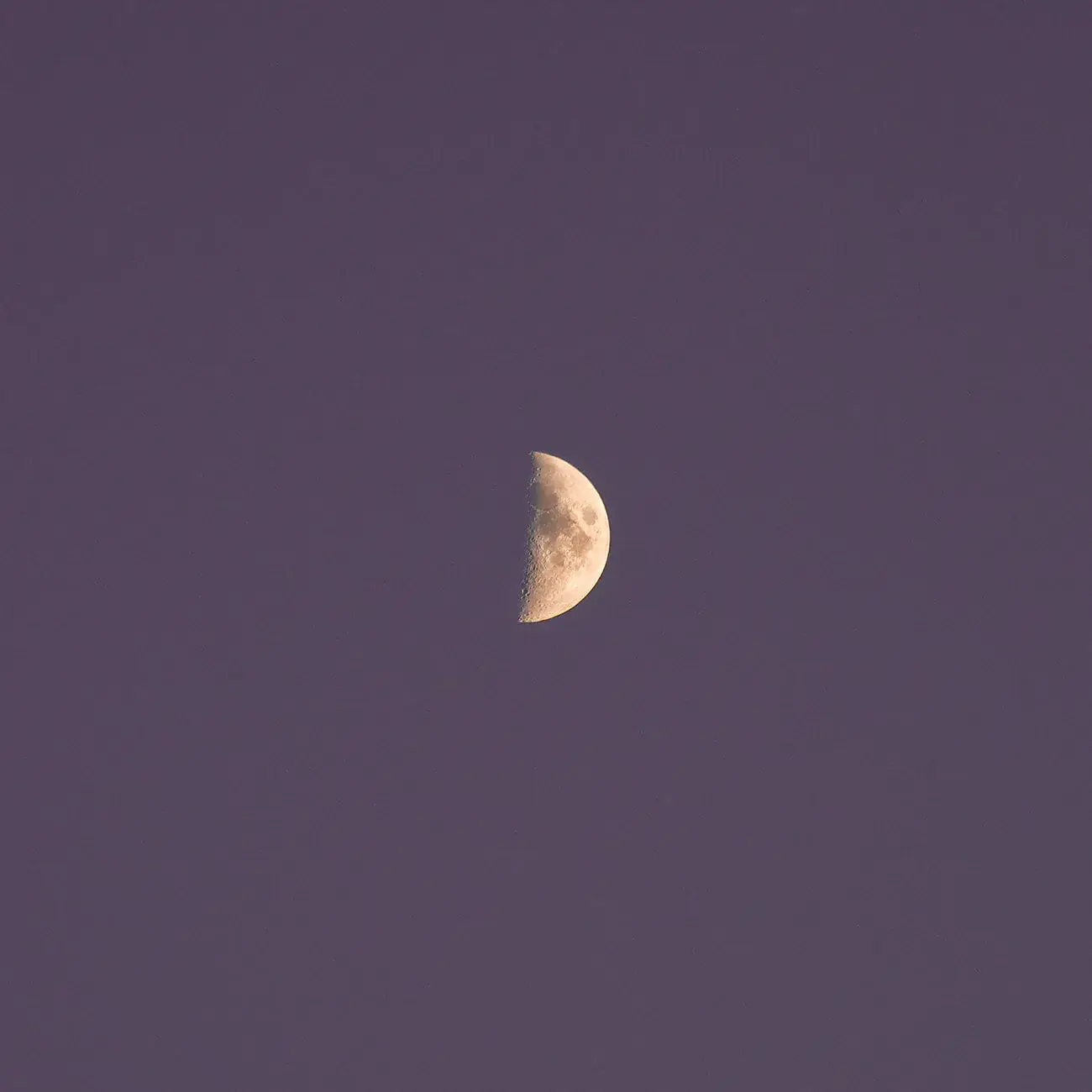
There is a neat trick hiding in this table. The gap between your Sun sign and your Moon sign tells you roughly which phase the Moon was in when you were born. Same sign: a new moon. Six signs apart: a full moon. Three apart either way: a quarter moon.
Count by that gap and the shares come out almost even. In our data, the twelve gaps range from 8.06% to 8.54%. Being born with the Moon in your own sign, the new-moon pairing, is 8.30%.
The small unevenness comes from the window itself. Fifteen years is not a whole number of lunar cycles that line up with the calendar; the Moon's phases realign with the same dates only every 19 years (the Metonic cycle). Count a different set of years and a few pairs would swap places near the top and bottom.
The sky behind it
| Moon ahead of Sun | Rough phase | Share of births |
|---|---|---|
| 0 signs | New moon | 8.30% |
| 1 sign | Waxing | 8.07% |
| 2 signs | Waxing | 8.43% |
| 3 signs | First quarter | 8.43% |
| 4 signs | Waxing | 8.42% |
| 5 signs | Waxing | 8.06% |
| 6 signs | Full moon | 8.24% |
| 7 signs | Waning | 8.33% |
| 8 signs | Waning | 8.48% |
| 9 signs | Last quarter | 8.29% |
| 10 signs | Waning | 8.54% |
| 11 signs | Waning | 8.40% |
The bottom
Why Capricorn sits at the bottom
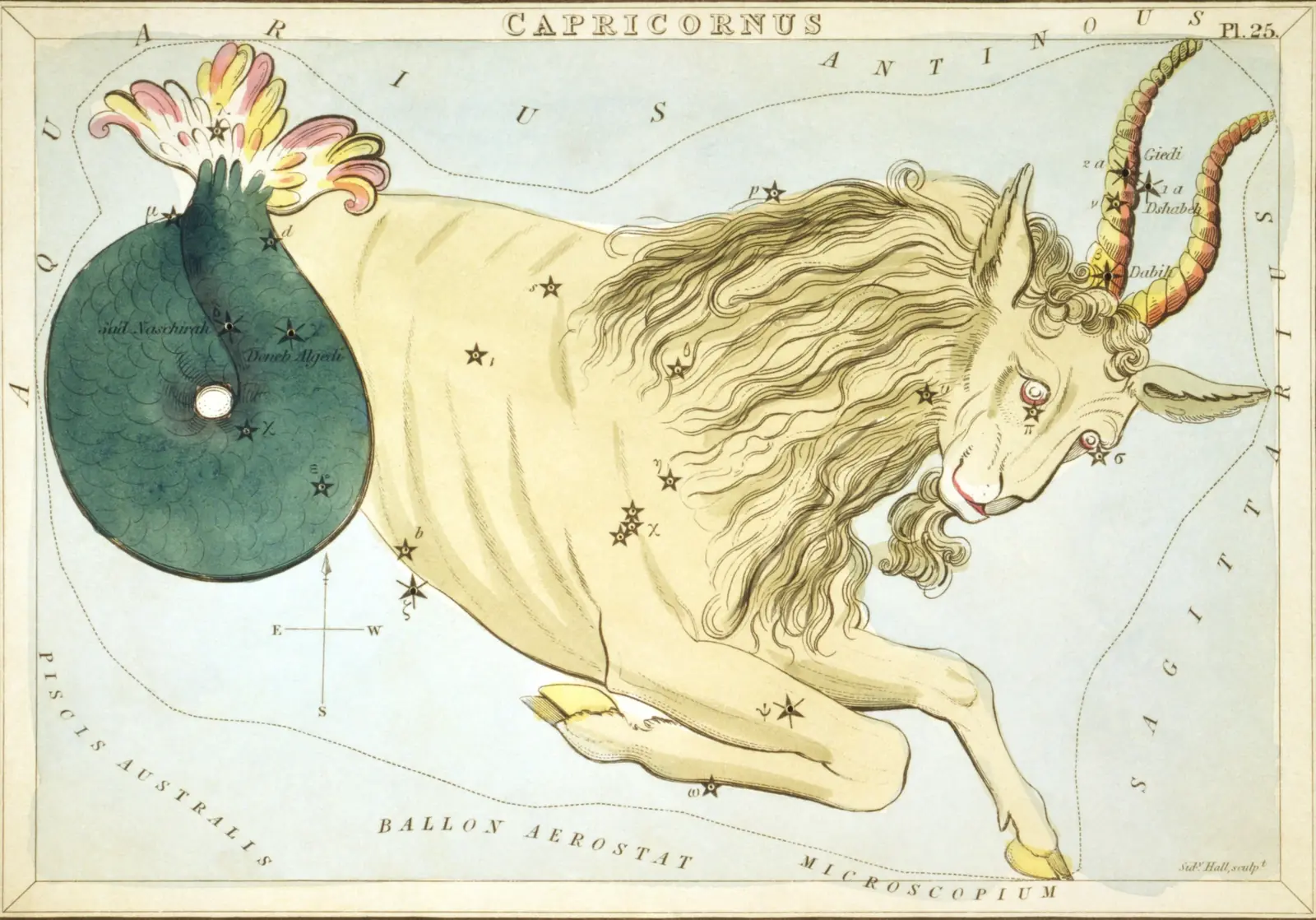
Of the ten rarest Sun-Moon pairs, 5 have a Capricorn Sun, including the rarest of all. Capricorn is the rarest Sun sign in the US for two stacked reasons: the Sun spends the fewest days of the year there, and the holiday weeks are the low point of the birth calendar.
Within Capricorn, the Moon decides the order. Capricorn Sun, Libra Moon sits at the very bottom at 0.556%. If you are a Capricorn with a different Moon, you are still in rare company: every Capricorn pair is below the even 1 in 144.
At the top, Virgo Sun, Cancer Moon leads at 0.787%, with Leo Sun, Libra Moon close behind.
The sky behind it
| Sun / Moon | Share | Odds | |
|---|---|---|---|
| Most common 1 | Virgo / Cancer | 0.787% | 1 in 127 |
| Most common 2 | Leo / Libra | 0.781% | 1 in 128 |
| Most common 3 | Leo / Taurus | 0.777% | 1 in 129 |
| Most common 4 | Leo / Gemini | 0.775% | 1 in 129 |
| Most common 5 | Virgo / Scorpio | 0.773% | 1 in 129 |
| Rarest 1 | Capricorn / Libra | 0.556% | 1 in 180 |
| Rarest 2 | Capricorn / Leo | 0.588% | 1 in 170 |
| Rarest 3 | Capricorn / Virgo | 0.597% | 1 in 168 |
| Rarest 4 | Capricorn / Gemini | 0.605% | 1 in 165 |
| Rarest 5 | Sagittarius / Virgo | 0.619% | 1 in 162 |
Try it
Your Sun and Moon, ranked
Pick both signs. You get the share of births, the rank out of 144 and the rough moon phase you were born under, plus every Moon sign for your Sun.
Capricorn Sun, Libra Moon: 0.556% of births, about 1 in 180.
Rank 144 of 144 pairs, below the even 1 in 144. Your Moon is 9 signs ahead of your Sun, so you were born roughly under a waning moon.
Every Moon sign with a Capricorn Sun
More to read
Shorter reads. Each opens in place.
In a reading
What the pair means
Astrologers read the Sun as what you are building and the Moon as what you need to feel safe. A pair in the same element (two water signs, say) is read as easy; signs that square each other as a productive tension. That is tradition, not statistics.
Continue readingShow less
Do not know your Moon?
Find your Moon sign
Your Moon changes sign every two to three days, so you need your birth date and, if the Moon changed sign that day, your birth time.
Continue readingShow less
Quick answers
What is the rarest Sun and Moon combination?
Capricorn Sun, Libra Moon, at 0.556% of 62 million US births from 2000 to 2014, about 1 in 180.
What is the most common Sun and Moon combination?
Virgo Sun, Cancer Moon, at 0.787% of births (about 1 in 127), followed by Leo Sun, Libra Moon.
Is my Moon sign rare?
Barely. Every Moon sign falls between 8.19% and 8.49% of births, because the Moon passes through each sign about every 27 days.
How rare is it to have your Sun and Moon in the same sign?
About 8.30% of births, roughly 1 in 12. It means you were born within a couple of days of a new moon.
Does the rarest Sun Moon combination change by country?
The Moon part does not, since the Moon's position is the same worldwide at a given instant. The Sun part follows each country's birth calendar, which shifts the order a little.
Why are Capricorn pairs so rare?
The Sun spends the fewest days in Capricorn and late December to mid-January has the fewest US births. Every Capricorn Sun pair falls below the even 1 in 144.