Research · Big three
The rarest big three, counted
We ran 1,972,440 birth moments through the ephemeris and weighted them by 62 million real US births. Here is how often every Sun, Moon and rising combination actually happens.
Photo: NPS / Lian Law
At a glance
The rarest big three is Capricorn Sun, Leo Moon, Pisces rising: about 1 in 3,537 US births (40°N, born 2000-2014).
- Most common
- Leo / Taurus / Scorpio1 in 1,161
- If it were even
- 1 in 1,72812 × 12 × 12 combinations
- Common vs rare
- 3.0×most common ÷ rarest at 40°N
- Rarest triple
- Triple Pisces1 in 3,200
Find your big three firstNeed your Moon and rising? Start with a birth time.
The lead
Why your big three is not 1 in 1,728
Try this today
- Look up your exact Moon and rising with your birth time before you check your odds.
- Ask three friends for their big three and see who is rarest. Then remember it says nothing about who is coolest.
Twelve Sun signs, twelve Moon signs, twelve rising signs. Multiply it out and you get 1,728 big threes, and a lot of posts stop there: "your combo is 1 in 1,728." It is a nice number. It is also wrong for almost everyone.
Each part of your big three is a different clock. The Sun spends between 29.4 and 31.4 days (2014 figures) in each sign, and babies are not born evenly through the year. The Moon laps the zodiac every month or so, which makes it the fairest of the three. The rising sign turns once a day, but at 40°N Aries clears the horizon in about 72 minutes a day while Leo takes about 152.
So we stopped guessing and counted. Every four-minute slot of every day from 2000 to 2014, weighted by the real number of US babies born that day. That covers most of Gen Z, which is probably you or someone you share a group chat with.
The result: at about 40° north, the most common big three, Leo / Taurus / Scorpio, turns up about once in 1,161 births. The rarest, Capricorn / Leo / Pisces, about once in 3,537. Same zodiac, 3.0 times the difference.
The sky behind it
Method. We did not survey anyone and we did not roll random numbers. We stepped through every calendar day from 2000-01-01 to 2014-12-31 (5,479 days) and every four-minute slot of local clock time within each day, 1,972,440 birth moments in all. Each moment is weighted by the number of babies the US Social Security Administration recorded for that date (62.2 million births), divided evenly across the day. For each moment the Sun and Moon come from NASA JPL's DE442 ephemeris (tropical zodiac, geocentric) and the rising sign from the local sidereal time at the stated latitude.
What it assumes. Births spread evenly through the 24 hours. Real hospitals have a daytime bulge (scheduled C-sections and inductions), which nudges rising-sign pairings a little; our earlier rising-sign study found it moves no single rising sign by more than 0.03 points. The calendar is the US one for every latitude, so the non-US rows are "the same births, born further north or south", not a census of those countries.
The bottom of the list
The ten rarest big threes
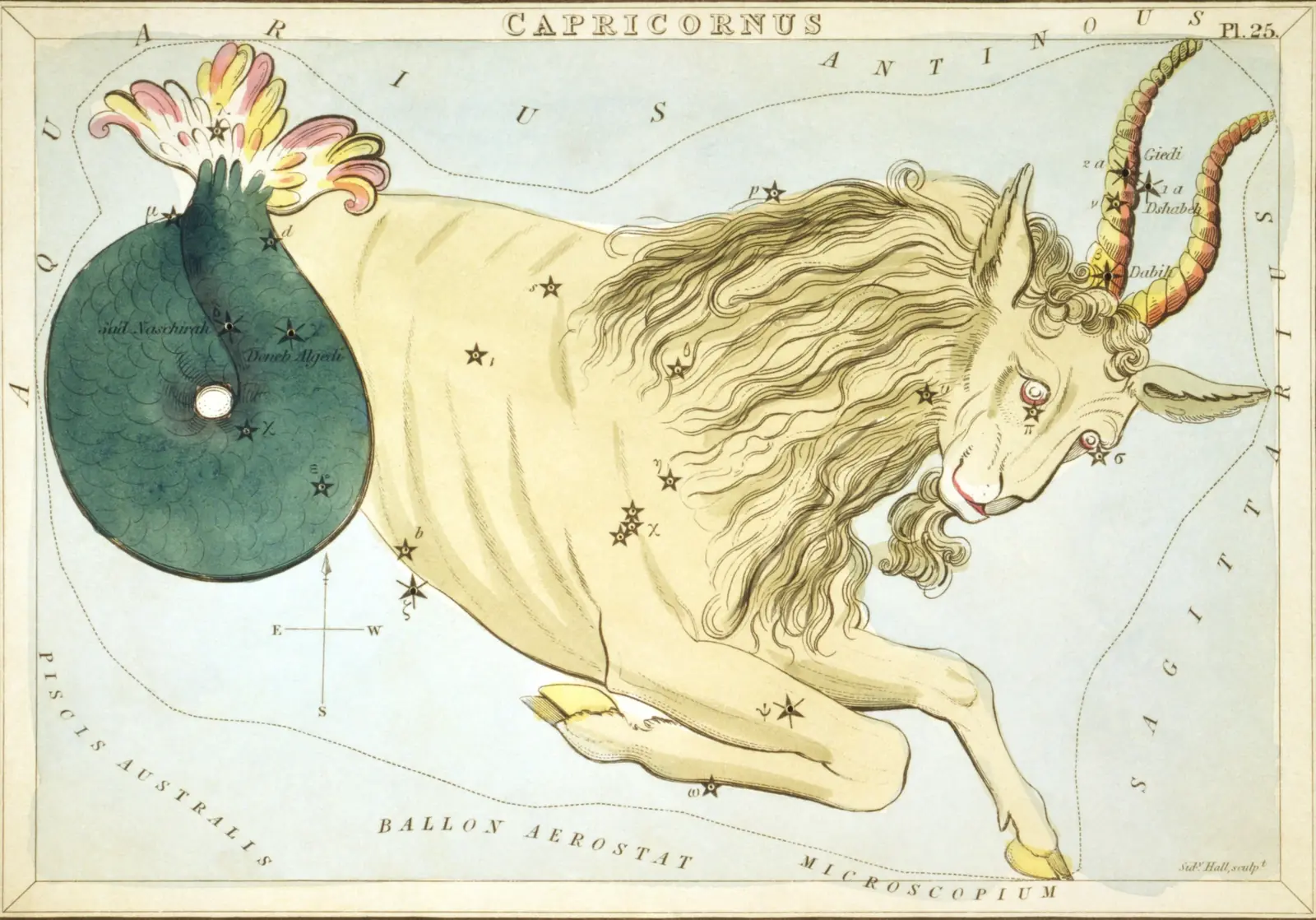
The bottom of the table has a clear signature. Capricorn Sun shows up again and again (8 of the bottom 20), because the Sun spends the fewest days of the year in Capricorn (Earth moves fastest in early January) and late December to mid-January is the quietest stretch of the US birth calendar, holidays included. Capricorn took 7.63% of births against 8.96% for Leo.
The second signature is the rising sign. Every one of the 20 rarest combinations has Aries or Pisces rising, the two signs that rise fastest in the northern mid-latitudes. At 40°N, Aries rising covers only 5.03% of the day.
The Moon adds a small, real wobble. Over these 15 years, Capricorn babies were a little less likely to have the Moon in Leo than in some other signs. That is a quirk of the Sun-Moon rhythm in this birth window, which is why the exact Moon in the rarest combo can shift if you count a different set of years.
The sky behind it
| Rarest # | Sun / Moon / rising | Odds | Share of births |
|---|---|---|---|
| 1 | Capricorn / Leo / Pisces | 1 in 3,537 | 0.0283% |
| 2 | Capricorn / Libra / Pisces | 1 in 3,440 | 0.0291% |
| 3 | Capricorn / Virgo / Aries | 1 in 3,423 | 0.0292% |
| 4 | Capricorn / Virgo / Pisces | 1 in 3,408 | 0.0293% |
| 5 | Capricorn / Libra / Aries | 1 in 3,406 | 0.0294% |
| 6 | Capricorn / Leo / Aries | 1 in 3,386 | 0.0295% |
| 7 | Pisces / Virgo / Aries | 1 in 3,374 | 0.0296% |
| 8 | Pisces / Cancer / Aries | 1 in 3,327 | 0.0301% |
| 9 | Pisces / Virgo / Pisces | 1 in 3,321 | 0.0301% |
| 10 | Capricorn / Cancer / Aries | 1 in 3,318 | 0.0301% |
The top of the list
The ten most common big threes
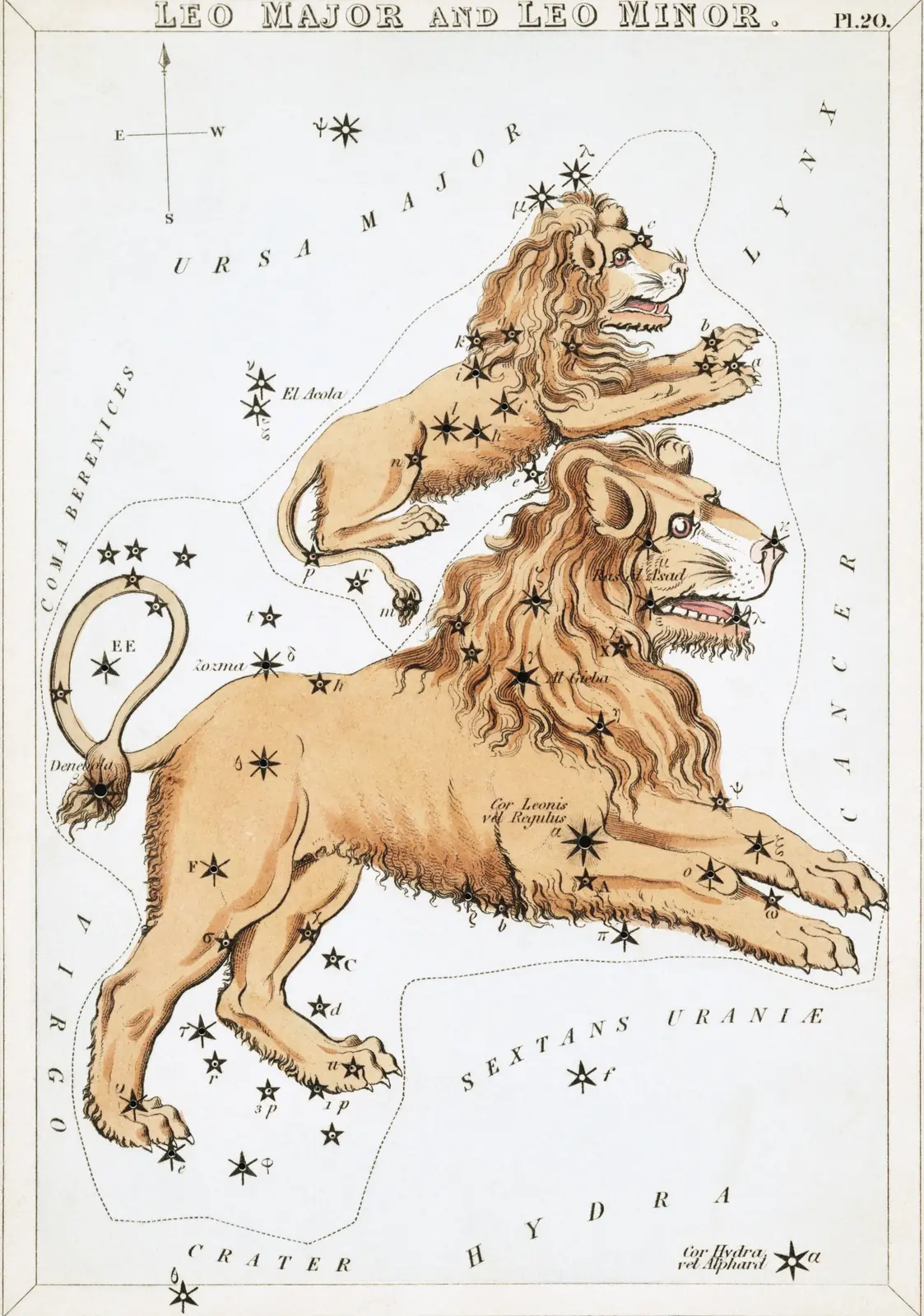
Flip the table and the pattern flips too. The top is crowded with Leo, Virgo and Cancer Suns: late summer is peak birth season in the US, and the Sun lingers longest in those signs around the July aphelion.
Then come the slow risers. All of the 20 most common combinations have Leo, Virgo, Libra or Scorpio rising, the signs that take the longest to clear the horizon at 40°N. Leo rising alone fills 10.57% of the day, more than twice Aries.
If your chart reads like late-summer and slow-rising, congratulations: you are a classic. Somewhere out there, about one in every 1,161 people born in those years is your exact big-three twin.
The sky behind it
| # | Sun / Moon / rising | Odds | Share of births |
|---|---|---|---|
| 1 | Leo / Taurus / Scorpio | 1 in 1,161 | 0.0861% |
| 2 | Leo / Pisces / Scorpio | 1 in 1,180 | 0.0848% |
| 3 | Virgo / Cancer / Virgo | 1 in 1,185 | 0.0844% |
| 4 | Cancer / Aries / Scorpio | 1 in 1,186 | 0.0843% |
| 5 | Cancer / Taurus / Leo | 1 in 1,191 | 0.0839% |
| 6 | Virgo / Cancer / Libra | 1 in 1,192 | 0.0839% |
| 7 | Cancer / Sagittarius / Scorpio | 1 in 1,195 | 0.0837% |
| 8 | Cancer / Gemini / Scorpio | 1 in 1,196 | 0.0836% |
| 9 | Leo / Libra / Scorpio | 1 in 1,196 | 0.0836% |
| 10 | Leo / Taurus / Virgo | 1 in 1,197 | 0.0835% |
Triple signs
Triple Scorpio, triple Pisces and the sunrise rule
A triple sign (the same sign for Sun, Moon and rising) needs two coincidences at once. The Sun has to be rising, so you were born within a couple of hours of sunrise. And the Moon has to be in the Sun's sign, which means a birth within a few days of the new moon.
Even so, triples are not especially rare as a group. What decides it is which sign. At 40°N, triple Virgo is the most common triple at 1 in 1,222, ranked 30th of 1,728. Triple Pisces is the rarest at 1 in 3,200. Triple Scorpio, the one everyone asks about, sits at 1 in 1,383.
Latitude
Born further north, rarer extremes

Run the same 62 million births at different latitudes and the gap between the most and least common combination changes a lot. At Miami's latitude it is 2.3 to 1. At 40°N, 3.0 to 1. At London's latitude, 5.2 to 1, and at Anchorage's, 12.0 to 1.
That is all the rising sign. The further you are from the equator, the more steeply some signs lift over the horizon and the more slowly others crawl. South of the equator the order of rising signs flips, so a rare combination in New York can be an ordinary one in Sydney.
Check yours
How rare is your big three?
Pick your Sun, Moon and rising, then the latitude closest to where you were born. You will get the computed odds, your rank out of 1,728 and how you compare with an even split. Not sure of your Moon or rising? The big three calculator finds them from your birth time.
Where were you born? (closest latitude)
Scorpio Sun, Scorpio Moon, Scorpio rising: about 1 in 1,383 births.
Number 387 of 1,728 combinations, from most common to rarest. It is more common than 1,339 of the others (78%), and 25% more common than an even 1 in 1,728.
On the common side. Your group chat probably has a twin.
More to read
Shorter reads. Each opens in place.
A gentle note
Rare is a fun fact, not a ranking
A rare big three does not make anyone more special, and a common one does not make anyone basic. Astrologers read the whole chart: houses, aspects, the planets beyond the big three. Use the odds for a laugh with friends and the chart for reflection.
Continue readingShow less
The fair one
The Moon is nearly even
Because the Moon visits every sign about once a month, all twelve Moon signs land between 8.19% and 8.49% of births in this window. If your Moon sign is the "rare" part of your big three, it is barely rare at all.
Continue readingShow less
Quick answers
What is the rarest big three in astrology?
For people born in the US between 2000 and 2014, at about 40° north, Capricorn Sun, Leo Moon, Pisces rising: roughly 1 in 3,537 births. It stacks the rarest Sun sign (Capricorn), one of the two fastest-rising signs at that latitude, and a Moon sign that was slightly under-represented among Capricorn babies in that window.
What is the most common big three?
Leo Sun, Taurus Moon, Scorpio rising, about 1 in 1,161 births at 40°N. Leo is one of the most common Sun signs in the US and Scorpio is among the slowest-rising signs in the northern mid-latitudes, so it fills the most birth minutes.
Is every big three 1 in 1,728?
Only if all three parts were spread evenly, and none of them is. At 40°N the most common combination is 3.0 times as frequent as the rarest. The rising sign does most of the work: Leo rises in 10.57% of birth minutes and Aries in 5.03%.
What is the most common zodiac sign in the US?
Leo, at 8.96% of 62.2 million US births from 2000 to 2014. Capricorn is the rarest at 7.63%. Our Sun-sign study has the full ranking and other countries.
How rare is a triple Scorpio?
About 1 in 1,383 at 40°N, which makes it 389th most common of 1,728 combinations, more common than average. The rarest triple there is triple Pisces at 1 in 3,200.
Does where I was born change how rare my big three is?
Yes, mostly through the rising sign. At Miami's latitude the most common combination is 2.3 times as frequent as the rarest; at London's latitude 5.2 times; at Anchorage's 12.0 times. Use the latitude buttons in the checker.
Does a rare big three mean anything?
Rarity is a fact about birth statistics, not about you. Astrologers read a chart as a whole, and a common combination is no less interesting than a rare one. Treat the number as a fun fact, and the chart as a mirror for reflection.
What are the rarest placements in astrology?
Among the big three, the rarest single placements in this data are Capricorn Sun (7.63%) and Aries or Pisces rising at northern latitudes (5.03% at 40°N). The Moon barely varies: every Moon sign sits between 8.19% and 8.49%.