Free tool · Moon phase
Moon Phase Calculator: any date, exact.
The Moon's phase for any date from 1900 to 2100: phase name, percentage illuminated, the Sun–Moon angle, the Moon's zodiac sign and degree, and the dates of the next new and full Moon. Today's figures come from the Shymea engine's live sky; other dates are computed in your browser from the same tropical geometry.
Full method, orbs and ephemeris on the methodology page.
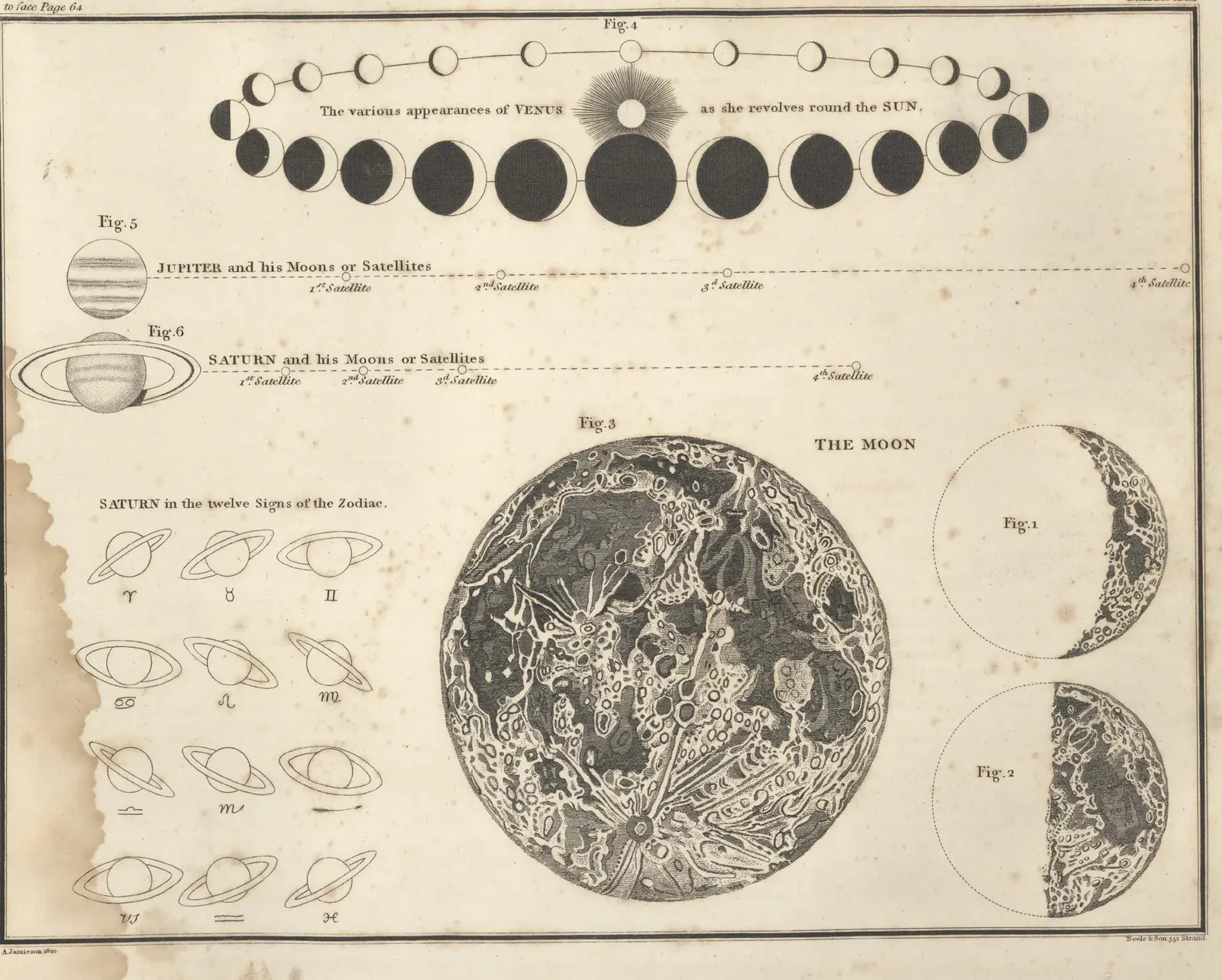
The phase is the angle between the Sun and Moon seen from Earth. At 0° the Moon is new; at 180° it is full. Illumination follows that angle directly, so a first-quarter Moon is exactly half lit and a 45° crescent is about 15% lit.
The Moon's sign is a separate fact from its phase: a full Moon can fall in any of the twelve signs, always opposite the Sun's. The tool shows both so the two are not confused.
How this is calculated
Geocentric tropical longitudes of the Sun and Moon are taken for the date (noon UTC for past and future dates; the current instant for today). The phase angle is Moon minus Sun, illumination is (1 − cos angle) ÷ 2, and the eight phase names are 45° bands centred on the four principal phases. The next new and full Moon are found by scanning forward for the 0° and 180° crossings and refining to the minute.
Today's values are read from the engine's precomputed lunar table, which is the same number the app shows. Other dates use astronomy-engine in the browser, which agrees with the JPL ephemeris to well under a degree for the Moon.
Common questions
- Why does the phase differ slightly from another site?
- Most differences are the time of day. The Moon moves about 12° a day, so a phase quoted for midnight local time and one quoted for noon UTC can differ by a few percent of illumination.
- Is the Moon sign the same everywhere?
- Yes. The Moon's zodiac longitude is geocentric and does not depend on where you stand. Only the local clock time of a sign change differs.
- What are the eight phases?
- New, waxing crescent, first quarter, waxing gibbous, full, waning gibbous, last quarter and waning crescent. Each covers 45° of the Sun–Moon angle, centred on 0°, 90°, 180° and 270° for the four principal phases.
Embed this tool on your site
Free for any website or newsletter. Paste the snippet where you want the widget; it computes in the reader’s browser and needs no account or API key. Add ?theme=dark or ?theme=autoto the URL to match your page. The only condition is that the credit line below the widget stays as it is.
<div style="max-width:420px">
  <iframe src="https://www.shymea.com/embed/moon-phase" title="Moon phase today — Shymea" width="100%" height="210" style="border:0;display:block" loading="lazy"></iframe>
  <p style="margin:6px 0 0;font:12px/1.4 system-ui,sans-serif">
    <a href="https://www.shymea.com/tools/moon-phase-calculator/">Moon phase data by Shymea</a>
  </p>
</div>
More embeds, a live preview and install notes for WordPress and Squarespace are on the free widgets page.
Go deeper
More free tools
- Saturn Return CalculatorThe exact dates of your first, second and third Saturn returns.
- Zodiac Sign CalculatorYour Sun sign from date, time and place, with the exact cusp minute.
- Rising Sign CalculatorYour Ascendant sign and degree from your birth time and place.
- Stellium CalculatorEvery sign and whole-sign house holding three or more planets in your chart.
- Moon Sign CalculatorYour Moon's sign, degree, house and natal phase.
- Transits TodayToday's planets against your natal chart, with readings.
- Planetary HoursToday's 24 planetary hours for your location.
- Jupiter Return CalculatorThe date and age of every Jupiter return, past, current and upcoming.
- Progressed Moon CalculatorYour progressed Moon's sign, degree, house and next sign change.
- Solar Return CalculatorThe return moment, Ascendant, Sun house and planets for any year.
- Lunar Return CalculatorYour next lunar return moment with a chart summary.
- Annual Profection CalculatorYour profection year's house, sign and time lord, with a 12-year table.
- Eclipse Impact CalculatorThe next 18 months of eclipses placed in your natal houses and planets.
- Void-of-Course MoonCurrent VOC status and the next 7 days of void periods, in your timezone.
- Retrograde StationsStation retrograde and direct dates with sign and degree, any year 1900–2100.
- Baby Zodiac Sign CalculatorDue date in: likely Sun signs, cusp days and Moon signs for your baby.
- Big Three CalculatorYour Sun, Moon and rising signs together, with what the combination means.
- Chart Ruler CalculatorFind your ruling planet, its house, sign and aspects, traditional and modern.
- Chinese Zodiac Element CalculatorYour element and animal from your exact birth date, with Lunar New Year computed for 1900-2100 and the Four Pillars (Lichun) year beside it.
- Chiron Return CalculatorYour exact Chiron return passes, squares and opposition, from NASA JPL data.
- Decan CalculatorWhat decan am I? Sun, Moon and rising decans from a birthday or birth time, with triplicity rulers, Chaldean faces and Golden Dawn cards.
- Descendant Sign CalculatorFind your Descendant degree, 7th house sign and its ruler, even without a birth time.
- Is Today a Good Day?Today's astrology verdict for new starts, contracts, love, money, career, travel and rest, plus a check for your own day and sign.
- Juno Sign CalculatorYour Juno sign, degree and house from NASA JPL positions, plus what Juno in each sign means in love.
- Lilith CalculatorBlack Moon Lilith sign, degree and house, with mean and true Lilith side by side.
- What Was Retrograde When You Were Born?Check your birthday against every retrograde of Mercury to Pluto, 1920-2034.
- Rising Sign Without Birth TimeEvery rising sign possible on your birth day and town, hour by hour, with clues to narrow it down.
- Sidereal Sign CalculatorYour Sun, Moon and rising in three zodiacs: tropical, Lahiri sidereal (Vedic) and the IAU constellations, plus your nakshatra.
- Moon Sign TodayThe sign the Moon is in right now, when it changes next, and the phase.
- Free Birth Chart CalculatorEvery planet, house and aspect from your exact birth minute.
Positions are computed from the JPL DE442 ephemeris in the Tropical zodiac with Placidus houses. Readings are educational, drafted from the computed factors and edited by the Shymea team; they are not the work of a named practising astrologer and are not medical, legal or financial advice. See the editorial policy.