Sidereal sign calculator · Lahiri ayanamsa
What is my sidereal sign? Your chart in three zodiacs
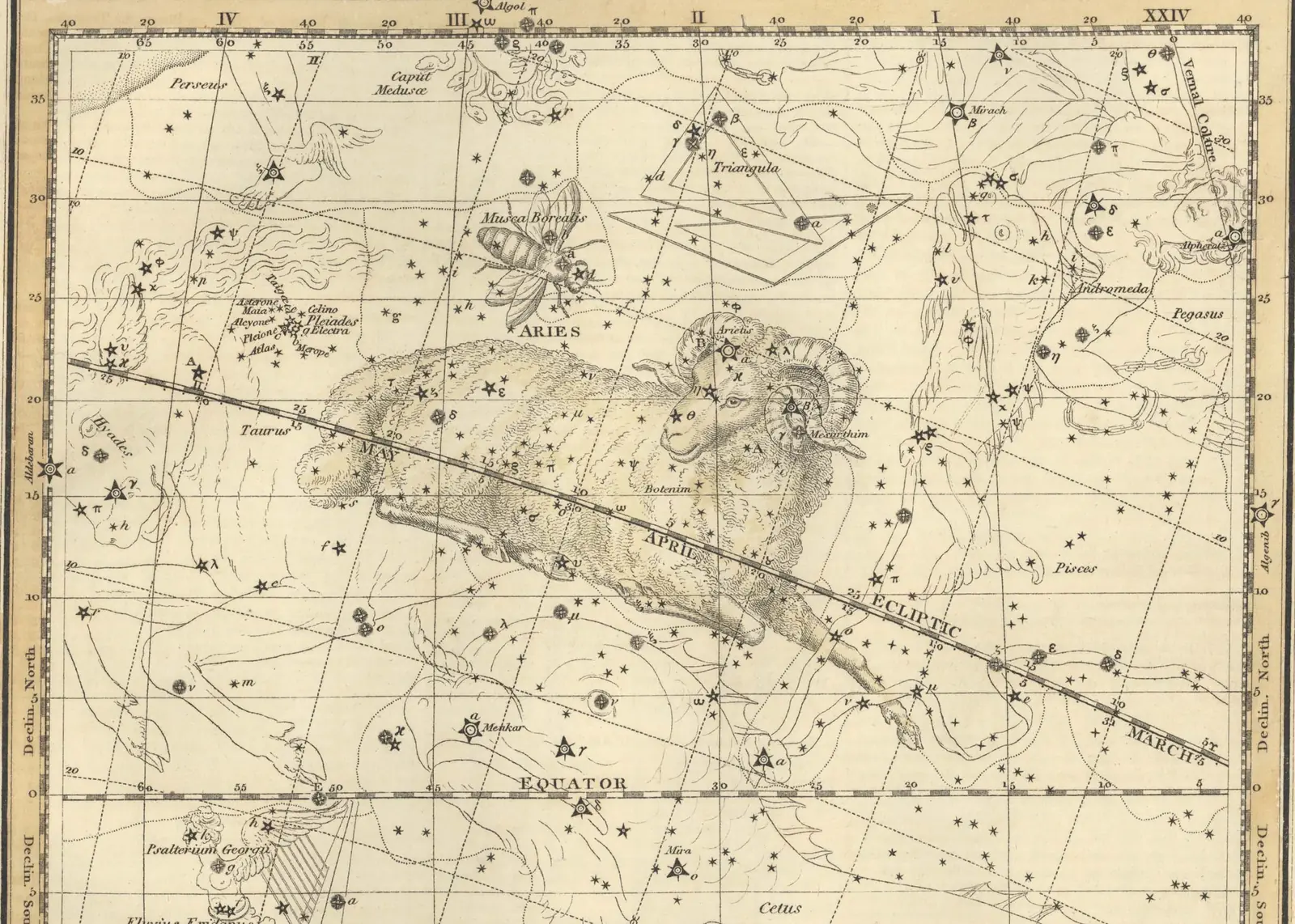
Western astrology counts from the equinox. Vedic astrology counts from the stars. Today the two sit 24°14′ apart, enough to move most people's Sun back a sign. Here is yours, side by side with the real constellation.
Photo: NPS / Jacob W. Frank
At a glance
Your sidereal sign is your tropical sign moved back by the ayanamsa, 24°14′ today. If your Sun is under about 24° of its sign, your sidereal Sun is the sign before.
- Lahiri ayanamsa today
- 24°14′01″October 18, 2026, true equinox
- In 2000 / 1900
- 23°51′ / 22°27′grows 50.26″ a year, 1° per 72 years
- Same Sun sign in both
- 19% of days70 of 365 days in 2026
- Sun today
- 25°07′ Libra tropical0°53′ Libra sidereal · in Virgo
- Sidereal Aries 2026
- Apr 14, 2026 · 04:02 UTC25 days after the tropical one
Find my sidereal signDate only for the Sun; add time and place for Moon, nakshatra and lagna.
The short version
Two zodiacs, one sky, a 24° gap
Try this today
- Find your Sun's degree in your Western chart. Under 24°? Your sidereal Sun is the sign before. 24° or more? Same sign.
- Do the same for your Moon and rising sign. People are often more surprised by those than by the Sun.
- Read both descriptions and notice which one you recognise. That is useful information, not a test you can fail.
Your free birth chart (tropical)Tropical vs sidereal: which system to follow
You have probably had this moment. You have known you are a Scorpio since middle school, then a friend runs your chart on a Vedic app and it says Libra. Your planets did not move. The measuring tape did.
Both zodiacs cut the Sun's yearly path into twelve 30° signs with the same names. The difference is the zero point.
The tropical zodiac, used by most Western astrologers, starts 0° Aries at the March equinox, the moment the Sun crosses the celestial equator heading north. It is tied to the seasons. In 2026 that happened on Mar 20, 2026 · 14:45 UTC.
The sidereal zodiac, used in Vedic (Jyotish) astrology, starts 0° Aries at a fixed point among the stars. In 2026 the Sun reached sidereal 0° Aries on Apr 14, 2026 · 04:02 UTC, 25 days later.
The distance between the two starting points is called the ayanamsa. With the Lahiri ayanamsa it is 24°14′01″ on October 18, 2026. Subtract it from any tropical position and you get the sidereal one. So a Sun at 10° tropical Scorpio sits at about 16° sidereal Libra.
That is why roughly 81% of birthdays land on a different sidereal Sun sign: only the last ~6° of each tropical sign survives the shift. In 2026 the Sun's sign matched in both zodiacs on just 70 of 365 days.
The sky behind it
Tropical positions are geocentric apparent longitudes on the true ecliptic of date, from NASA JPL's DE442 ephemeris. Sidereal = tropical minus the Lahiri ayanamsa (Swiss Ephemeris definition) plus nutation, so both sit on the same equinox. Our ayanamsa agrees with the Swiss Ephemeris to 0.13″ and our sidereal Sun to 0.7″ on five test dates from 1950 to 2026.
Why the gap grows
Precession: the slow wobble that split the zodiac
Try this today
- Put a grandparent's birthday into the date-only calculator, then yours. Watch the offset in the middle card change.
- Work out your own number: the ayanamsa grows about 50″ a year, so a 2026 baby and a 1966 baby differ by about 50′ (60 years × 50.26″).
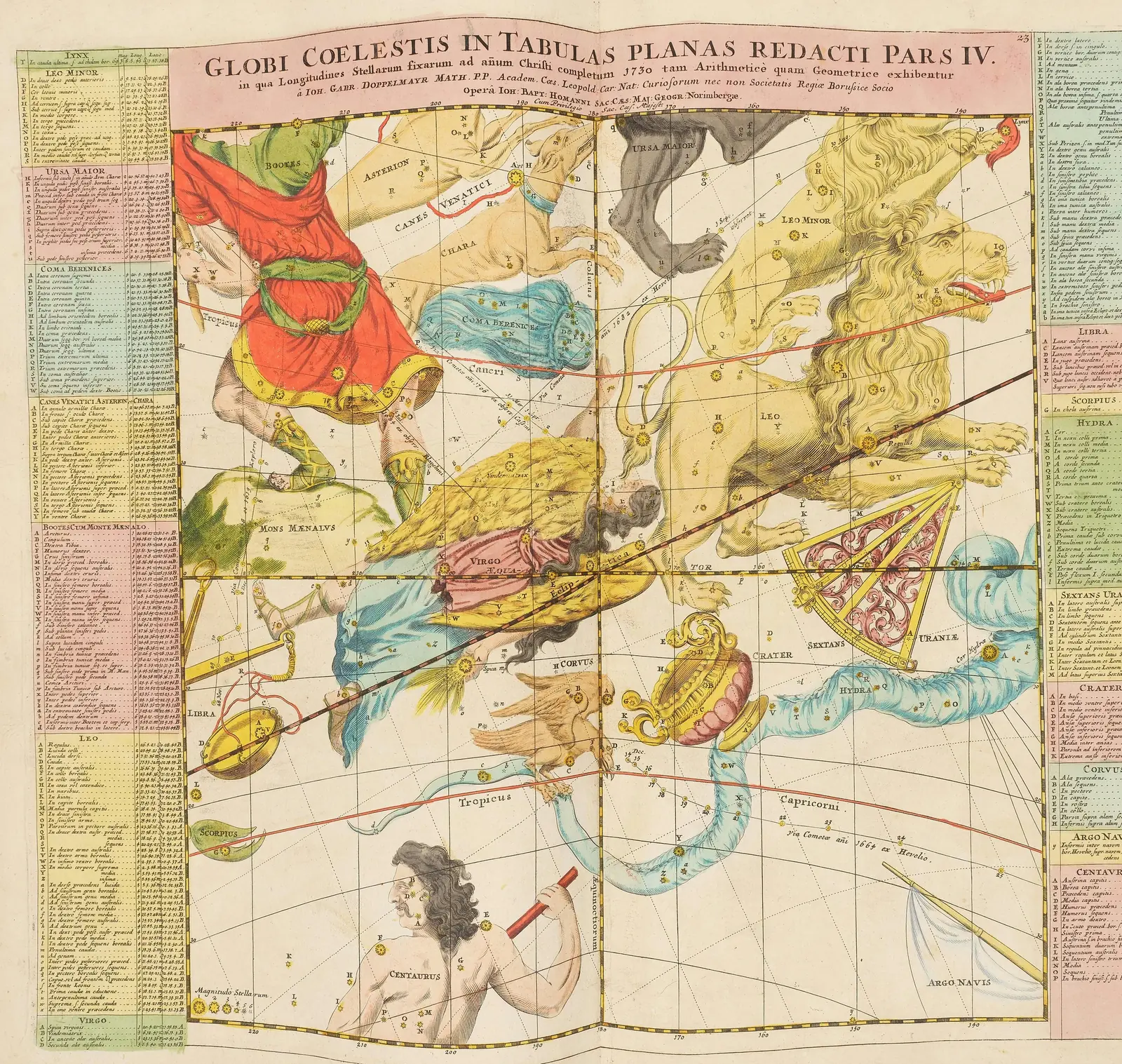
Earth spins like a slightly tipsy top. Its axis traces a slow circle that takes about 26,000 years to complete, and as it turns, the point where the Sun crosses the equator in March slides westward against the stars. Astronomers call it the precession of the equinoxes. The Greek astronomer Hipparchus is credited with measuring it in the 2nd century BC (Britannica).
The tropical zodiac moves with the equinox. The sidereal zodiac stays with the stars. So every year they drift a little further apart, about 50.26 arcseconds, which adds up to one degree every 71.6 years.
Run the clock and the gap is easy to see. On January 1, 1900 the Lahiri ayanamsa was 22°27′37″. In 2000 it was 23°51′25″. By 2100 it will be 25°15′15″. The table further down has the full run.
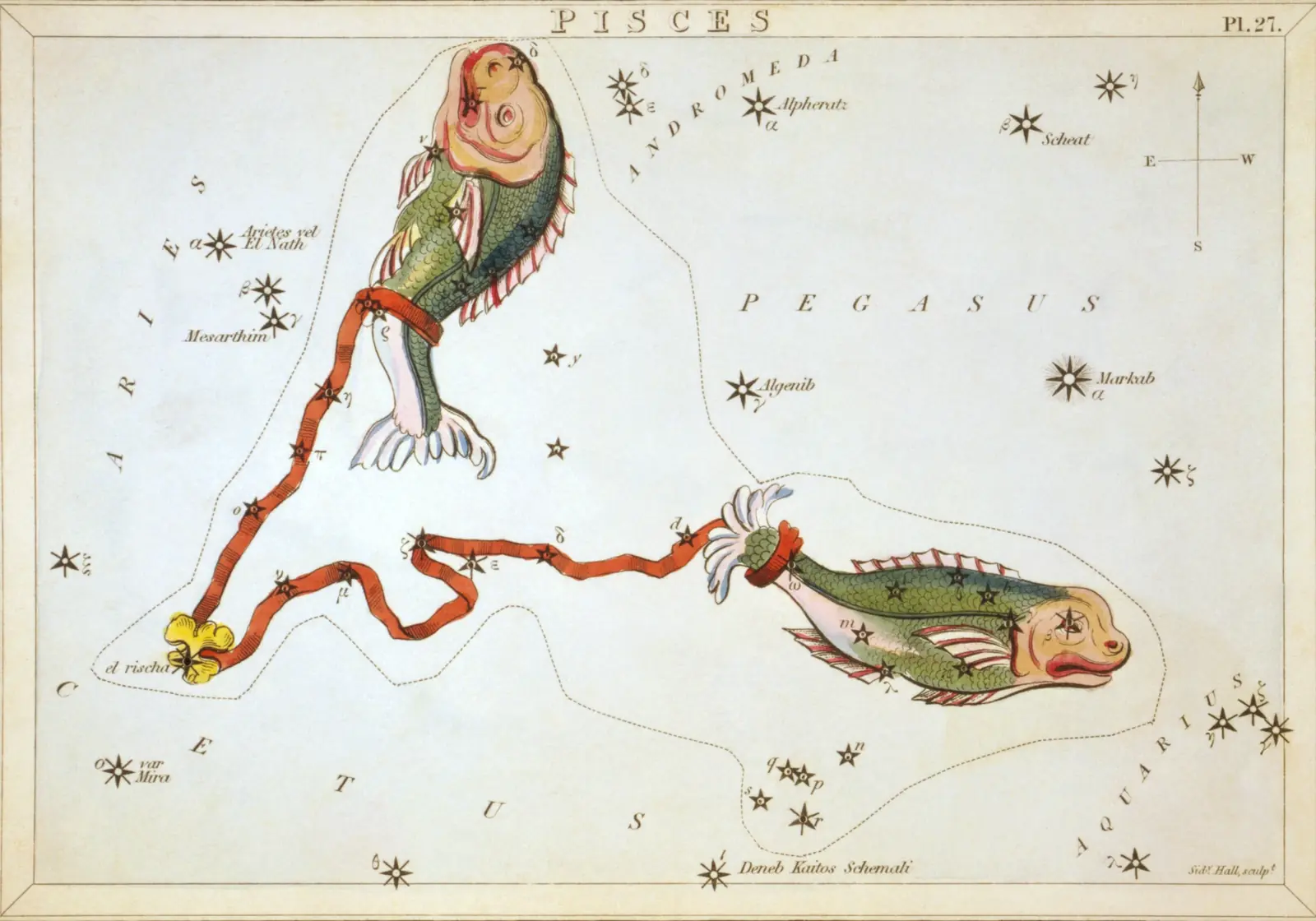
Run the clock backwards and the two zodiacs lined up around AD 291 by the Lahiri reckoning. Other ayanamsas put that moment decades or centuries away, and that disagreement is the whole reason ayanamsas come in flavours. Today the March equinox sits among the stars of Pisces, which is the astronomy behind the phrase "the Age of Pisces."
Why Lahiri
Lahiri: the ayanamsa from India's calendar reform

Try this today
- If you have a Vedic chart from an astrologer, check which ayanamsa it uses. It is usually printed in small type near the top.
- If a planet of yours is at 29° or 0° of a sign in the calculator, treat its sign as a soft answer. A different ayanamsa could flip it.
There is no single, agreed sidereal starting point in the sky, so astrologers had to choose one. The choice that stuck in India came out of a government committee.
In November 1952 India's Council of Scientific and Industrial Research set up a Calendar Reform Committee under the physicist Meghnad Saha, with the astronomer N. C. Lahiri among its members (Positional Astronomy Centre, IMD). The reformed national calendar came into use on March 22, 1957 (Indian national calendar). The ayanamsa that now carries Lahiri's name is tied to that work. It is often called Chitrapaksha because it is meant to place the bright star Spica (Chitra) near the start of sidereal Libra (Ayanamsa). It is by far the most common ayanamsa in Indian astrology today.
Lahiri is not the only option. On October 18, 2026, computed with the Swiss Ephemeris:
- Lahiri: 24°13′53″
- Krishnamurti (KP): 24°08′04″
- Raman: 22°47′06″
- Fagan-Bradley (Western sidereal astrology): 25°06′52″
From Raman to Fagan-Bradley that is a spread of 2°20′. If one of your planets sits within a degree of a sign line, switching ayanamsa can move it. Fagan-Bradley, for instance, sits about 53′ beyond Lahiri.
You can see the sidereal zodiac at work in the festival calendar. Makar Sankranti marks the Sun entering sidereal Capricorn: Jan 14, 2026 · 09:37 UTC, or 15:07 IST, in 2026. Tropical Capricorn begins around December 21 (in 2026, on Dec 21), about 24 days before the sidereal one. Mesha Sankranti, the solar new year kept as Vishu, Puthandu and Baisakhi, is the Sun entering sidereal Aries: 09:32 IST on April 14, 2026.
The sky behind it
Indian panchangs can differ from our Sankranti times by several minutes. Drik Panchang gives Makar Sankranti 2026 as 15:13 IST; our Lahiri computation gives 15:07 IST. The Sun moves about 2.5 arcseconds a minute, so a few minutes means the two ayanamsa variants differ by roughly 15″.
True sidereal
The third zodiac: the constellations as they really are
Try this today
- Run the full calculator and look at the third column. Any planet outside the classic twelve is worth a look on a star chart.
- Born late November to mid-December? Check whether the Sun was in front of Ophiuchus.
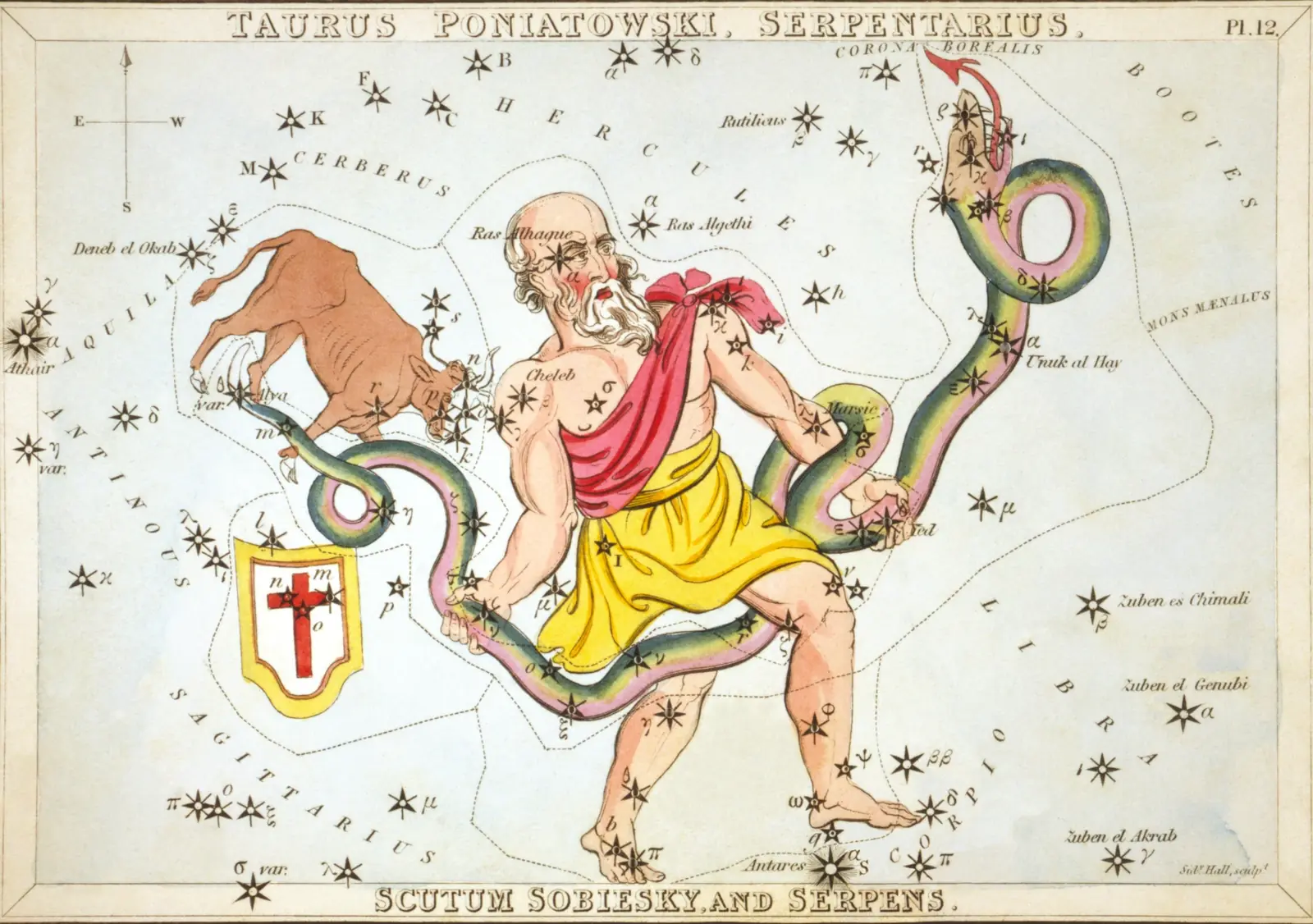
Sidereal signs are still tidy: twelve equal 30° boxes, just shifted to sit with the stars. The constellations themselves are not tidy at all.
In 1930 the International Astronomical Union fixed official borders for all 88 constellations (IAU constellations). Along the Sun's path those borders cut thirteen pieces of very different sizes. Using them, the Sun in 2026:
- spends about 45 days in Virgo, the longest stretch
- spends only about 7 days in Scorpius, the shortest
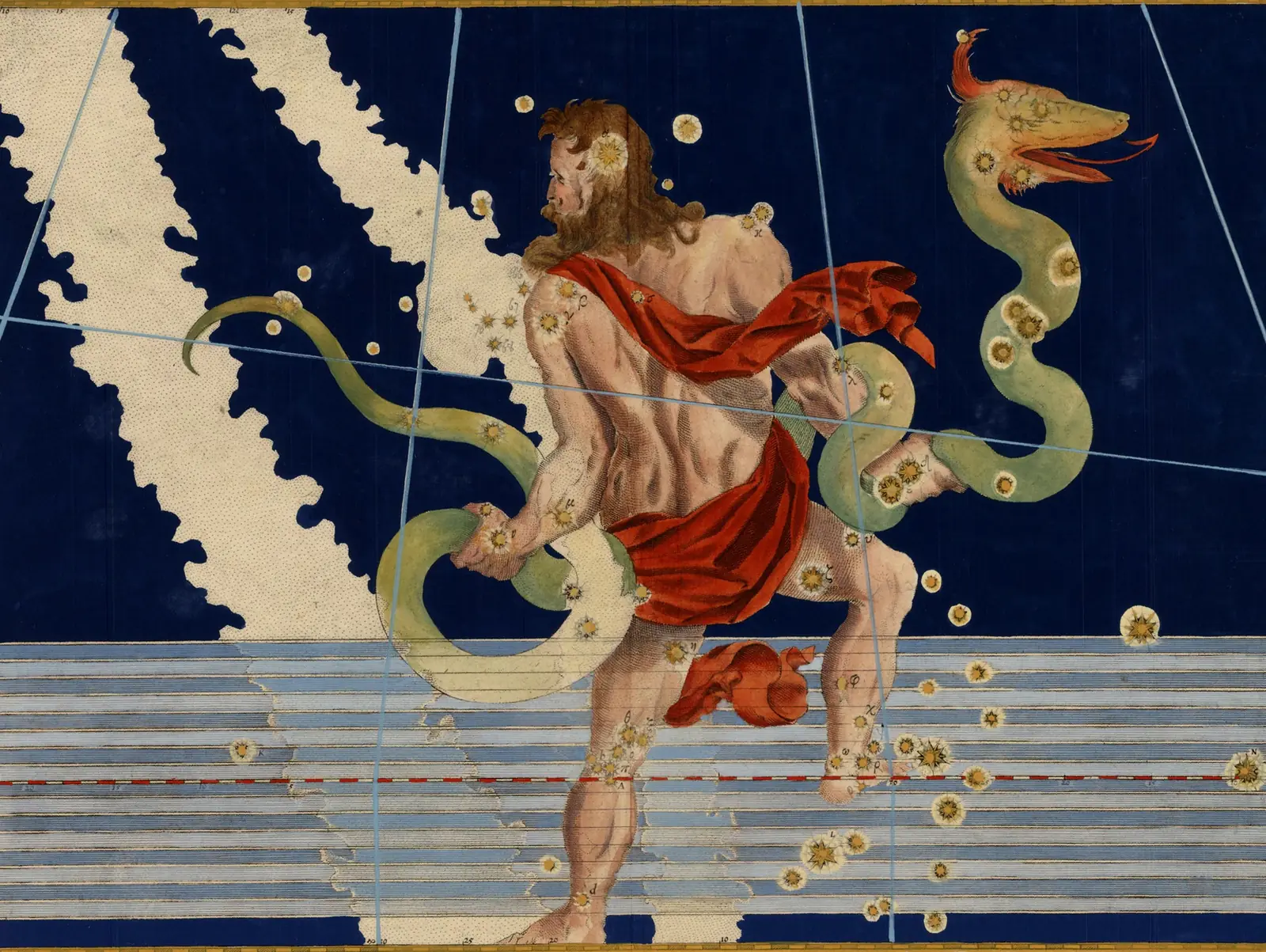
- crosses Ophiuchus, the serpent-bearer, from Nov 30, 2026 · 05:39 UTC to Dec 18, 2026 · 13:06 UTC
Some astrologers call reading the chart against these real star patterns "true sidereal" or astronomical astrology. It is a minority approach, and it is different from Vedic sidereal astrology, which never uses Ophiuchus. We show it in the third column of the calculator because it answers the curious question underneath all of this: which stars was the Sun actually in front of when you were born?
The answer is often surprising. On October 18, 2026 the Sun is at 25°07′ Libra tropical and 0°53′ Libra sidereal, but the stars behind it belong to Virgo. Saturn, at 10°13′ Aries tropical, is in front of Cetus, a constellation that is not in the zodiac at all. Planets wander up to a few degrees off the ecliptic, and the constellation borders do not follow it.
The sky behind it
Constellation membership uses the IAU (Delporte 1930) boundaries, which are defined for the B1875 equinox; positions are precessed to that frame before the lookup (skyfield in the build, astronomy-engine in your browser).
What Vedic charts lead with
In a Vedic chart, your Moon and lagna get top billing
Try this today
- Find your birth time on a birth certificate or hospital record if you can. It changes more in a Vedic chart than any other single input.
- Compare your tropical Moon and your sidereal Moon. Many people relate more to one of them; there is no wrong answer.
If you are asking "what is my Vedic sign," you might be asking the wrong planet. Western astrology leads with the Sun. Jyotish puts a great deal of weight on the Moon sign (rashi) and on the rising sign (lagna), the sign on the eastern horizon at your birth.
The Moon also carries the nakshatras, the 27 lunar mansions. Each one is 13°20′ of the sidereal zodiac, and each is split into four padas of 3°20′. The nakshatra your Moon occupies is often called your birth star (Nakshatra). The full calculator gives it to you, with the pada and the planet traditionally said to rule it in the Vimshottari scheme.
Here is the catch. The Moon moves about 13° a day, so without a birth time it can change sign or nakshatra during your birthday. On October 18, 2026 at 12:00 UTC the Moon is at 23°12′ Capricorn tropical, which is 28°58′ Sagittarius sidereal: the same moment, a different sign. If you leave the time blank, the calculator tells you when your Moon sign depends on the hour instead of guessing.
The lagna needs the time to within a few minutes. If you only know "sometime in the morning," try our rising sign tool for people without a birth time, then subtract the ayanamsa.
Calculate yours
Your sidereal sign, worked out three ways
Start with just your birthday for the Sun. Add a time and place and you get every planet, the lunar nodes (Rahu and Ketu), your Moon's nakshatra and your sidereal rising sign, each shown tropical, Lahiri sidereal and by constellation. Everything is calculated in your browser.
Just the date: your Sun in three zodiacs
No time, no place, no sign-up. Type your birthday and see where the Sun was in each system at noon UTC that day.
The Lahiri ayanamsa grows about 50 arcseconds a year, one degree every 72 years or so. On your birthday it was the number in the middle card.
The whole chart: tropical, Lahiri and constellation side by side
Add your birth time and place for the Moon to the degree, your nakshatra and your sidereal rising sign (lagna). Do not know the time? Tick the box and we will show what the day allows.
More to read
Shorter reads. Each opens in place.
The honest answer
So which sign is the real one?
Both, in the sense that matters: each is computed correctly from a different starting point. Tropical tracks the seasons, sidereal tracks the stars. Astrology is a tradition and a mirror, not a measurement of personality, so the useful question is which system's language helps you reflect. Plenty of people keep both.
Continue readingShow less
Today's sky
The sky on October 18, in both zodiacs
At 12:00 UTC on October 18, 2026, 9 of the 10 planets sit in a different sign in the sidereal zodiac. The Sun entered sidereal Libra on Oct 17 (Tula Sankranti) and enters sidereal Scorpio on Nov 16; tropical Scorpio begins on Oct 23.
Continue readingShow less
Quick math
Convert any placement by hand
Write the tropical position as degrees from 0° Aries (Taurus adds 30, Gemini 60, and so on). Subtract the ayanamsa for the birth year, about 23°30′ for 1975, 23°51′ for 2000, 24°13′ for 2026. Divide what is left by 30: the whole number is the sign, the remainder the degree.
Continue readingShow less
Sun sign dates in three systems, computed
When the Sun enters each sign in 2026, tropical vs sidereal (Lahiri) vs the IAU constellations. Dates are UTC; the year turns over inside Capricorn and Sagittarius. Then the 2027 sidereal ingresses, the ayanamsa through the years, and the sky on October 18, 2026.
| Sign | Tropical | Sidereal (Lahiri) | Constellation (IAU) |
|---|---|---|---|
| Aries | Mar 20 to Apr 20 | Apr 14 to May 15 | Apr 19 to May 14 |
| Taurus | Apr 20 to May 21 | May 15 to Jun 15 | May 14 to Jun 21 |
| Gemini | May 21 to Jun 21 | Jun 15 to Jul 16 | Jun 21 to Jul 21 |
| Cancer | Jun 21 to Jul 22 | Jul 16 to Aug 17 | Jul 21 to Aug 11 |
| Leo | Jul 22 to Aug 23 | Aug 17 to Sep 17 | Aug 11 to Sep 17 |
| Virgo | Aug 23 to Sep 23 | Sep 17 to Oct 17 | Sep 17 to Oct 31 |
| Libra | Sep 23 to Oct 23 | Oct 17 to Nov 16 | Oct 31 to Nov 23 |
| Scorpio | Oct 23 to Nov 22 | Nov 16 to Dec 16 | Nov 23 to Nov 30 |
| Sagittarius | Nov 22 to Dec 21 | Dec 16 to Jan 14 | Dec 18 to Jan 20 |
| Capricorn | Dec 21 to Jan 20 | Jan 14 to Feb 12 | Jan 20 to Feb 16 |
| Aquarius | Jan 20 to Feb 18 | Feb 12 to Mar 14 | Feb 16 to Mar 12 |
| Pisces | Feb 18 to Mar 20 | Mar 14 to Apr 14 | Mar 12 to Apr 19 |
| Ophiuchus | not a sign | not a sign | Nov 30 to Dec 18 |
| Sidereal sign | Vedic name | 2026 (UTC) | 2027 (UTC) |
|---|---|---|---|
| Aries | Mesha | Apr 14, 2026 · 04:02 UTC | Apr 14, 2027 · 09:58 UTC |
| Taurus | Vrishabha | May 15, 2026 · 00:51 UTC | May 15, 2027 · 06:49 UTC |
| Gemini | Mithuna | Jun 15, 2026 · 07:22 UTC | Jun 15, 2027 · 13:25 UTC |
| Cancer | Karka | Jul 16, 2026 · 18:09 UTC | Jul 17, 2027 · 00:18 UTC |
| Leo | Simha | Aug 17, 2026 · 02:28 UTC | Aug 17, 2027 · 08:43 UTC |
| Virgo | Kanya | Sep 17, 2026 · 02:22 UTC | Sep 17, 2027 · 08:40 UTC |
| Libra | Tula | Oct 17, 2026 · 14:21 UTC | Oct 17, 2027 · 20:38 UTC |
| Scorpio | Vrishchika | Nov 16, 2026 · 14:13 UTC | Nov 16, 2027 · 20:28 UTC |
| Sagittarius | Dhanu | Dec 16, 2026 · 04:54 UTC | Dec 16, 2027 · 11:08 UTC |
| Capricorn | Makara | Jan 14, 2026 · 09:37 UTC | Jan 14, 2027 · 15:40 UTC |
| Aquarius | Kumbha | Feb 12, 2026 · 22:38 UTC | Feb 13, 2027 · 04:39 UTC |
| Pisces | Meena | Mar 14, 2026 · 19:33 UTC | Mar 15, 2027 · 01:30 UTC |
| Year | Ayanamsa | Decimal degrees |
|---|---|---|
| 1900 | 22°27′37″ | 22.4605 |
| 1925 | 22°48′34″ | 22.8096 |
| 1950 | 23°09′31″ | 23.1587 |
| 1975 | 23°30′28″ | 23.5078 |
| 1990 | 23°43′02″ | 23.7174 |
| 2000 | 23°51′25″ | 23.8570 |
| 2010 | 23°59′48″ | 23.9967 |
| 2020 | 24°08′11″ | 24.1364 |
| 2026 | 24°13′12″ | 24.2203 |
| 2027 | 24°14′03″ | 24.2342 |
| 2050 | 24°33′20″ | 24.5556 |
| 2100 | 25°15′15″ | 25.2542 |
| Body | Tropical | Sidereal (Lahiri) | Constellation |
|---|---|---|---|
| Sun | 25°07′ Libra | 0°53′ Libra | Virgo |
| Moon | 23°12′ Capricorn | 28°58′ Sagittarius | Sagittarius |
| Mercury | 19°03′ Scorpio | 24°49′ Libra | Libra |
| Venus | 4°04′ Scorpio | 9°50′ Libra | Virgo |
| Mars | 11°33′ Leo | 17°19′ Cancer | Cancer |
| Jupiter | 22°29′ Leo | 28°15′ Cancer | Leo |
| Saturn | 10°13′ Aries | 15°59′ Pisces | Cetus |
| Uranus | 5°07′ Gemini | 10°53′ Taurus | Taurus |
| Neptune | 2°23′ Aries | 8°09′ Pisces | Pisces |
| Pluto | 3°04′ Aquarius | 8°50′ Capricorn | Capricornus |
All times are UTC. In the Americas the local date can be a day earlier; in Asia and Australia a day later.
Quick answers
What is my sidereal sign?
It is the sign the Sun (or Moon, or rising point) occupies when the zodiac is measured from the stars instead of from the March equinox. In practice you subtract the ayanamsa, about 24°14′ for a birth in late 2026 and 23°51′ at the start of 2000, from your tropical position. For most people that moves the Sun back one sign. Enter your birthday in the calculator above to see yours.
What is my Vedic sign?
Vedic (Jyotish) astrology uses the sidereal zodiac, usually with the Lahiri ayanamsa, so your Vedic Sun sign is your sidereal Sun sign. Many Vedic astrologers put more weight on the Moon sign (rashi) and the rising sign (lagna) than on the Sun, which is why the full calculator shows all three plus your Moon's nakshatra.
Why is my sidereal sign different from my zodiac sign?
Because the two zodiacs start in different places. The tropical zodiac begins at the March equinox; the sidereal one is pinned to the stars. Precession has slowly moved the equinox about 24°14′ away from the sidereal starting point, so any position less than about 24° into a tropical sign falls in the previous sidereal sign. In 2026 the Sun's sign was the same in both systems on 70 of 365 days.
Is sidereal or tropical more accurate?
Neither is more accurate; they measure from different reference points. Tropical follows the seasons, sidereal follows the background stars, and both can be computed to the arcsecond. Which one you use is a choice of tradition: Western astrology mostly uses tropical, Indian astrology uses sidereal.
What ayanamsa does this calculator use?
Lahiri (also called Chitrapaksha), named for N. C. Lahiri of India's 1950s Calendar Reform Committee and by far the most widely used ayanamsa in Indian astrology. We use the Swiss Ephemeris definition, carried forward with the IAU 2006 precession. Our values agree with the Swiss Ephemeris to 0.13 arcseconds. Other ayanamsas differ: on October 18, 2026, Raman is 22°47′, Krishnamurti 24°08′ and the Western sidereal Fagan-Bradley 25°06′.
When does the Sun enter sidereal Capricorn in 2027 (Makar Sankranti)?
The Sun reaches 0° sidereal Capricorn (Lahiri) on Jan 14, 2027 · 15:40 UTC, which is 21:10 IST on January 14 in India. In 2026 it was Jan 14, 2026 · 09:37 UTC (15:07 IST). Panchangs can differ by a few minutes depending on the exact ayanamsa variant they use.
Do I need my birth time for a sidereal chart?
For the Sun sign, usually not: the Sun moves about one degree a day. For the Moon you want it, because the Moon moves about 13° a day and can change sign during your birthday. For the rising sign (lagna) and the houses you need it to within a few minutes.
Is the sidereal zodiac the same as the 13-sign zodiac with Ophiuchus?
No. The sidereal zodiac keeps twelve equal 30° signs; it just starts from the stars. The 13-sign version uses the real, unequal constellation boundaries set by the IAU in 1930, where the Sun crosses Ophiuchus from about Nov 30 to Dec 18. The third column of the calculator shows that version too.