Astrology systems · The lunar nodes
Rahu and Ketu vs the North Node: same dragon, two maps
Rahu and Ketu are the Moon's nodes, the two points where its path crosses the Sun's. Western astrology reads them in the tropical zodiac, Vedic in the sidereal one, 24°14′ apart. Here is where they really are in 2026 and 2027.
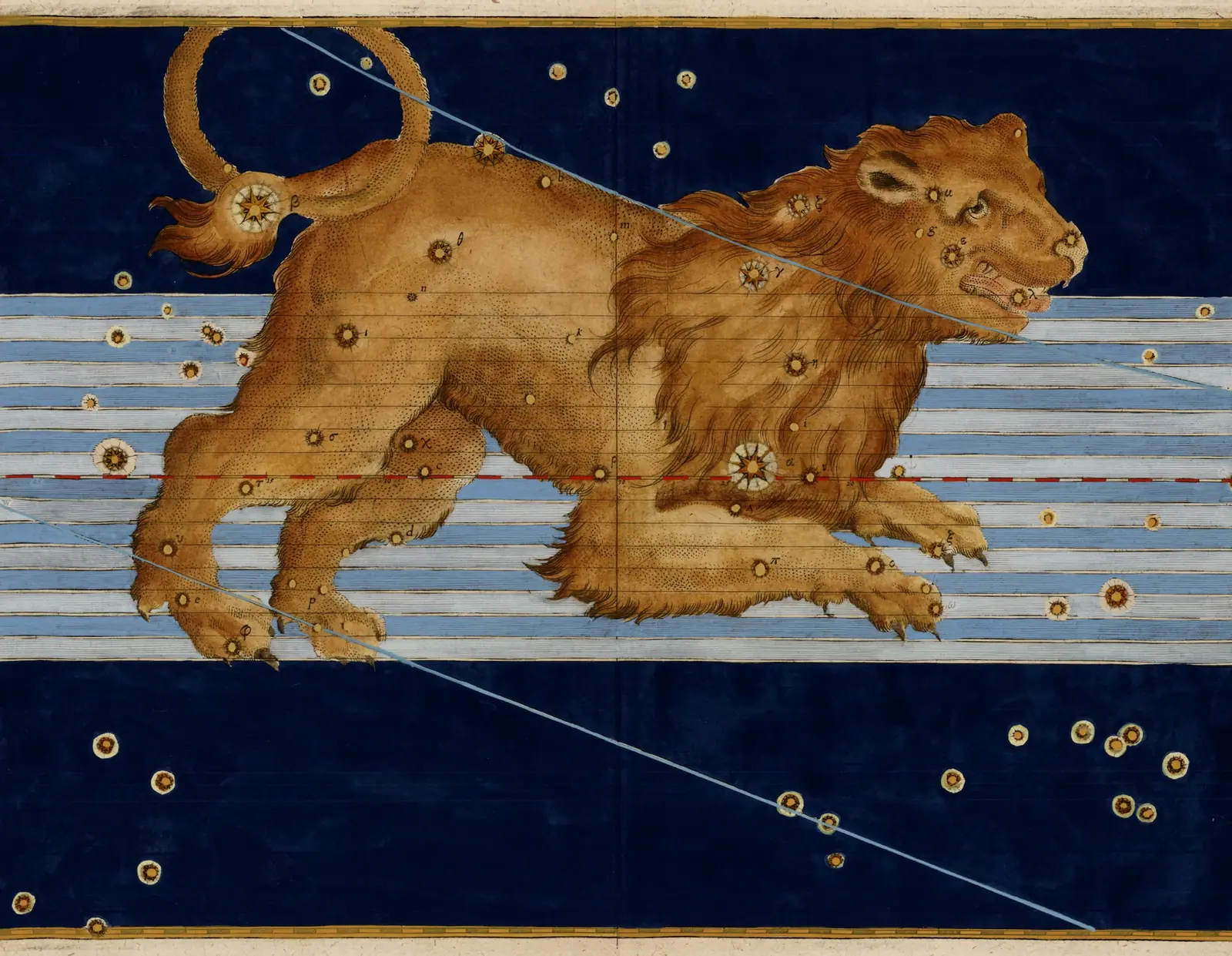
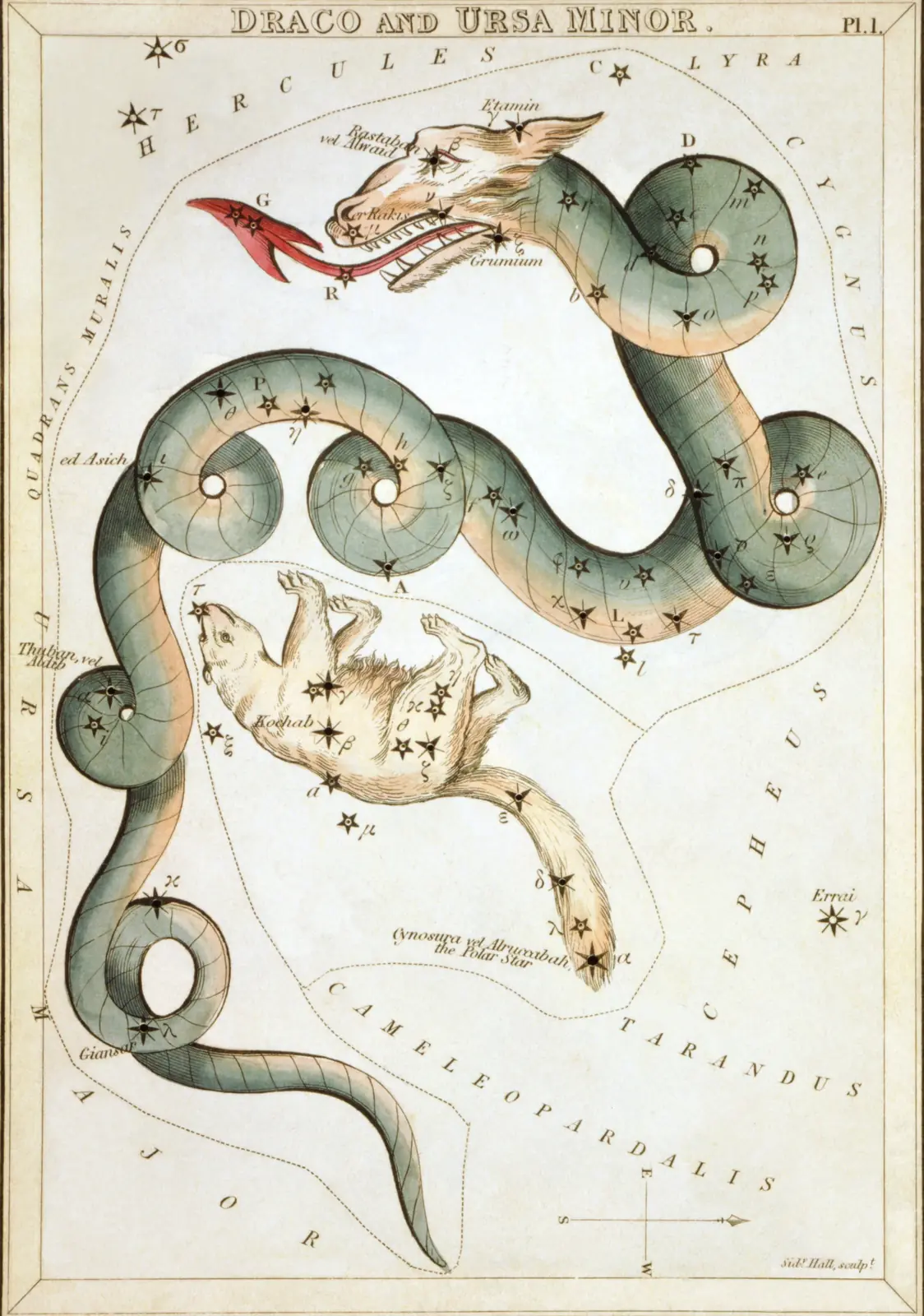
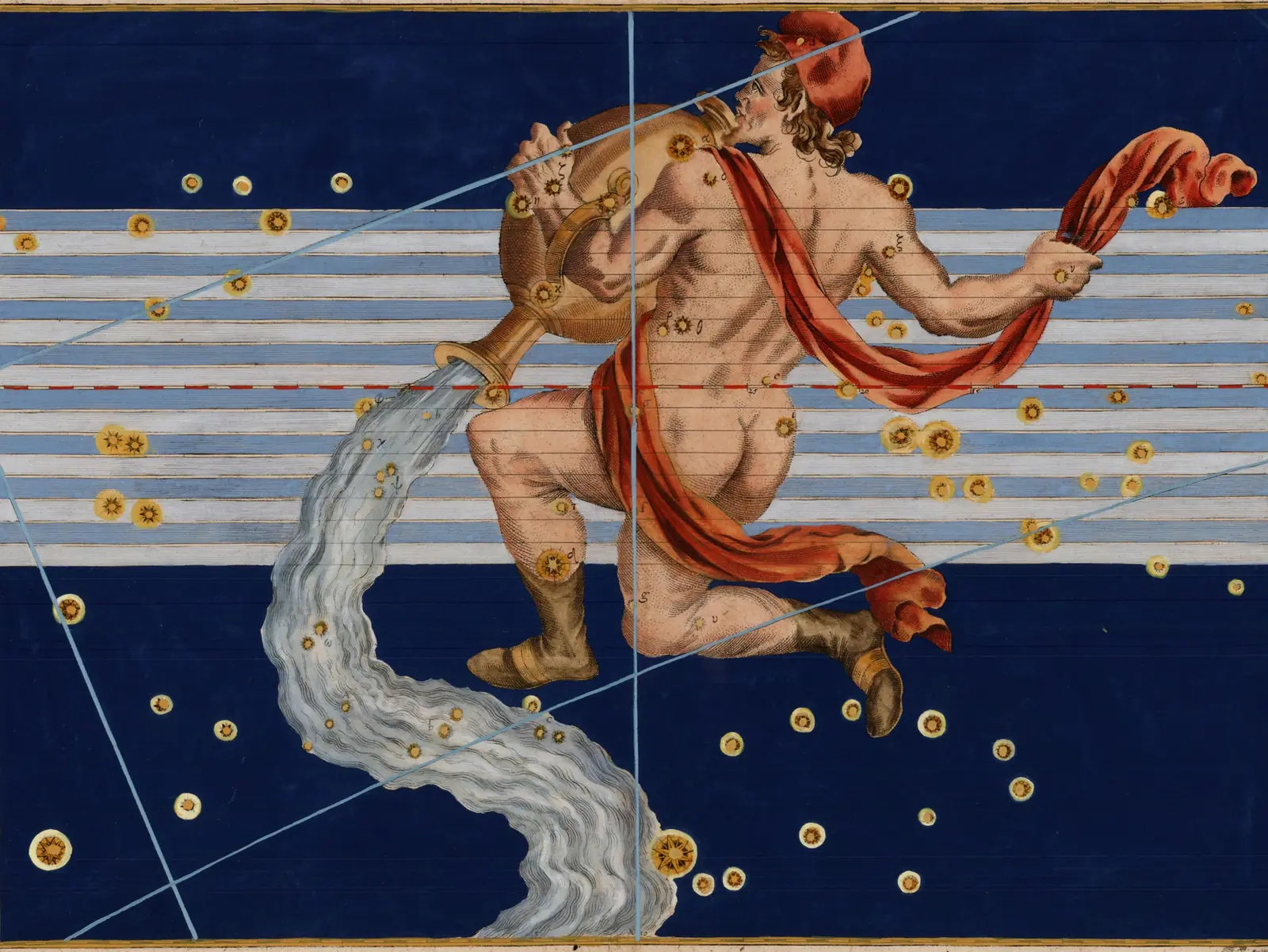
Urania's Mirror, London 1824 · Library of Congress
At a glance
Rahu is the North Node and Ketu the South Node, read in the Vedic zodiac. On October 18, 2026 the North Node is at 26°47′ Aquarius (Western) and Rahu at 2°33′ Aquarius (Vedic); Rahu moves into Capricorn on Dec 5, 2026.
- North Node today
- 26°47′ Aquariusmean; true node 28°02′ Aquarius
- Rahu today
- 2°33′ AquariusLahiri; Ketu 2°33′ Leo
- Rahu into Capricorn
- December 5, 2026, 17:02 UTCmean node; true node Nov 25, 2026
- North Node into Aquarius
- July 27, 2026, 00:47 UTCtrue node; mean Aug 18, 2026
- Full cycle
- 18.61 yearsabout 18 months per sign
Find your North Node and RahuBoth zodiacs, plus your next nodal return. Free, in your browser.
The short answer
Rahu is the North Node. The sign is what changes.
Try this today
- Put your birth date into the node finder below and see whether your North Node and your Rahu share a sign.
- If your Western North Node sits in the first 24°14′ of a sign, expect your Rahu to be one sign earlier. That is the whole trick.
You looked up your Rahu in an Indian app and it said Capricorn. Your Western chart says North Node in Aquarius. So which one is lying? Neither, and you can relax.
The Moon's orbit is tilted about 5° to the Sun's apparent path, the ecliptic. Twice a month the Moon crosses that path. The crossing where it heads north is the ascending node, the North Node, which Jyotisha calls Rahu. The opposite crossing is the descending node, the South Node, or Ketu. They are always exactly opposite each other, so if you know one you know the other.
The only real difference is the zodiac you measure them in. Western astrology uses the tropical zodiac, which starts at the March equinox. Vedic astrology uses a sidereal zodiac pinned to the stars, and in October 2026 the standard Lahiri version starts 24°14′ later. Same point, smaller number.
That is why, right now, the mean North Node sits at 26°47′ Aquarius in the Western zodiac and Rahu at 2°33′ Aquarius in the Vedic one. Both say Aquarius for now, but Rahu is only a couple of degrees from the edge. Then they split: Rahu crosses into Capricorn on Dec 5, 2026, while the Western North Node stays in Aquarius until Mar 7, 2028.
The sky behind it
Positions for October 18, 2026, 12:00 UTC. Mean node from Meeus, Astronomical Algorithms, eq. 47.7. True node from the Moon's osculating geocentric orbit in JPL DE442, ecliptic and equinox of date. Sidereal = tropical minus the Lahiri ayanamsa (24°14′, Swiss Ephemeris SIDM_LAHIRI).
2026-2027
Where the nodes are going in 2026 and 2027
Try this today
- When a post gives a node date, check two things: tropical or sidereal, and mean or true. That explains nearly every disagreement.
- Find the house that Aquarius (Western) or Capricorn (Vedic) rules in your chart. That is the area of life both traditions point to for 2027.
Here is why your feed shows four different dates for the "same" event. There are two zodiacs and two ways of computing the node, so you get four calendars.
Western, true node: the North Node entered Aquarius on July 27, 2026, 00:47 UTC, with the South Node entering Leo. That is the date most Western sites quote (it was still July 26 in the Americas).
Western, mean node: the smooth average crossed 23 days later, on August 18, 2026, 19:24 UTC.
Vedic, true node: Rahu leaves Aquarius for Capricorn, and Ketu leaves Leo for Cancer, on November 25, 2026, 12:34 UTC.
Vedic, mean node: December 5, 2026, 17:02 UTC. This is the one most Indian panchangs print, usually converted to IST.
Notice what that means for most of 2027: the Western axis is Aquarius-Leo and the Vedic axis is Capricorn-Cancer. Same dragon, different houses on the map. If you follow both systems, you are reading two neighbouring signs for the same eighteen months, and that is fine as long as you do not mix them in one chart.
The next change after that comes in 2028: the Western North Node backs into Capricorn on Mar 26, 2028 (true) or Mar 7, 2028 (mean), and Rahu backs into Sagittarius on May 24, 2028 (true) or Jun 23, 2028 (mean).
The sky behind it
Sign changes found by bisection to the second, mid-2025 to 2028. The node moves backward (retrograde) through the zodiac, about 3.2′ a day on average. The true node held direction through every crossing in this window, so there are no double entries. Spot-check: Drik Panchang lists the 2026 Capricorn ingress as November 25 (true) and December 5 (mean), matching our dates.
Mean vs true
Mean node vs true node, without the headache
Try this today
- Open your chart in two apps. If the node signs disagree, check the settings for "mean" or "true" before anything else.
- Pick one setting and stick with it. Consistency matters more than which one you choose.
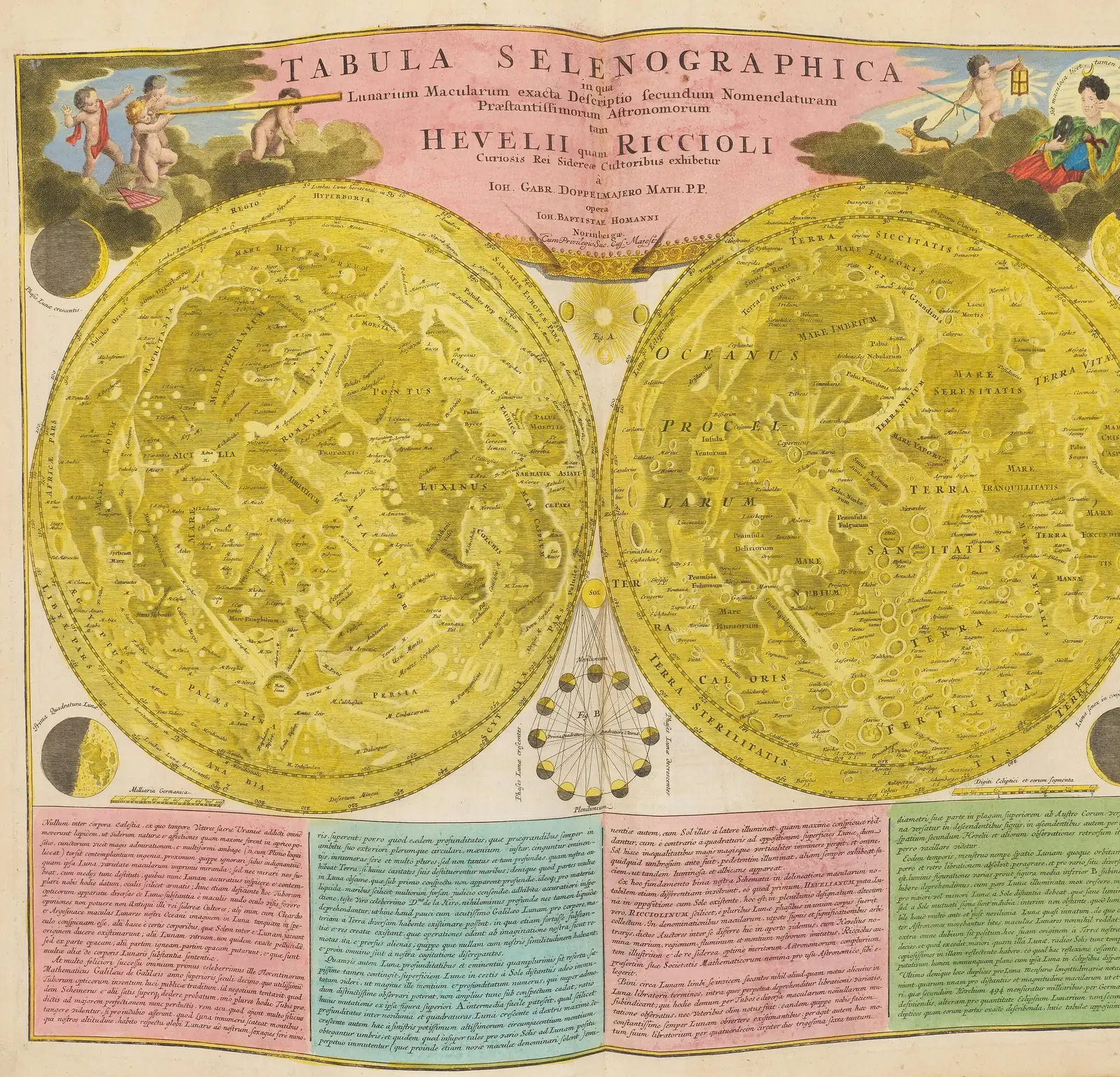
The Sun's gravity tugs the Moon's orbit around, so the nodes slide backward through the zodiac, a full lap in 18.61 years. That steady slide is the mean node. It is an average, which is why it never stops and never turns around.
The true node is where the Moon's orbit actually crosses the ecliptic at a given instant. The same solar tug that drives the slide also makes it wobble, so the true node rocks back and forth around the mean one. In 2026 and 2027 the gap never got bigger than 1°47′. Today it is 1°15′: the true node at 28°02′ Aquarius, the mean at 26°47′ Aquarius.
Who uses which? Traditional Jyotisha almanacs mostly print the mean node for Rahu and Ketu, and many Western astrologers and apps default to the true node, though plenty of software lets you switch. Neither is "the real astrology." Both describe the same axis.
The only time it matters for you: if your natal node sits within about 1°47′ of a sign line, one app may put it in the neighbouring sign. The node finder flags that case.
The sky behind it
Cross-check against Swiss Ephemeris SE_MEAN_NODE and SE_TRUE_NODE on 2026-01-01, 2026-10-18, 2027-06-01: our values agree within 0°00′ (well under the 1′ precision we print in signs).
| Date | Mean (ours) | Mean (Swiss) | True (ours) | True (Swiss) |
|---|---|---|---|---|
| 2026-01-01 | 342.169 | 342.171 | 340.959 | 340.954 |
| 2026-10-18 | 326.813 | 326.815 | 328.037 | 328.038 |
| 2027-06-01 | 314.845 | 314.848 | 313.728 | 313.724 |
Why they matter
The nodes are where eclipses happen
Try this today
- Mark Aug 2, 2027 in your calendar. If you live near the path of totality, NASA's eclipse site has the map and local times.
- Look up which of your houses the 2027 eclipses fall in. That is where both traditions say the nodal story gets loud.
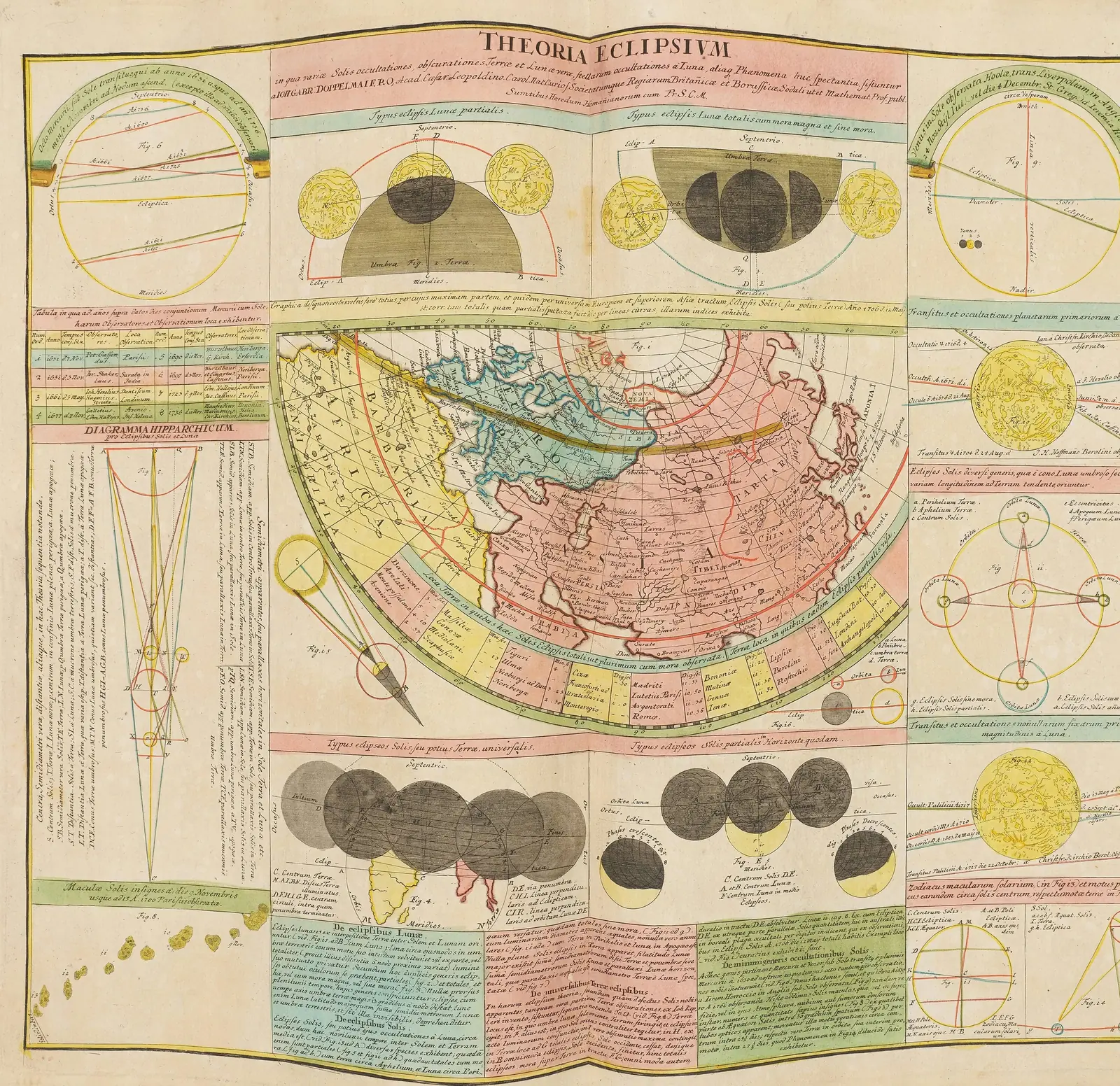
Here is the part both traditions agree on completely. A solar or lunar eclipse can only happen when a new or full Moon falls close to one of the nodes, because that is the only place the Sun, Moon and Earth can line up in three dimensions.
That geometry is where the stories come from. In the Hindu tradition the asura Svarbhanu drank the nectar of immortality at the churning of the ocean and was beheaded by Vishnu; his head became Rahu and his body Ketu, and Rahu swallowing the Sun or Moon is the old explanation of an eclipse (Britannica; Samudra manthan). Medieval European astrologers, working from Arabic sources, named the nodes the dragon's head and tail, Caput and Cauda Draconis (Lunar node). Two cultures, the same picture of a sky-dragon eating the light.
In 2026 and 2027 there are 4 solar and 5 lunar eclipses, all clustered near the nodal axis. The tightest is the total solar eclipse of August 2, 2027 at 9°55′ Leo, only 1.6° from the South Node. The annular eclipse of February 6, 2027 at 17°38′ Aquarius sits 2.9° from the North Node. In the Vedic zodiac those same eclipses fall at 15°40′ Cancer and 23°24′ Capricorn.
Eclipses are not a reason to panic. Treat them as the sky's loudest reminders of the axis you are already working with, and plan nothing drastic on the strength of one.
Meaning
What Rahu and Ketu mean, and how it differs from the Western nodes
Try this today
- Write one line on what feels easy (South Node or Ketu sign) and one on what feels like a stretch (North Node or Rahu sign). Check whether the two zodiacs change your answer.
- If you are in a Rahu or Ketu dasha, ask a Jyotishi which sign they use and why.
Same points, but the toolkits around them differ, and that is where readings start to sound different.
In Western astrology the nodes are usually read as a growth axis. The North Node is the direction that feels unfamiliar but stretches you; the South Node is what comes easily, the comfort zone or old habit. Evolutionary and karmic schools add a past-life layer. The nodes are not planets here; they are sensitive points.
In Jyotisha Rahu and Ketu are two of the nine grahas, the "seizers," alongside the Sun, Moon and five visible planets (Navagraha). They are often called shadow planets, have their own periods in the Vimshottari dasha system (Rahu's lasts 18 years, Ketu's 7), and are read for hunger and obsession (Rahu) versus detachment and letting go (Ketu).
The overlap is real: Rahu's restless pull forward rhymes with the Western North Node, and Ketu's mix of mastery and release rhymes with the South Node. The tone is different. Western readings tend to be about personal growth; Vedic readings treat Rahu and Ketu more cautiously, as forces that both reward and unsettle.
Neither framing is a forecast. Use them as prompts for reflection, not verdicts about your life.
Node finder
Find your North Node and your Rahu
Enter a birth date. We compute the mean lunar node for that day, show it in the Western zodiac (North and South Node) and the Vedic one (Rahu and Ketu, Lahiri), flag it if mean and true could disagree, and list your nodal returns and reversals. Nothing is saved.
Enter a birth date. The node moves only about 3′ a day, so the time of birth barely matters here.
More to read
Shorter reads. Each opens in place.
Your cycle
Nodal returns: the 18.6-year rhythm
Every 18.61 years the node comes back to where it was when you were born, around ages 18.6, 37.2, 55.8 and 74.5. Halfway between, the axis flips (the nodal reversal). If you were born roughly 18-19 or 37 years before 2026-2027 with your North Node in Aquarius, this stretch is your return. The finder computes yours.
Continue readingShow less
On the calendar
Why Indian almanacs and Western sites print different dates
Most panchangs print the sidereal mean node in Indian Standard Time (UTC+5:30), so Rahu's Capricorn ingress of December 5, 2026, 17:02 UTC shows up there late that same night. Western sites usually print the tropical true node in their own time zone. 109 days and a whole sign separate the two systems' 2026 headline dates.
Continue readingShow less
Node sign changes and eclipses, computed
Every sign change of the lunar nodes from mid-2025 to 2028 in both zodiacs, mean and true, and every eclipse of 2026-2027 with its distance from the nodal axis.
| System | Node | Date (UTC) | North Node / Rahu | South Node / Ketu |
|---|---|---|---|---|
| Western (tropical) | True | July 27, 2026, 00:47 UTC | Pisces → Aquarius | Leo |
| Western (tropical) | Mean | August 18, 2026, 19:24 UTC | Pisces → Aquarius | Leo |
| Vedic (Lahiri) | True | November 25, 2026, 12:34 UTC | Aquarius → Capricorn | Cancer |
| Vedic (Lahiri) | Mean | December 5, 2026, 17:02 UTC | Aquarius → Capricorn | Cancer |
| Western (tropical) | Mean | March 7, 2028, 08:10 UTC | Aquarius → Capricorn | Cancer |
| Western (tropical) | True | March 26, 2028, 16:03 UTC | Aquarius → Capricorn | Cancer |
| Vedic (Lahiri) | True | May 24, 2028, 10:23 UTC | Capricorn → Sagittarius | Gemini |
| Vedic (Lahiri) | Mean | June 23, 2028, 19:59 UTC | Capricorn → Sagittarius | Gemini |
| Date | Eclipse | Western degree | Vedic degree | Nearest node |
|---|---|---|---|---|
| February 17, 2026 | Annular solar eclipse | 28°50′ Aquarius | 4°37′ Aquarius | North Node (10.1°) |
| March 3, 2026 | Total lunar eclipse | 12°52′ Virgo | 18°38′ Leo | South Node (3.9°) |
| August 12, 2026 | Total solar eclipse | 20°02′ Leo | 25°49′ Cancer | South Node (9.8°) |
| August 28, 2026 | Partial lunar eclipse | 4°51′ Pisces | 10°37′ Aquarius | North Node (5°) |
| February 6, 2027 | Annular solar eclipse | 17°38′ Aquarius | 23°24′ Capricorn | North Node (2.9°) |
| February 20, 2027 | Penumbral lunar eclipse | 1°59′ Virgo | 7°45′ Leo | South Node (11.4°) |
| July 18, 2027 | Penumbral lunar eclipse | 25°58′ Capricorn | 1°43′ Capricorn | North Node (15.5°) |
| August 2, 2027 | Total solar eclipse | 9°55′ Leo | 15°40′ Cancer | South Node (1.6°) |
| August 17, 2027 | Penumbral lunar eclipse | 24°04′ Aquarius | 29°50′ Capricorn | North Node (12.5°) |
All times are UTC. In the Americas the local date can be a day earlier; in Asia and Australia a day later.
Quick answers
Is Rahu the same as the North Node?
Yes. Rahu is the Moon's ascending (north) node and Ketu is the descending (south) node. They are the same two points in the sky. What differs is the zodiac: Vedic astrology measures them against the stars (Lahiri ayanamsa, 24°14′ in October 2026), so Rahu's sign is often one sign behind the Western North Node's.
What sign is Rahu in 2026?
In the Vedic (sidereal, Lahiri) zodiac Rahu is in Aquarius until late 2026, then moves into Capricorn: November 25, 2026, 12:34 UTC by the true node, December 5, 2026, 17:02 UTC by the mean node most Indian almanacs use. Ketu moves from Leo into Cancer at the same moment. Rahu stays in Capricorn until Jun 23, 2028 (mean).
When does the North Node enter Aquarius in 2026?
In the Western (tropical) zodiac the true North Node entered Aquarius on July 27, 2026, 00:47 UTC and the mean node followed on August 18, 2026, 19:24 UTC. The South Node entered Leo at the same moments. The North Node leaves Aquarius for Capricorn on Mar 26, 2028 (true) or Mar 7, 2028 (mean).
Mean node vs true node: which should I use?
Either. The mean node is a smooth average that always moves backward; the true node is the Moon's actual node at that moment and wobbles around it by up to 1°47′ (2026-2027), sometimes standing still or moving forward for a few days. Most Vedic almanacs use the mean node for Rahu and Ketu; many Western apps default to the true node. They only disagree when a node sits within about 1°47′ of a sign line.
Why is my Rahu in a different sign from my North Node?
Because the Vedic zodiac starts 24°14′ further along than the Western one. If your Western North Node sits in the first 24°14′ of its sign, your Rahu falls one sign back. The node finder on this page tells you both.
Is Rahu in Capricorn in 2027?
Yes, for the whole of 2027 in the Vedic zodiac: Rahu is in Capricorn and Ketu in Cancer from Dec 5, 2026 (mean) until Jun 23, 2028. In the Western zodiac the North Node spends all of 2027 in Aquarius and the South Node in Leo.
Do Western astrologers use Rahu and Ketu?
Not by those names. Western astrology calls the same points the North Node and South Node, and medieval Latin texts called them Caput Draconis and Cauda Draconis, the dragon's head and tail. The meanings overlap but are not identical: modern Western readings frame the axis as growth versus comfort zone, while Jyotisha treats Rahu and Ketu as two of the nine grahas with their own periods in the dasha system.
How long do Rahu and Ketu stay in one sign?
About 18 months. The nodes take 18.61 years to travel backward through all twelve signs, so each sign gets roughly a year and a half. The current Capricorn-Cancer stay (Vedic, mean) runs Dec 5, 2026 to Jun 23, 2028.