Astrology systems · Vedic and Western
Vedic vs Western astrology: one sky, two rulers
Same planets, same night, same angles between them. The only thing that moves is where the zodiac starts counting, and in 2026 the two starting lines are 24°14′ apart.
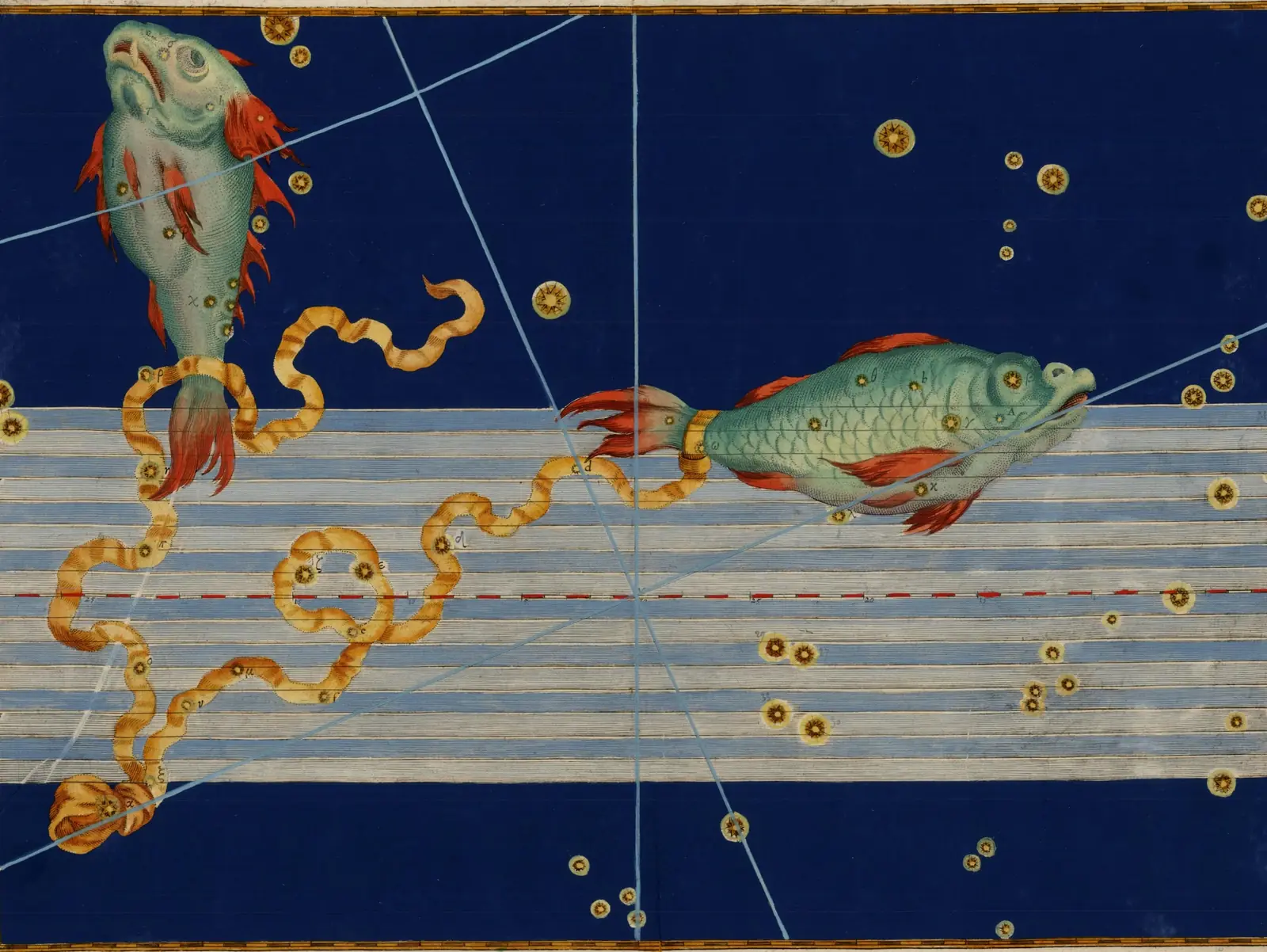
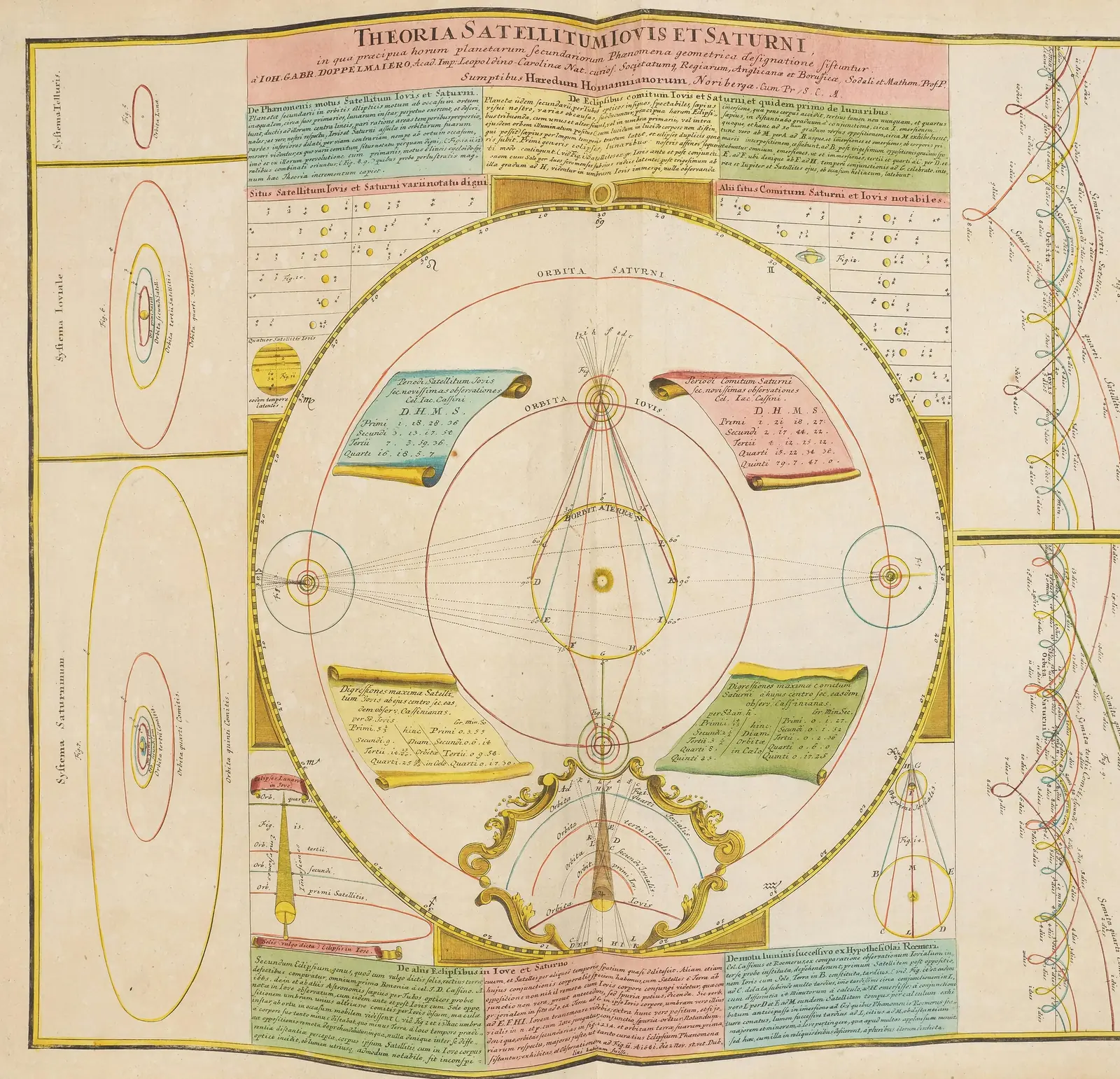
Johann Gabriel Doppelmayr, Atlas Novus Coelestis, 1742
At a glance
Neither has been shown to be more accurate in controlled tests. They count the same sky from different starting points, 24°14′ apart in 2026 (Lahiri), so about 81% of birthdays get a different Sun sign in each.
- The gap today
- 24°14′01″Lahiri ayanamsa, Oct 18, 2026
- Different Sun sign
- about 81% of the zodiac81% of the days in 2026
- Vedic Aries 2026
- April 14, 2026 · 04:02 UTCWestern Aries began Mar 20
- Zodiacs lined up
- around 285 ADLahiri's zero year
- Drift
- 50.26″ a year1° every 71.6 years
Convert your chart belowWestern and Vedic side by side, plus your Moon's nakshatra. Free, in your browser.
The short answer
Two zodiacs, one sky

Try this today
- Run your birthday through the converter below. Note which of your placements change sign and which stay put.
- If your Western Sun sits after 24°14′ in its sign, you keep your Sun sign in both systems. Check your Moon and rising too; they often switch even when the Sun does not.
You typed your birthday into an Indian astrology app and it told you you're a Cancer. You have been a Leo your whole life. Your group chat has opinions. Relax: both apps are reading the same sky correctly.
Here is the whole difference in one line. Western astrology uses the tropical zodiac, which starts at the March equinox, the moment the Sun crosses the celestial equator heading north. In 2026 that was March 20, 2026 · 14:45 UTC. Vedic astrology (Jyotisha) uses a sidereal zodiac, which starts from a point fixed against the stars. With the Lahiri ayanamsa, the Sun reached that point on April 14, 2026 · 04:02 UTC, 25 days later.
Everything else follows from that. Every planet in your Vedic chart sits that same arc earlier than in your Western chart: 24°14′ for a 2026 birth, 23°51′ for someone born in 2000. A Sun at 10° Leo becomes about 15°46′ Cancer. A Sun at 28° Leo stays Leo, just at 3°46′. The angles between your planets, your squares and trines, do not change at all.
So "which zodiac sign am I really" has two honest answers. Ptolemy, writing in the 2nd century, said astrologers take "the sign which begins with the vernal equinox, that of Aries" as the starting point of them all (Tetrabiblos I.10). Indian astronomy kept counting from the stars. Two old, careful traditions, one choice of zero.
The sky behind it
The ayanamsa is the arc between the two zero points. On October 18, 2026 · 12:00 UTC the Lahiri value is 24°14′01″ (true, including nutation; 24°14′ mean). Sun ingresses computed with JPL DE442 (apparent geocentric longitude, true ecliptic of date); sidereal = tropical minus the Lahiri ayanamsa (Swiss Ephemeris SIDM_LAHIRI).
Why they drift
The slow wobble that split the zodiac
Try this today
- In the "One degree" converter, enter 15° of your Sun sign with your birth year, then again with 2026. The difference is how far the gap has grown in your lifetime, about 50″ a year.
- Next time a "your sign changed" post pops up, check whether it means tropical or sidereal. That one question settles most of them.
Earth spins like a slightly tipsy top. Its axis traces a slow circle in the sky, and as it does, the point where the Sun crosses the equator in March slides backward against the stars. Astronomers call it the precession of the equinoxes, and the Greek astronomer Hipparchus is credited with discovering it in the 2nd century BC (Britannica).
The tropical zodiac rides along with the equinox. The sidereal zodiac stays with the stars. So every year the gap grows by about 50.26 arcseconds, one full degree every 71.6 years.
Under the Lahiri definition the two zodiacs coincided around 285 AD, which is the zero year Lahiri's own ephemeris uses. Since then the gap has grown to 23°09′ in 1950, 23°51′ in 2000 and 24°14′ today. By 2100 it will be 25°15′.
This is also why "NASA changed your zodiac sign" stories go viral every few years. Nothing changed. The drift is about 2,000 years old and Western astrology simply never followed it, by design.
The sky behind it
Mean precession rate from the Lahiri ayanamsa between January 1, 2026 and January 1, 2027. At this pace the gap reaches a full 30° around 2439, when the Vedic signs would sit one whole sign behind the Western ones.
| Year | Gap between zodiacs |
|---|---|
| 1950 | 23°09′ |
| 2000 | 23°51′ |
| 2026 | 24°13′ |
| 2050 | 24°34′ |
| 2100 | 25°15′ |
Tropical vs sidereal
Which zodiac is correct? Even sidereal astrologers disagree
Try this today
- If a Vedic reading and an app disagree with each other, ask which ayanamsa each used before you ask which is right.
- Look at where your Sun falls in the real constellations, not the signs. It is a third answer, and a fun one.
Real zodiac dates 2026 (the constellations)Sidereal zodiac dates 2026
If you hoped sidereal would be the one objective answer, here's the plot twist. To build a star-based zodiac you have to pick which star, or which ancient date, marks 0° Aries. Different schools picked differently.
Lahiri (also called Chitrapaksha) is the standard in India. It is named for the astronomer N. C. Lahiri, member-secretary of the Calendar Reform Committee the Government of India set up in 1952 under Meghnad Saha; the ephemeris work it led to passed to the India Meteorological Department in 1955 (IMD Positional Astronomy Centre). The idea behind Lahiri is to keep the star Spica (Chitra) opposite 0° Aries, at the start of Libra. We checked: in October 2026 Spica sits at 29°58′ Virgo in the Lahiri zodiac, just 1.3′ short of that line. (Background on the definitions: Ayanamsa.) KP, Raman and Yukteshwar are other Indian choices, and Western sidereal astrologers mostly use Fagan-Bradley.
In 2026 those five values span 2°20′. That is enough to move a planet near a sign edge, or to shift your Moon's nakshatra.
And neither zodiac matches the constellations you can see. The signs are equal 30° slices; the star figures are not. Virgo is huge, Scorpius barely touches the ecliptic, and Ophiuchus sneaks in between. Both systems are measuring frames, not star maps.
So which is correct? The tropical zodiac is correct if you think astrology is about the seasons, the light and the dark. The sidereal zodiac is correct if you think it is about the star backdrop. That is a question of meaning, and the sky cannot settle it for you.
The sky behind it
| Ayanamsa | Value | Difference from Lahiri |
|---|---|---|
| Lahiri (Chitrapaksha) | 24°13′13″ | - |
| Krishnamurti (KP) | 24°07′24″ | -0°06′ |
| Raman | 22°46′26″ | -1°27′ |
| Yukteshwar | 22°50′31″ | -1°23′ |
| Fagan-Bradley | 25°06′12″ | +0°53′ |
The honest part
So is Vedic or Western astrology more accurate?

Try this today
- Read one description of your Vedic Moon sign and one of your Western Moon sign. Write down the line from each that rings truest. That tells you which language suits you, not which is right.
- Notice the Barnum effect: a reading that fits everyone feels personal. Specific, checkable statements are the interesting ones.
This is the question everyone actually types, so let's split it in two, because "accurate" means two different things here.
Accurate about the sky? Both are, completely. A good Vedic chart and a good Western chart put every planet in the same physical place, to the arcminute. The converter on this page shows it: the numbers differ only by the ayanamsa. Neither system is "more astronomical" than the other.
Accurate about you? Here the honest answer is that neither has been shown to work in controlled tests. The most cited one, Shawn Carlson's double-blind study published in Nature in 1985, asked astrologers to match birth charts to personality profiles, and they did no better than chance (Nature). That test used Western charts. We know of no published controlled study showing that Vedic charts do better, or worse.
So you will find plenty of people who swear Vedic "finally described me" and just as many who feel seen by their Western chart. Both experiences are real. They are not evidence that one zodiac is true.
What you can say: the two traditions are good at different kinds of reflection. If a framework gives you useful questions about your life, that is its value. Treat it as a mirror and a conversation, never as a guarantee, and never as a reason to skip real advice on health, money or law.
Beyond the zodiac
What actually feels different in a Vedic reading
Try this today
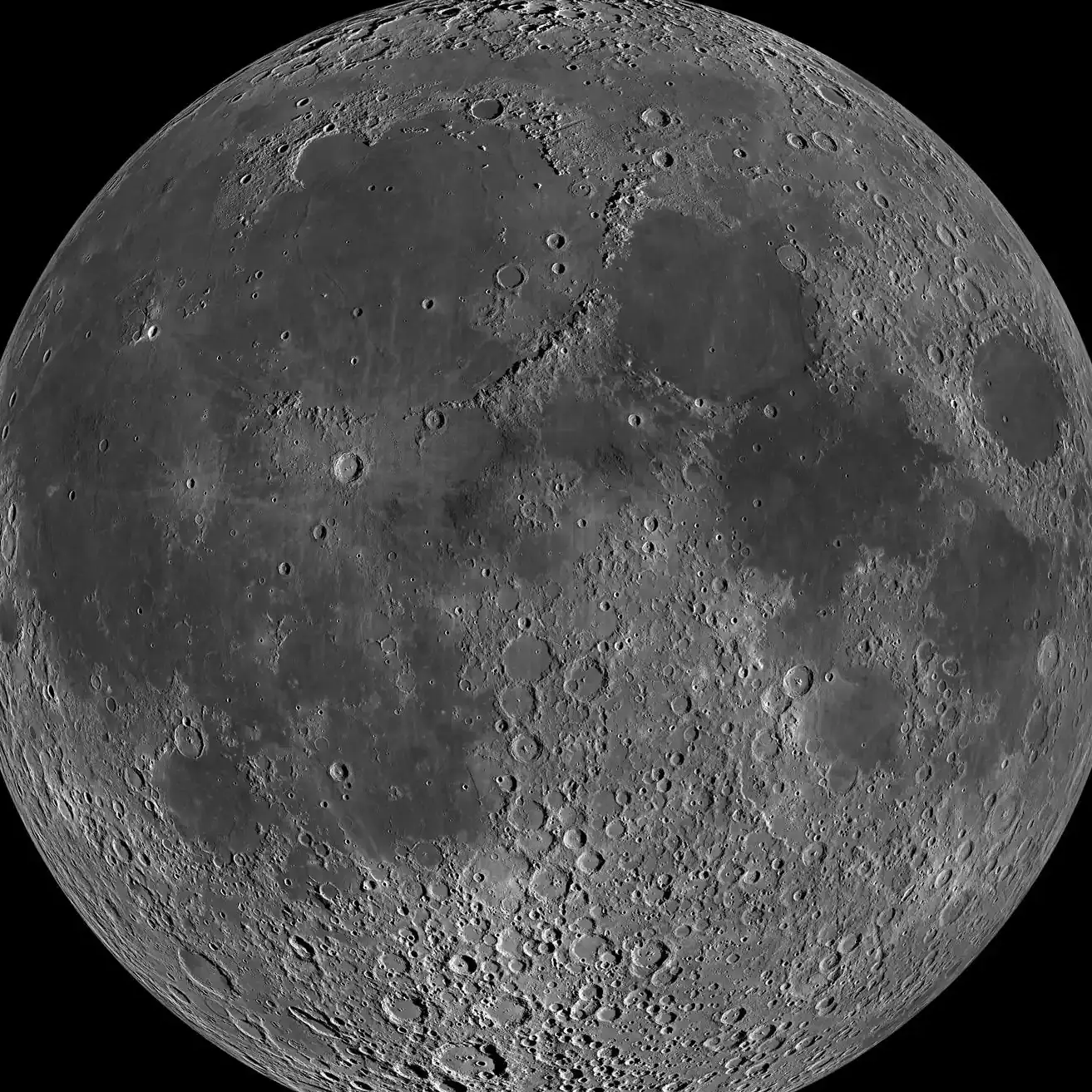
- On October 18, 2026, the Moon sat at 23°12′ Capricorn in the Western zodiac and in Uttara Ashadha nakshatra in the Vedic one. Find your own in the converter.
- If you try a Vedic reading, ask about your current dasha. It is the part with no real Western twin.
Rahu and Ketu vs the North NodeWhole sign vs Placidus houses
The zodiac shift gets the headlines, but if you sit with a Jyotishi and then with a Western astrologer, the bigger difference is the toolkit.
The Moon leads. Vedic astrology gives the Moon sign (rashi) and its nakshatra, one of 27 lunar mansions of 13°20′ each, a starring role. Your nakshatra and its pada (quarter) are used for naming customs, timing and compatibility. The converter tells you yours.
Time runs in chapters. The Vimshottari dasha system divides life into planetary periods totalling 120 years, starting from the Moon's nakshatra at birth. Western astrology times things mainly with transits, progressions and solar returns.
Nine grahas, no outer planets. Jyotisha uses the Sun, Moon, Mercury, Venus, Mars, Jupiter, Saturn and the lunar nodes Rahu and Ketu. Uranus, Neptune and Pluto, found by telescope from 1781 on, are not part of the classical system.
Charts inside the chart. Divisional charts (vargas) such as the navamsa (D9) split each sign into finer parts. Houses are usually whole-sign from the rising sign (Lagna), where many Western astrologers use Placidus.
The two families are related. Scholars trace Indian horoscopy partly to Greek astrology: the Sanskrit Yavanajataka, "the sayings of the Greeks," is a 3rd-century CE versification of an earlier Greek-language text (Yavanajataka; Hindu astrology). They share signs, planets and houses. They grew apart in which zero they kept and what they built on top.
Tropical to sidereal converter
See your chart in both zodiacs
Enter your birth details and we compute your planets in the Western (tropical) zodiac, then subtract the Lahiri ayanamsa for your birth moment to give the Vedic (sidereal) chart. You also get your Moon's nakshatra. No birthday handy? Convert a single degree instead. Everything runs in your browser; nothing is saved.
What do you want to convert?
More to read
Shorter reads. Each opens in place.
On the calendar
Festivals that follow the sidereal Sun
India's solar festivals track the Sun's sidereal ingresses, which is why they sit in mid-month. Makar Sankranti marks the Sun entering sidereal Capricorn: January 14, 2026 · 09:37 UTC in 2026 and January 14, 2027 · 15:40 UTC in 2027. The Sun's entry into sidereal Aries, the start of the solar new year in several regions, came on April 14, 2026 · 04:02 UTC and returns on April 14, 2027 · 09:58 UTC. Local almanacs can differ by a few minutes depending on the ayanamsa they use.
Continue readingShow less
A real example
One sky, both ways: October 18, 2026
At noon UTC on October 18, 2026, 6 of the 9 points in the sky sat in a different sign depending on the zodiac. The Sun was at 25°07′ Libra in the Western zodiac and 0°53′ Libra in the Vedic one, just 0°53′ past the sidereal Libra line. The full list is in the tables below.
Continue readingShow less
Choosing
Which one should you follow?
Pick by what you want from it. Want seasons, psychology and the outer planets? Western. Want the Moon's nakshatra, dasha timing and the Indian tradition? Vedic. Want both? Keep two charts and never mix their signs in one reading.
Continue readingShow less
Sun sign dates and the sky, in both zodiacs
When the Sun enters each sign in the Western (tropical) and Vedic (sidereal, Lahiri) zodiacs. The gap runs from 23.8 to 25.4 days because the Sun moves faster in January than in July.
| Sign | Rashi | Western (tropical) | Vedic (sidereal) | Gap |
|---|---|---|---|---|
| Aries | Mesha | March 20, 2026 · 14:45 UTC | April 14, 2026 · 04:02 UTC | 24.6 days |
| Taurus | Vrishabha | April 20, 2026 · 01:39 UTC | May 15, 2026 · 00:52 UTC | 25.0 days |
| Gemini | Mithuna | May 21, 2026 · 00:36 UTC | June 15, 2026 · 07:23 UTC | 25.3 days |
| Cancer | Karka | June 21, 2026 · 08:24 UTC | July 16, 2026 · 18:09 UTC | 25.4 days |
| Leo | Simha | July 22, 2026 · 19:13 UTC | August 17, 2026 · 02:28 UTC | 25.3 days |
| Virgo | Kanya | August 23, 2026 · 02:18 UTC | September 17, 2026 · 02:22 UTC | 25.0 days |
| Libra | Tula | September 23, 2026 · 00:05 UTC | October 17, 2026 · 14:21 UTC | 24.6 days |
| Scorpio | Vrishchika | October 23, 2026 · 09:37 UTC | November 16, 2026 · 14:13 UTC | 24.2 days |
| Sagittarius | Dhanu | November 22, 2026 · 07:23 UTC | December 16, 2026 · 04:55 UTC | 23.9 days |
| Capricorn | Makara | December 21, 2026 · 20:50 UTC | January 14, 2026 · 09:37 UTC | 23.8 days |
| Aquarius | Kumbha | January 20, 2026 · 01:44 UTC | February 12, 2026 · 22:38 UTC | 23.9 days |
| Pisces | Meena | February 18, 2026 · 15:51 UTC | March 14, 2026 · 19:33 UTC | 24.1 days |
| Sign | Rashi | Western (tropical) | Vedic (sidereal) | Gap |
|---|---|---|---|---|
| Aries | Mesha | March 20, 2027 · 20:24 UTC | April 14, 2027 · 09:58 UTC | 24.6 days |
| Taurus | Vrishabha | April 20, 2027 · 07:17 UTC | May 15, 2027 · 06:49 UTC | 25.0 days |
| Gemini | Mithuna | May 21, 2027 · 06:18 UTC | June 15, 2027 · 13:25 UTC | 25.3 days |
| Cancer | Karka | June 21, 2027 · 14:10 UTC | July 17, 2027 · 00:18 UTC | 25.4 days |
| Leo | Simha | July 23, 2027 · 01:04 UTC | August 17, 2027 · 08:43 UTC | 25.3 days |
| Virgo | Kanya | August 23, 2027 · 08:14 UTC | September 17, 2027 · 08:40 UTC | 25.0 days |
| Libra | Tula | September 23, 2027 · 06:01 UTC | October 17, 2027 · 20:38 UTC | 24.6 days |
| Scorpio | Vrishchika | October 23, 2027 · 15:32 UTC | November 16, 2027 · 20:28 UTC | 24.2 days |
| Sagittarius | Dhanu | November 22, 2027 · 13:16 UTC | December 16, 2027 · 11:08 UTC | 23.9 days |
| Capricorn | Makara | December 22, 2027 · 02:42 UTC | January 14, 2027 · 15:40 UTC | 23.8 days |
| Aquarius | Kumbha | January 20, 2027 · 07:29 UTC | February 13, 2027 · 04:39 UTC | 23.9 days |
| Pisces | Meena | February 18, 2027 · 21:33 UTC | March 15, 2027 · 01:30 UTC | 24.2 days |
| Point | Western | Vedic | Nakshatra (pada) |
|---|---|---|---|
| Sun | 25°07′ Libra | 0°53′ Libra (Tula) | Chitra (3) |
| Moon | 23°12′ Capricorn | 28°58′ Sagittarius (Dhanu) | Uttara Ashadha (1) |
| Mercury | 19°03′ Scorpio | 24°49′ Libra (Tula) | Vishakha (2) |
| Venus | 4°04′ Scorpio | 9°50′ Libra (Tula) | Swati (1) |
| Mars | 11°33′ Leo | 17°19′ Cancer (Karka) | Ashlesha (1) |
| Jupiter | 22°29′ Leo | 28°15′ Cancer (Karka) | Ashlesha (4) |
| Saturn | 10°13′ Aries | 15°59′ Pisces (Meena) | Uttara Bhadrapada (4) |
| North Node (Rahu) | 26°47′ Aquarius | 2°33′ Aquarius (Kumbha) | Dhanishta (3) |
| South Node (Ketu) | 26°47′ Leo | 2°33′ Leo (Simha) | Magha (1) |
All times are UTC. In the Americas the local date can be a day earlier; in Asia and Australia a day later.
Quick answers
Is Vedic astrology more accurate than Western?
No controlled study has shown either one to be more accurate. The best-known test, Shawn Carlson's double-blind study in Nature (1985), found astrologers matched charts to personality profiles no better than chance, and we know of no comparable test that shows Vedic doing better. What differs is the starting point: Western counts from the March equinox, Vedic from the stars, 24°14′ apart in 2026. Both are exact about where the planets are. The meanings are tradition, not measurement.
Tropical vs sidereal: which is correct?
Both are correct measurements of different things. The tropical zodiac is tied to the seasons: 0° Aries is the March equinox, as Ptolemy set out in the Tetrabiblos. The sidereal zodiac is tied to the background stars. They drift apart by about 50.26″ a year because Earth's axis slowly wobbles. The right one is the one whose anchor you find meaningful.
Why is my Vedic sign different from my Western sign?
Because the Vedic zodiac starts 24°14′ later along the same circle (Lahiri ayanamsa, October 2026). Any planet that sits earlier than that in its Western sign falls back one sign in the Vedic chart. That covers about 81% of the zodiac, so roughly four in five people have a different Vedic Sun sign.
If I'm a Leo, what is my sign in Vedic astrology?
Usually Cancer. In 2026 the Sun was in Western Leo from Jul 22 to Aug 23 but in Vedic Leo (Simha) only from Aug 17. So a Leo born from about Jul 22 to Aug 17 is a Vedic Cancer (Karka), and one born after that stays Leo. Dates shift by a day or so from year to year; the converter on this page gives the exact answer.
What ayanamsa does Vedic astrology use in 2026?
Most Indian astrologers use the Lahiri (Chitrapaksha) ayanamsa, about 24°13′13″ on January 1, 2026 and 24°14′01″ by October 18. Others are in use too: Krishnamurti (KP), Raman and Yukteshwar among them, and the Western sidereal school uses Fagan-Bradley. In 2026 those values span about 2°20′.
Will the gap between Vedic and Western keep growing?
Yes, by about 1° every 71.6 years. Under Lahiri the two zodiacs lined up around 285 AD. The gap was 23°09′ in 1950, 23°51′ in 2000, and will be 25°15′ in 2100. At that pace the Vedic signs fall a full sign behind the Western ones in about 413 years.
Can I use both Vedic and Western astrology?
Yes, many people do. They answer in different styles: Western astrology leans on aspects and psychological themes, Vedic on the Moon's nakshatra, the dasha periods and divisional charts. Using both is fine as long as you do not mix the zodiacs inside one chart reading.
Does Vedic astrology use Uranus, Neptune and Pluto?
Traditional Jyotisha uses nine grahas: the Sun, Moon, Mercury, Venus, Mars, Jupiter, Saturn, and the lunar nodes Rahu and Ketu. Uranus, Neptune and Pluto were discovered by telescope from 1781 onward and are not part of the classical system, though some modern Vedic astrologers add them.