Zodiac systems · The sign question
Has your zodiac sign changed? No. The sky behind it did.
Your horoscope sign follows the seasons, so it holds. The stars behind the Sun have slid about 24°13′ since the zodiacs lined up. Here are all three answers for your birthday, computed.
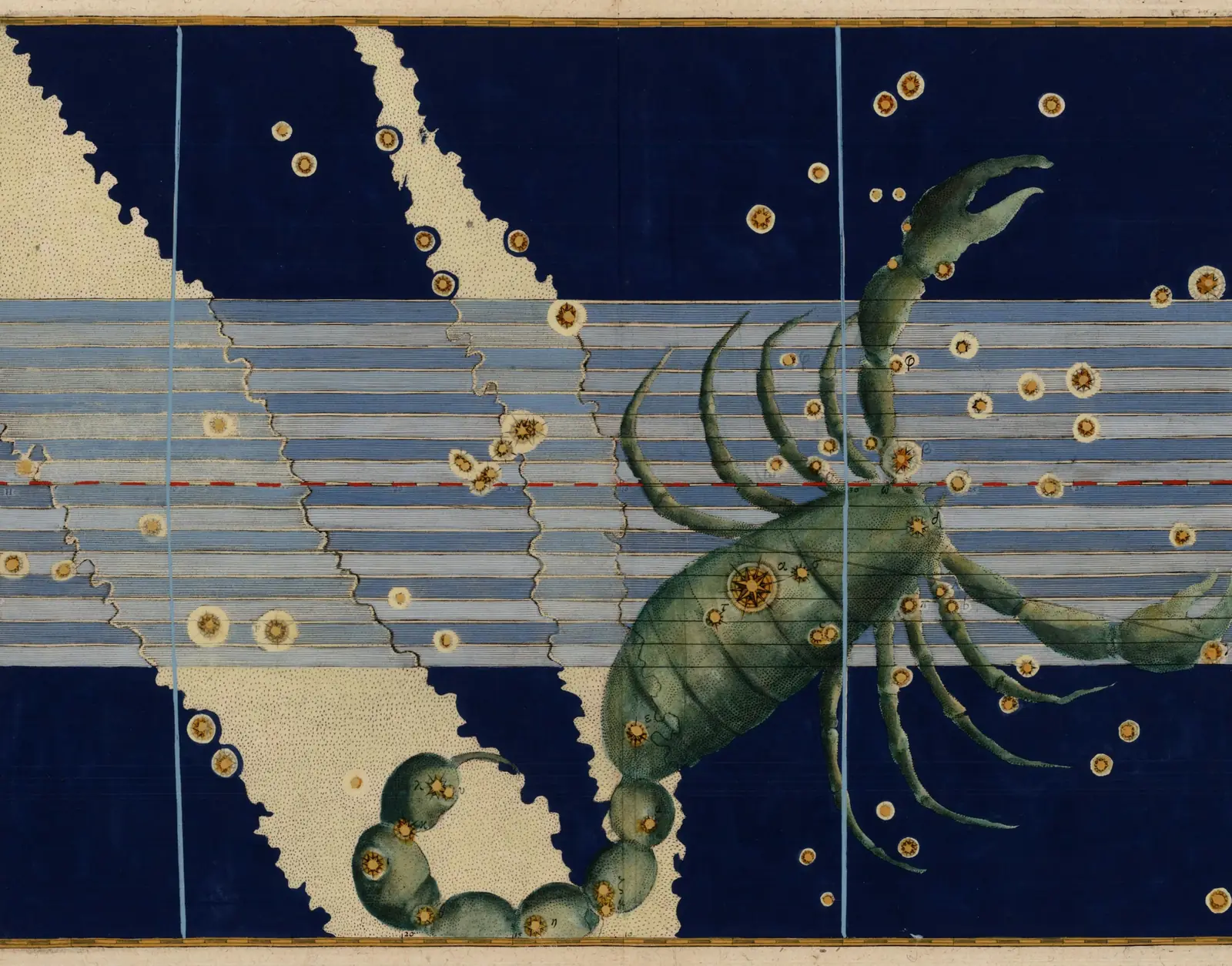
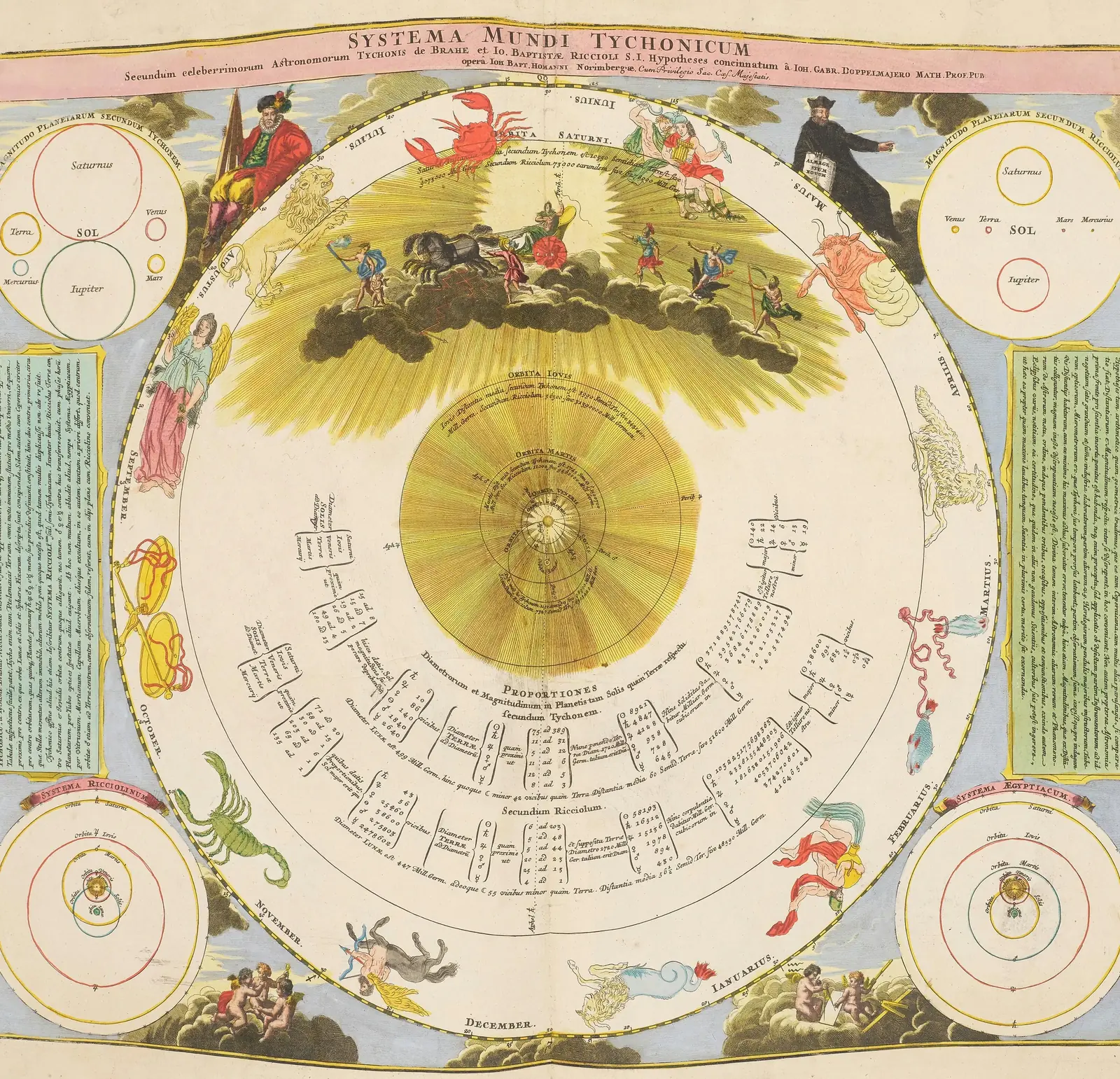
Johann Gabriel Doppelmayr, Atlas Novus Coelestis, 1742
At a glance
No, your Western zodiac sign has not changed. It is fixed to the seasons. What moved is the star backdrop: on 89% of days in 2026 the Sun stood in a different constellation than its sign.
- Your Western sign
- UnchangedAries still starts at the equinox, Mar 20 2026
- Star drift (2026)
- 24°13′Lahiri ayanamsa, about 25 days of calendar
- Days the sky disagrees
- 325 of 3652026, Sun's constellation vs sign
- Sun in Ophiuchus
- Nov 30 to Dec 1818.3 days in 2026 (UTC)
- What NASA changed
- Nothinga 2016 kids' explainer went viral
Check your three signsTropical, sidereal and constellation, for any birthday 1930 to 2035.
The short answer
One birthday, three honest answers
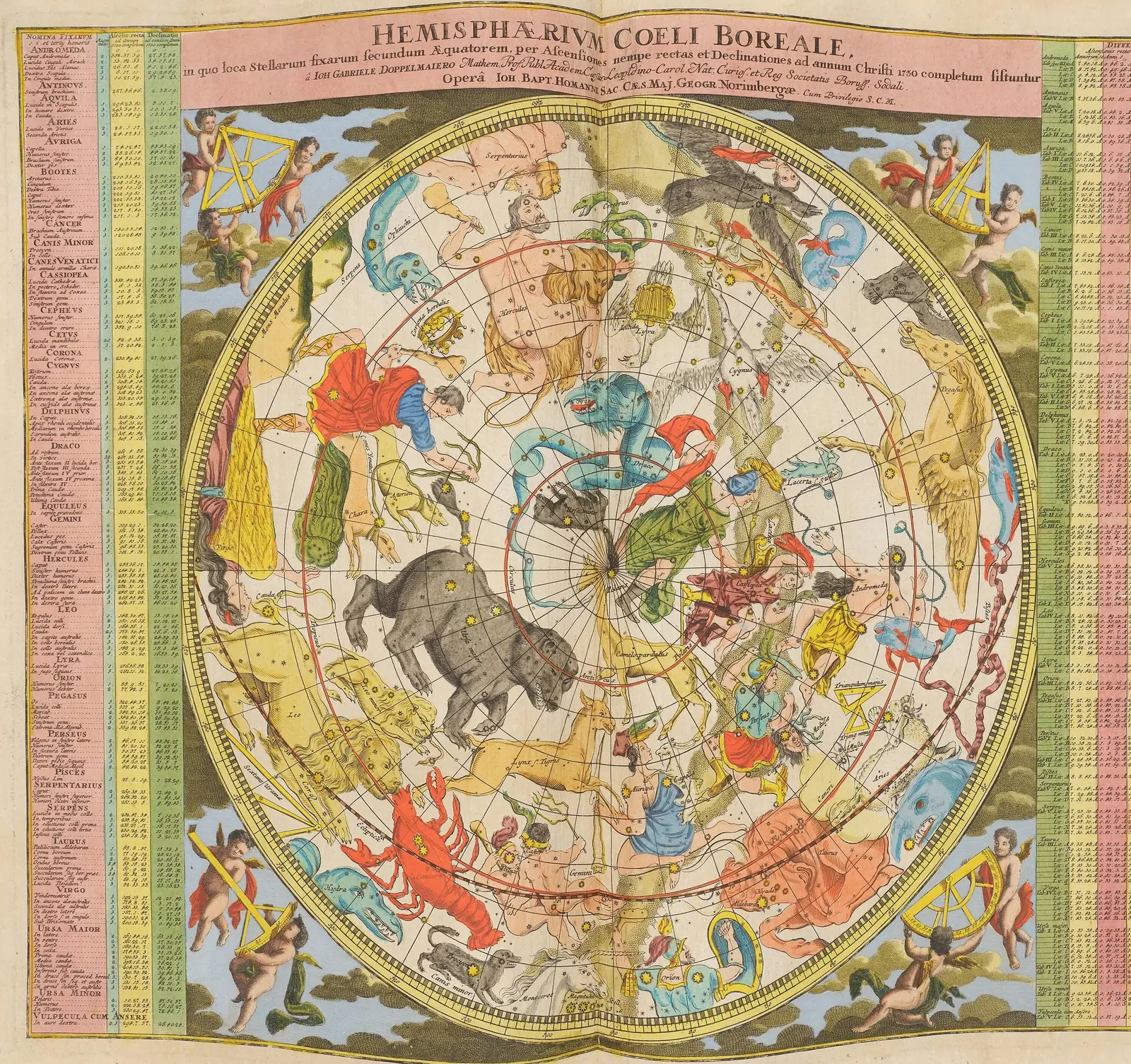
Try this today
- Run your birthday through the checker below and screenshot the three answers.
- Then check your best friend's. Most people get at least two different names.
- If your sign lands on a crossing day, add your birth time: the Sun can change sides in the middle of an afternoon.
Find your Western sign to the minuteSidereal sign calculator
Every few years your group chat lights up. Someone posts a screenshot: NASA changed the zodiac, you're not a Leo anymore. Half the chat panics, the other half says they always felt more like a Cancer anyway.
Here is the calm version. "What's my sign?" has three different answers, depending on which sky you are measuring against.
Western astrology (tropical). This is the zodiac in every horoscope app and magazine. It starts at the March equinox, the moment day and night are equal, and cuts the year into twelve equal 30-degree slices. In 2026 the Sun entered tropical Aries at March 20, 2026 · 14:46 UTC. It is a calendar of the seasons, so it does not drift. This sign has not changed.
Vedic astrology (sidereal). Jyotish measures the same twelve equal signs from the fixed stars instead. Using the Lahiri ayanamsa, the two zodiacs were 24°13′ apart on January 1, 2026. That is why the sidereal Sun only reached Aries on April 14, 2026 · 04:03 UTC.
Astronomy (the actual constellation). Astronomers do not use signs at all. They use 88 constellations with official borders, and the Sun's path crosses 13 of them, at uneven lengths. The Sun reached the constellation Aries on April 19, 2026 · 02:30 UTC.
Same Sun, same day, three rulers. None of them is a mistake. They are measuring different things.
The sky behind it
All three answers come from the Sun's geocentric apparent position in the NASA JPL DE442 ephemeris. Tropical uses the true ecliptic and equinox of date; sidereal subtracts the Lahiri ayanamsa (Swiss Ephemeris SIDM_LAHIRI); constellations use the IAU boundaries via skyfield. Crossings are computed for 1930 to 2035, rounded to the minute, UTC.
The viral story
What NASA actually said in 2016 (and 2011, and 2020)
Try this today
- Next time the screenshot goes round, ask one question: which zodiac does the claim use? That ends most arguments.
- Notice the dates: 2011, 2016, 2020. If it shows up again in 2027, it is the same story.
This story has a habit of coming back, so it is worth knowing its shape.
January 2011. Parke Kunkle, an astronomy instructor at Minneapolis Community and Technical College and a board member of the Minnesota Planetarium Society, told a local paper that the Earth's wobble had shifted the sky, and gave Ophiuchus as running from November 29 to December 17. It went national in days (MPR News). Astrologers replied that Western astrology follows the seasons, not the constellations.
January 2016. NASA's Space Place, a science site for kids, published an explainer on the zodiac. It said the Babylonians divided the band into 12 equal parts to match their 12-month calendar, even though the Sun passes through 13 constellations, and left Ophiuchus out.
September 2016. The explainer went viral as "NASA changed the zodiac," with one widely shared article claiming 86% of people now had a different sign. NASA replied on its Tumblr that it hadn't changed any zodiac signs, "we just did the math" (FOX 13; Christian Science Monitor).
July 2020. NASA reshared the same post when the rumor resurfaced: no, it did not change the zodiac (GMA News).
So where did 86% come from? We ran the numbers ourselves. Checking every day of 2026 at noon UTC, the Sun's IAU constellation differed from its tropical sign on 325 of 365 days, 89%. The viral figure was in the right neighborhood. The conclusion was not: a different constellation is not a different sign.
The sky behind it
The slow wobble that moved the stars
Try this today
- Find Polaris tonight. It is our pole star now, but precession means the pole points somewhere else over the 25,800-year cycle.
- Look at the table further down: the sky shift was about four days in the year 0 and about 24 now.
Picture a spinning top that is slowing down. Its tip stays put while its handle traces a lazy circle. Earth's axis does the same thing, and astronomers call it precession.
Because the axis wobbles, the spot where the Sun crosses the equator each March, the equinox, slides backward against the stars. Hipparchus, the Greek astronomer of the 2nd century BC, is usually credited with noticing it (Wikipedia). Our calculation puts the present rate at 50.32 arcseconds a year, one degree every 72 years, a full lap in roughly 25,800 years at today's pace.
Here is the part that matters for you. Two thousand years ago, when the zodiac took its classic shape, the signs and the star patterns sat roughly on top of each other. By the Lahiri reckoning the two zodiacs lined up exactly in the year 285 AD. Since then they have peeled apart by 24°13′, about 25 days of calendar.
Western astrologers chose to stay with the seasons. Ptolemy's Tetrabiblos, written in the 2nd century AD, argues that it is reasonable to reckon the beginnings of the signs from the equinoxes and solstices (the Loeb translation), so Aries means "the start of spring," wherever the stars happen to be. That choice is the whole reason your sign has not changed.
And the equinox keeps moving. In 2026 it sits in the constellation Pisces. By the IAU borders it crosses into Aquarius in about the year 2598, which is one astronomical answer to "when does the Age of Aquarius begin."
The sky behind it
Lahiri ayanamsa (Swiss Ephemeris, true value with nutation): 23°43′ on January 1, 1990; 24°13′ on January 1, 2026; 24°14′ on January 1, 2027. The equinox point is placed in its IAU constellation by precessing the true equinox of date back to the B1875 boundary frame.
The thirteenth constellation
Ophiuchus is real. It just is not a sign.
Try this today
- Born late November or early December? Check your exact day below and see if the Sun was in Ophiuchus.
- If it was, enjoy the trivia. You can be a Sagittarius with a serpent-bearer fun fact.
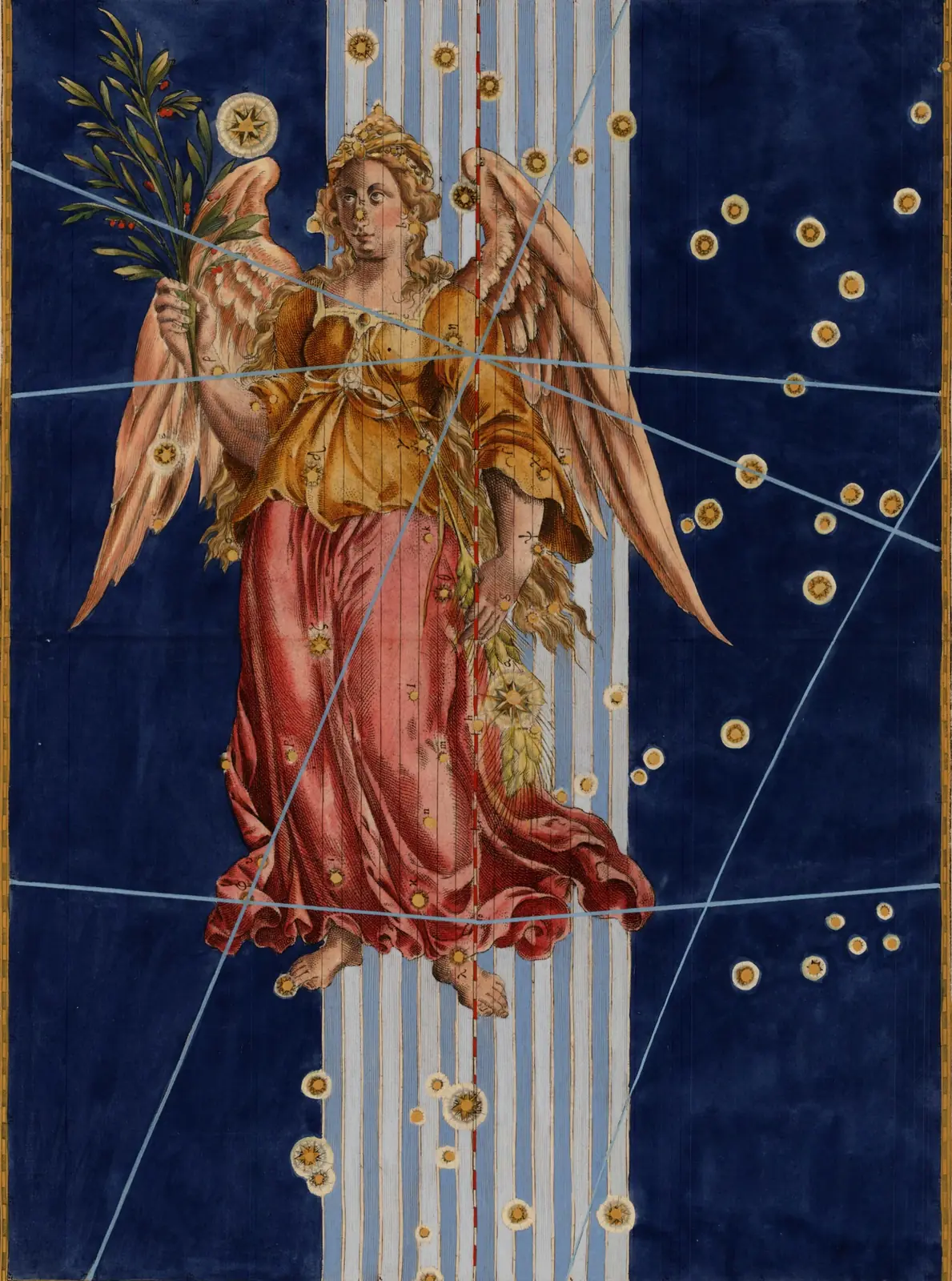
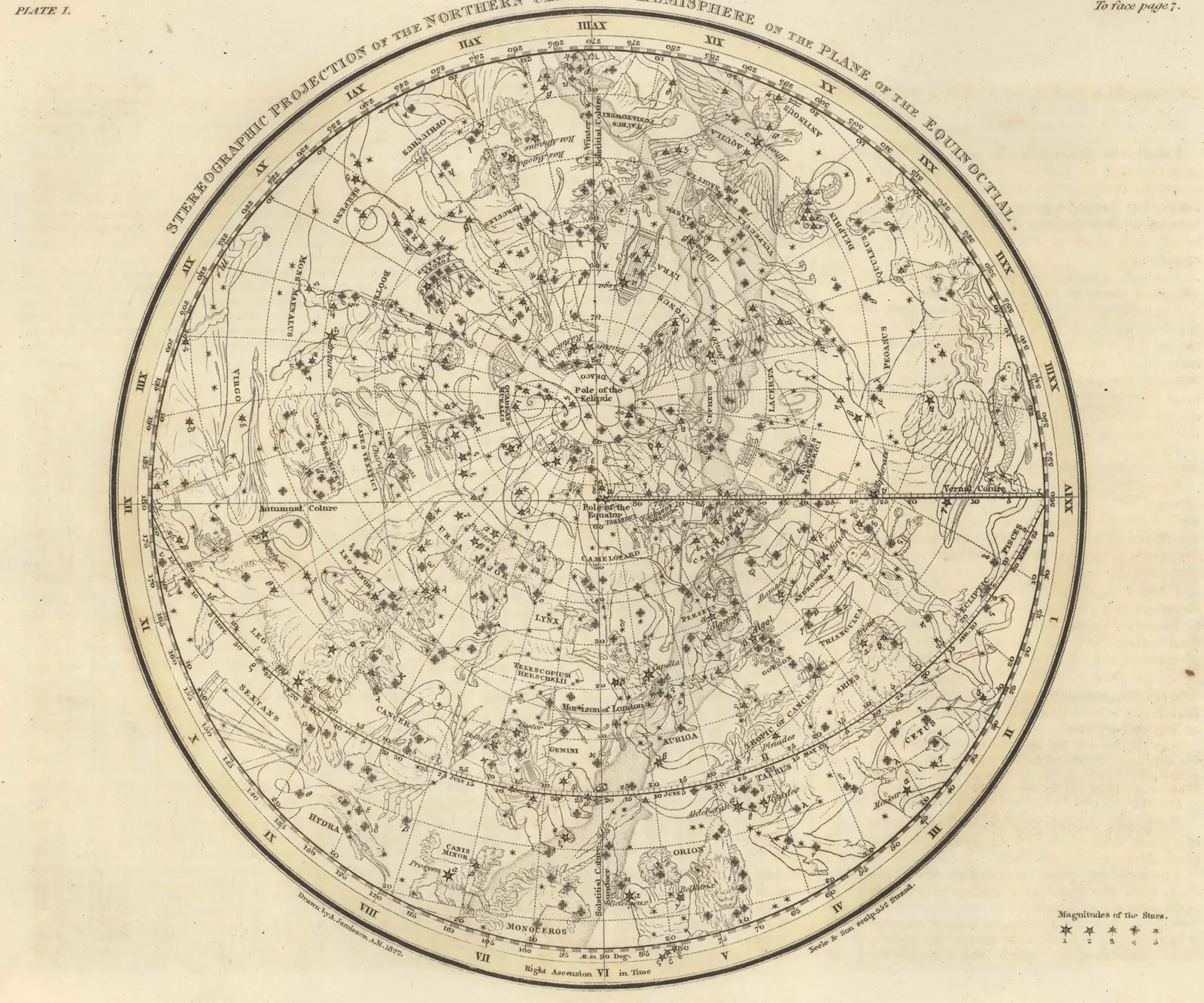
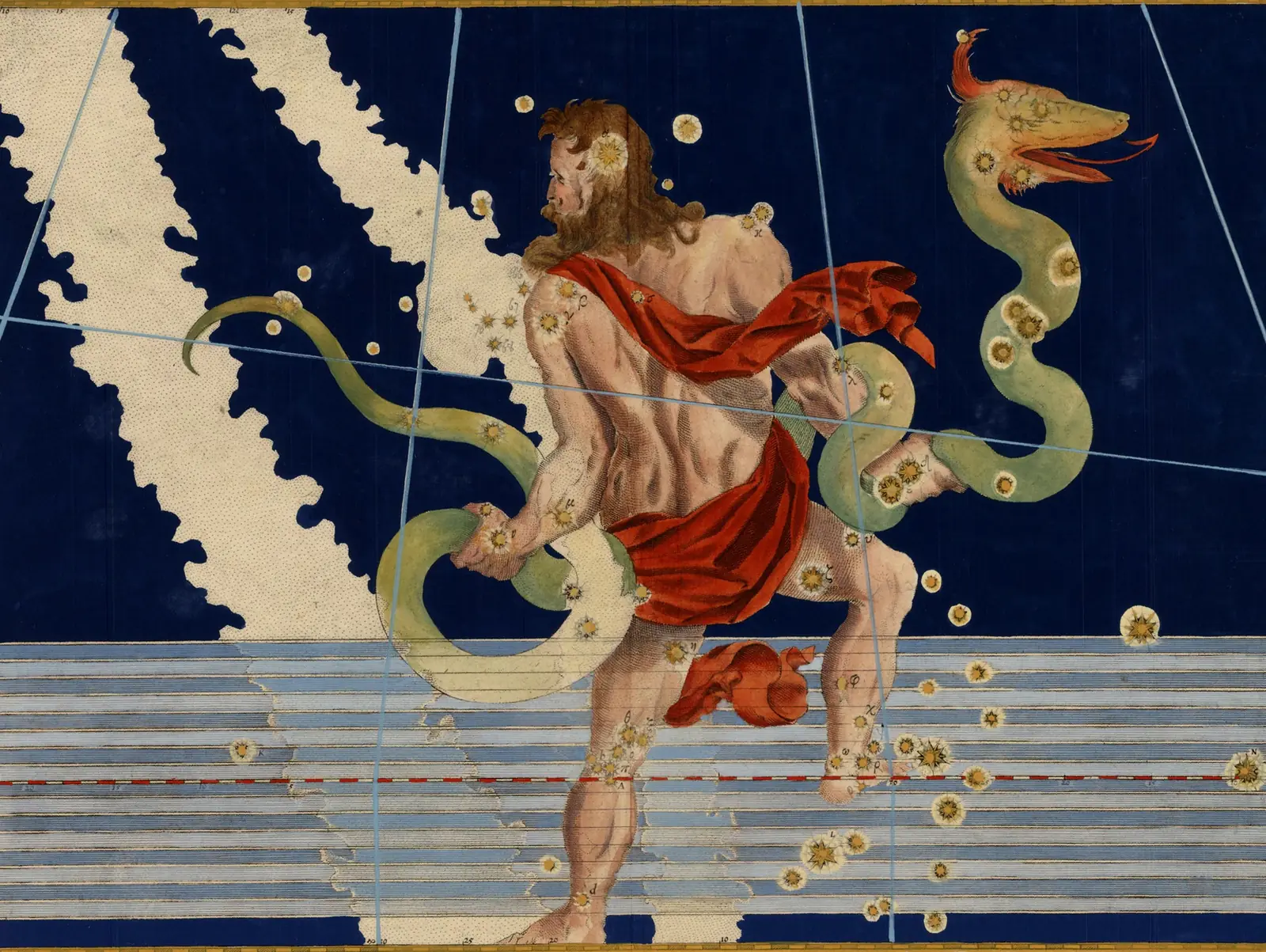
Ophiuchus, the serpent-bearer, is a big, faint figure of a man holding a snake, standing on the scorpion's back. Johann Bayer engraved him like this in 1603.
In 1930 the International Astronomical Union fixed official borders for 88 constellations (IAU). Those borders were drawn for star mapping, not for astrology, and they are lopsided. The Sun's path clips the bottom of Ophiuchus, so each year the Sun walks through it.
In 2026 the Sun enters Ophiuchus at November 30, 2026 · 05:40 UTC and leaves at December 18, 2026 · 13:06 UTC, a stay of 18.3 days. It spends just 6.5 days in Scorpius, the shortest stay of the year, and a full 44.5 days in Virgo, the longest.
That unevenness is exactly why astrologers, Babylonian and later Greek, worked with twelve equal signs instead. A sign is a 30-degree measuring unit. A constellation is a picture with ragged edges. If your birthday falls in the Ophiuchus window, your Western sign is still Sagittarius, and of the 2026 Sagittarius days, 19 had the Sun in front of the serpent-bearer.
Which one is yours
So which sign should you actually use?
Try this today
- Read your tropical sign's page and your sidereal sign's page side by side. Notice which one sounds more like you, without deciding which is right.
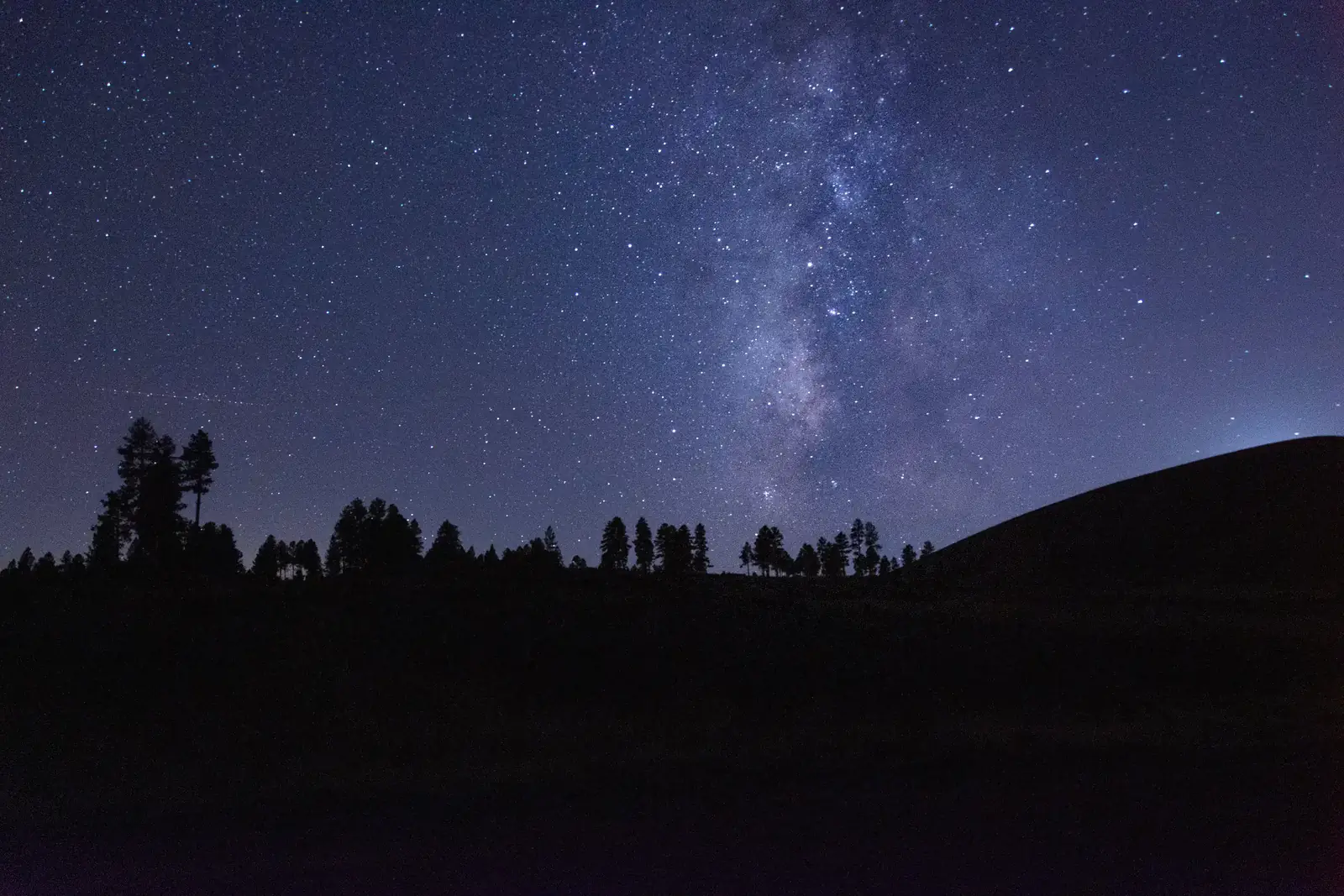
- Use the constellation answer the next time you are under a dark sky. It turns a birthday into something you can point at, in the right season.
Calculate your big threeWhich astrology is most accurate?Free birth chart
Think of it like time zones. Your watch says one thing, a friend in Mumbai sees another, the server log reads UTC. All of them are right, for their purpose.
Use your tropical sign for Western horoscopes, compatibility charts, your big three and anything built on Western astrology. This is the sign the tradition means when it says "Libra," and it is the one you have always had. In 2026 tropical Libra runs from September 23, 2026 · 00:05 UTC to October 23, 2026 · 09:38 UTC.
Use your sidereal sign if you work with Vedic astrology, a Jyotish reading or a panchang. Sidereal Libra began on October 17, 2026 · 14:22 UTC. Makar Sankranti, the festival of the Sun entering sidereal Capricorn, fell at January 14, 2026 · 09:37 UTC by our Lahiri calculation.
Use your constellation for stargazing, trivia and the joy of knowing which stars were behind the Sun when you arrived. For a 2026 Libra birthday, the Sun was mostly in front of Virgo (30 of 30 days).
None of these "corrects" the others. Astrology is a tradition and a lens for reflection; the different systems are different lenses, not upgrades.
Check yours
The three-way sign checker
Enter your birthday. You get your Western sign (the one horoscopes use), your Vedic sidereal sign (Lahiri), and the constellation the Sun was really standing in, all from NASA JPL positions for 1930 to 2035. Add a birth time if you were born on a crossing day.
More to read
Shorter reads. Each opens in place.
Born on the line
Cusp birthday? The minute matters, not the meme
The tropical Sun changes sign at a different time each year, so "the 21st" is never a fixed border. In 2026 it entered Scorpio at October 23, 2026 · 09:38 UTC. If you were born that day, your sign depends on the hour. That is a real reason a sign can look "changed" online: a chart with a precise time can give a different answer than a list of dates.
Continue readingShow less
In your lifetime
Even since 1950, the stars have slipped
Precession is slow, but our data shows it. The Sun entered Ophiuchus at November 29, 1950 · 18:03 UTC in 1950, November 29, 2000 · 13:40 UTC in 2000 and November 30, 2026 · 05:40 UTC in 2026. The calendar wobbles with leap years, but over centuries every constellation date creeps later by about a day per 72 years. Your tropical sign dates do not creep at all.
Continue readingShow less
The 24-degree gap
Why Vedic signs run about a sign behind
With a 24°13′ gap, most birthdays fall one sign earlier in the sidereal zodiac. Only the last 5 to 6 days of each Western sign land in the same sidereal sign. A Western Aries born in early April is usually a sidereal Pisces; a Western Aries born after Apr 14 2026 is an Aries in both systems.
Continue readingShow less
The three zodiacs, computed
The dates the Sun entered each sign or constellation in 2026, the shares of each Western sign that fall in each constellation and sidereal sign, and how the gap has grown over two thousand years.
| Constellation | Sun enters | Leaves | Days |
|---|---|---|---|
| Capricornus | January 20, 2026 · 02:18 UTC | February 16, 2026 · 12:54 UTC | 27.4 |
| Aquarius | February 16, 2026 · 12:54 UTC | March 12, 2026 · 14:31 UTC | 24.1 |
| Pisces | March 12, 2026 · 14:31 UTC | April 19, 2026 · 02:30 UTC | 37.5 |
| Aries | April 19, 2026 · 02:30 UTC | May 14, 2026 · 13:58 UTC | 25.5 |
| Taurus | May 14, 2026 · 13:58 UTC | June 21, 2026 · 21:19 UTC | 38.3 |
| Gemini | June 21, 2026 · 21:19 UTC | July 21, 2026 · 02:04 UTC | 29.2 |
| Cancer | July 21, 2026 · 02:04 UTC | August 11, 2026 · 01:09 UTC | 21.0 |
| Leo | August 11, 2026 · 01:09 UTC | September 17, 2026 · 02:16 UTC | 37.0 |
| Virgo | September 17, 2026 · 02:16 UTC | October 31, 2026 · 14:40 UTC | 44.5 |
| Libra | October 31, 2026 · 14:40 UTC | November 23, 2026 · 17:27 UTC | 23.1 |
| Scorpius | November 23, 2026 · 17:27 UTC | November 30, 2026 · 05:40 UTC | 6.5 |
| Ophiuchus | November 30, 2026 · 05:40 UTC | December 18, 2026 · 13:06 UTC | 18.3 |
| Sagittarius | December 18, 2026 · 13:06 UTC | January 20, 2027 · 08:25 UTC | 32.8 |
| Sign | Tropical: Sun enters | Sidereal: Sun enters |
|---|---|---|
| Aquarius | January 20, 2026 · 01:45 UTC | February 12, 2026 · 22:39 UTC |
| Pisces | February 18, 2026 · 15:52 UTC | March 14, 2026 · 19:33 UTC |
| Aries | March 20, 2026 · 14:46 UTC | April 14, 2026 · 04:03 UTC |
| Taurus | April 20, 2026 · 01:39 UTC | May 15, 2026 · 00:52 UTC |
| Gemini | May 21, 2026 · 00:37 UTC | June 15, 2026 · 07:23 UTC |
| Cancer | June 21, 2026 · 08:25 UTC | July 16, 2026 · 18:09 UTC |
| Leo | July 22, 2026 · 19:13 UTC | August 17, 2026 · 02:29 UTC |
| Virgo | August 23, 2026 · 02:19 UTC | September 17, 2026 · 02:23 UTC |
| Libra | September 23, 2026 · 00:05 UTC | October 17, 2026 · 14:22 UTC |
| Scorpio | October 23, 2026 · 09:38 UTC | November 16, 2026 · 14:13 UTC |
| Sagittarius | November 22, 2026 · 07:23 UTC | December 16, 2026 · 04:55 UTC |
| Capricorn | December 21, 2026 · 20:50 UTC | January 14, 2026 · 09:37 UTC |
| Western sign | Days | Constellation behind the Sun | Sidereal sign |
|---|---|---|---|
| Aries | 30 | Pisces 29, Aries 1 | Pisces 24, Aries 6 |
| Taurus | 31 | Aries 25, Taurus 6 | Aries 25, Taurus 6 |
| Gemini | 31 | Taurus 31 | Taurus 25, Gemini 6 |
| Cancer | 32 | Gemini 29, Cancer 2, Taurus 1 | Gemini 26, Cancer 6 |
| Leo | 31 | Cancer 19, Leo 12 | Cancer 25, Leo 6 |
| Virgo | 31 | Leo 25, Virgo 6 | Leo 25, Virgo 6 |
| Libra | 30 | Virgo 30 | Virgo 25, Libra 5 |
| Scorpio | 30 | Libra 21, Virgo 9 | Libra 25, Scorpio 5 |
| Sagittarius | 30 | Ophiuchus 19, Scorpius 6, Sagittarius 3, Libra 2 | Scorpio 24, Sagittarius 6 |
| Capricorn | 29 | Sagittarius 29 | Sagittarius 23, Capricorn 6 |
| Aquarius | 30 | Capricornus 28, Aquarius 2 | Capricorn 24, Aquarius 6 |
| Pisces | 30 | Aquarius 22, Pisces 8 | Aquarius 24, Pisces 6 |
| Year | Gap (degrees) | About this many days |
|---|---|---|
| 500 BC | -10.88 | -11.0 |
| 1 BC (year 0) | -3.96 | -4.0 |
| 285 AD | -0.01 | 0.0 |
| 500 AD | 2.97 | 3.0 |
| 1000 AD | 9.92 | 10.1 |
| 1500 AD | 16.88 | 17.1 |
| 1930 AD | 22.88 | 23.2 |
| 2000 AD | 23.86 | 24.2 |
| 2026 AD | 24.22 | 24.6 |
| 2100 AD | 25.25 | 25.6 |
| 2598 AD | 32.22 | 32.7 |
| 3000 AD | 37.86 | 38.4 |
All times are UTC. In the Americas the local date can be a day earlier; in Asia and Australia a day later.
Quick answers
Has my zodiac sign changed in 2026?
No. Western astrology uses the tropical zodiac, which starts at the March equinox every year (March 20, 2026 · 14:46 UTC in 2026), so your sign stays the sign you grew up with. What has shifted is the backdrop of stars: in 2026 the Sun stood in a different constellation from its tropical sign on 325 of 365 days (89%, checked at noon UTC).
Did NASA change the zodiac signs?
No. In January 2016 NASA's Space Place, a science site for kids, explained that the Sun passes through 13 constellations and that the Babylonians left Ophiuchus out. Headlines that September claimed NASA had changed everyone's sign. NASA answered on its Tumblr that it hadn't changed any zodiac signs, it just did the math, and reshared that answer in July 2020.
What are the new zodiac sign dates?
There are no new astrology dates. The "new" dates are the Sun's passage through the IAU constellations. In 2026: Capricornus from Jan 20, Aquarius Feb 16, Pisces Mar 12, Aries Apr 19, Taurus May 14, Gemini Jun 21, Cancer Jul 21, Leo Aug 11, Virgo Sep 17, Libra Oct 31, Scorpius Nov 23, Ophiuchus Nov 30, Sagittarius Dec 18 (UTC).
Am I an Ophiuchus?
If you were born between about November 29 and December 18, the Sun was in the constellation Ophiuchus. In 2026 that window is November 30, 2026 · 05:40 UTC to December 18, 2026 · 13:06 UTC. No major astrology tradition, Western or Vedic, uses Ophiuchus as a sign, and the tropical Sun is already in Sagittarius by then (it entered on Nov 22 in 2026), so your horoscope sign is still Sagittarius.
Why is my Vedic sign different from my Western sign?
Vedic astrology uses the sidereal zodiac, which is pinned to the stars instead of the seasons. With the Lahiri ayanamsa the two zodiacs were 24°13′ apart on January 1, 2026, so the sidereal Sun enters each sign about 25 days later. In 2026 the two systems disagreed on 295 of 365 days (80.8%). Only the last 5 to 6 days of each Western sign fall in the same sidereal sign.
Will zodiac signs change in 2027?
Your Western sign will not. The tropical dates shift by a few hours each year, which is why cusp birthdays matter, but the signs themselves are fixed to the seasons. The star backdrop keeps creeping, about one degree every 72 years: Ophiuchus starts at November 30, 2027 · 11:46 UTC in 2027, against November 29, 1950 · 18:03 UTC in 1950.
How often do the zodiac signs shift against the stars?
Slowly. The equinox slides backward about 50.32 arcseconds a year, one degree every 72 years, which works out to one full circle in roughly 25,800 years at today's rate. A birthday moves into the previous constellation about once every two thousand years.
When does the Age of Aquarius start?
It depends on the definition, and astrologers disagree. Using the IAU constellation boundaries, our calculation puts the March equinox point crossing from Pisces into Aquarius in the year 2598. Wikipedia's Age of Aquarius article gives 2595 for the same boundary; the small gap comes from the precession model. In 2026 the equinox is still in Pisces.