Astronomy vs astrology · 2026
Real zodiac dates 2026: where the Sun actually is
Thirteen constellations, not twelve. The Sun spends 18.3 days in Ophiuchus this year and only 6.5 in Scorpius. Here is every border crossing, to the minute.
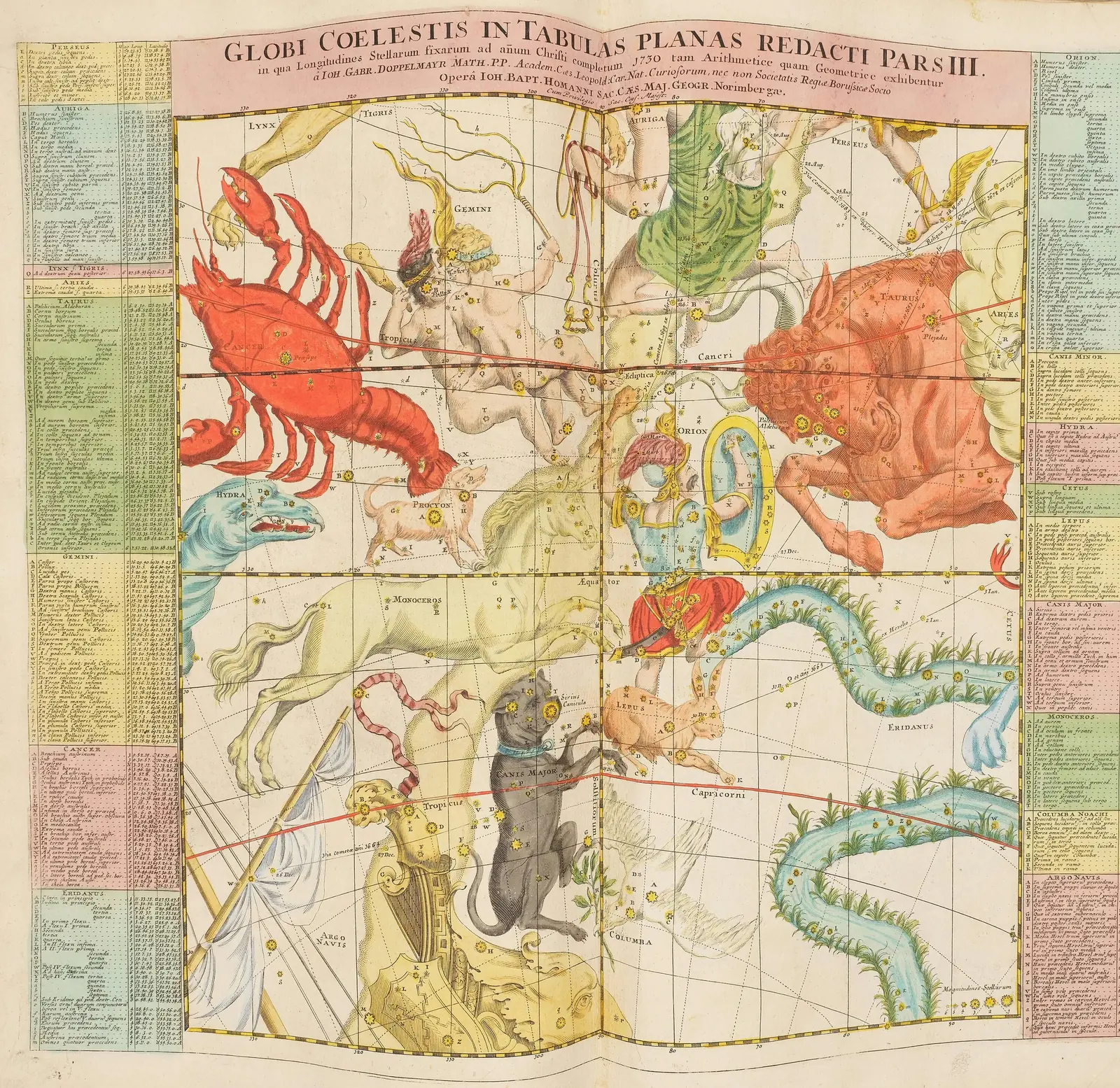
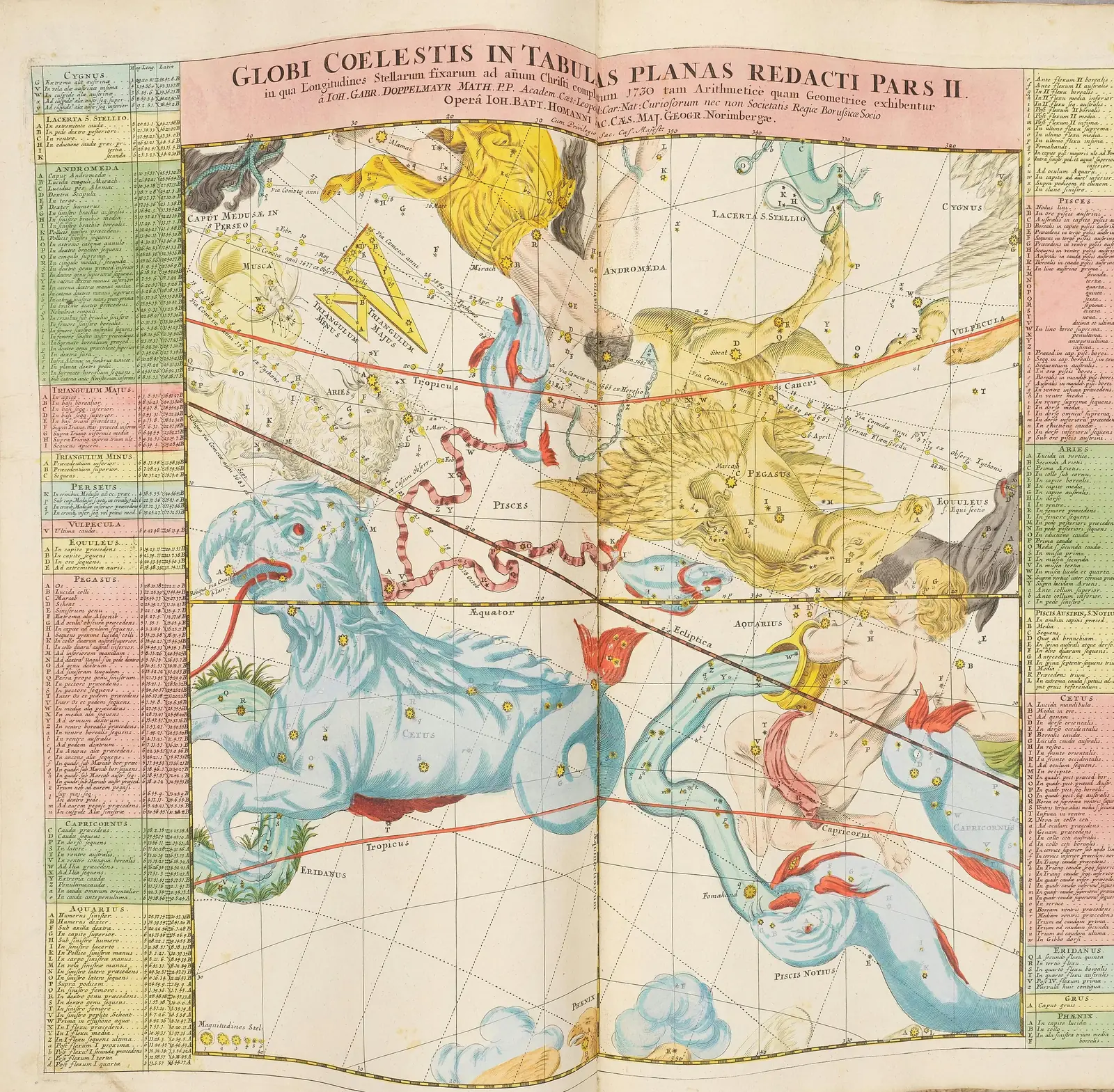
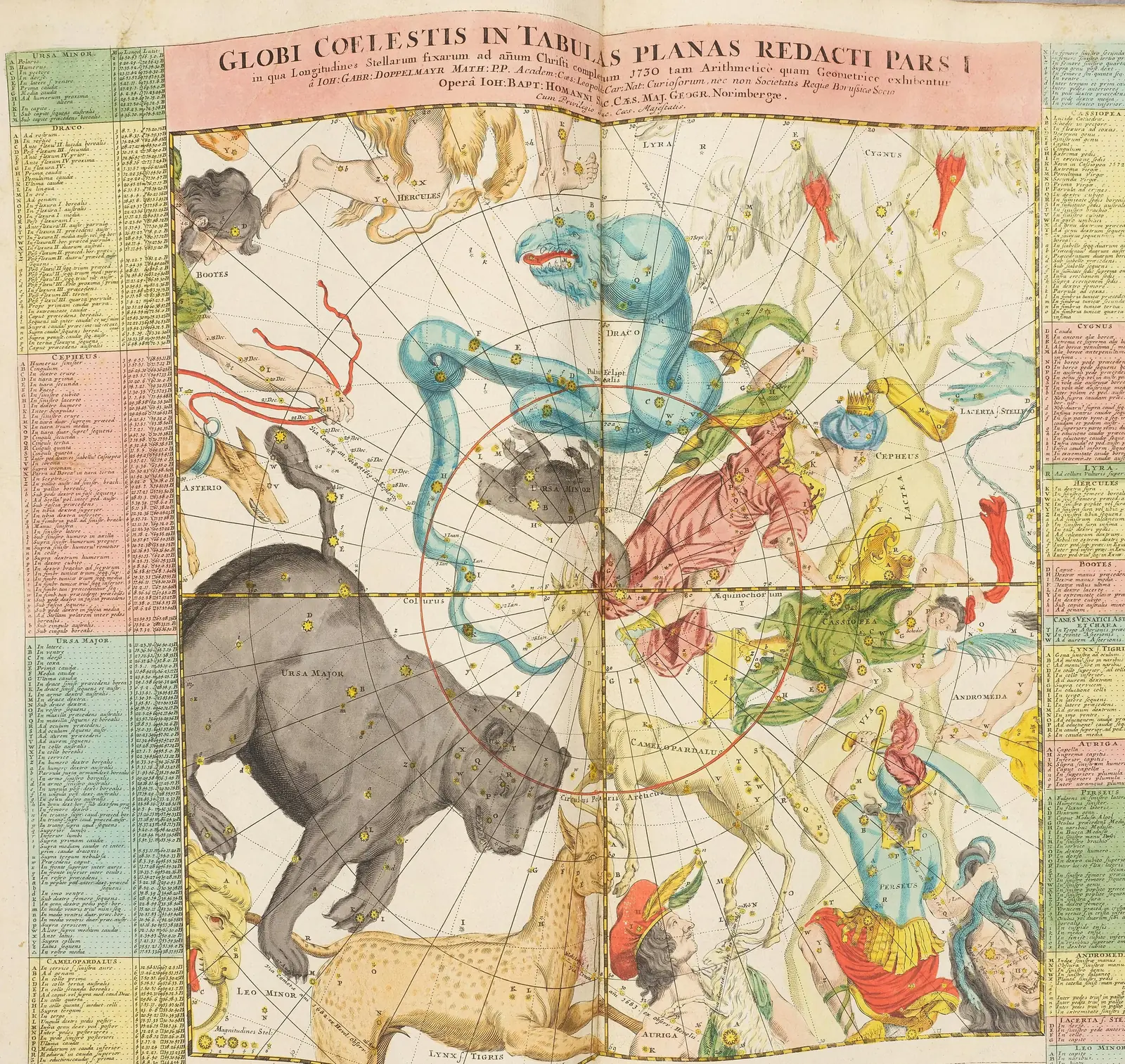
Johann Gabriel Doppelmayr, Atlas Novus Coelestis, 1742
At a glance
In 2026 the Sun passes through 13 constellations. It is in Ophiuchus from November 30 to December 18, and in Scorpius for just 6.5 days.
- Ophiuchus
- Nov 30 to Dec 1818.3 days, enters 05:39 UTC
- Longest stay
- Virgo, 44.5 daysSep 17 to Oct 31
- Shortest stay
- Scorpius, 6.5 daysNov 23 to Nov 30
- Aries, two ways
- Sign Mar 20, stars Apr 1929 days apart
- Right now
- Sun in Virgountil Oct 31, 2026 · 14:40 UTC
Find your real constellationAny birthday, any year. Shows your sign three ways.
The dates
The Sun keeps two calendars, and your horoscope uses one
Try this today
- Put your birthday into the checker below. It tells you your tropical sign, your Lahiri sidereal sign and your real constellation together.
- If you were born between Nov 30 and Dec 18, check whether the Sun was in Ophiuchus. In most years it was.
- Screenshot your three results and send them to whoever posted the NASA meme.
Has my zodiac sign changed?Zodiac sign dates 2026 (tropical, to the minute)
You have probably seen the screenshot. "NASA changed the zodiac, you're actually a Pisces now." Someone in the group chat panics, someone else says it is fake, and nobody checks the sky. So we did.
The Sun moves along a line through the stars called the ecliptic. In 2026 that line runs through 13 constellations as the International Astronomical Union draws them. The Sun enters Aries, the star pattern, on Apr 19, 2026 · 02:29 UTC. It enters Aries, the zodiac sign, on Mar 20, 2026 · 14:45 UTC, the moment of the March equinox. Same name, 29 days apart.
That gap is the whole story of "real zodiac dates." Western astrology counts twelve equal signs from the equinox, a calendar tied to the seasons. The constellations are actual groups of stars, and the borders between them were drawn by astronomers in 1930. Run the Sun through both systems and you get two honest sets of dates.
Neither one is a mistake. Your horoscope sign answers "what season were you born in?" The constellation answers "what stars sat behind the Sun?" This page gives you the second answer for every day of 2026, computed from NASA JPL's DE442 ephemeris rather than copied from a meme.
The sky behind it
The Sun's apparent geocentric position is computed from JPL DE442, precessed to the 1875 equinox the IAU borders are defined in, and looked up in the official boundary table (Roman 1987, CDS VI/42). Each change is bracketed on a one-hour grid and narrowed to one second. One full circuit, Sagittarius to Ophiuchus, adds up to 365.3 days.
The 13th constellation
Ophiuchus gets 18.3 days in 2026. Scorpius gets 6.5
Try this today
- Born Nov 23 to Nov 30? The Sun was in Scorpius, the shortest stay of the year, while your tropical sign was Sagittarius.
- Tap Ophiuchus in the year strip below to see how its bar compares with Scorpius.
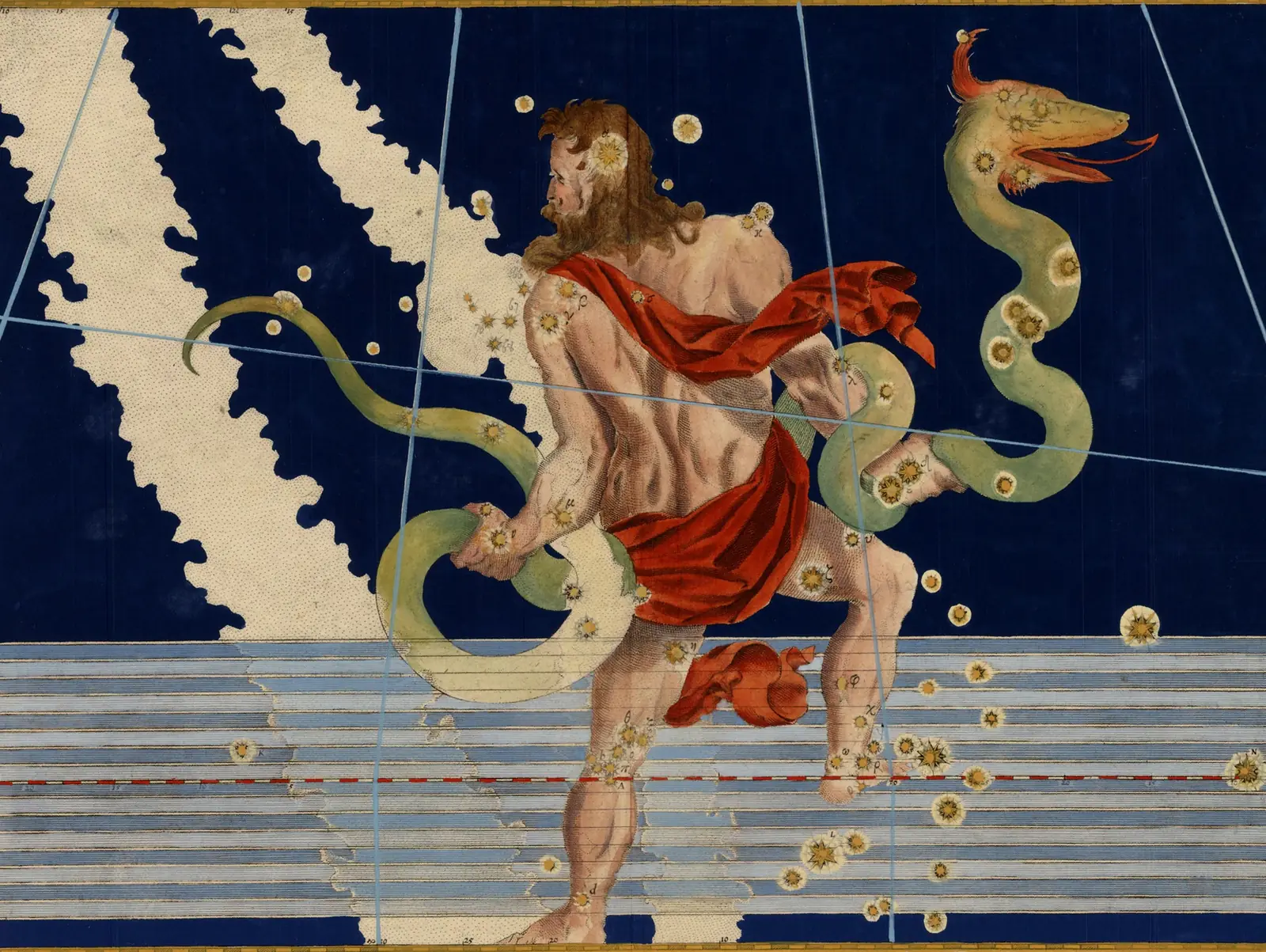
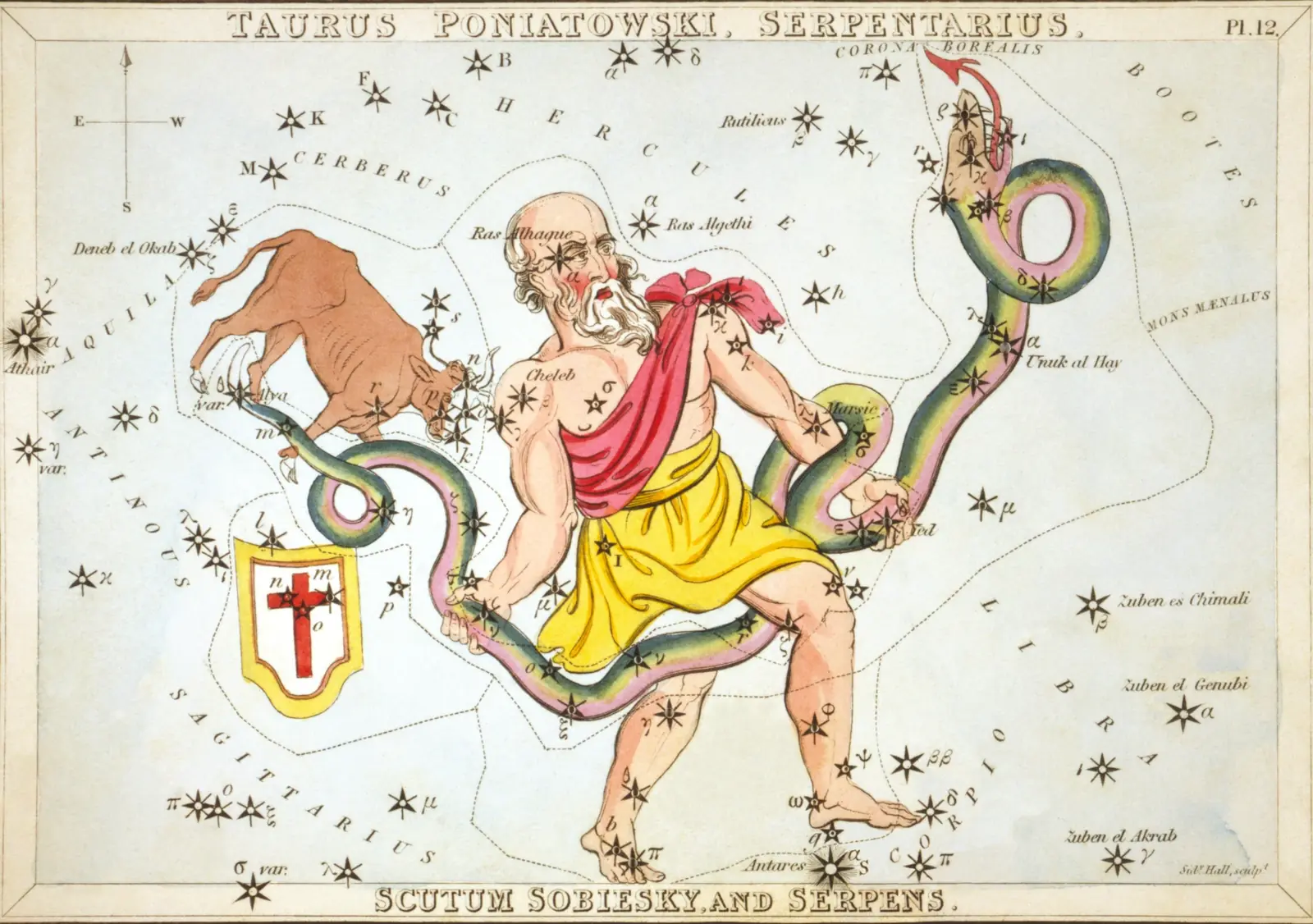
Ophiuchus is the serpent-bearer, a big figure of a man holding a snake, drawn in star atlases for centuries. Ptolemy listed it in the second century. Its feet stand right on the Sun's path, between the scorpion and the archer.
In 2026 the Sun walks in on Nov 30, 2026 · 05:39 UTC and leaves for Sagittarius on Dec 18, 2026 · 13:06 UTC. The halfway point of that stay lands on Dec 9, 2026. That is 18.3 days, nearly 3 times longer than the 6.5 days the Sun spends in Scorpius, from Nov 23 to Nov 30.
So why does nobody's horoscope say Ophiuchus? Because astrology never used the constellations directly. The twelve signs were set up as a measuring grid of equal parts, and Ophiuchus did not get a slot. The idea of a 13-sign zodiac has been floated before, most famously in Walter Berg's 1995 book The 13 Signs of the Zodiac, and it resurfaced in 2016 after a NASA kids' science page explained the constellations and people read it as NASA changing the signs. It had not: NASA was describing the constellations, not redrawing astrology.
If you love the idea of being an Ophiuchus, enjoy it. Just know it describes the stars behind the Sun, not a sign astrologers read.
The sky behind it
The Sun's stretch through Scorpius runs from 1°26′ Sagittarius to 8°01′ Sagittarius in tropical terms, entirely inside the sign of Sagittarius. Tropical Sagittarius begins Nov 22, 2026 · 07:23 UTC; the Sun enters Ophiuchus at 8°01′ Sagittarius.
Why they split
The slow wobble that moved the stars off their signs
Try this today
- Compare one row of the table: tropical Cancer begins Jun 21, 2026, the constellation Cancer on Jul 21, 2026.
- Ask yourself which question you care about: the season you were born in, or the stars behind the Sun. There is no wrong pick.
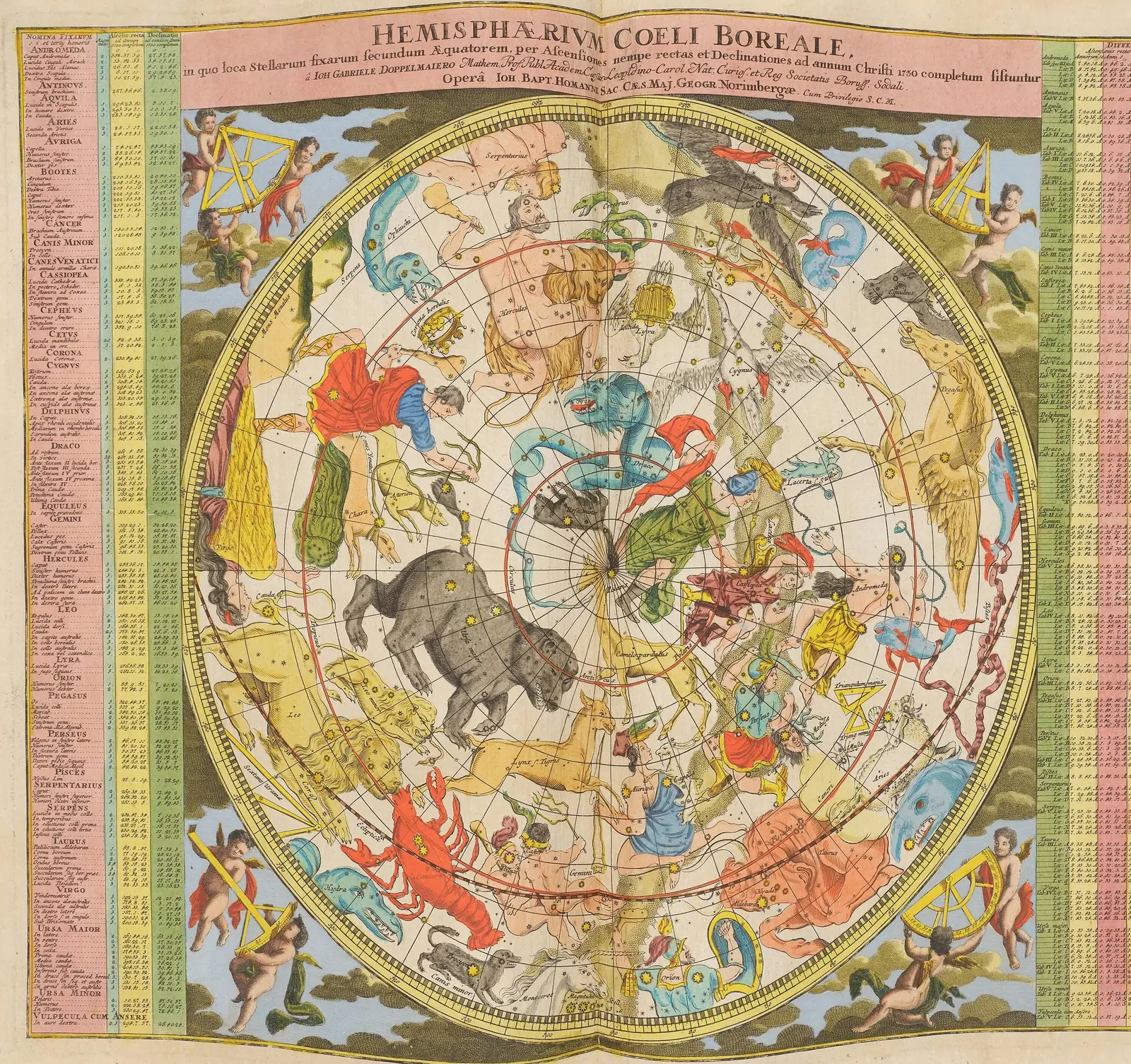
Here is the part the memes skip. Two thousand years ago, when Greek astronomers wrote down the zodiac, the March equinox Sun stood near the stars of Aries. Calling the first 30 degrees after the equinox "Aries" made sense.
Then the equinox kept moving. Earth's spin axis wobbles like a slowing top, a motion called axial precession, and it drags the equinox backward along the ecliptic by about one degree every 72 years. Western astrology chose to stay with the seasons, so its signs travel with the equinox. The stars stay put. Over two millennia the gap has grown to roughly a whole sign.
You can see it in this year's numbers. On average, each constellation now begins 27.5 degrees after the start of the sign that shares its name. The Sun covers about a degree a day, which is why the constellation dates land anywhere from 18 to 38 degrees, roughly that many days, after the horoscope dates.
None of this was a secret. Hipparchus described precession in the second century BC, and Ptolemy, writing in the second century AD, tied the signs to the equinoxes and solstices. Western tradition kept the seasonal zodiac on purpose. Vedic astrology made the other choice and pinned its signs to the stars, which is why it has its own set of dates.
The sky behind it
Average lag computed over the 12 constellations that share a sign name, from each constellation's starting longitude in 2026. Sidereal (Lahiri) dates use an ayanamsa of 24.22° on Jan 1, 2026.
Odd sizes
Virgo takes 44.5 days. Your sign takes about 30
Try this today
- If you were born in late September, the Sun was probably still in Virgo, the stars, even if your sign is Libra. Virgo lasts until Oct 31.
- Scroll to the width table and find the constellation with the biggest overlap with its own sign.
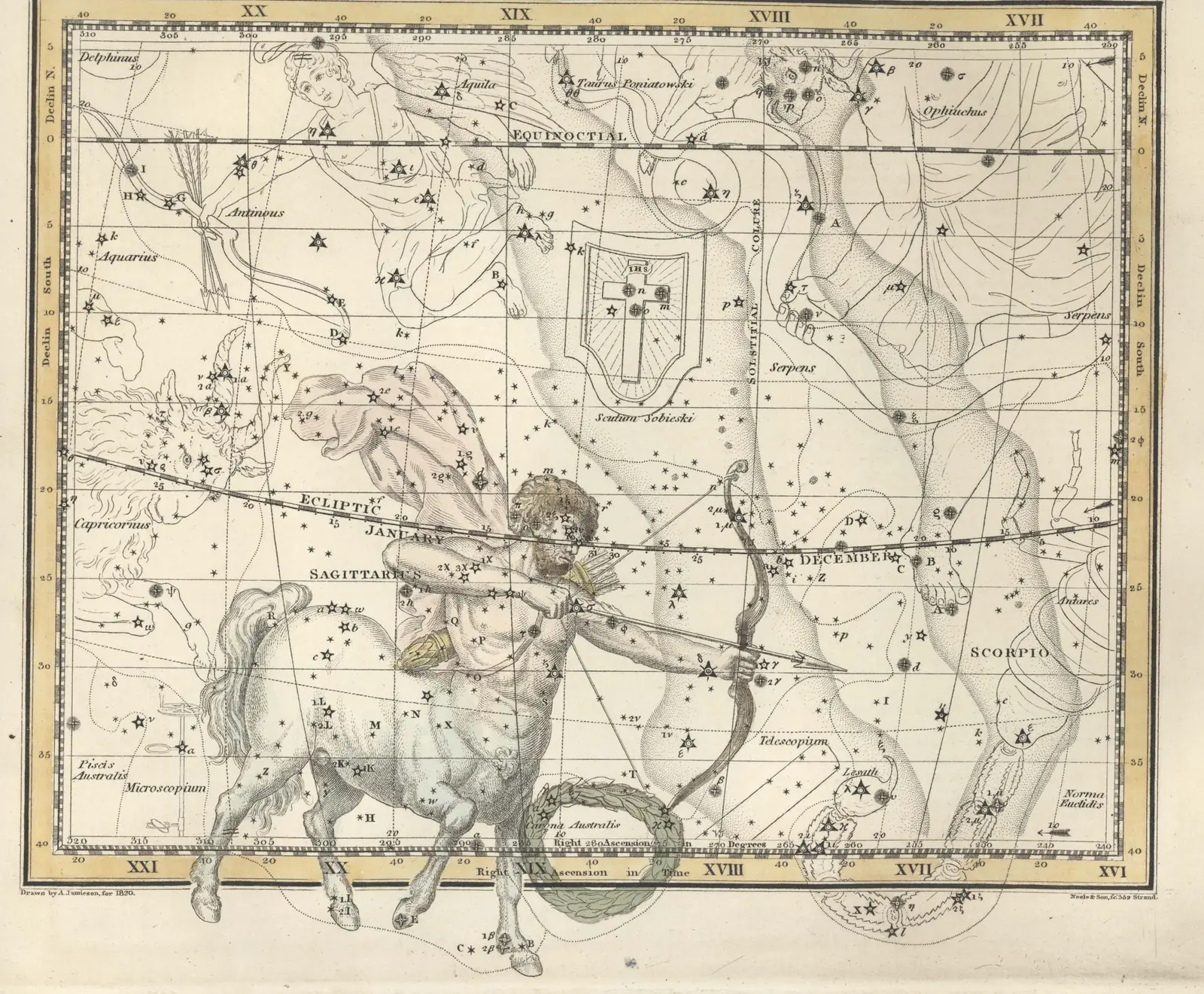
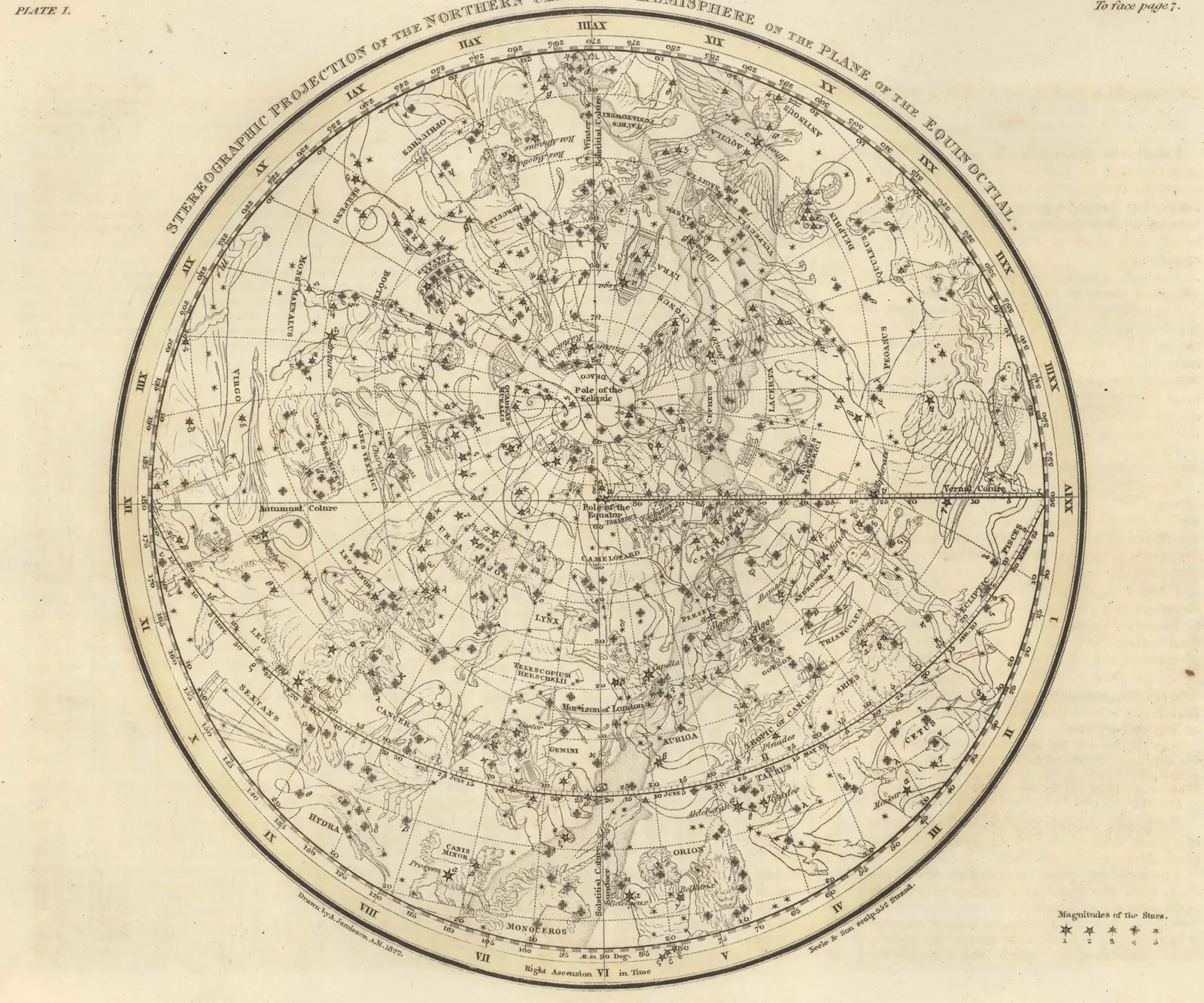
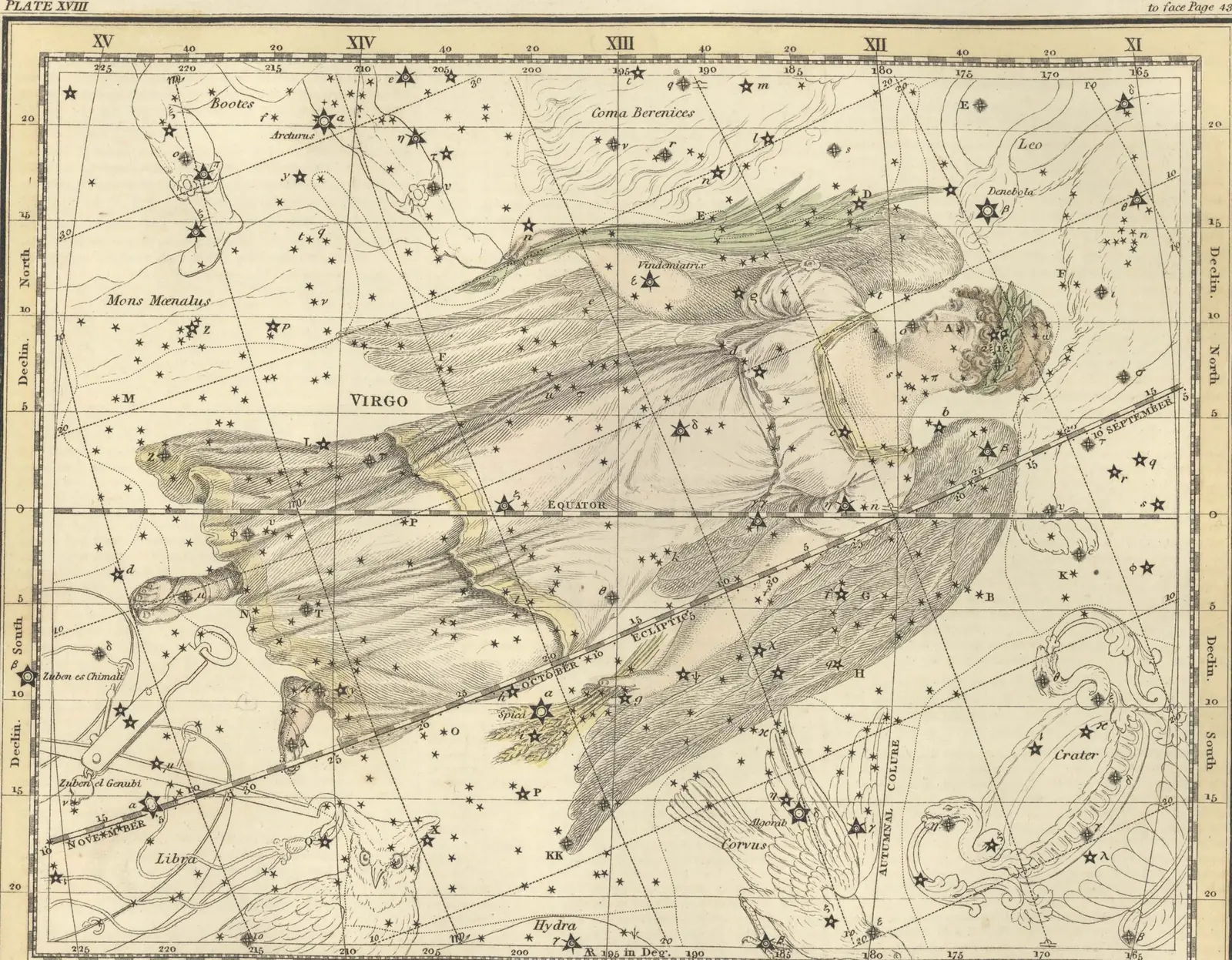
Look at an old star map like Jamieson's 1822 Virgo and you will see the problem straight away. The maiden is huge. She sprawls across the sky, and the Sun's path cuts right through her.
When the IAU fixed the borders in 1928 (published in 1930, the work of the Belgian astronomer Eugène Delporte), it drew lines along right ascension and declination around the traditional figures. Nobody tried to make the zodiac constellations equal. So in 2026 the Sun spends 44.5 days in Virgo, from Sep 17 to Oct 31, and only 21.0 days in Cancer, the faint crab.
The mismatch makes some funny results. The constellation Libra never touches the tropical sign of Libra. The Sun reaches it on Oct 31, 2026, already at 8°11′ Scorpio, 8 days after tropical Scorpio began on Oct 23, 2026. The same goes for Capricornus, Gemini, Scorpius: none of them shares even a single degree with its namesake sign. Leo overlaps its own sign the most, by 11.6 degrees.
So if someone says your "real" sign is a different one, the honest reply is: real by which ruler?
The sky behind it
Widths are measured along the ecliptic between the Sun's entry and exit longitudes in 2026. Leo starts 18.4° into tropical Leo; Gemini starts 30.5° past the start of tropical Gemini, just beyond its end; Capricornus 30.0°.
For you
Three zodiacs, one birthday: how to read your results

Try this today
- Run your birthday, then a friend's. Count how many of you keep the same name across all three.
- If you want your full Western chart rather than just the Sun, the birth chart calculator is free.
When you try the checker below, you will usually get three different answers. That can feel like a glitch. It is not.
Your tropical sign is what Western astrology reads: your Sun sign, the one on every horoscope app, including ours. Your Lahiri sidereal sign is what most Vedic astrologers use, twelve equal signs fixed to the stars. Your constellation is the plain astronomy answer, the IAU patch of sky behind the Sun.
Which one is "yours" depends on the tradition you are working in. If your big three came from a Western chart, keep them. If you are curious about Jyotish, the sidereal sign is the one to look up. The constellation is a fun fact with real stars behind it, and it is the only one of the three that includes Ophiuchus.
One more thing people miss: you cannot see the constellation behind the Sun on your birthday. It is up in daylight. The stars you see at midnight are on the opposite side of the sky, roughly six months along the path.
Find yours
Which constellation was the Sun in on your birthday?
Enter any date from 1700 to 2200. The checker finds the IAU constellation behind the Sun, your Western sign and your Lahiri sidereal sign, right here in your browser. Below it: the Sun's whole 2026 tour drawn to scale, and where it is right now.
Pick a date and press the button. The sample date is set inside the Sun’s 2026 stay in Ophiuchus, so you can see the 13th constellation turn up.
The Sun’s 2026 tour, to scale
Tap a constellation to see its dates. Bars show days; the stars do not share the sky evenly.
Ophiuchus: Nov 30, 05:39 UTC to Dec 18, 13:06 UTC. No sign carries its name.
Right now
Checking the sky...
More to read
Shorter reads. Each opens in place.
Not the same thing
Real zodiac dates are not sidereal dates
"True sidereal" sometimes means the constellation dates on this page and sometimes Lahiri's equal signs. They differ. Lahiri sidereal Capricorn starts Jan 14, 2026 (Makar Sankranti); the Sun reaches the constellation Capricornus on Jan 20, 2026. See sidereal zodiac dates 2026.
Continue readingShow less
A near miss
The Sun reaches Gemini on solstice day
The June solstice, when tropical Cancer begins, is Jun 21, 2026 · 08:24 UTC. The Sun crosses from Taurus into the constellation Gemini later the same day, at 21:19 UTC. So on the longest day of 2026 it starts in one constellation and ends in the next.
Continue readingShow less
Plan ahead
Real zodiac dates 2027
The 2027 crossings land about six hours later than these, so a few dates shift by a day. The full table, with 2026 side by side, is on real zodiac dates 2027.
Continue readingShow less
Real zodiac dates 2026, computed
Every stretch the Sun spends in an IAU constellation in 2026, with the tropical and Lahiri sign start dates for comparison. Sagittarius appears twice: it holds the Sun on New Year's Day (the stay began Dec 18, 2025) and again from Dec 18.
| Constellation | Sun enters | Sun leaves | Days | Tropical sign begins | Lahiri sign begins |
|---|---|---|---|---|---|
| Sagittarius | Dec 18, 2025 · 07:00 UTC | Jan 20, 2026 · 02:18 UTC | 32.8 | Sagittarius: Nov 22, 2026 | Sagittarius: Dec 16, 2026 |
| Capricornus | Jan 20, 2026 · 02:18 UTC | Feb 16, 2026 · 12:54 UTC | 27.4 | Capricorn: Dec 21, 2026 | Capricorn: Jan 14, 2026 |
| Aquarius | Feb 16, 2026 · 12:54 UTC | Mar 12, 2026 · 14:30 UTC | 24.1 | Aquarius: Jan 20, 2026 | Aquarius: Feb 12, 2026 |
| Pisces | Mar 12, 2026 · 14:30 UTC | Apr 19, 2026 · 02:29 UTC | 37.5 | Pisces: Feb 18, 2026 | Pisces: Mar 14, 2026 |
| Aries | Apr 19, 2026 · 02:29 UTC | May 14, 2026 · 13:57 UTC | 25.5 | Aries: Mar 20, 2026 | Aries: Apr 14, 2026 |
| Taurus | May 14, 2026 · 13:57 UTC | Jun 21, 2026 · 21:19 UTC | 38.3 | Taurus: Apr 20, 2026 | Taurus: May 15, 2026 |
| Gemini | Jun 21, 2026 · 21:19 UTC | Jul 21, 2026 · 02:04 UTC | 29.2 | Gemini: May 21, 2026 | Gemini: Jun 15, 2026 |
| Cancer | Jul 21, 2026 · 02:04 UTC | Aug 11, 2026 · 01:09 UTC | 21.0 | Cancer: Jun 21, 2026 | Cancer: Jul 16, 2026 |
| Leo | Aug 11, 2026 · 01:09 UTC | Sep 17, 2026 · 02:15 UTC | 37.0 | Leo: Jul 22, 2026 | Leo: Aug 17, 2026 |
| Virgo | Sep 17, 2026 · 02:15 UTC | Oct 31, 2026 · 14:40 UTC | 44.5 | Virgo: Aug 23, 2026 | Virgo: Sep 17, 2026 |
| Libra | Oct 31, 2026 · 14:40 UTC | Nov 23, 2026 · 17:27 UTC | 23.1 | Libra: Sep 23, 2026 | Libra: Oct 17, 2026 |
| Scorpius | Nov 23, 2026 · 17:27 UTC | Nov 30, 2026 · 05:39 UTC | 6.5 | Scorpio: Oct 23, 2026 | Scorpio: Nov 16, 2026 |
| Ophiuchus | Nov 30, 2026 · 05:39 UTC | Dec 18, 2026 · 13:06 UTC | 18.3 | Not a sign | Not a sign |
| Sagittarius | Dec 18, 2026 · 13:06 UTC | Jan 20, 2027 · 08:25 UTC | 32.8 | Sagittarius: Nov 22, 2026 | Sagittarius: Dec 16, 2026 |
| When (UTC) | From | Into | Sun's tropical position |
|---|---|---|---|
| Jan 20, 2026 · 02:18 UTC | Sagittarius | Capricornus | 0°01′ Aquarius |
| Feb 16, 2026 · 12:54 UTC | Capricornus | Aquarius | 27°51′ Aquarius |
| Mar 12, 2026 · 14:30 UTC | Aquarius | Pisces | 22°01′ Pisces |
| Apr 19, 2026 · 02:29 UTC | Pisces | Aries | 29°03′ Aries |
| May 14, 2026 · 13:57 UTC | Aries | Taurus | 23°47′ Taurus |
| Jun 21, 2026 · 21:19 UTC | Taurus | Gemini | 0°31′ Cancer |
| Jul 21, 2026 · 02:04 UTC | Gemini | Cancer | 28°22′ Cancer |
| Aug 11, 2026 · 01:09 UTC | Cancer | Leo | 18°25′ Leo |
| Sep 17, 2026 · 02:15 UTC | Leo | Virgo | 24°14′ Virgo |
| Oct 31, 2026 · 14:40 UTC | Virgo | Libra | 8°11′ Scorpio |
| Nov 23, 2026 · 17:27 UTC | Libra | Scorpius | 1°26′ Sagittarius |
| Nov 30, 2026 · 05:39 UTC | Scorpius | Ophiuchus | 8°01′ Sagittarius |
| Dec 18, 2026 · 13:06 UTC | Ophiuchus | Sagittarius | 26°37′ Sagittarius |
| Constellation | Width along the ecliptic | Days | Starts this far into its sign |
|---|---|---|---|
| Virgo | 44.0° | 44.5 | 24.2° |
| Taurus | 36.7° | 38.3 | 23.8° |
| Pisces | 37.0° | 37.5 | 22.0° |
| Leo | 35.8° | 37.0 | 18.4° |
| Sagittarius | 33.4° | 32.8 | 26.6° |
| Gemini | 27.8° | 29.2 | 30.5° |
| Capricornus | 27.8° | 27.4 | 30.0° |
| Aries | 24.7° | 25.5 | 29.1° |
| Aquarius | 24.2° | 24.1 | 27.9° |
| Libra | 23.2° | 23.1 | 38.2° |
| Cancer | 20.1° | 21.0 | 28.4° |
| Ophiuchus | 18.6° | 18.3 | No sign |
| Scorpius | 6.6° | 6.5 | 31.4° |
All times are UTC. In the Americas the local date can be a day earlier; in Asia and Australia a day later.
Quick answers
What are the real zodiac dates for 2026?
By the IAU constellation borders, the Sun is in Capricornus from Jan 20, Aquarius from Feb 16, Pisces from Mar 12, Aries from Apr 19, Taurus from May 14, Gemini from Jun 21, Cancer from Jul 21, Leo from Aug 11, Virgo from Sep 17, Libra from Oct 31, Scorpius from Nov 23, Ophiuchus from Nov 30 and Sagittarius again from Dec 18. Times to the minute are in the table on this page (UTC).
What are the NASA zodiac signs dates for 2026?
NASA did not make new zodiac signs. In 2016 a NASA education page explained that the Sun passes through 13 constellations, including Ophiuchus, and the internet ran with it. The 2026 dates people mean by "NASA dates" are the constellation dates on this page: for example Ophiuchus from November 30 to December 18.
When is the Sun in Ophiuchus in 2026?
From Nov 30, 2026 · 05:39 UTC to Dec 18, 2026 · 13:06 UTC, about 18.3 days. In New York the Sun crosses in at Nov 30, 12:39 AM; in Los Angeles at Nov 29, 9:39 PM, so the local date depends on where you are.
Is my zodiac sign wrong if the constellation is different?
No. Western astrology uses the tropical zodiac, twelve equal 30-degree signs counted from the March equinox. The constellations are star patterns of uneven size. Both are real; they just answer different questions. Your horoscope sign is your tropical sign.
Why is Virgo so long and Scorpius so short?
The IAU borders follow the star figures, not equal slices. Virgo covers 44.0 degrees of the Sun's path, so the Sun needs 44.5 days to cross it. Scorpius only touches the path for 6.6 degrees, about 6.5 days, because Ophiuchus takes most of that stretch.
Are real zodiac dates the same as sidereal (Vedic) dates?
No. Sidereal astrology still uses twelve equal 30-degree signs, just shifted to line up with the stars. With the Lahiri ayanamsa, sidereal Aries begins Apr 14, 2026 in 2026, while the Sun enters the constellation Aries on Apr 19, 2026. The constellation dates are the "true" sky; sidereal signs are a tidy grid laid over it.
Will the real zodiac dates be different in 2027?
Only slightly. Each crossing comes about 6 hours later in 2027 than in 2026, which can nudge a date by one day. The 2027 page has every crossing side by side with 2026.