Zodiac myths · Greek mythology
The Greek myths behind the twelve zodiac signs
A ram that flew, a god disguised as a bull, a crab that picked a fight with Heracles. Every sign has a story, and most of them are older than Greece.
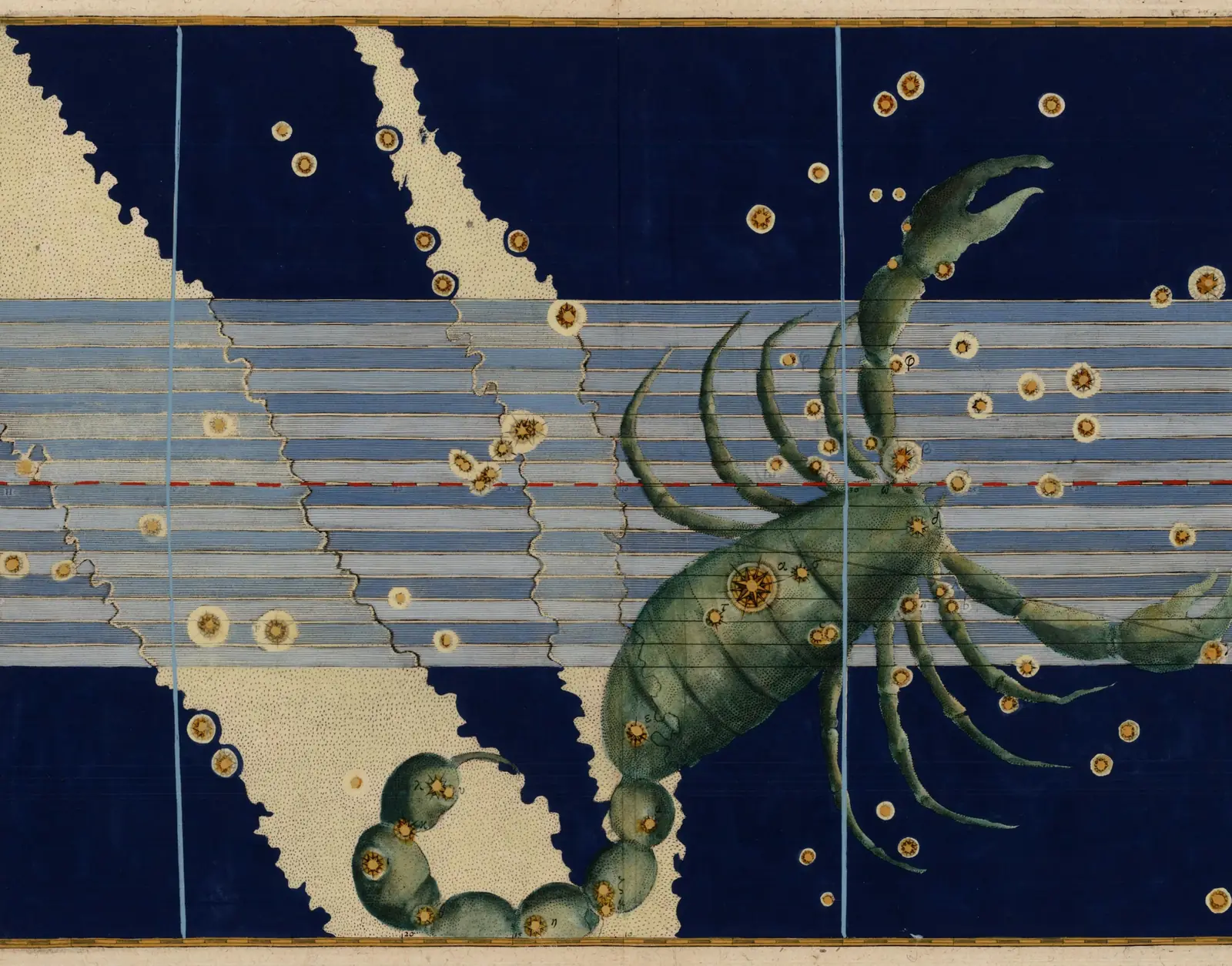
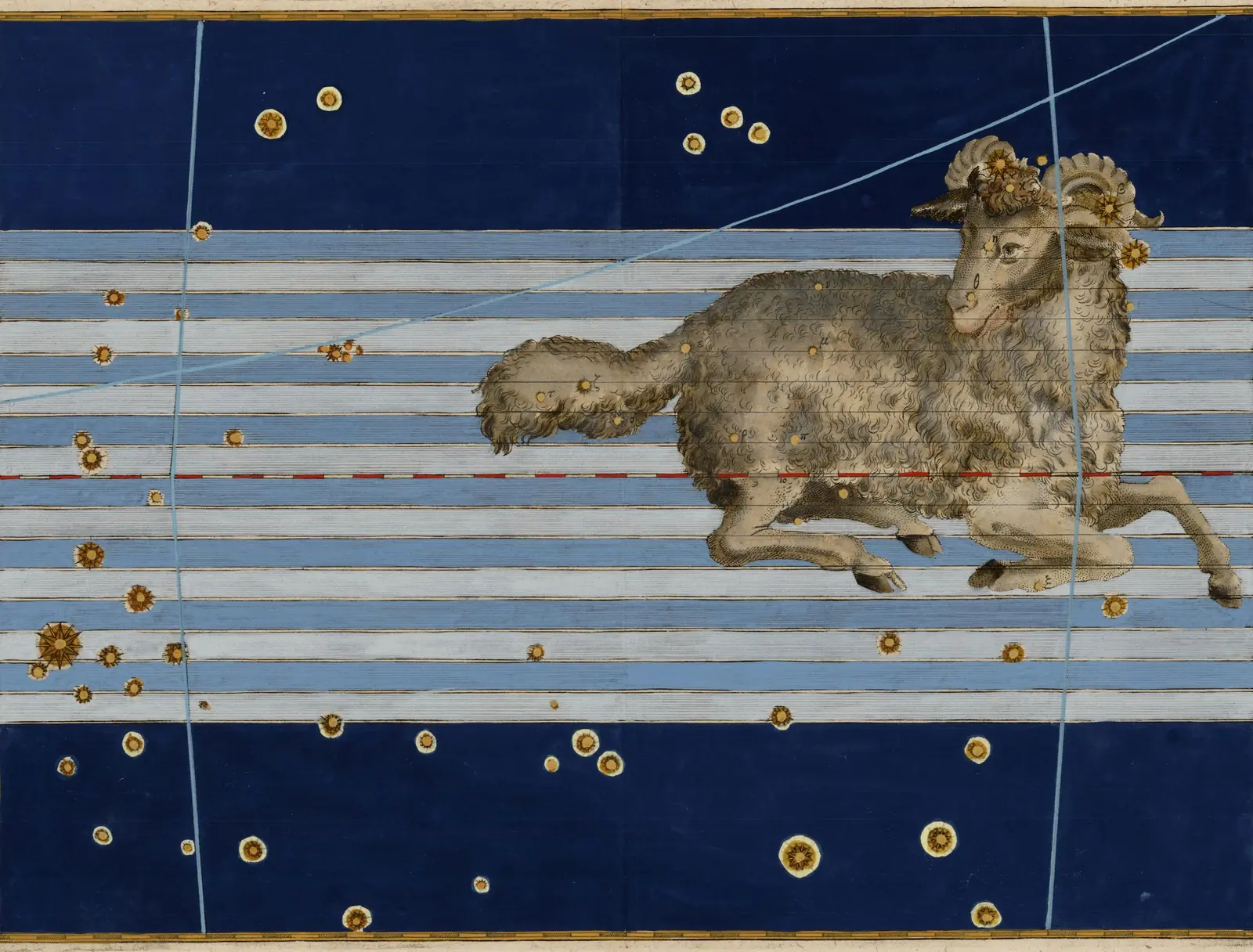
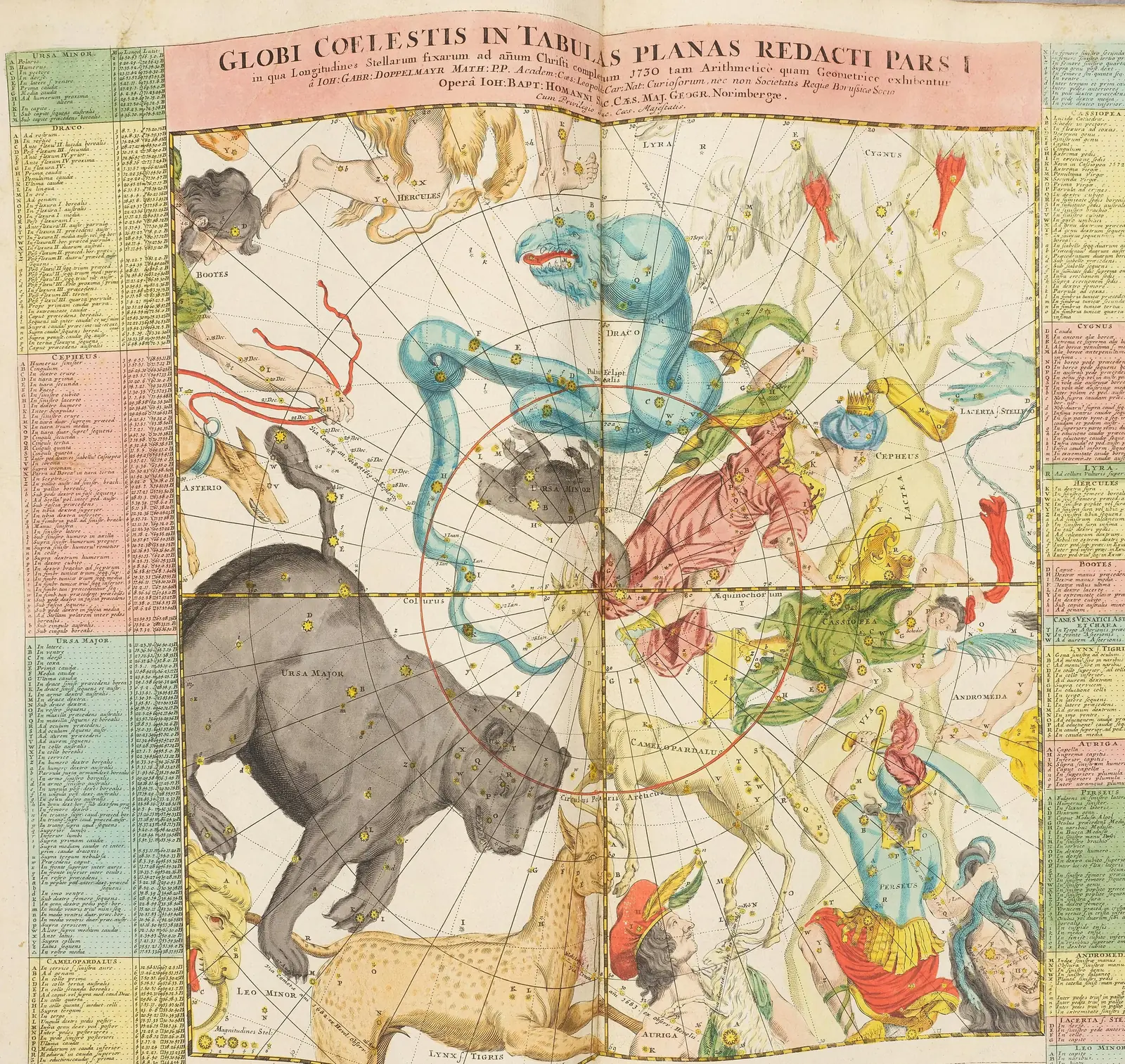
Johann Gabriel Doppelmayr, Atlas Novus Coelestis, 1742
At a glance
Each zodiac sign is a Greek catasterism, a figure placed in the stars: the golden ram, Zeus's bull, Castor and Pollux, the Nemean lion and eight more. Most figures came from Babylon first.
- Oldest Greek star texts
- Aratus, c. 275 BCand the Catasterisms of Eratosthenes
- Sign with no Greek myth
- Librathe Greeks saw the Scorpion's claws
- Shortest Sun stay, 2026
- Scorpius, 6 daysNov 24 to Nov 29, 2026
- Longest Sun stay, 2026
- Virgo, 45 daysSep 17 to Oct 31, 2026
- Next figure at midnight
- AriesOct 22 to Nov 15, 2026
Find your sign's mythEnter a birthday: your sign's myth, and the stars the Sun was really in.
Where the stories come from
The Greeks borrowed the pictures and wrote the stories
Try this today
- Read your own sign's myth, then the two on either side. The zodiac reads like a chain.
- Notice how many of these stories are about survival, not glory.
- Pick a dark night and find one figure for real. The page for each sign tells you when.
Go outside on a clear night and the stars do not look like a ram or a crab. Somebody decided they did, a very long time ago, and somebody else later explained why.
The first step was Babylonian. Star lists on clay tablets, the series called MUL.APIN, compiled by about 1000 BC, already name a Bull of Heaven, Great Twins, a Lion, a Scorpion, a Goat-Fish and a Great One pouring water along the Sun's path. By around the 5th century BC Babylonian astronomers had cut that path into twelve equal signs.
The Greeks inherited the figures and did what Greeks did: they wrote stories. The poet Aratus put the whole sky into verse in the Phaenomena around 275 BC. A handbook called the Catasterisms, attributed to the scholar Eratosthenes, explained how each figure got there. A "catasterism" is exactly that, a placing among the stars, usually by Zeus as a reward, a memorial or a joke.
Then the Romans collected it all. Hyginus, writing in Latin, lists the variants side by side and often admits that nobody agreed. Ovid retold the best ones as poetry. Ptolemy's Almagest, around AD 150, listed 48 constellations, and almost all of them survive among the 88 that astronomers use today.
A pattern
Half the zodiac is Heracles and Typhon
Try this today
- Find the hero or the monster in your own sign's myth. Which side are you on?
- Read Capricorn and Pisces together: the same afternoon, two escapes.
Lay the twelve myths side by side and the same names keep turning up.
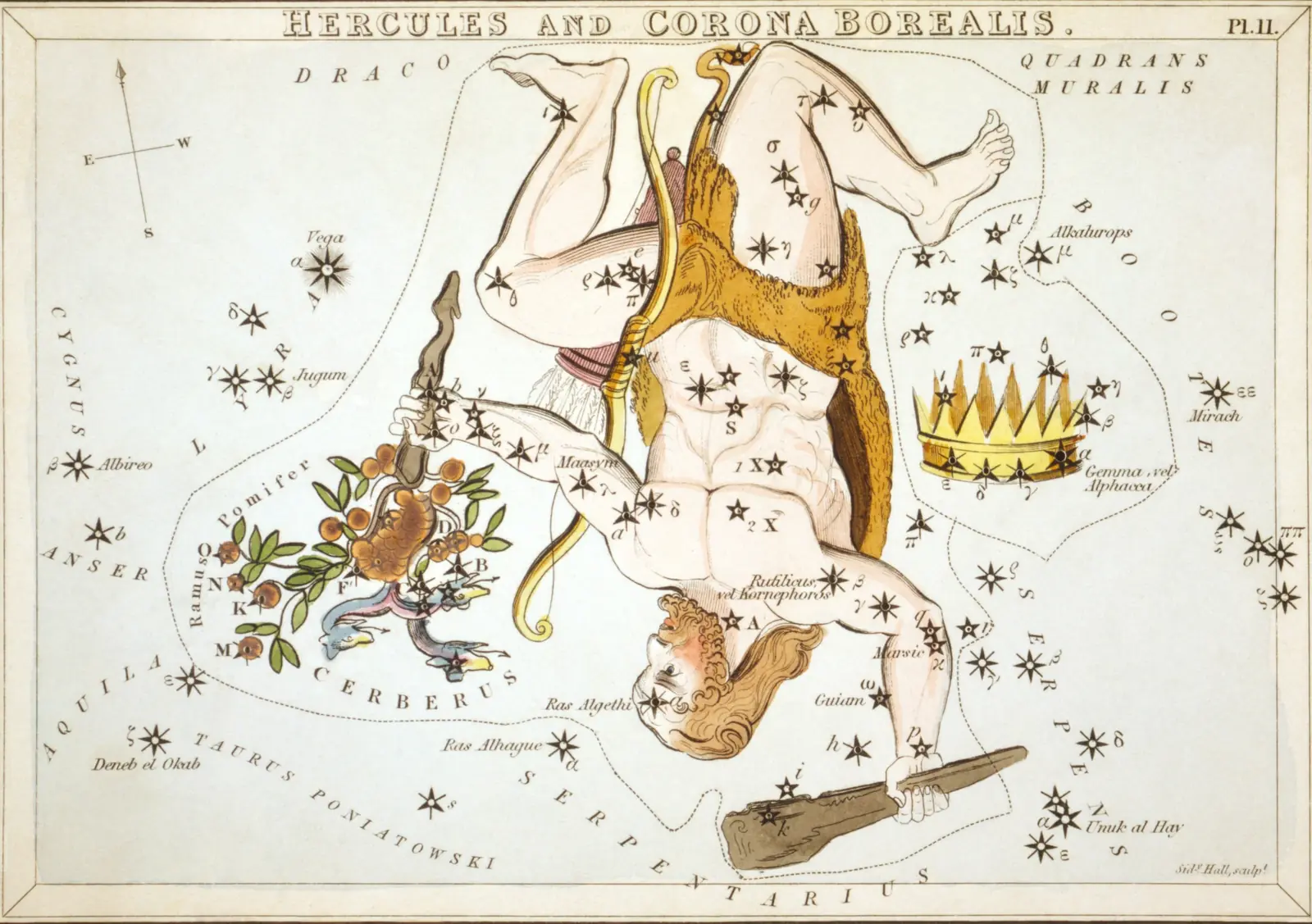
Heracles is in two of them. The Nemean lion of Leo was his first labour, and the crab of Cancer nipped his foot during his second, against the Hydra. Both creatures lost, and both got a place in the sky, which tells you something about Greek ideas of honour: you could be remembered for showing up, not for winning.
Typhon, the hundred-headed storm-giant, drives two more. When he attacked Olympus the gods fled into Egypt in animal shapes. Pan dived into a river and came out half fish, the sea-goat of Capricorn. Aphrodite and her son Eros were carried across the Euphrates by two fish, the pair in Pisces.
Zeus is everywhere: as the bull of Taurus, as the father of Pollux in Gemini, as the god who took Ganymede in Aquarius, and as the one who places almost every figure in the stars.
Honest footnotes
Three signs the Greek story does not quite fit
Some popular myth lists paper over the gaps. These are the three worth knowing.
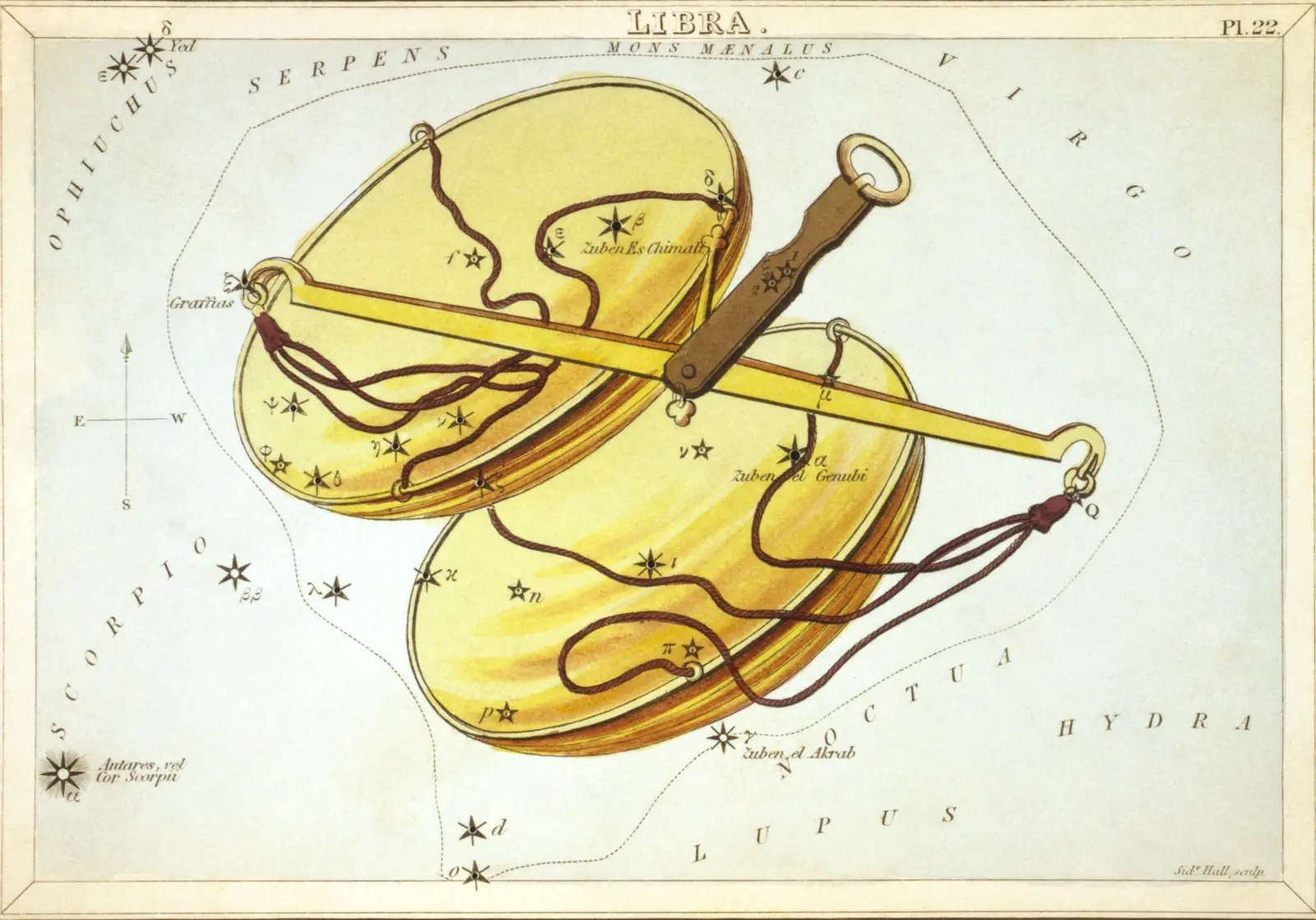
Libra has no classic Greek myth at all. Aratus and Ptolemy both call its stars the Chelai, the Claws of the Scorpion. The scales are Babylonian (zibānītu) and Roman, and were tied to Justice later. The Libra page tells that story instead.
Sagittarius is usually said to be Chiron. The oldest star texts disagree: Chiron is the constellation Centaurus, and the archer is Crotus, son of Pan, who invented archery and, charmingly, applause. The Sagittarius page has the details.
Capricorn's goat-fish is far older than its Greek story. It was the emblem of the Babylonian water god Ea long before anyone connected it to Pan. The Capricorn page explains both.
Signs and stars
The myth lives in the stars. Your sign lives in the calendar
Astrology's signs and the constellations they are named after used to line up. They no longer do, and that is not a scandal, just geometry.
Western astrology uses the tropical zodiac: twelve 30-degree signs counted from the spring equinox. In 2026 the Sun enters Aries on Mar 20, 2026. The constellations are uneven patches of sky with borders fixed by the International Astronomical Union in 1930, and the Sun does not reach the stars of Aries until Apr 19, 2026.
Precession, the slow wobble of Earth's axis, has slid the equinox west by roughly a sign since the Greeks drew their maps. Across the twelve, the Sun now reaches each constellation about 28 days after the matching sign begins. The stays are uneven too: in 2026 the Sun spends 45 days in Virgo and only 6 in Scorpius, because the boundaries are not equal and Ophiuchus takes a slice.
So the myths belong to the constellations, the figures you can see. The signs borrowed their names.
The sky behind it
JPL DE442 via Skyfield; IAU boundaries (Roman 1987) via skyfield.load_constellation_map; tropical signs on the true ecliptic of date; geocentric, UTC. Sun-in-constellation dates are checked daily at 12:00 UTC.
Find your myth
Which myth were you born under?
Enter a birthday. You get your sign's myth, and the constellation the Sun was really standing in that day, which, thanks to precession, is often the sign before yours.
Pick a date to see your sign's myth, and the constellation the Sun was really standing in.
More to read
Shorter reads. Each opens in place.
The twelve
Every sign's myth, in zodiac order
Aries: the golden ram. The flying golden ram that carried Phrixus to Colchis. Its fleece became the Golden Fleece.
Continue readingShow less
Taurus: the white bull. Zeus in disguise as a white bull, carrying Europa across the sea to Crete.
Gemini: the twins Castor and Pollux. Castor and Pollux, the twin brothers who chose to share one immortality between them.
Cancer: the crab. Karkinos, the crab Hera sent to nip Heracles' foot while he fought the Hydra.
Leo: the Nemean lion. The Nemean lion, whose hide no weapon could pierce, Heracles' first labour.
Virgo: the maiden of justice. Astraea or Dike, Justice herself, the last immortal to leave the earth.
Libra: the scales. The only zodiac sign that is an object. To the Greeks, its stars were the Scorpion's claws.
Scorpio: the scorpion that killed Orion. The scorpion that killed the hunter Orion. The two are set so they never share the sky.
Sagittarius: the archer. Usually drawn as a centaur archer; the oldest Greek source names Crotus, the satyr who invented archery.
Capricorn: the sea-goat. A goat with a fish's tail: Pan diving into a river to escape the monster Typhon.
Aquarius: the water-bearer. Ganymede, the Trojan prince taken to Olympus to pour for the gods.
Pisces: the two fish. Aphrodite and Eros escaping Typhon in a river, carried or changed into two fish tied together.
For your chart
How to read a myth without turning it into a horoscope
Astrologers did not take their sign meanings from these stories; the meanings come mostly from rulers, elements and modes. But the myths make good companions. Read yours as a question rather than a verdict: the ram asks who you would rescue, the crab what you would show up for, the fish what cord holds you to someone. That is reflection, not prediction, and it is how these stories have always been used.
Continue readingShow less
The pictures
About the star maps on these pages
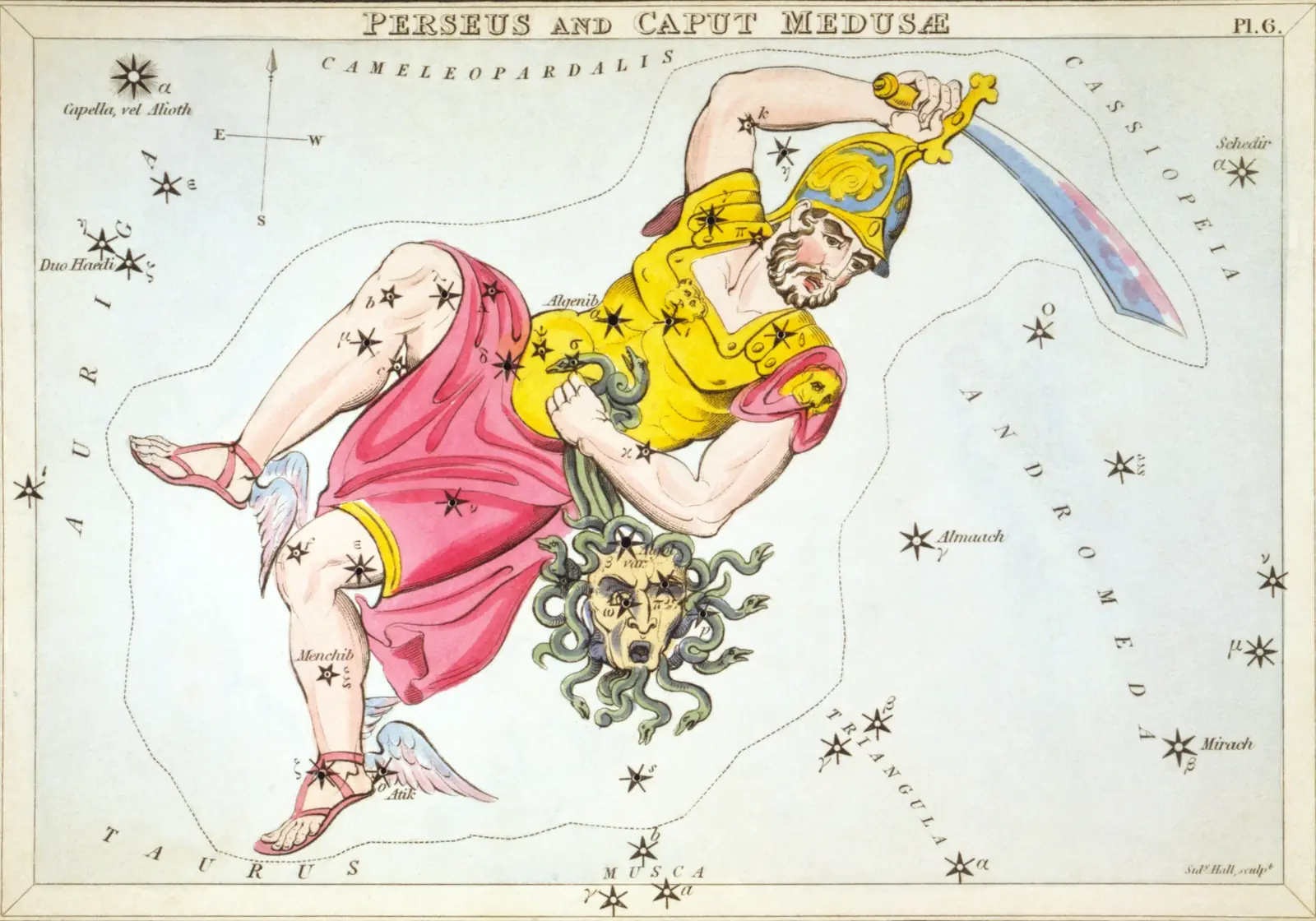
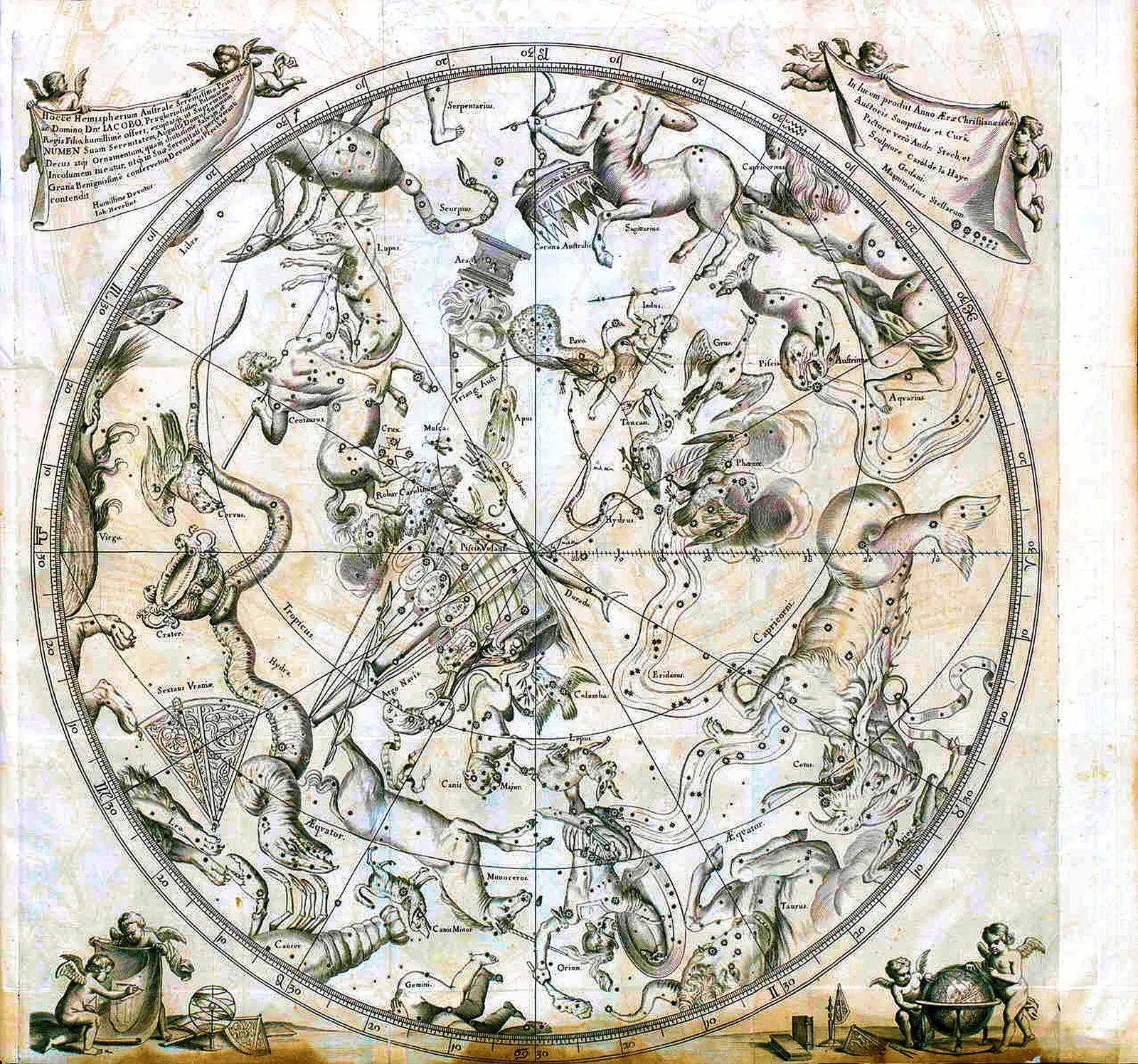
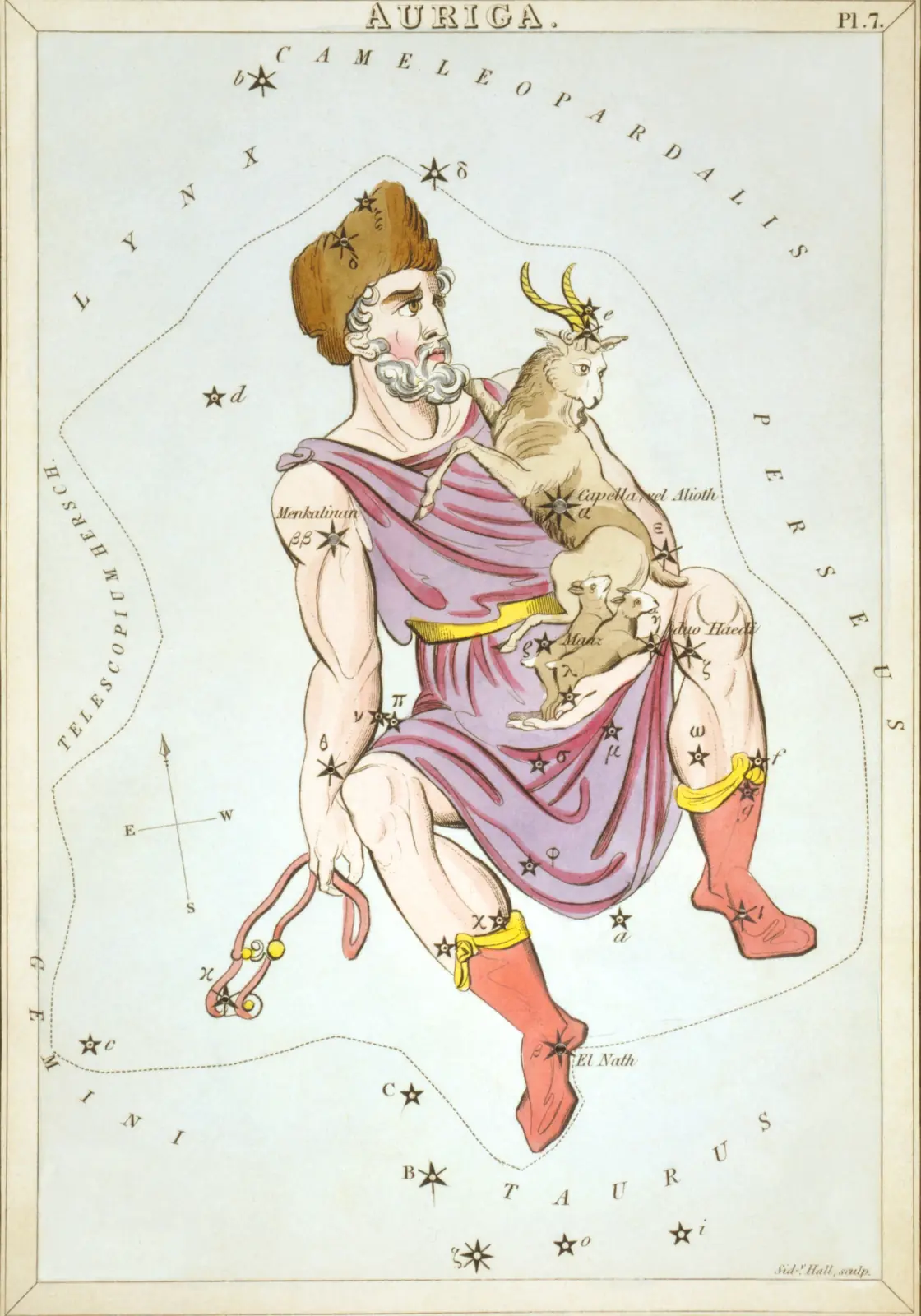
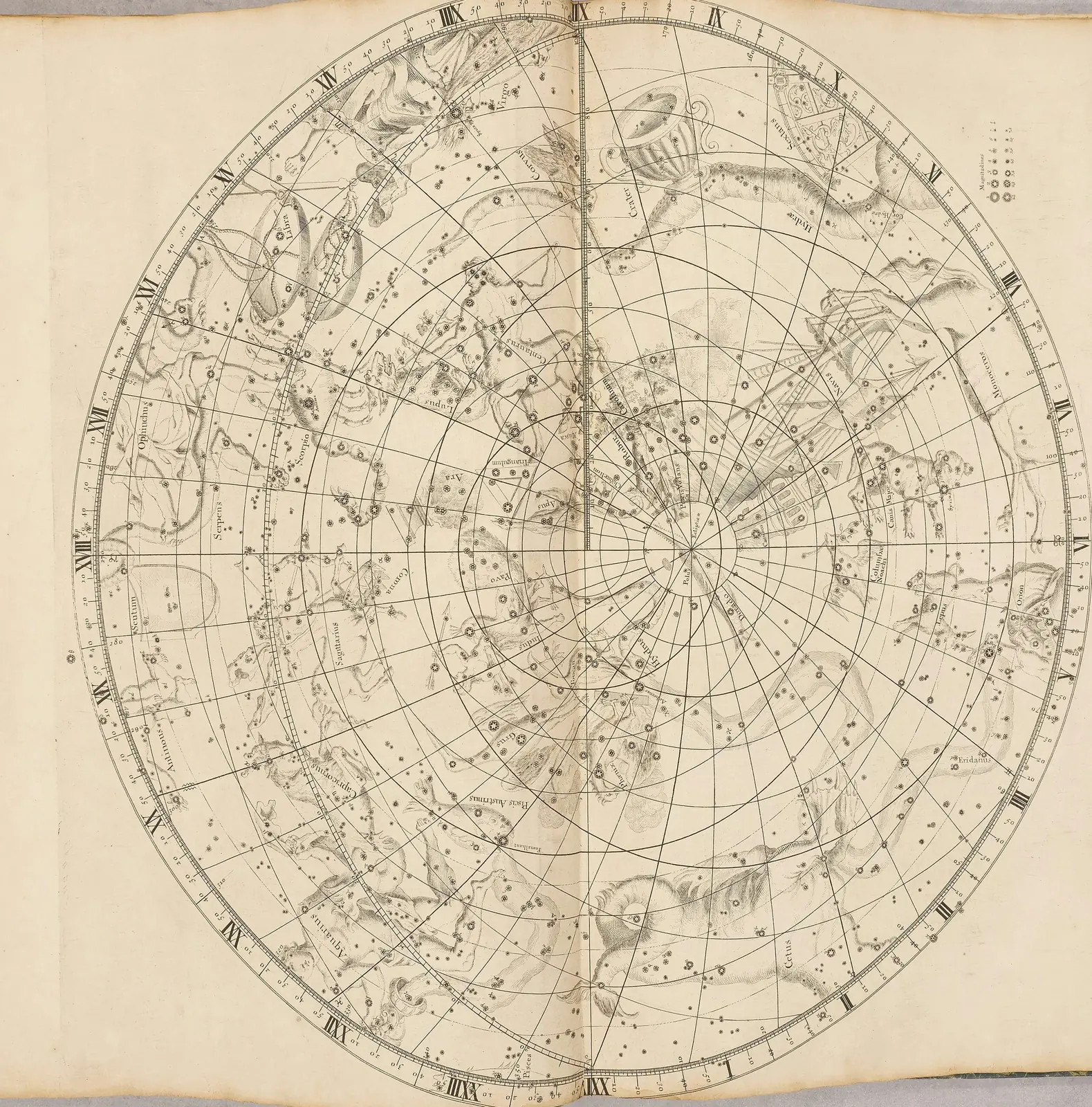
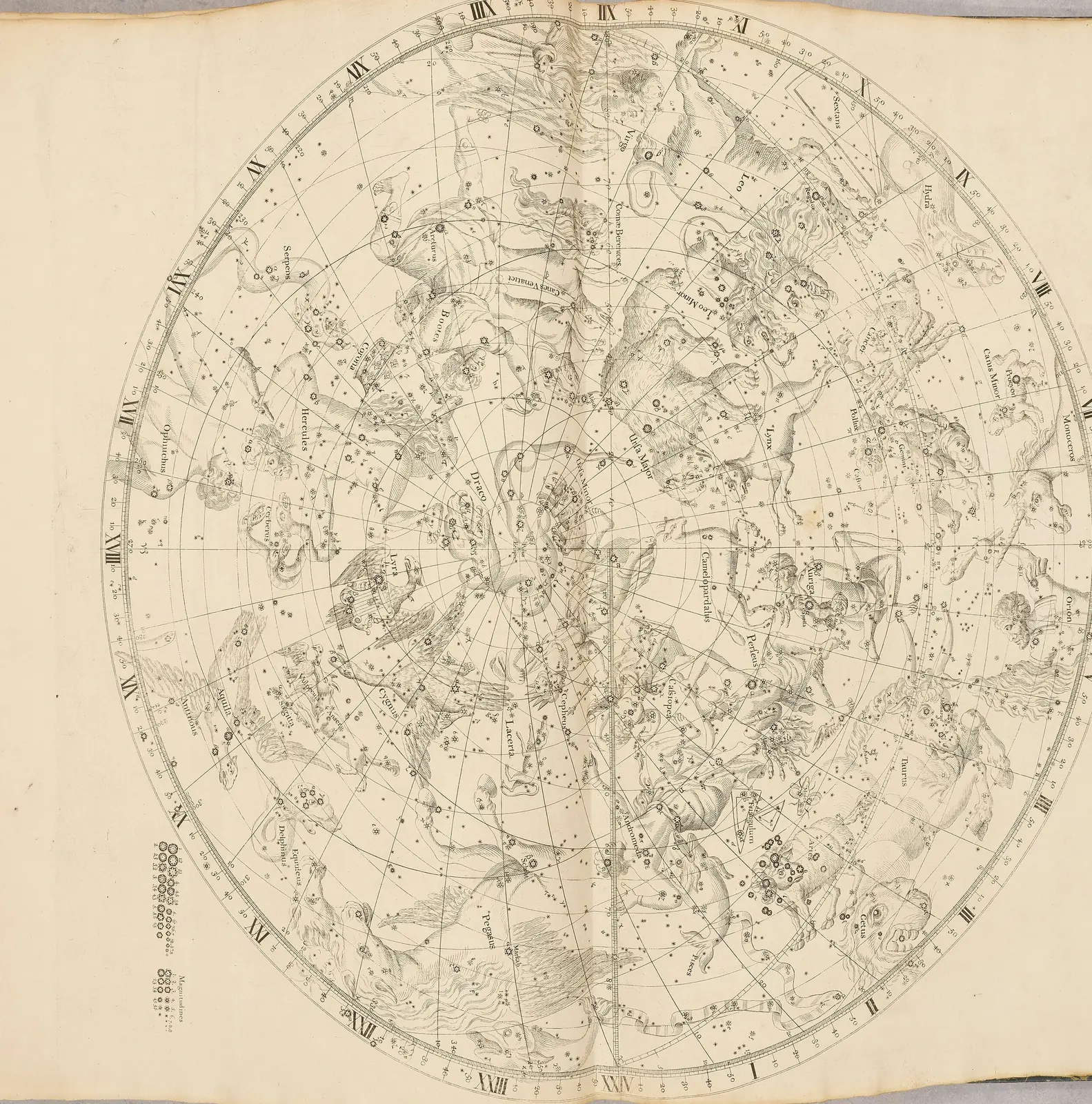
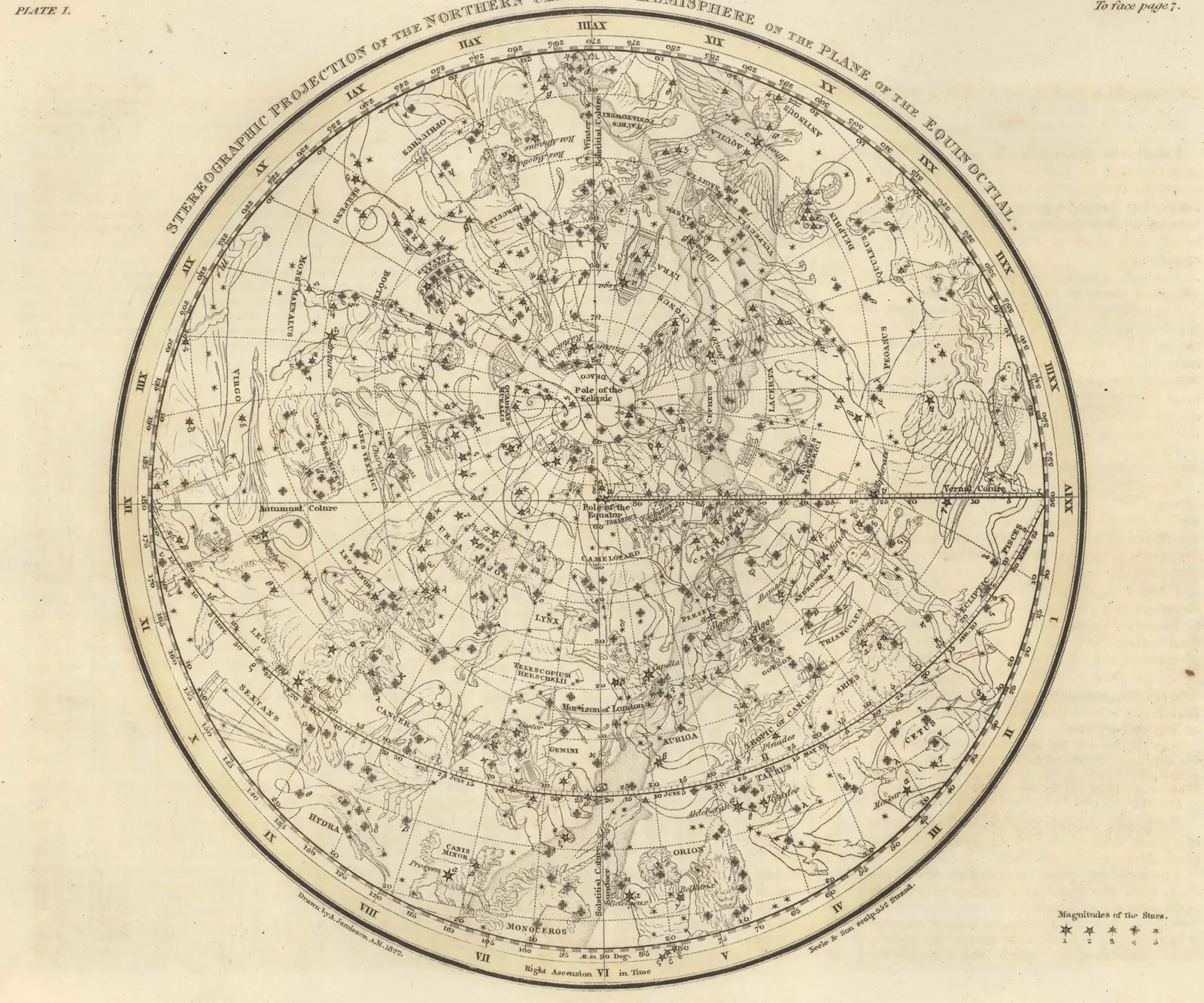
Every figure here comes from a real historical atlas, not a modern illustration: Johann Bayer's Uranometria (1603), John Flamsteed's Atlas Coelestis (1729), Johann Doppelmayr's Atlas Novus Coelestis (1742), Alexander Jamieson's Celestial Atlas (1822) and the hand-coloured cards of Urania's Mirror (London, 1824). Each sign page shows the same figure as drawn across two centuries.
Continue readingShow less
The twelve myths at a glance
The figure, the oldest source we cite for it, and the computed sky: when the Sun is inside each IAU constellation in 2026 and when the figure is best seen at midnight.
| Sign | Figure | Main source | Sun in the stars, 2026 | Days | Best seen |
|---|---|---|---|---|---|
| Aries | The golden ram | Apollodorus, Library 1.9.1 | Apr 19 to May 14, 2026 | 26 days | Oct 22 to Nov 15, 2026 |
| Taurus | The white bull | Ovid, Metamorphoses 2.833-875 | May 15 to Jun 21, 2026 | 38 days | Nov 16 to Dec 21, 2026 |
| Gemini | The twins Castor and Pollux | Homer, Odyssey 11.298-304 | Jun 22 to Jul 20, 2026 | 29 days | Dec 22, 2026 to Jan 18, 2027 |
| Cancer | The crab | Apollodorus, Library 2.5.2 | Jul 21 to Aug 10, 2026 | 21 days | Jan 19 to Feb 6, 2027 |
| Leo | The Nemean lion | Apollodorus, Library 2.5.1 | Aug 11 to Sep 16, 2026 | 37 days | Feb 7 to Mar 14, 2027 |
| Virgo | The maiden of justice | Aratus, Phaenomena 96-136 | Sep 17 to Oct 31, 2026 | 45 days | Mar 15 to Apr 28, 2027 |
| Libra | The scales | Aratus, Phaenomena | Nov 1 to Nov 23, 2026 | 23 days | Apr 29 to May 22, 2027 |
| Scorpio | The scorpion that killed Orion | Ovid, Fasti 5.537-544 | Nov 24 to Nov 29, 2026 | 6 days | May 23 to May 29, 2027 |
| Sagittarius | The archer | Catasterisms 28 (attributed to Eratosthenes) | Jan 1 to Jan 19, 2026 and Dec 19 to Dec 31, 2026 | 32 days | Jun 18 to Jul 22, 2027 |
| Capricorn | The sea-goat | Hyginus, Astronomica 2.28 | Jan 20 to Feb 16, 2026 | 28 days | Jul 23 to Aug 20, 2027 |
| Aquarius | The water-bearer | Homer, Iliad 20.232-235 | Feb 17 to Mar 12, 2026 | 24 days | Aug 21 to Sep 14, 2027 |
| Pisces | The two fish | Ovid, Fasti 2.457-474 | Mar 13 to Apr 18, 2026 | 37 days | Sep 15 to Oct 22, 2027 |
All times are UTC. In the Americas the local date can be a day earlier; in Asia and Australia a day later.
Quick answers
What are the zodiac signs in Greek mythology?
Aries is the golden ram of the Golden Fleece, Taurus is Zeus as a bull, Gemini the twins Castor and Pollux, Cancer the crab that bit Heracles, Leo the Nemean lion, Virgo the goddess of justice, Libra the scales (once the Scorpion's claws), Scorpio the scorpion that killed Orion, Sagittarius the archer Crotus, Capricorn Pan as a sea-goat, Aquarius Ganymede, and Pisces Aphrodite and Eros as fish.
Did the Greeks invent the zodiac?
No. Most of the twelve figures appear earlier in Babylonian star lists such as MUL.APIN, and the twelve equal signs were a Babylonian development of the 5th century BC or so. The Greeks added the myths, and Greek astronomers like Hipparchus and Ptolemy shaped the system astrology still uses.
Which zodiac sign has no Greek myth?
Libra. Greek astronomers called its stars the Claws of the Scorpion. The scales are Babylonian and Roman, later linked to Astraea, the goddess of justice who is Virgo.
What is the Scorpio myth?
The scorpion was sent by the Earth, or by Artemis, to kill the boastful giant hunter Orion. Both were set in the sky on opposite sides, so when Scorpius rises Orion sets.
Who put the zodiac signs in the sky in Greek myth?
Usually Zeus, sometimes at another god's request: Hera placed the crab, Leto asked for Orion and the scorpion, and the Muses asked for Crotus. The Greeks called this a catasterism, a placing among the stars.
Is Sagittarius Chiron the centaur?
Not in the oldest star texts. Chiron is the constellation Centaurus. The Catasterisms and Hyginus make Sagittarius Crotus, son of Pan, who invented archery. Later writers merged the two.
What is the oldest source for the zodiac myths?
The Catasterisms attributed to Eratosthenes (3rd century BC, surviving as an epitome) and Aratus's Phaenomena (around 275 BC) are the earliest Greek star texts. Hyginus's De Astronomia, in Latin, collects most of the variants.