Astrology systems · Where the signs began
The Babylonian zodiac: 18 constellations, then 12 signs
Long before your horoscope app, scribes in Mesopotamia pressed the Moon's road into clay: eighteen star groups, from the Hired Man to the Goat-Fish. Here is how they became the twelve signs you know, and where those stars sit tonight.
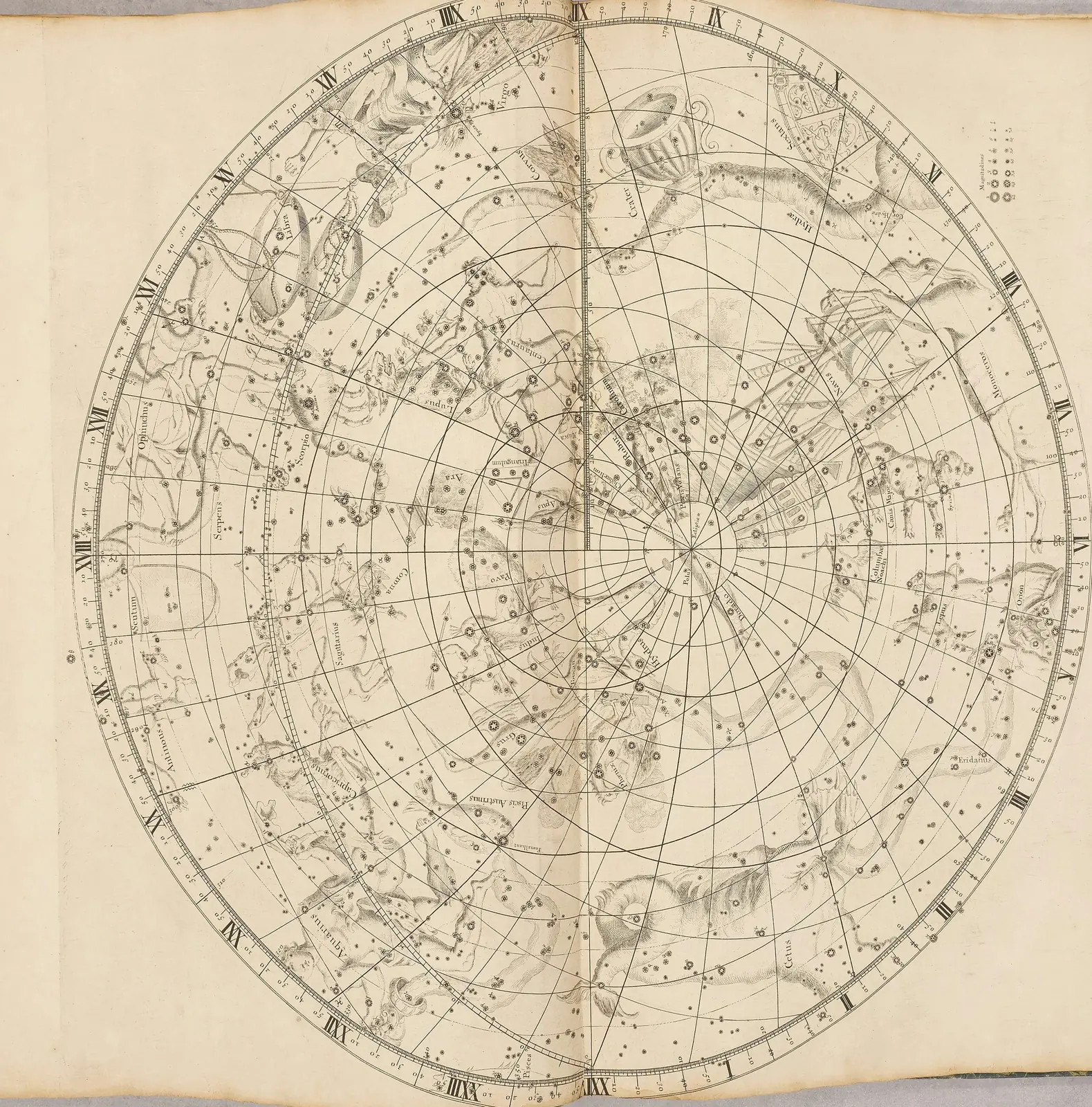
John Flamsteed, Atlas Coelestis, 1729
At a glance
The "original 18 zodiac signs" are the 17 or 18 constellations MUL.APIN lists in the path of the Moon. By about 400 BCE Babylon had cut them to 12 equal signs, the zodiac we still use, now 25.1° away from the stars.
- Constellations in the Moon's path
- 17 or 18MUL.APIN, tablet 1
- Oldest dated MUL.APIN copy
- 686 BCEWikipedia: MUL.APIN
- 12 equal signs appear
- c. 5th century BCEearliest horoscope 410 BCE
- Stars vs signs gap today
- 25°07′Fagan-Bradley, Oct 18, 2026
- Spica, the Furrow, today
- 24°13′ Libra29°05′ Virgo against the stars
See your full chart, tropical and to the minuteFree birth chart: Sun, Moon, rising and every planet.
The short version
Eighteen stops on the Moon's road
Try this today
- Tap through the 18 constellations in the tool below. Count how many you can already name in their modern form.
- On the next clear night, find the Moon and note which bright star is nearest. You are doing exactly what MUL.APIN's authors did.
The history of astrology, as a timelineIs Ophiuchus a zodiac sign?
Picture a flat roof in Babylon, sometime in the first millennium BCE. No streetlights, a dry sky, and a scribe whose job is to watch. The Moon rises a little later each night and slides past the same stars, month after month. Those stars get names.
That is where the zodiac comes from. A Babylonian text called MUL.APIN (it opens with the words "the Plough star") lists the constellations that "stand in the path of the Moon". Depending on how you count two of the star groups, there are 17 or 18 of them. They include faces you know, like the Lion, the Scorpion and the Twins, and some you probably do not: the Hired Man, the Old Man, the Crook, the Swallow.
So when TikTok says there were "originally 18 zodiac signs", it is half right. There were 18 constellations along the Moon's path. They were not yet signs in the way your horoscope means them: equal slices, a personality each, a month each. That came later.
The tablet
What MUL.APIN actually is
Try this today
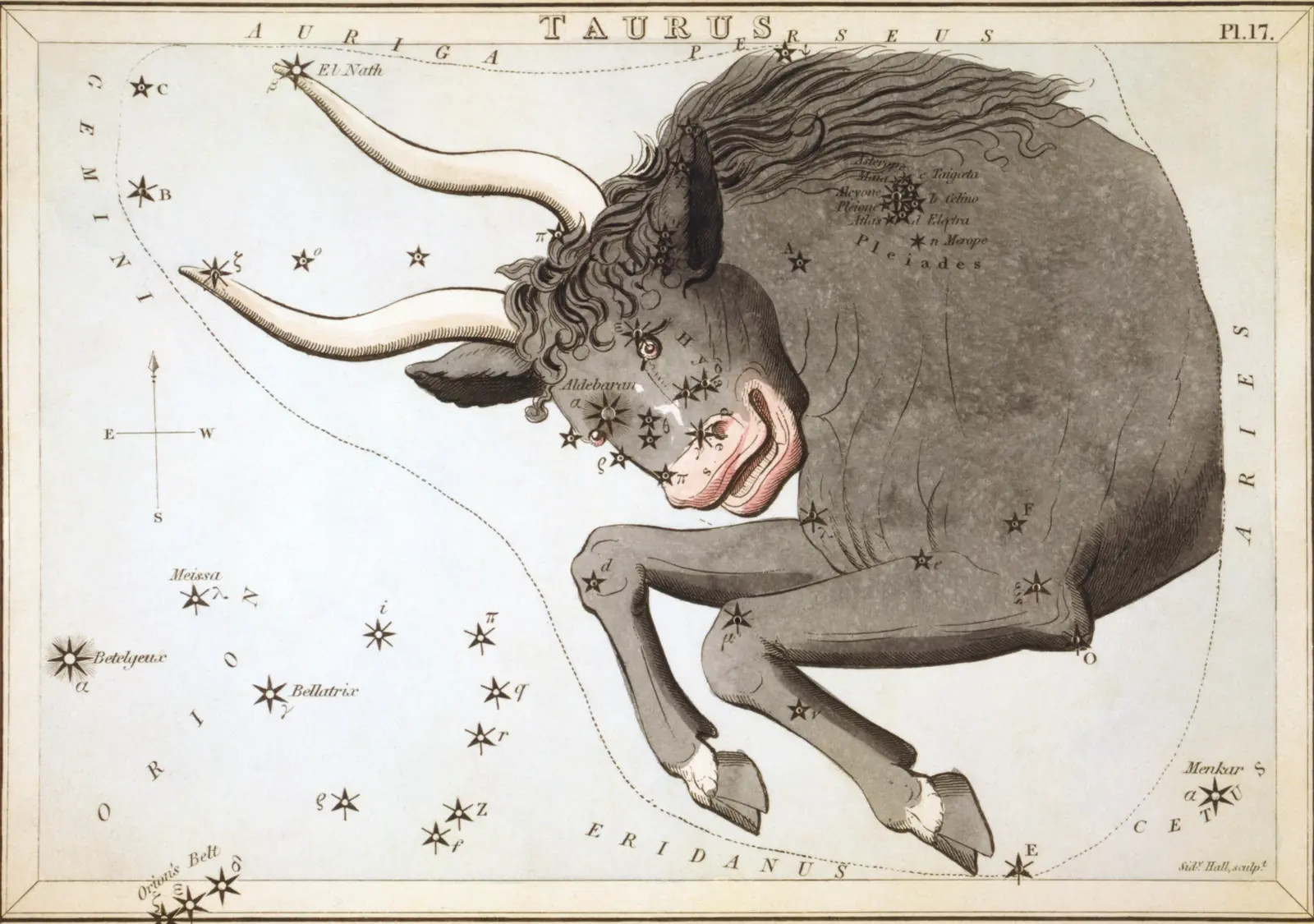
- Find the Pleiades this winter. Their brightest star, Alcyone, now sits at 0°22′ Gemini in the Western zodiac, which tells you how far the equinox has moved since MUL.MUL led the list.
MUL.APIN is not one tablet but a two-tablet compendium, a kind of astronomer's handbook. The oldest dated copy was written in 686 BCE. The British Museum holds a fine copy of tablet 1 (BM 86378), and scholars think much of what it records was gathered centuries earlier, around 1000 BCE.
It covers a lot. It lists about 66 stars and constellations in three bands of the sky named for the gods Anu, Enlil and Ea. It gives the dates on which key stars first rise at dawn, which stars rise as others set, and how to add a leap month when the calendar drifts from the seasons. And in one passage it names the gods that "stand in the path of the Moon", starting with MUL.MUL, simply "the Stars", the cluster we call the Pleiades.
The list opens with the Pleiades, a star cluster farmers across the ancient world used to time the year. Starting there feels right: the Moon's road begins with the stars everyone already knew.
The sky behind it
Star positions are apparent geocentric ecliptic longitudes for Oct 18, 2026, from SIMBAD J2000 coordinates precessed with skyfield. skyfield with NASA JPL DE442; Fagan-Bradley ayanamsa 24°02′31.36″ at 1950 Jan 1.0 TT, precessed into the true ecliptic of date; star positions from SIMBAD J2000 coordinates, proper motion ignored.
From 18 to 12
How 18 constellations became 12 equal signs
Try this today
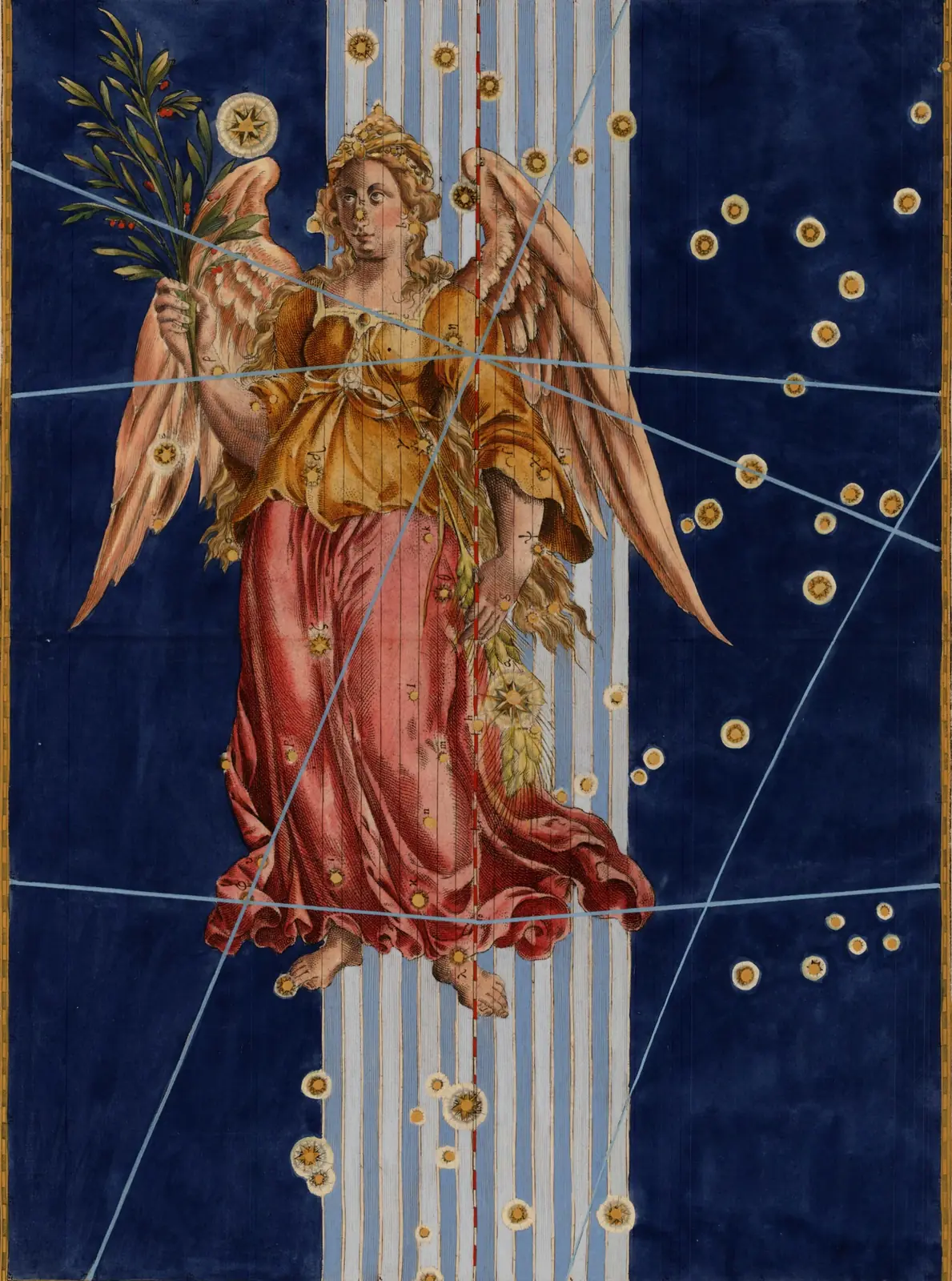
- Look at a Virgo illustration and find the ear of wheat. That is the Babylonian Furrow, still there after 2,500 years.
- Compare the two lists in the tables below and spot the three constellations that did not make the cut.
Has my zodiac sign changed?Egyptian zodiac signs, the real history
Constellations are messy. Some are huge, some are tiny, and they overlap. That is fine for omens, but terrible for maths, and by the middle of the first millennium BCE Babylonian astronomers were doing serious maths: predicting where the Moon and planets would be, years ahead.
So, around the 5th century BCE, they invented something tidy. They divided the Moon's and Sun's path into 12 equal parts of 30 degrees, one for each month of a roughly 12-month year, and named each part after a constellation near it. Some of the 18 merged (the Stars and the Bull of Heaven became one sign), some vanished from the list (Orion, Perseus and Auriga sit too far off the path), and the result was the zodiac.
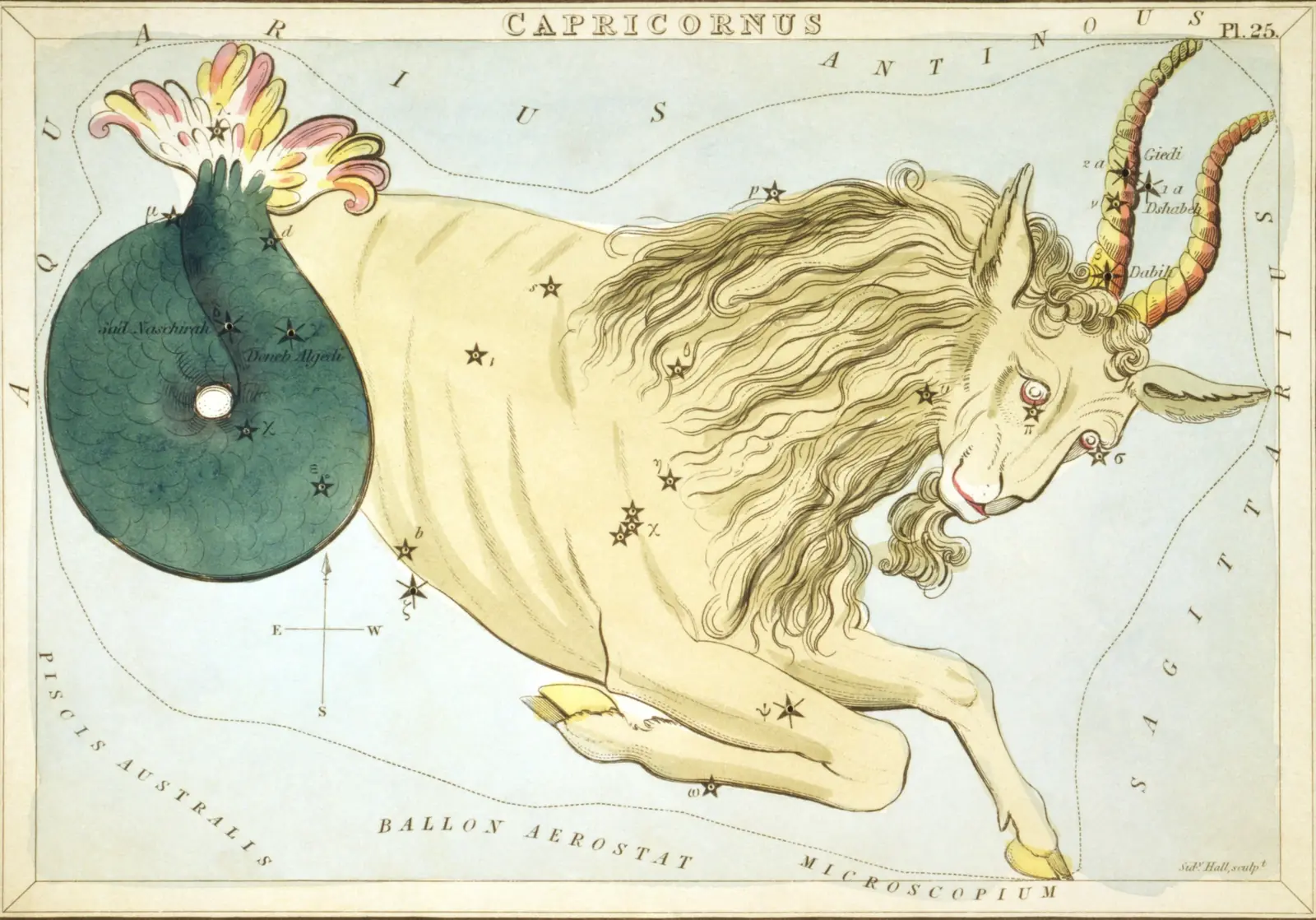
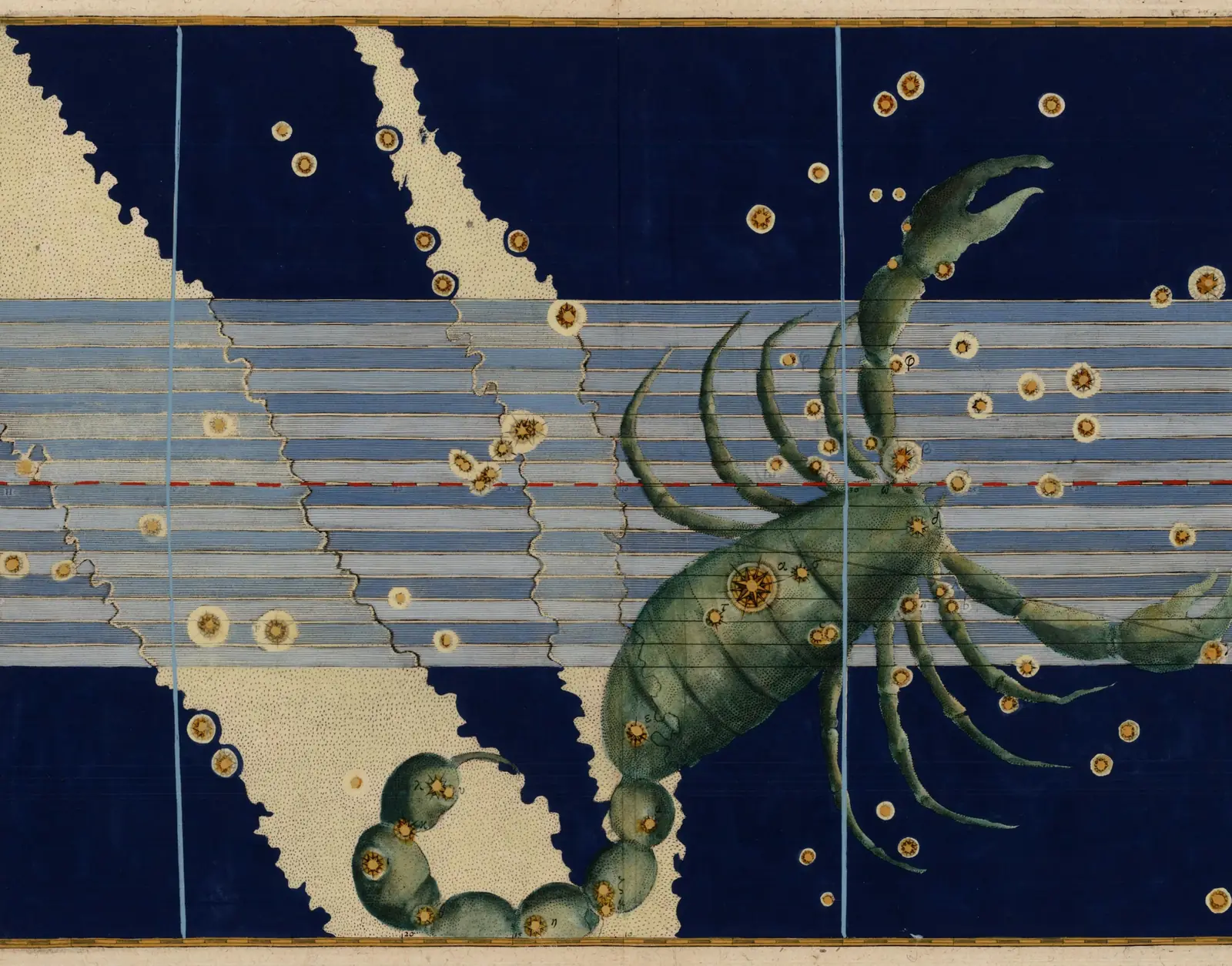
Many of the names survived almost word for word. The Furrow, AB.SÍN, marked by the star Spica, the ear of grain, became the maiden holding wheat: Virgo. The Goat-Fish became Capricorn. The Scorpion stayed the Scorpion. The oldest known personal horoscope, from Babylon, is dated 410 BCE, so by then personal sky records were being kept.
Tied to the stars
Why your Babylonian sign is probably one sign earlier
Try this today
- Use the calculator below to get your star-fixed sign and its Akkadian name.
- In 2026 the Sun enters the star-fixed Aries on Apr 15, when it reads 25°06′ Aries in the Western zodiac. See the full 2026 and 2027 tables below.
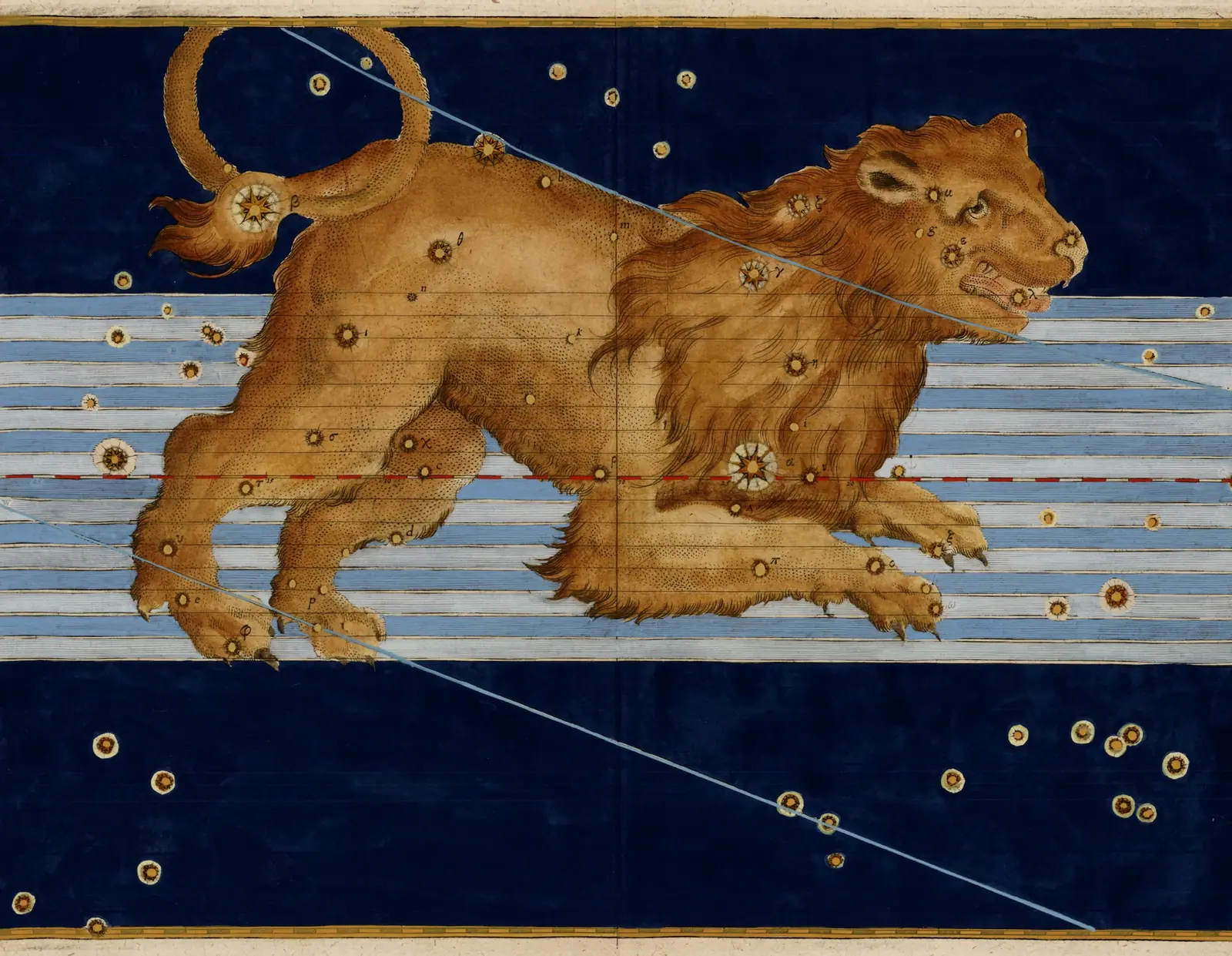
The Babylonians measured their signs against the stars. They used a set of bright reference stars along the path, now called the normal stars: Regulus in the Lion, Spica in the Furrow, Antares in the Scorpion and others. A sign meant "this stretch of the starry belt".
Western astrology took a different turn. Greek astronomers later fixed the start of Aries to the spring equinox instead, so signs follow the seasons. Because Earth's axis wobbles, the equinox slips backwards against the stars by about one degree every 72 years. The two zodiacs were close in the first centuries CE. Today they are about 25°07′ apart.
Here is that drift made concrete. Spica sits at 24°13′ Libra in the Western zodiac, but at 29°05′ Virgo against the stars, still at the edge of the Furrow where Babylon put it. Regulus has crossed into Western Virgo at 0°12′ Virgo. Aldebaran, the Bull's eye, reads 10°10′ Gemini tropically and 15°03′ Taurus sidereally.
So unless your Sun sits late in its sign, your Babylonian-style sign is the one before your usual sign. A Western Leo born in early August is a Babylonian Crab. Neither is wrong; they measure from different starting lines.
The sky behind it
Modern sidereal astrologers reconstruct the Babylonian zodiac with the Fagan-Bradley ayanamsa, which puts Aldebaran and Antares at 15° of Taurus and Scorpio. Our computed positions agree: Aldebaran 15°03′ Taurus, Antares 15°01′ Scorpio. The gap grows by about 1.39° per century (23.35° in 1900, 24.74° in 2000).
What it was for
Omens for kings first, birth charts much later
It is tempting to imagine Babylonians checking their big three. They did not. The great omen series Enuma Anu Enlil, about 70 tablets of "if this happens in the sky, that will happen on earth", was written for the palace. An eclipse or a planet's return said something about the harvest, a war, the king's health.
Personal astrology arrived late. A small set of cuneiform birth records, the oldest from 410 BCE, note where the Moon, Sun and planets stood when someone was born. They read more like data sheets than readings. The idea of a full personality per sign, houses, and the rising sign came through Hellenistic Egypt and Greece, centuries later.
That is a nice way to hold your sign: a very old way of paying attention to the sky, not a fixed verdict about who you are.
Find yours
What is my Babylonian zodiac sign?
Enter your birthday to get your sign in the star-fixed zodiac the Babylonians used, with its Akkadian name and your Western sign beside it. Or flip to the second tab and walk the 18 constellations of the Moon's path one by one.
Your sign in the Babylonian-style (sidereal) zodiac
MUL.MUL and GU₄.AN.NA, the Stars and the Bull of Heaven
The Sun stood at 29°56′ Taurus measured against the stars, which the Babylonians would have counted in MUL.MUL and GU₄.AN.NA. The Pleiades (simply 'the Stars') and the bull's face around Aldebaran.
In the Western (tropical) zodiac you are a Gemini (24°40′). The two differ because the equinox has slid about 24.7° against the stars since the zodiac was laid out.
Method: Sun position from astronomy-engine, minus the Fagan-Bradley ayanamsa for your year. If you were born within a day of a sign change, add your birth time for a clean answer.
More to read
Shorter reads. Each opens in place.
Short read
Your sign's Babylonian name
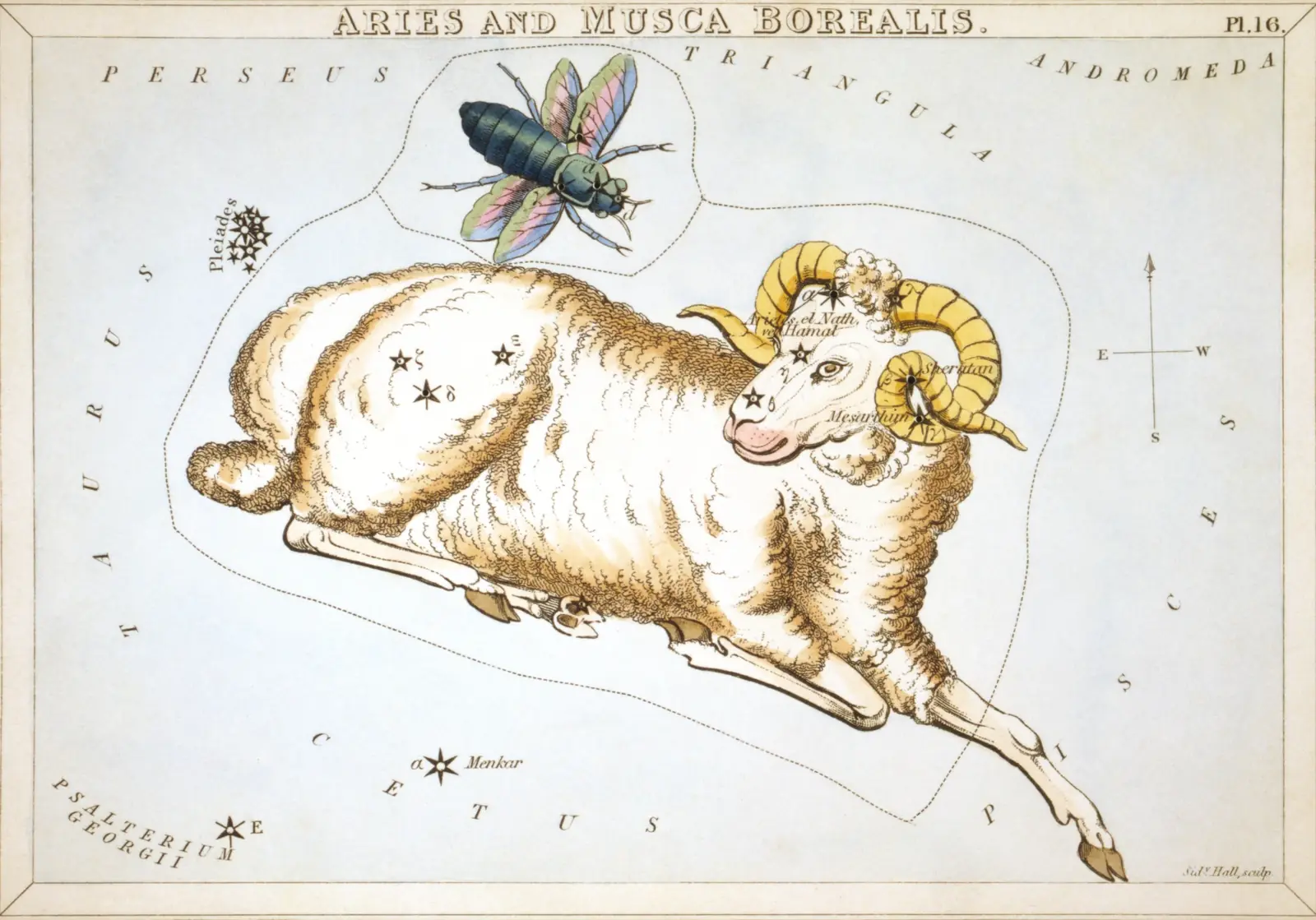
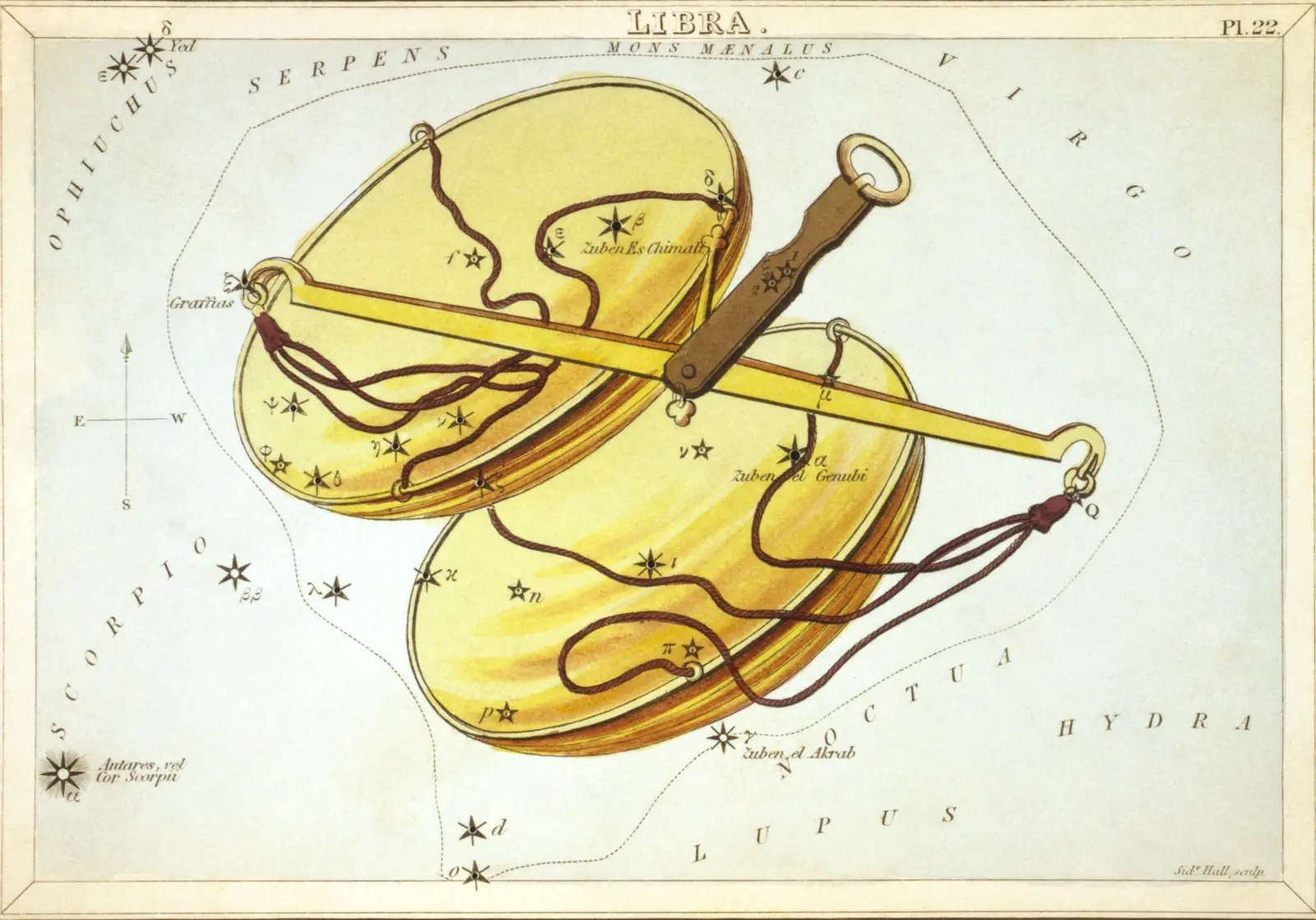
Aries was the Hired Man. Taurus was the Stars and the Bull of Heaven. Virgo was the Furrow, Libra the Scales, Sagittarius the god Pabilsag, Capricorn the Goat-Fish, Aquarius the Great One and Pisces the Tails. The full list, with modern equivalents, is in the tables below.
Continue readingShow less
Short read
No, Babylon did not leave out a 13th sign
Ophiuchus is not on MUL.APIN's Moon-path list, and the 12 signs were never meant to match constellation borders, which the IAU drew in 1930. The Babylonian choice of 12 tracks the months of the year.
Continue readingShow less
The lists and the numbers
MUL.APIN's Moon-path list, the 12 signs that replaced it, where Babylon's reference stars sit today, and the star-fixed sign dates for 2026 and 2027.
| No. | Babylonian name | Meaning | Today |
|---|---|---|---|
| 1 | MUL.MUL | The Stars | the Pleiades, in Taurus |
| 2 | GU₄.AN.NA | The Bull of Heaven | Taurus, around Aldebaran and the Hyades |
| 3 | SIPA.ZI.AN.NA | The True Shepherd of Anu | Orion |
| 4 | ŠU.GI | The Old Man | Perseus |
| 5 | GÀM | The Crook | Auriga |
| 6 | MAŠ.TAB.BA.GAL.GAL | The Great Twins | Gemini, Castor and Pollux |
| 7 | AL.LUL | The Crab | Cancer |
| 8 | UR.GU.LA | The Lion | Leo |
| 9 | AB.SÍN | The Furrow | Spica and part of Virgo |
| 10 | zibānītu | The Scales | Libra |
| 11 | GÍR.TAB | The Scorpion | Scorpius |
| 12 | PA.BIL.SAG | Pabilsag | Sagittarius |
| 13 | SUḪUR.MAŠ | The Goat-Fish | Capricornus |
| 14 | GU.LA | The Great One | Aquarius |
| 15 | KUN.MEŠ | The Tails | part of Pisces |
| 16 | SIM.MAḪ | The Swallow | the south-western fish of Pisces with part of Pegasus |
| 17 | Anunītu | The goddess Anunitu | the north-eastern fish of Pisces with part of Andromeda |
| 18 | LÚ.ḪUN.GÁ | The Hired Man | Aries |
| Sign | Babylonian | Meaning |
|---|---|---|
| Aries | LÚ.ḪUN.GÁ | Hired Man |
| Taurus | MUL.MUL and GU₄.AN.NA | Stars and the Bull of Heaven |
| Gemini | MAŠ.TAB.BA.GAL.GAL | Great Twins |
| Cancer | AL.LUL | Crab |
| Leo | UR.GU.LA | Lion |
| Virgo | AB.SÍN | Furrow |
| Libra | zibānītu | Scales |
| Scorpio | GÍR.TAB | Scorpion |
| Sagittarius | PA.BIL.SAG | Pabilsag, a winged archer god |
| Capricorn | SUḪUR.MAŠ | Goat-Fish |
| Aquarius | GU.LA | Great One |
| Pisces | KUN.MEŠ | Tails |
| Star | Western (tropical) | Against the stars (Fagan-Bradley) |
|---|---|---|
| Alcyone (the Pleiades), Babylonian MUL.MUL | 0°22′ Gemini | 5°15′ Taurus |
| Aldebaran, in the Bull of Heaven | 10°10′ Gemini | 15°03′ Taurus |
| Regulus, the King, in the Lion | 0°12′ Virgo | 5°05′ Leo |
| Spica, the Furrow | 24°13′ Libra | 29°05′ Virgo |
| Antares, in the Scorpion | 10°08′ Sagittarius | 15°01′ Scorpio |
| Sign | Babylonian name | Sun enters | Western position then |
|---|---|---|---|
| Capricorn | Goat-Fish | Jan 15, 2026 · 06:25 UTC | 25°06′ Capricorn |
| Aquarius | Great One | Feb 13, 2026 · 19:33 UTC | 25°06′ Aquarius |
| Pisces | Tails | Mar 15, 2026 · 16:43 UTC | 25°06′ Pisces |
| Aries | Hired Man | Apr 15, 2026 · 01:36 UTC | 25°06′ Aries |
| Taurus | Stars and the Bull of Heaven | May 15, 2026 · 22:48 UTC | 25°07′ Taurus |
| Gemini | Great Twins | Jun 16, 2026 · 05:36 UTC | 25°07′ Gemini |
| Cancer | Crab | Jul 17, 2026 · 16:28 UTC | 25°07′ Cancer |
| Leo | Lion | Aug 18, 2026 · 00:41 UTC | 25°07′ Leo |
| Virgo | Furrow | Sep 18, 2026 · 00:18 UTC | 25°07′ Virgo |
| Libra | Scales | Oct 18, 2026 · 11:53 UTC | 25°07′ Libra |
| Scorpio | Scorpion | Nov 17, 2026 · 11:22 UTC | 25°07′ Scorpio |
| Sagittarius | Pabilsag, a winged archer god | Dec 17, 2026 · 01:48 UTC | 25°07′ Sagittarius |
| Sign | Babylonian name | Sun enters | Western position then |
|---|---|---|---|
| Capricorn | Goat-Fish | Jan 15, 2027 · 12:28 UTC | 25°07′ Capricorn |
| Aquarius | Great One | Feb 14, 2027 · 01:33 UTC | 25°07′ Aquarius |
| Pisces | Tails | Mar 15, 2027 · 22:41 UTC | 25°07′ Pisces |
| Aries | Hired Man | Apr 15, 2027 · 07:32 UTC | 25°07′ Aries |
| Taurus | Stars and the Bull of Heaven | May 16, 2027 · 04:46 UTC | 25°07′ Taurus |
| Gemini | Great Twins | Jun 16, 2027 · 11:40 UTC | 25°08′ Gemini |
| Cancer | Crab | Jul 17, 2027 · 22:39 UTC | 25°08′ Cancer |
| Leo | Lion | Aug 18, 2027 · 06:57 UTC | 25°08′ Leo |
| Virgo | Furrow | Sep 18, 2027 · 06:36 UTC | 25°08′ Virgo |
| Libra | Scales | Oct 18, 2027 · 18:11 UTC | 25°08′ Libra |
| Scorpio | Scorpion | Nov 17, 2027 · 17:38 UTC | 25°08′ Scorpio |
| Sagittarius | Pabilsag, a winged archer god | Dec 17, 2027 · 08:03 UTC | 25°08′ Sagittarius |
All times are UTC. In the Americas the local date can be a day earlier; in Asia and Australia a day later.
Quick answers
What are the 18 Babylonian zodiac signs?
They are the constellations the MUL.APIN text lists as standing in the path of the Moon: the Stars (Pleiades), the Bull of Heaven, the True Shepherd of Anu (Orion), the Old Man (Perseus), the Crook (Auriga), the Great Twins, the Crab, the Lion, the Furrow, the Scales, the Scorpion, Pabilsag, the Goat-Fish, the Great One, the Tails, the Swallow, Anunitu and the Hired Man. Strictly they were not signs yet, just star groups the Moon passes.
Were there originally 18 zodiac signs?
Sort of. The older Babylonian list had 17 or 18 constellations along the Moon's path, depending on how scholars split two of the star groups. Around the 5th century BCE astronomers in Babylon replaced it with 12 equal signs of 30 degrees each, and that 12-sign zodiac is the one Greek and later Western astrology inherited.
What is MUL.APIN?
A two-tablet Babylonian astronomical compendium named after its opening words, 'the Plough star'. It lists stars and constellations, the dates they rise, the path of the Moon, and simple schemes for the calendar. The oldest dated copy was written in 686 BCE, the British Museum holds tablet 1 (BM 86378), and the material in it is older still.
What is my Babylonian zodiac sign?
The Babylonian zodiac was tied to the stars, not the seasons, so it runs close to today's sidereal zodiac. In 2026 that offset is about 25.1°, so most people land one sign earlier than their Western sign. Use the calculator on this page with your birthday to get the exact answer and its Babylonian name.
Is the Babylonian zodiac the same as the Vedic zodiac?
Close cousins, not twins. Both are sidereal, measured against the stars. Western sidereal astrologers usually use the Fagan-Bradley reconstruction of the Babylonian zodiac, while Vedic astrology mostly uses Lahiri, which differs by a little under a degree. Same 12 signs, slightly different starting line.
Did the Babylonians invent astrology?
They built the oldest well-documented system of reading the sky as signs. Omen collections like Enuma Anu Enlil go back to the second millennium BCE, and the earliest known personal horoscope, from Babylon, dates to 410 BCE. Greek astrology later combined this with Egyptian timekeeping and Greek geometry.
Why does my Babylonian sign not match my horoscope sign?
Because the equinox slides backwards against the stars by about one degree every 72 years. Western astrology keeps Aries tied to the March equinox, while a star-fixed zodiac stays with the stars. The gap is now about 25.1°, almost a whole sign.
When is Scorpio season in the Babylonian zodiac in 2026?
Against the stars, the Sun enters Scorpio on Nov 17, 2026 · 11:22 UTC, when it reads 25°07′ Scorpio in the Western zodiac, about three and a half weeks after Western Scorpio season begins.