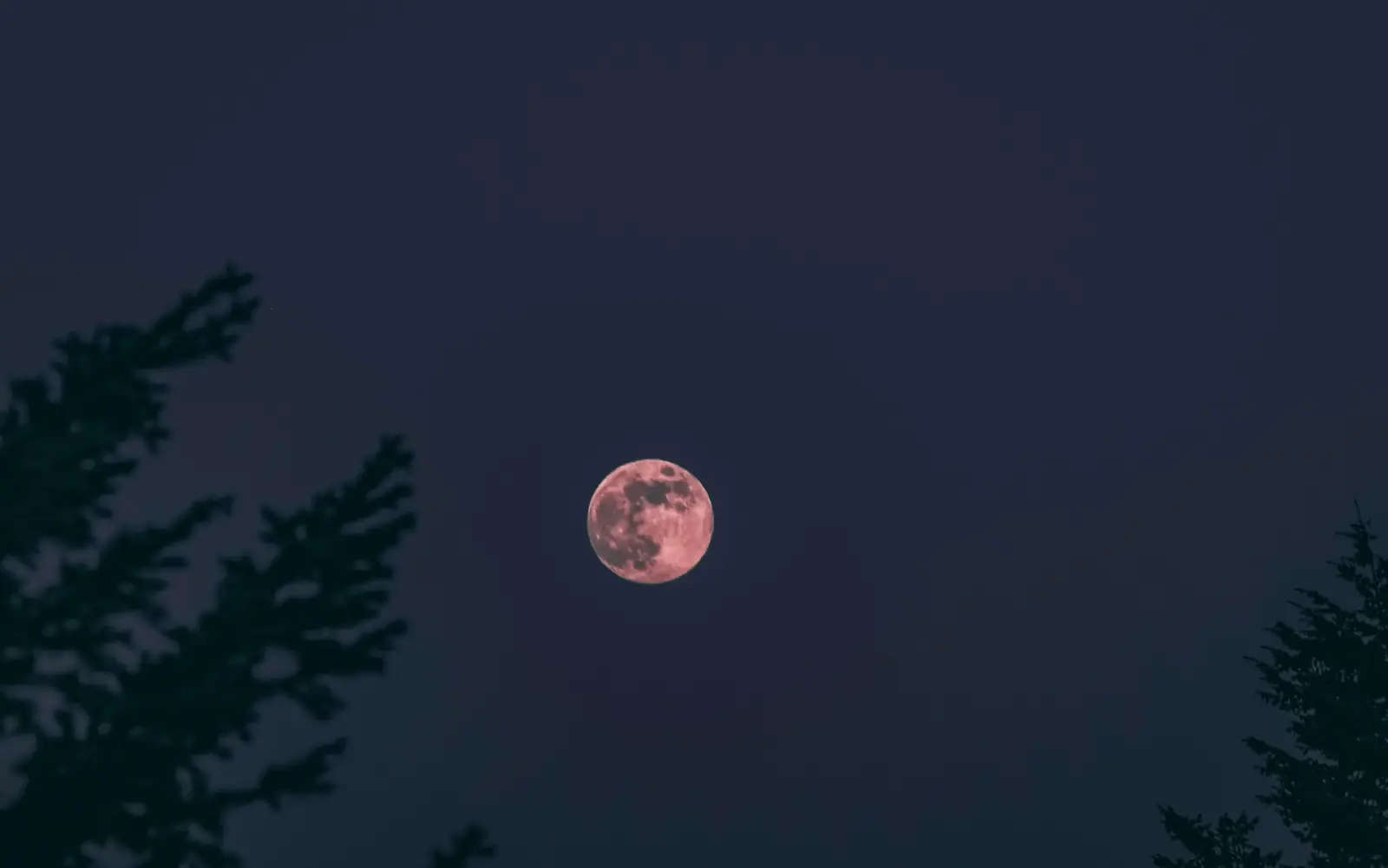
Eclipse calendar · 2027
Eclipses 2027: 2 suns, 3 moons, one long summer shadow
An annular ring in Aquarius on Feb 6, a total eclipse in Leo on Aug 2, and 3 quiet penumbral moons. Every degree computed, every time in UTC.
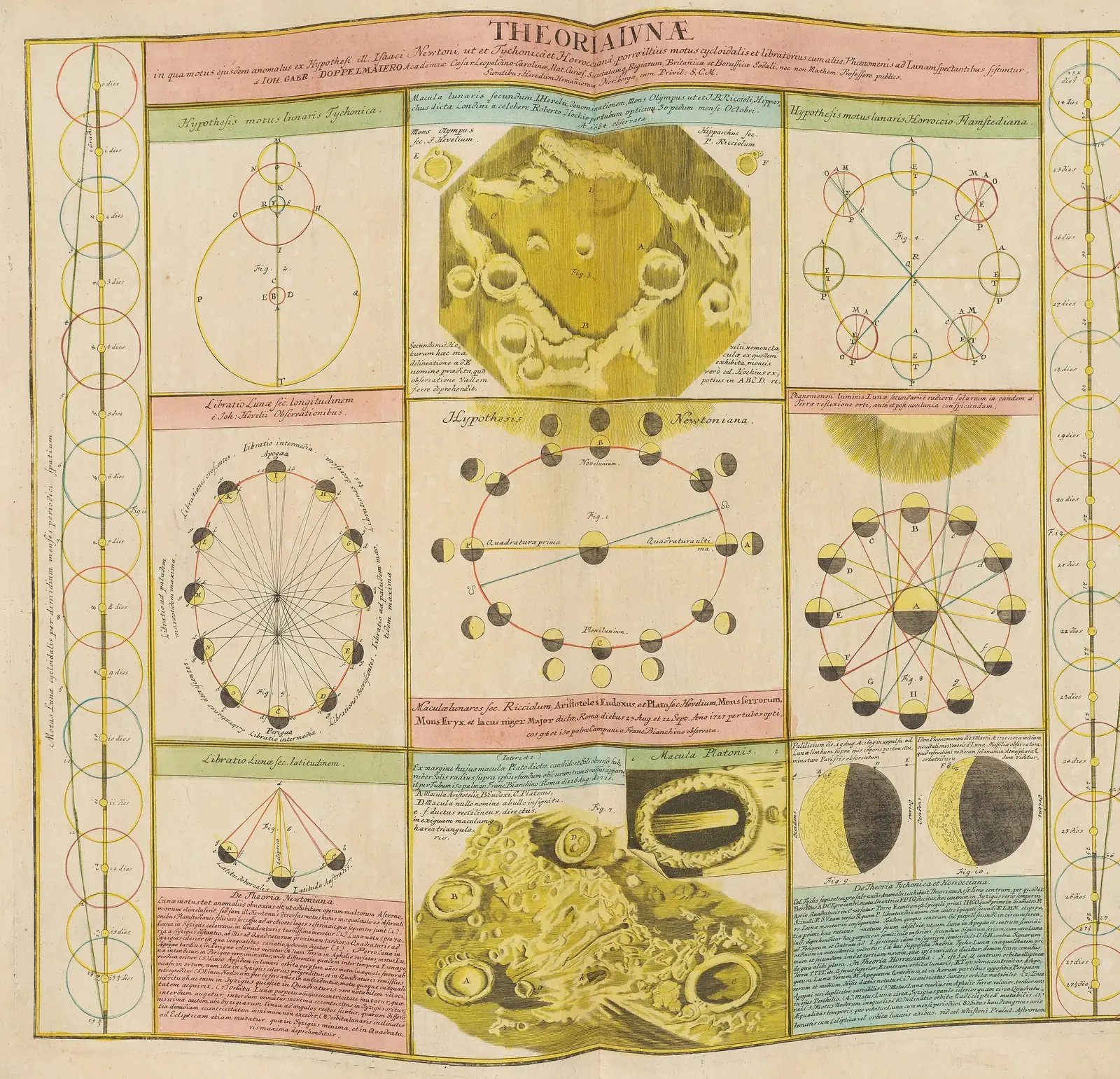
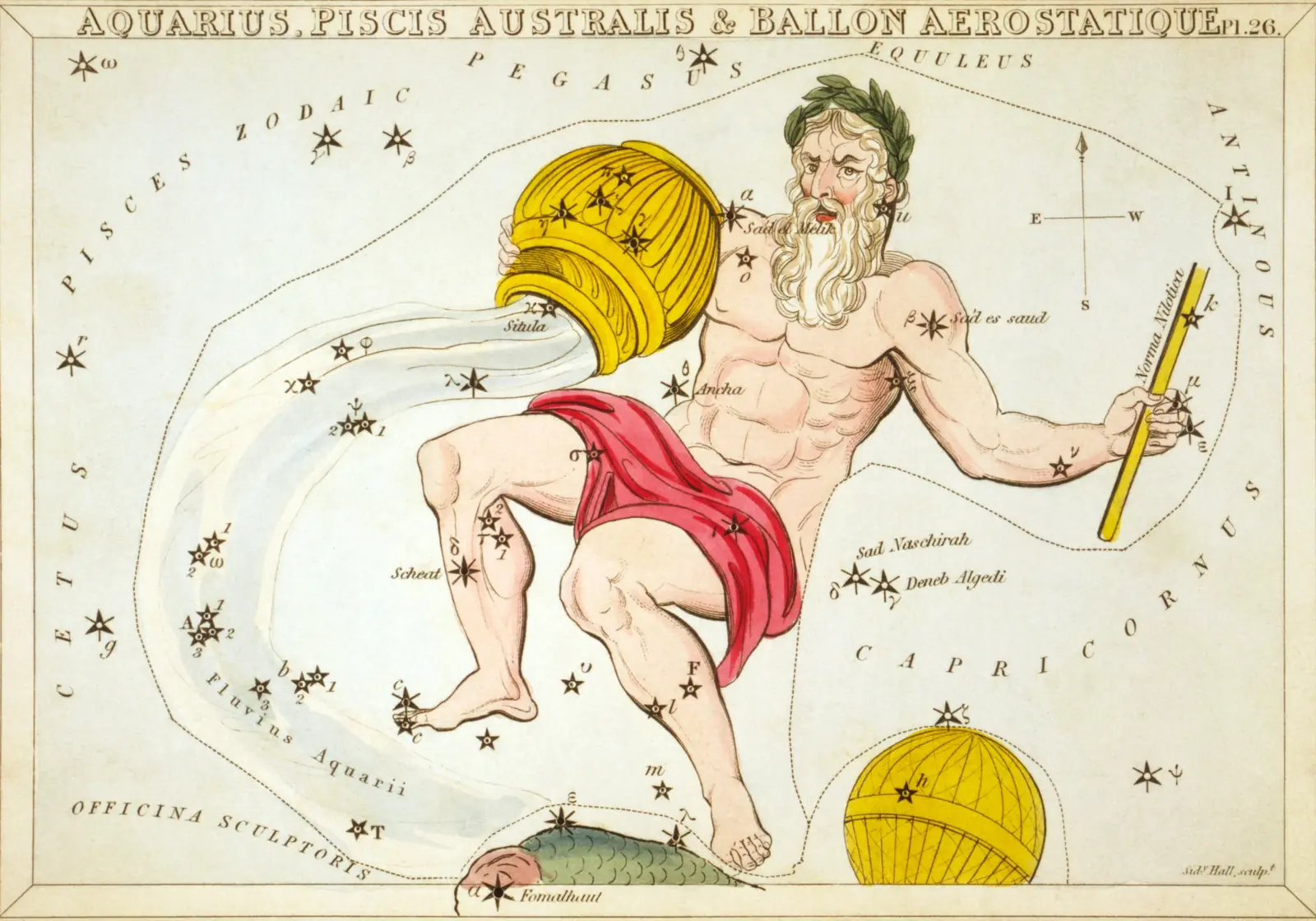
Johann Gabriel Doppelmayr, Atlas Novus Coelestis, 1742
At a glance
There are 5 eclipses in 2027. The first is an annular solar eclipse at 17°38′ Aquarius on Feb 6, 2027 · 16:00 UTC; the big one is the total solar eclipse at 9°55′ Leo on Aug 2, 2027 · 10:07 UTC.
- Feb 6
- Annular solar eclipse17°38′ Aquarius · 16:00 UTC
- Feb 20
- Penumbral lunar eclipse1°59′ Virgo · 23:12 UTC
- Jul 18
- Penumbral lunar eclipse25°58′ Capricorn · 16:02 UTC
- Aug 2
- Total solar eclipse9°55′ Leo · 10:07 UTC
- Aug 17
- Penumbral lunar eclipse24°04′ Aquarius · 07:13 UTC
Find your 2027 eclipse housesBirth date, time and place in; each eclipse's house and contacts out.
The year in shadows
Two eclipse seasons, and a node that does not budge
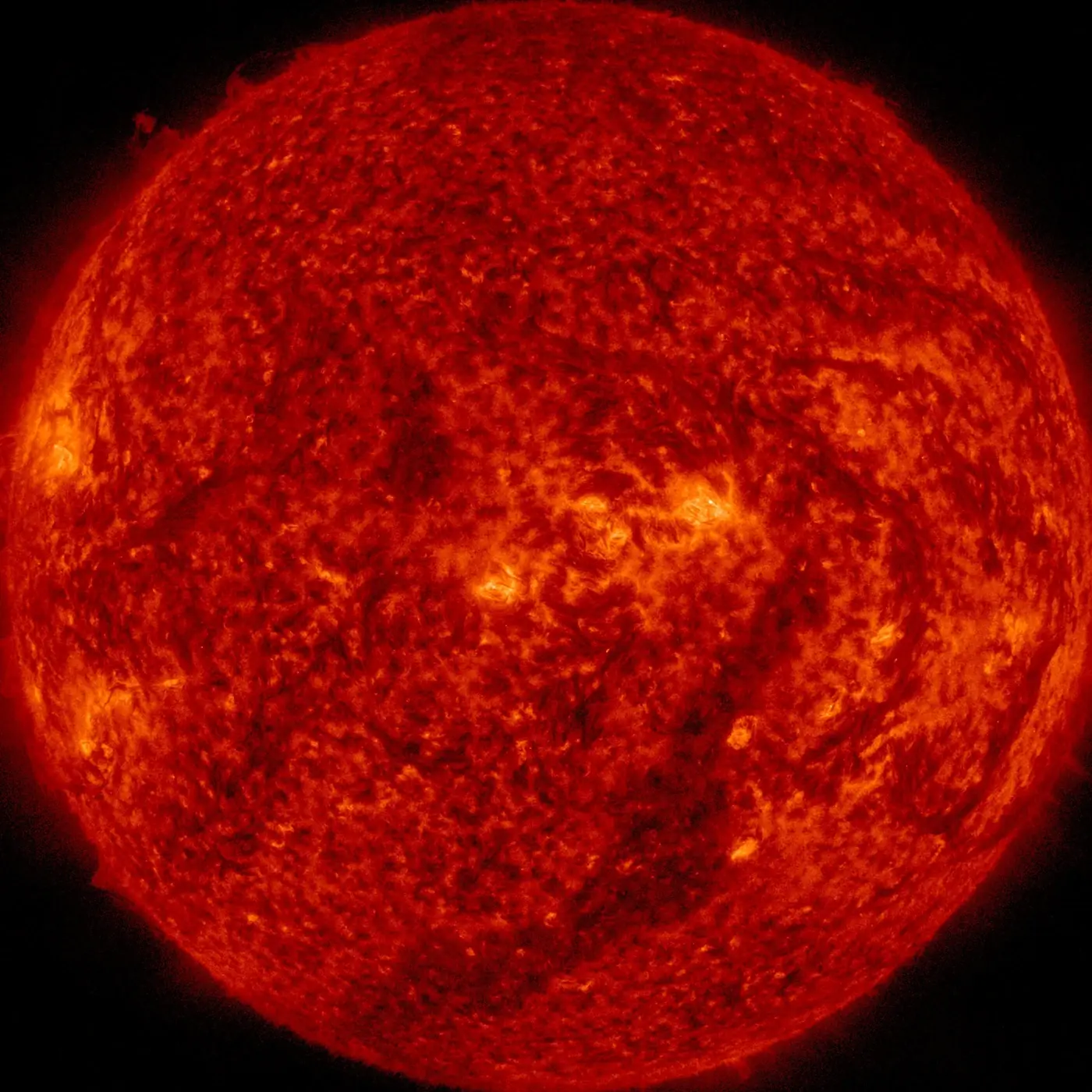
Try this today
- Put two dates in your calendar now: Feb 6 and Aug 2. Those are the two new-moon eclipses, the "beginnings" of the year.
- Look up where Leo and Aquarius fall in your chart. The finder below does it in one tap.
Eclipses do not scatter randomly through the year. They arrive in clusters, called eclipse seasons, roughly every six months, when the Sun lines up with the lunar nodes, the two points where the Moon's tilted path crosses the Sun's.
In 2027 the first season runs Feb 6 to Feb 20: a annular solar eclipse on Feb 6, then a penumbral lunar eclipse on Feb 20. The second is longer and busier, Jul 18 to Aug 17, three eclipses in 30 days with the total solar eclipse of Aug 2 right in the middle.
The North Node sits in Aquarius all year (the mean node entered it on Aug 19, 2026 and leaves for Capricorn on Mar 8, 2028). So the main axis of 2027 is Leo-Aquarius: the heart versus the group, the spotlight versus the network. Astrologers read that axis as a question about how you shine without losing your people. That is an interpretation, not a forecast.
Not every 2027 eclipse lands on that axis. The Feb 20 lunar eclipse falls at 1°59′ Virgo, and the July one at 25°58′ Capricorn, because a full moon sits opposite the Sun and can spill into a neighbouring sign. The full list of signs touched: Aquarius, Virgo, Capricorn, Leo.
The sky behind it
Eclipse seasons here are eclipses within 40 days of each other. The mean lunar node is computed with Meeus's formula (Astronomical Algorithms, eq. 47.7). Every 2027 eclipse falls near the north node (Feb 6), north node (Feb 20), south node (Jul 18), south node (Aug 2), south node (Aug 17).
February
The February 2027 eclipse: a ring of fire at 17°38′ Aquarius
Try this today
- Write down one group you want more of in 2027 (a club, a team, a server) and one you are ready to quietly leave.
- Check what house 17°38′ Aquarius lands in for you. That is where astrologers say the "new chapter" starts.
Picture the Moon sliding across the Sun but falling a little short: it is near the far end of its orbit, so it looks slightly too small, and a bright ring stays visible. That is an annular eclipse, and the year opens with one on Feb 6, 2027 · 16:00 UTC at 17°38′ Aquarius.
NASA's catalogue lists the ring lasting up to 7m51s along a path over Chile, Argentina, Uruguay, Brazil, the South Atlantic, Ivory Coast, Ghana, Togo, Benin, Nigeria. A partial eclipse is visible across South America, Antarctica, western and southern Africa. Most of the Northern Hemisphere will miss it, and that is fine: astrologers use an eclipse by its zodiac degree, wherever the shadow lands.
Because it is a new moon close to the North Node, the traditional reading is a beginning: Aquarius themes of friends, groups, tech, causes and the future. 14 days later the penumbral lunar eclipse of Feb 20, 2027 · 23:12 UTC at 1°59′ Virgo rounds off the season with a soft, almost invisible dimming.
Put simply: February is a good month to notice who is really in your corner, and which circles you stay in only out of habit.
The sky behind it
Our computed time 16:00:55 UTC; NASA's is 16:00:47 TD (TT). After converting, the two differ by 77 s, because we minimise the geocentric shadow-axis distance rather than NASA's local greatest-eclipse point. Saros 131, magnitude 0.928.
August
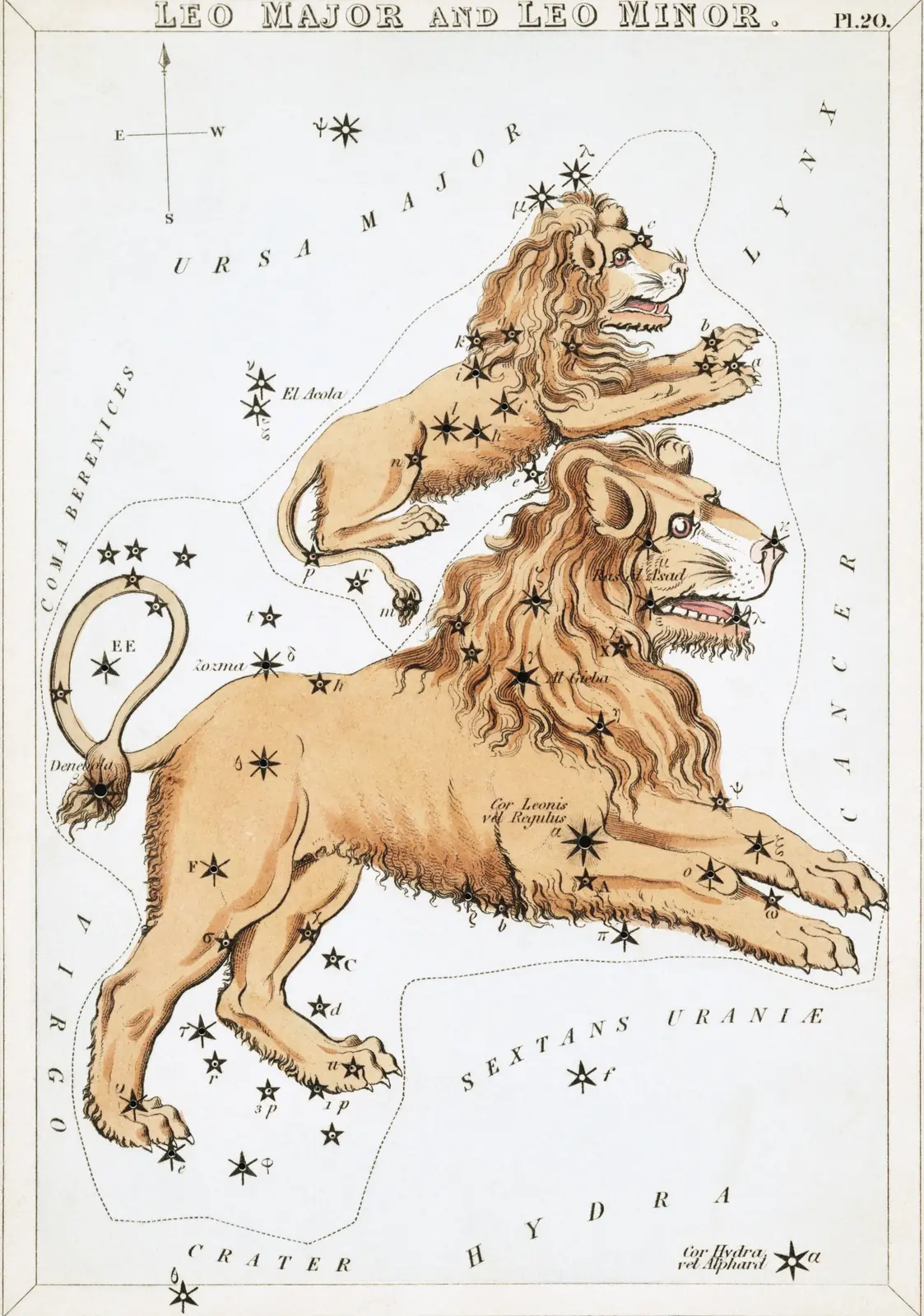
The total solar eclipse of Aug 2, 2027 in Leo
Try this today
- Make a list of three things you keep doing mainly because people expect it. Circle one to drop by September.
- If you can travel, look at the NASA path map early. Accommodation along totality paths books up.
This is the headline eclipse of 2027. On Aug 2, 2027 · 10:07 UTC, the new moon covers the Sun completely at 9°55′ Leo, with the Sun in its own sign.
NASA lists totality of up to 6m23s, which is long for a total eclipse, along a path across Morocco, Spain, Algeria, Libya, Egypt, Saudi Arabia, Yemen, Somalia. The partial phase reaches Africa, Europe, the Middle East, western and southern Asia. If you have ever wanted to travel for an eclipse, this is the one people are already planning around.
Astrologically it sits near the South Node in Leo, which tradition reads as release more than launch: letting go of an old way of performing, a role you have outgrown, an audience you no longer need. Leo also rules joy and creative risk, so the softer reading is: what would you make if nobody were watching?
The season around it is unusually full. A barely-there penumbral lunar eclipse at 25°58′ Capricorn opens it on Jul 18, and another at 24°04′ Aquarius closes it on Aug 17.
The sky behind it
NASA greatest eclipse 10:07:49 TD, Saros 136, magnitude 1.079. Our computed gamma (shadow-axis distance from Earth's centre) is 0.1416, close to the centre, which is why totality is long.
The quiet moons
Why all three 2027 lunar eclipses are penumbral
Try this today
- On each lunar eclipse night, write one thing that has reached its natural end. No need to act on it yet.
- The Feb 20 eclipse is in Virgo: tidy one small corner of your life, a drawer, an inbox, a habit.
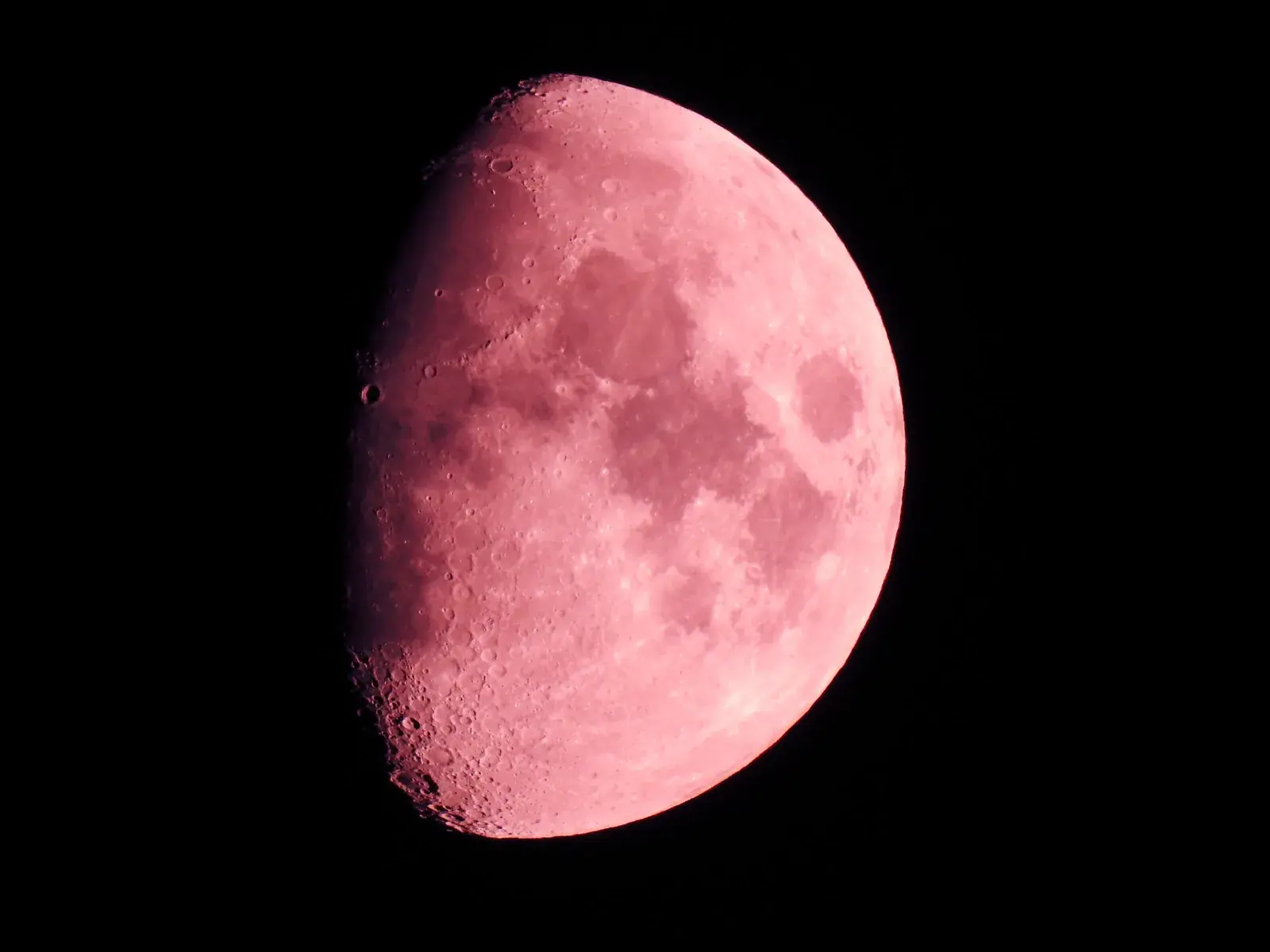
If you were hoping for a coppery blood moon in 2027, here is the honest news: there is none. All three lunar eclipses are penumbral, meaning the Moon passes only through Earth's faint outer shadow and never touches the dark umbra.
- Feb 20, 2027 · 23:12 UTC at 1°59′ Virgo: penumbral magnitude 0.926, nearly a full dip into the penumbra, so a careful eye may see one side look duller.
- Jul 18, 2027 · 16:02 UTC at 25°58′ Capricorn: penumbral magnitude 0.002. The Moon barely grazes the shadow. Technically an eclipse, visually nothing.
- Aug 17, 2027 · 07:13 UTC at 24°04′ Aquarius: penumbral magnitude 0.545.
Astrologers still count penumbral eclipses, though many weigh them more lightly than total ones. They behave like extra-charged full moons: a culmination, a reveal, a feeling finally named. The next total lunar eclipse is Dec 31, 2028 · 16:52 UTC at 10°35′ Cancer.
Two zodiacs
Eclipses 2027 in Western and Vedic astrology

Try this today
- Not sure which zodiac you use? If your sign comes from a newspaper horoscope, it is tropical.
- Convert your own placements with the sidereal sign calculator.
You may see two different sign lists for 2027's eclipses online, and both can be right. Western astrology uses the tropical zodiac, tied to the seasons. Vedic (Jyotish) astrology uses the sidereal zodiac, tied to the stars, which in 2027 runs about 24° behind.
So the total eclipse of Aug 2 is 9°55′ Leo in Western astrology and 15°41′ Cancer in Vedic. The February annular is 17°38′ Aquarius tropical and 23°24′ Capricorn sidereal. The table below has all five.
Vedic tradition also names the nodes Rahu (north) and Ketu (south), and many Jyotish calendars give guidance on not starting important work during an eclipse. That is a living cultural practice, worth respecting, and separate from the astronomy. If you follow it, use the exact times here and convert them to your local clock.
The sky behind it
Sidereal degrees use the Lahiri ayanamsa, approximated as 23.857° at J2000 plus 50.29″ per year (within about 0.02° of Swiss Ephemeris Lahiri). For 2027 that is about 24.2°.
Your houses
Where do the 2027 eclipses land for you?
Tap your rising sign (or your Sun sign if you do not know it) and see the house each 2027 eclipse falls in, plus a live countdown to the next one in your own time zone.
Count houses from my
My rising sign is
Tap a sign to see your houses.
More to read
Shorter reads. Each opens in place.
Where it came from
The eclipse story started in 2026
2027 continues a cycle that began with the partial lunar eclipse at 4°51′ Pisces on Aug 28, 2026. The 2026 eclipses already moved into Leo and Aquarius, and the axis stays there until the node changes sign in 2028.
Continue readingShow less
What comes next
Eclipses 2028 at a glance
The next eclipse after 2027 is a partial lunar eclipse at 21°34′ Cancer on Jan 12, 2028. As the node backs into Capricorn (Mar 8, 2028), the story shifts to the Cancer-Capricorn axis.
Continue readingShow less
Every 2027 eclipse, computed
Tropical and sidereal degrees from JPL DE442, then a check against NASA's catalogue: every 2027 time agrees within 77 seconds.
| Date and time (UTC) | Eclipse | Western (tropical) | Vedic (Lahiri) | Node |
|---|---|---|---|---|
| Feb 6, 2027 · 16:00 UTC | Annular solar eclipse | 17°38′ Aquarius | 23°24′ Capricorn | North (Rahu) |
| Feb 20, 2027 · 23:12 UTC | Penumbral lunar eclipse | 1°59′ Virgo | 7°45′ Leo | North (Rahu) |
| Jul 18, 2027 · 16:02 UTC | Penumbral lunar eclipse | 25°58′ Capricorn | 1°43′ Capricorn | South (Ketu) |
| Aug 2, 2027 · 10:07 UTC | Total solar eclipse | 9°55′ Leo | 15°41′ Cancer | South (Ketu) |
| Aug 17, 2027 · 07:13 UTC | Penumbral lunar eclipse | 24°04′ Aquarius | 29°50′ Capricorn | South (Ketu) |
| Eclipse | NASA greatest (TD) | Saros | Magnitude | Visible from | Our time vs NASA |
|---|---|---|---|---|---|
| Feb 6 solar | 16:00:47 | 131 | 0.928 | South America, Antarctica, western and southern Africa | +77 s |
| Feb 20 lunar | 23:14:06 | 143 | umbral -0.057 | the Americas, Europe, Africa, Asia | -3 s |
| Jul 18 lunar | 16:04:09 | 110 | umbral -1.068 | eastern Africa, Asia, Australia, the Pacific | -1 s |
| Aug 2 solar | 10:07:49 | 136 | 1.079 | Africa, Europe, the Middle East, western and southern Asia | +58 s |
| Aug 17 lunar | 07:14:59 | 148 | umbral -0.525 | the Pacific, the Americas | -3 s |
| Date (UTC) | Eclipse | Degree |
|---|---|---|
| Feb 17, 2026 · 12:13 UTC | Annular solar eclipse | 28°50′ Aquarius |
| Mar 3, 2026 · 11:33 UTC | Total lunar eclipse | 12°52′ Virgo |
| Aug 12, 2026 · 17:46 UTC | Total solar eclipse | 20°02′ Leo |
| Aug 28, 2026 · 04:12 UTC | Partial lunar eclipse | 4°51′ Pisces |
| Feb 6, 2027 · 16:00 UTC | Annular solar eclipse | 17°38′ Aquarius |
| Feb 20, 2027 · 23:12 UTC | Penumbral lunar eclipse | 1°59′ Virgo |
| Jul 18, 2027 · 16:02 UTC | Penumbral lunar eclipse | 25°58′ Capricorn |
| Aug 2, 2027 · 10:07 UTC | Total solar eclipse | 9°55′ Leo |
| Aug 17, 2027 · 07:13 UTC | Penumbral lunar eclipse | 24°04′ Aquarius |
| Jan 12, 2028 · 04:13 UTC | Partial lunar eclipse | 21°34′ Cancer |
| Jan 26, 2028 · 15:08 UTC | Annular solar eclipse | 6°11′ Aquarius |
| Jul 6, 2028 · 18:19 UTC | Partial lunar eclipse | 15°16′ Capricorn |
| Jul 22, 2028 · 02:55 UTC | Total solar eclipse | 29°51′ Cancer |
| Dec 31, 2028 · 16:52 UTC | Total lunar eclipse | 10°35′ Cancer |
All times are UTC. In the Americas the local date can be a day earlier; in Asia and Australia a day later.
Quick answers
How many eclipses are there in 2027?
5: 2 solar and 3 lunar. They are Feb 6 (annular solar), Feb 20 (penumbral lunar), Jul 18 (penumbral lunar), Aug 2 (total solar), Aug 17 (penumbral lunar).
What is the February 2027 eclipse in astrology?
An annular solar eclipse on Feb 6, 2027 · 16:00 UTC at 17°38′ Aquarius, a new moon close to the North Node. Two weeks later, on Feb 20, 2027 · 23:12 UTC, a penumbral lunar eclipse falls at 1°59′ Virgo. Astrologers read the pair as a start-something season in the Aquarius part of your chart.
When is eclipse season 2027?
There are two. The first runs Feb 6 to Feb 20 (14 days, 2 eclipses). The second runs Jul 18 to Aug 17 (30 days, 3 eclipses), with the total solar eclipse in the middle.
Is there a total solar eclipse in 2027?
Yes, on Aug 2, 2027 · 10:07 UTC at 9°55′ Leo. NASA's catalogue gives a maximum totality of 6m23s, with the path crossing Morocco, Spain, Algeria, Libya, Egypt, Saudi Arabia, Yemen, Somalia.
What signs are the 2027 eclipses in?
In the tropical zodiac: Aquarius (Feb 6), Virgo (Feb 20), Capricorn (Jul 18), Leo (Aug 2), Aquarius (Aug 17). The North Node is in Aquarius for the whole year, so most of the story sits on the Leo-Aquarius axis.
What are the 2027 eclipses in Vedic astrology?
Vedic astrology uses the sidereal zodiac, about 24° behind the tropical one in 2027 (Lahiri). The same eclipses fall at 23°24′ Capricorn (Feb 6), 7°45′ Leo (Feb 20), 1°43′ Capricorn (Jul 18), 15°41′ Cancer (Aug 2), 29°50′ Capricorn (Aug 17). Same moment, different label.
Are lunar eclipses in 2027 visible?
All three 2027 lunar eclipses are penumbral: the Moon only brushes Earth's pale outer shadow, so most people notice at most a slight dimming. The Jul 18 one is so shallow (penumbral magnitude 0.002) that it is practically invisible.