Synastry · House overlays
Synastry house overlays: who feels it more?
Their planet is the guest. Your house is the room it walks into. Here is the rule astrologers use, the overlays that read loudest, and the maths that tells you when to double-check.
Photo: Burst
At a glance
The house person usually feels it more. Your partner's planet lands in a part of your life, and you notice it there first.
- The rule
- House person feels itthe planet person brings it
- Loudest overlays
- Sun to Mars in the 1st, 4th, 7th or 10thpersonal planets, angular houses
- A personal planet in the 7th
- 27.4% of pairsSun, Moon, Venus or Mars, one direction
- Sitting on a cusp
- 13.5% of overlayswithin 2°: read both houses
- Placidus vs Whole Sign
- 53.9% change houseof 200,000 overlays tested
Calculate your house overlaysFree, both directions, Placidus or Whole Sign.
The basics
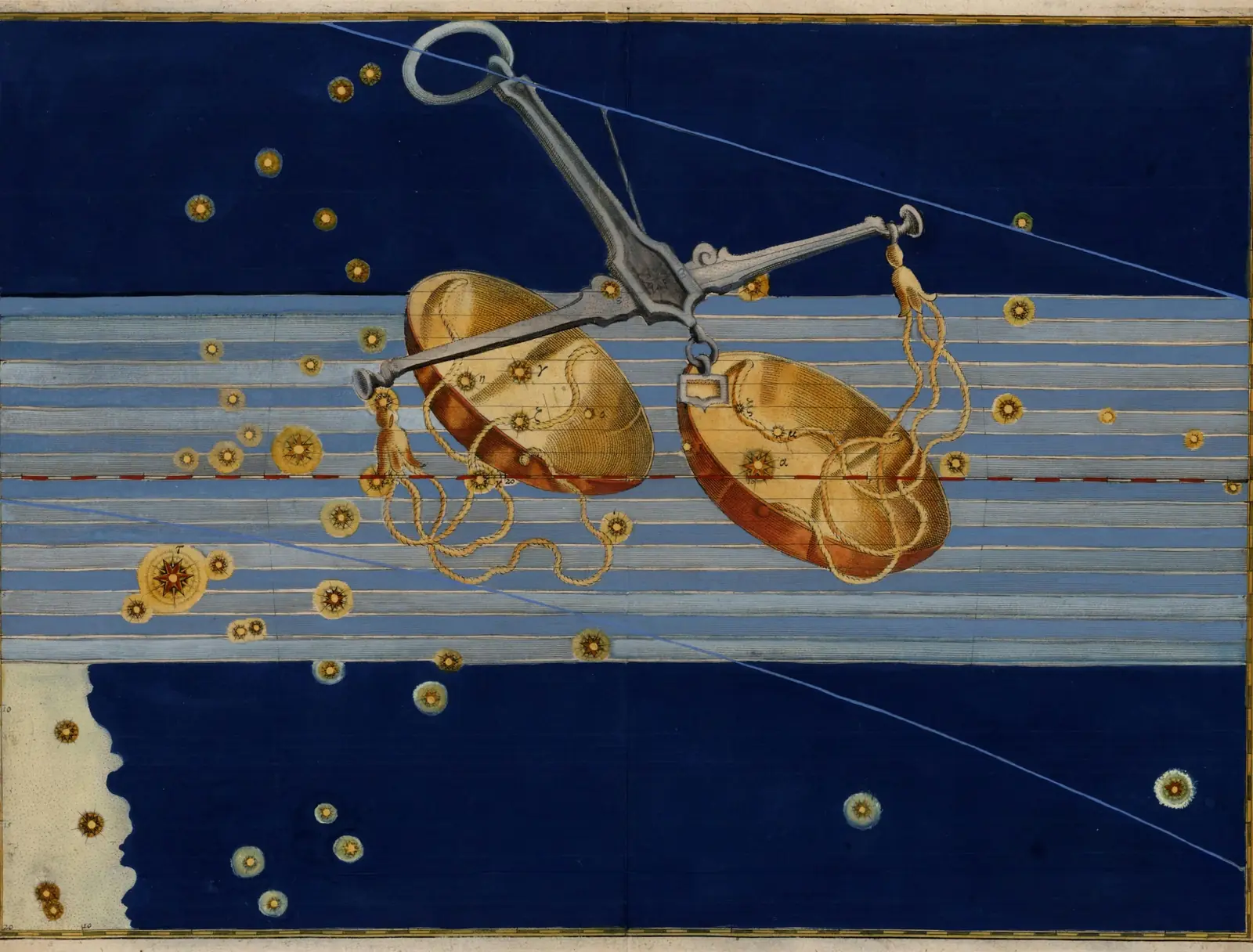
What a house overlay is, in one picture

Try this today
- Before you run the numbers, guess. Which part of your life changed most when this person arrived? Write it down.
- Then check which of your houses holds their Sun, Moon and Venus. Compare.
House overlays calculatorSynastry compatibility, the full reading
You meet someone and, oddly, they make you think about money. Or they make your flat feel like home the minute they walk in. Or every conversation turns into a plan for a trip. Astrologers have a tidy explanation for that feeling: house overlays.
Your birth chart has twelve houses, each a part of life: self, money, talk, home, romance, routines, partnership, intimacy, travel, career, friends, the private inner world. Your partner's chart has planets. Lay their planets over your houses and each one lands somewhere. Their Venus in your 4th house. Their Mars in your 10th. Those are overlays.
There are always two directions. Their planets in your houses tell you where you feel them. Your planets in their houses tell you where they feel you. The two lists are rarely mirror images, which is the whole point. One of you can be the comfortable home; the other can be the exciting distraction from it.
You need both birth times to do this properly, because house cusps come from the clock. The calculator does both directions at once.
Who feels it more
The rule: the house person feels it, the planet person brings it

Try this today
- List your partner's five personal planets and the house each lands in for you. Circle any in your 1st, 4th, 7th or 10th.
- Now do it the other way. Whoever has more circles is, by this rule, the one who feels the other more.
Here is the convention, plainly. The planet person is expressing their own nature: their Sun shines, their Mars pushes, their Moon wants comfort. They would do that with anyone. The house person experiences that nature landing in one specific corner of their life, and that is why they tend to notice it more.
Say their Moon lands in your 4th house. To them, it is just how they care for people. To you, it can feel like they belong in your home, at your family table, in your private routines. You feel it; they live it.
That does not make the planet person numb. They often sense the overlay as a kind of welcome or resistance: in your 4th house, they feel at home with you, or they feel your family's eyes on them. But the strongest, most specific sensation usually sits with the house person.
Two refinements make the rule more useful:
- Personal planets speak louder. The Sun, Moon, Mercury, Venus and Mars describe day-to-day personality. Overlays from them are felt in ordinary life.
- Angular houses speak louder. The 1st, 4th, 7th and 10th are the angular houses, traditionally the strongest places in a chart. A planet there is hard to ignore.
Put those together and you get a simple scale, which the finder below uses: loud, steady or background.
A worked example
Two sample charts, read both ways
Try this today
- Open the calculator and load the two sample charts. Flip the direction and watch the story change.
- Then switch from Placidus to Whole Sign. Count how many overlays move.
To show how lopsided overlays can be, we computed two sample charts from invented birth data (not real people): Sample A, born 1996-04-21 07:40 in New York, USA, and Sample B, born 1994-11-03 09:30 in London, UK.
Sample A's planets in Sample B's houses. Moon and Venus land in Sample B's 7th house, the house of partnership. By the rule, Sample B is the one who feels that: Sample A shows up as a possible partner, someone whose feelings and affection sit right on the relationship line.
Sample B's planets in Sample A's houses. A crowd of them, Sun, Moon, Mercury, Venus, Jupiter and Pluto, land in Sample A's 6th house of routines and daily work. To Sample A, Sample B might feel like part of the everyday: the person you run errands with, the one who changes your habits.
So who feels it more? By the rule our calculator uses (the other person's personal planets in your 1st, 5th, 7th or 8th), Sample B does. That is not a verdict on the relationship. It is a description of where each person feels the other. One more detail: Sample B's Saturn sits within 2° of a cusp in Sample A's chart, the kind of overlay to read in both neighbouring houses.
The sky behind it
Sample positions (tropical, geocentric, JPL DE442): Sample A's Moon 13° Gemini, Venus 15° Gemini. Sample B's Ascendant 6° Sagittarius, Placidus 7th cusp 6° Gemini. 9 of the 20 sample overlays change house under Whole Sign.
Why overlays move
Birth time and house system: the two things that change your answer
Try this today
- Check the birth certificate, not the family story. Many countries record the time on it.
- In the calculator, note any overlay flagged near a cusp and read both houses' pages.
Overlays look exact on screen, but they rest on two choices, and both can move a planet into the next room.
The birth time. House cusps turn with the Earth, about a degree every four minutes on average. In our simulation of 20,000 random pairs, shifting one person's birth time by just 15 minutes changed the house of 12.6% of overlays. A one-hour error changed 50.1%. If a birth time is "around teatime," hold the houses loosely.
The cusp. 13.5% of overlays landed within 2° of a house cusp. Many astrologers read a planet a degree or two before a cusp as already working in the next house. When you see one, read both.
The house system. Placidus, the most popular modern system, makes houses unequal. At New York's latitude a Placidus 1st or 7th house can run from 19.5° to 48.1° wide; in London, from 15.7° to 60.5°. Near the equator the spread is only 27.6° to 32.6°. Whole Sign gives every house exactly 30°. The result: 53.9% of overlays in our sample fell in a different house under the two systems.
None of this means overlays are random. It means they are as good as the birth times behind them, and that you should use one system for both charts.
The sky behind it
Method: dates uniform 1970-01-01 to 2005-12-31 UTC, clock time uniform, one of 20 large cities on six continents. 200,000 overlays (10 planets × 20,000 pairs), seed 20261018. Planets from JPL DE442 via Skyfield; Placidus cusps from the Swiss Ephemeris. Ascendant speed in London ranges from 1.7 to 5.7 minutes per degree across the day.
| Latitude | 1st and 7th houses | 5th and 11th houses | Narrowest to widest house |
|---|---|---|---|
| Equator (0°) | 27.6° to 32.6° | 27.6° to 32.6° | 27.6° to 32.6° |
| New York (40.7°N) | 19.5° to 48.1° | 20.4° to 41.5° | 19.5° to 48.1° |
| London (51.5°N) | 15.7° to 60.5° | 16.8° to 47.7° | 15.7° to 60.5° |
One page each
All 120 overlays: planet in partner's house
Each overlay has its own page with the reading for both people: what the planet person brings, what the house person feels, and how loud it tends to be.
Sun: 1st · 2nd · 3rd · 4th · 5th · 6th · 7th · 8th · 9th · 10th · 11th · 12th
Moon: 1st · 2nd · 3rd · 4th · 5th · 6th · 7th · 8th · 9th · 10th · 11th · 12th
Mercury: 1st · 2nd · 3rd · 4th · 5th · 6th · 7th · 8th · 9th · 10th · 11th · 12th
Venus: 1st · 2nd · 3rd · 4th · 5th · 6th · 7th · 8th · 9th · 10th · 11th · 12th
Mars: 1st · 2nd · 3rd · 4th · 5th · 6th · 7th · 8th · 9th · 10th · 11th · 12th
Jupiter: 1st · 2nd · 3rd · 4th · 5th · 6th · 7th · 8th · 9th · 10th · 11th · 12th
Saturn: 1st · 2nd · 3rd · 4th · 5th · 6th · 7th · 8th · 9th · 10th · 11th · 12th
Uranus: 1st · 2nd · 3rd · 4th · 5th · 6th · 7th · 8th · 9th · 10th · 11th · 12th
Neptune: 1st · 2nd · 3rd · 4th · 5th · 6th · 7th · 8th · 9th · 10th · 11th · 12th
Pluto: 1st · 2nd · 3rd · 4th · 5th · 6th · 7th · 8th · 9th · 10th · 11th · 12th
Rule finder
Who feels it more? Pick a planet and a house
Choose a planet, a house and whose point of view you want. The card applies the rule above: who feels it, where it shows, and how loud it usually reads. Each combination links to its own page.
Point of view
Planet
House
Their Venus in your 7th house
You do, mostly. It shows up in your partnership.
You are the house person. Their affection, taste and sense of what is beautiful land in your commitment and one-to-one partnership. You tend to notice it there, often before they do.
Loud. This is a personal planet in an angular house, the strongest kind of house. Angular houses (1st, 4th, 7th, 10th) are where overlays are hardest to ignore.
Read Venus in partner’s 7th house →Find your real overlays →
More to read
Shorter reads. Each opens in place.
Aspects, too
Who feels it more in synastry aspects?
Aspects follow a similar convention. When a slower planet (Saturn, Uranus, Neptune, Pluto) touches a faster, personal one, the person whose personal planet is touched usually feels it more: their Venus is the one being shaped by your Pluto. Between two personal planets it is closer to even. See the synastry aspects guide.
Continue readingShow less
A fair warning
Outer planets are a generation's, not a person's
Uranus, Neptune and Pluto move so slowly that everyone born within a few years of your partner has them in the same signs. Their Pluto in your 7th is shared by most of their age group. Treat outer-planet overlays as background unless they also form close aspects to your personal planets.
Continue readingShow less
What it can't tell you
Overlays describe; they don't decide
Overlays are a language for talking about how two people land in each other's lives. They are not a test you pass or fail. A 2020 study of Swedish register data from 1968 to 2001 tested several zodiac-sign compatibility rules and found no consistent evidence that "compatible" couples were more likely to marry or less likely to divorce. It looked at sign pairings, not house overlays (Helgertz & Scott, Genus). Use the chart as a mirror, and the person as the evidence.
Continue readingShow less
House overlays, by the numbers
From 20,000 random pairs of births (200,000 overlays), computed with JPL DE442 planets and Swiss Ephemeris Placidus houses. These describe the geometry, not anyone's love life.
| Test | Share of overlays |
|---|---|
| Within 2° of a house cusp | 13.5% |
| Changes house if one birth time is off by 15 minutes | 12.6% |
| Changes house if one birth time is off by 60 minutes | 50.1% |
| Falls in a different house under Whole Sign than Placidus | 53.9% |
| House | What it covers | Share of overlays |
|---|---|---|
| 1st | self and first impressions | 8.7% |
| 2nd | money and self-worth | 8.6% |
| 3rd | talk and everyday life | 8.6% |
| 4th | home and family | 8.4% |
| 5th | romance and play | 8.4% |
| 6th | routines and health | 8.6% |
| 7th | partnership | 8.1% |
| 8th | intimacy and trust | 8.1% |
| 9th | travel and beliefs | 8.1% |
| 10th | career and reputation | 8.0% |
| 11th | friends and the future | 8.2% |
| 12th | the private inner world | 8.2% |
All times are UTC. In the Americas the local date can be a day earlier; in Asia and Australia a day later.
Quick answers
Who feels it more in synastry, the planet person or the house person?
By the usual convention, the house person. The planet person is simply being themselves; the house person feels that energy landing in a specific part of their life, such as home, money or romance. The planet person tends to feel it too, but more as a sense of being welcomed or resisted in that area.
How do I calculate house overlays in synastry?
Take each planet in one chart and find which house it falls in on the other chart, using the second person's house cusps. Then repeat the other way round. You need both birth times for this. Our free calculator at /synastry-overlays/calculator/ does both directions at once, in Placidus or Whole Sign.
Is there a free synastry house overlay calculator?
Yes. The Shymea house overlays calculator is free with no account. Enter two birth dates, times and places and it lists every planet of each person in the other's houses, flags planets sitting near a cusp, and links each overlay to its own page.
What does it mean when his planets are in my 7th house?
The 7th is the house of committed partnership. When someone's planets land there, astrologers read them as showing up in your life as a partner figure, someone you measure as a possible other half. Their Sun, Moon, Venus or Mars there is usually read as loud. It is common but not universal: in our simulation of random pairs, 27.4% had one of those four planets in the other person's 7th, looking in one direction.
Which house overlays matter most in synastry?
Most astrologers give the most weight to personal planets (Sun, Moon, Mercury, Venus, Mars) in the angular houses: the 1st, 4th, 7th and 10th. The 5th (romance) and 8th (intimacy) are also read closely in love synastry. Outer planets in your houses are shared by everyone born in the same few years as your partner, so they count for less on their own.
Do you need an exact birth time for house overlays?
For the house person, yes. Houses come from the birth time. In our test, moving one person's birth time by 15 minutes changed the house of 12.6% of overlays, and by an hour 50.1%. The planet person's time matters less, except for their Moon, which moves about 13 degrees a day.
Should I use Placidus or Whole Sign houses for synastry?
Either is a legitimate choice, and you should know they disagree often: 53.9% of overlays in our sample fell in a different house under Whole Sign than under Placidus. Placidus is the most common system in modern Western astrology. Whole Sign is the oldest system on record, from Hellenistic astrology. Pick one and use it for both charts.
Are house overlays more important than synastry aspects?
They answer different questions. Aspects describe how two people's planets interact; overlays describe where in your life you feel the other person. Many astrologers read aspects first and use overlays to place them.