Part 9: Horary & Electional · Chapter 30 of 36 · 11 min
Horary: one question, one chart, judged by rules
Horary is Western astrology’s judicial art: a chart set for a question that is alive, particular, and ready for judgment.
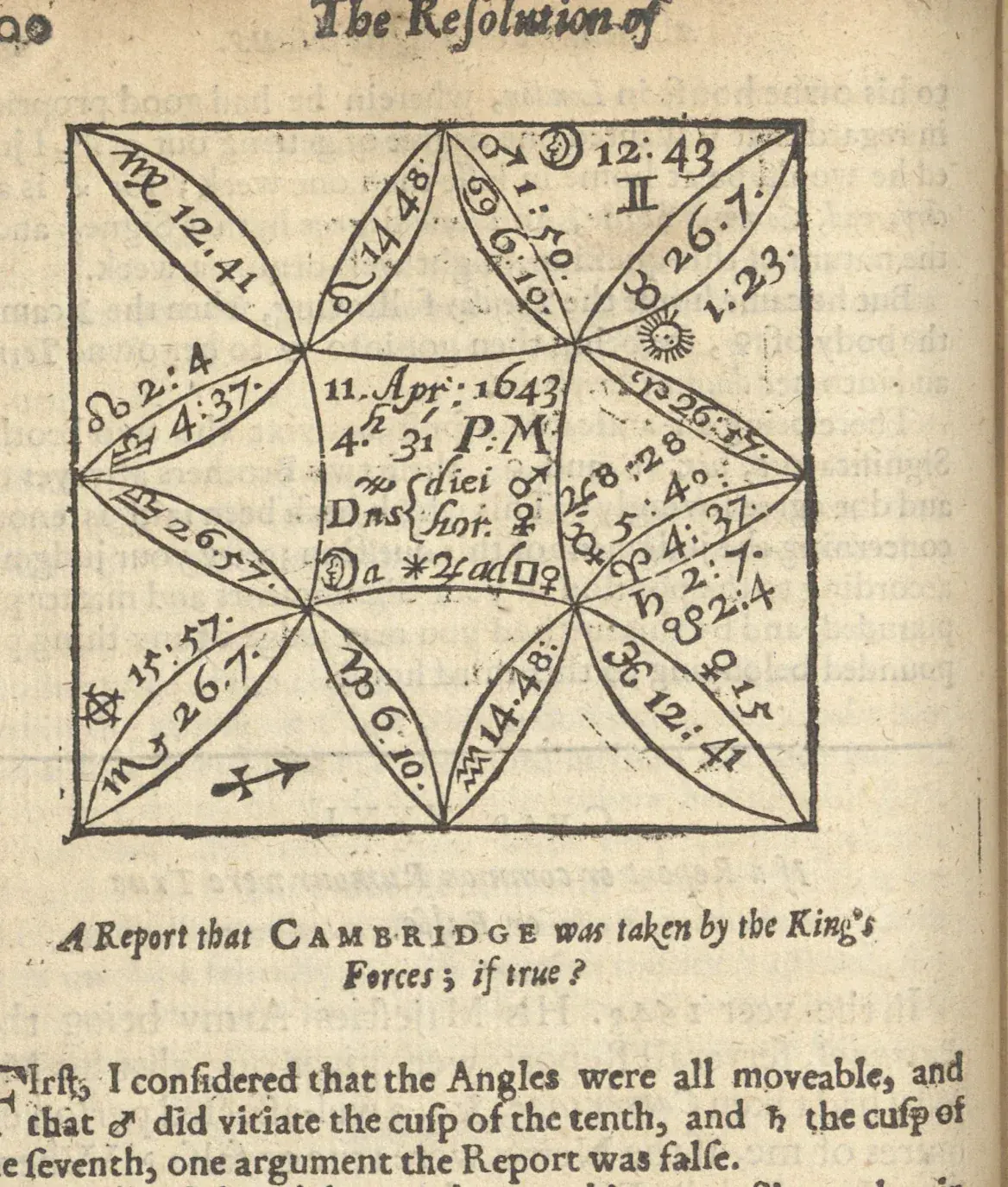
Horary is Western astrology’s judicial art: a chart set for a question that is alive, particular, and ready for judgment. The chart does not report a permanent truth about you. It describes the structure of a matter at the instant the question becomes an intelligible task for the astrologer.
Its discipline is narrow on purpose. You ask about one matter; you select the agents by house; you inspect their condition and contact; you state what the testimony supports and what it does not. Rules are not ceremonial furniture. They stop a vivid symbol from carrying more weight than it can bear.
A question that can be judged
A usable horary question has a subject, a matter, and an outcome that could eventually be checked. "Will the folder I misplaced turn up?" gives you an object and a possible event. "Will the person I lent my book to return it?" gives you another person, an object, and an outcome. "Tell me what is coming" gives you no clear quesited: no defined matter to signify.
One question means one chart. "Should I accept the invitation, move house, and continue this collaboration?" contains three different matters, with different houses and different outcomes. Break it apart. You may first ask what will come from accepting the invitation. If circumstances later change in a concrete way, a new question may arise. A wish for a different answer is not a new circumstance.
Keep the wording close to the actual stake. Do not turn a plain matter into a dramatic one because drama feels more astrological. If the real question is whether a message will arrive, ask about the message. If what you need is a direct conversation, records, consent, or skilled human assessment, a horary chart does not replace those things. It is an interpretive method, not a machine for establishing facts.
Questions about another person’s private interior life are usually weak horary material. They invite projection because the outcome cannot be cleanly checked. Ask instead about an interaction, a response, a meeting, or a shared matter. Horary works best when the question has edges.
The moment of the chart
Use a stable convention. A sound working rule is to cast for the moment the astrologer receives and genuinely understands the question. A message may arrive at 09:02, be read at 09:20, and become clear at 09:23; under this rule, 09:23 is the relevant moment. In self-practice, use the moment the question becomes focused enough that you intend to judge it.
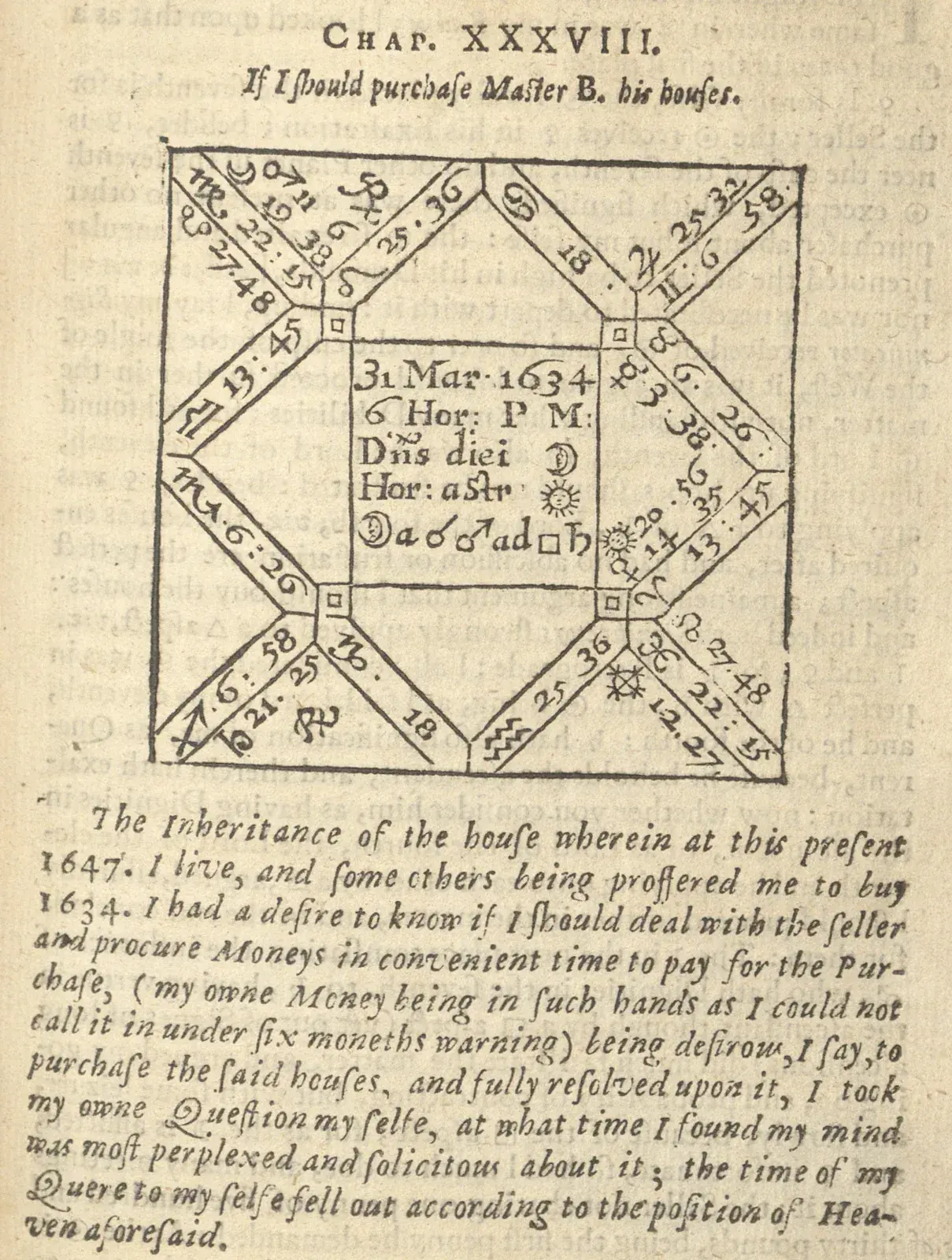
Record the date, exact time, location, and house system. Software can supply seconds, but technical precision does not repair a vague question. Consistency matters more than chasing a supposedly perfect instant.
Some traditional practitioners also compare the planetary hour with the rising sign or the matter asked about. Treat that as a descriptive check, not a gatekeeper. A mismatch does not make a chart unusable. It may simply tell you that the situation is complicated, poorly framed, or not yet fully understood.
Choosing the house before reading planets
The house is the grammar of the question. Choose it from the literal matter first, then inspect its ruler. A lost movable possession belongs to the second house. A message or local exchange belongs to the third. Home and property belong to the fourth. The person on the other side of a straightforward interaction is usually the seventh. A friend is the eleventh. A public outcome, role, or visible result may belong to the tenth.
In the question about a lent book, the person holding it is shown by the seventh house, while the book itself remains a second-house matter for the querent. You need not choose between them. One is the actor; one is the object.
Turn houses only when the wording requires it. If the question concerns a friend’s home, take the friend from the eleventh and their home from the fourth counted from there: the second house of the radical chart. The arithmetic is simple; the judgment is not. A turned second house can describe the friend’s home while the radical second still describes your own possession. Context decides which role is active.
Do not turn houses merely because a chart looks more interesting that way. Nor should you change the house system because one version gives a more agreeable answer. Pick a coherent horary method and let it make demands of you.
Significators: who and what carries the matter
The querent is shown by the Ascendant, its ruler, and the Moon. The Ascendant ruler describes the querent’s agency in the matter: what you can do, how available you are, how directly you can act. It is not a diagnosis of your character. The Moon is a co-significator and often the chart’s moving hand: it shows what has just occurred and what develops next.
The quesited is shown by the relevant house cusp and its ruler. If the question is about the other person returning a book, the ruler of the seventh signifies that person. The ruler of the second signifies the book. Planets inside the relevant houses can add useful detail, especially when they plainly fit a person, object, or condition already present in the question. Do not assign every planet a starring role.
For core horary judgment, use the traditional visible-planet rulership scheme consistently. Outer planets may describe atmosphere or an unusual condition, but they should not displace the principal rulers unless you have a tested method that tells you exactly how they do so. A rule that changes when inconvenient is not a rule.
How a horary answer is built
First assess condition. Essential dignity describes whether a planet operates with its own tools or against the grain. A planet in its own sign has familiar ground beneath it. A planet in detriment or fall may be constrained, poorly placed, or unable to express its usual function cleanly. This is about capacity in the matter, not virtue.
Accidental condition describes practical leverage. Angular planets tend to be visible, immediate, and able to act. Cadent planets are less direct, more delayed, or occupied elsewhere. Direct motion generally carries a matter forward; retrograde motion can show return, revision, reversal, or a change of mind. Speed, house placement, combustion, and aspects to benefic or difficult planets add texture. None of these factors should be read alone.
Then inspect relationship. An applying aspect between the principal significators is the clearest form of contact. Applying means the faster planet is moving toward exact aspect, not merely that two planets sit within a broad distance of one another. A conjunction joins; a sextile opens a workable connection; a square requires effort or friction; a trine often proceeds readily; an opposition can bring contact through division or distance. The aspect describes the manner of contact, not a moral grade.
Use exactness with care. Some traditional methods calculate allowable distance through planetary moieties, while others work tightly from exact aspects. In either case, distinguish an aspect that is applying from one that has already separated. Do not call a matter complete merely because two planets are within a generic five-degree orb.
Reception tells you whether the planets can make use of their contact. If Venus is at 20° Gemini, Venus is in Mercury’s sign; in traditional language, Mercury receives Venus. Mercury has a place for Venus, or something Venus needs. An aspect can show that two parties meet. Reception can show whether the meeting has welcome, motive, resources, or room to proceed. Contact without reception may still perfect, but it may feel reluctant, uneven, or conditional.
When the main rulers do not aspect, look for a legitimate intermediary. Translation of light occurs when a faster planet separates from one significator and applies to another, carrying the matter between them. Collection of light occurs when two significators apply separately to a slower third planet, which gathers them. Also check sequence: if the faster planet perfects an aspect to a third planet before reaching the promised contact, that intervening aspect may prohibit, alter, or delay the matter.
Testimony is not a vote count. An exact application between the proper rulers usually outweighs a loose decorative contact from a minor point. Your task is to weigh relevance, strength, and sequence.
Considerations before judgment
Traditional horary keeps several cautions in view. They are quality checks, not automatic refusals.
An Ascendant in the first roughly three degrees of a sign can suggest that the matter is still forming or that key facts have not appeared. An Ascendant in the final roughly three degrees can suggest that much has already been decided, completed, or overtaken. Saturn in the seventh house has often been read as a warning that the astrologer may misjudge, miss context, or carry too much burden into the reading. It asks for care; it does not erase the chart.
A void-of-course Moon needs a clear definition. In a strict traditional approach, it means the Moon will make no applying major aspect to a traditional planet before leaving its current sign. That can show little development through the question’s present conditions. It does not mean that nothing at all can happen. Life contains events; the chart may be saying that this question, framed this way, has little traction.
Combustion is another condition, not a verdict. A planet within roughly 8°30′ of the Sun is traditionally combust: too close to be visibly distinct. In felt terms, its agency may be obscured, absorbed, or unable to act openly. Context matters. A planet at the Sun’s exact heart is treated differently from one merely near it.
When a chart contains mixed testimony, separate the issues. One factor may describe whether contact occurs; another may describe its quality; another may describe delay. That is more useful than flattening everything into a forced yes or no.
Worked mini-example: the lent book
This example is illustrative rather than a chart from a named event. Use whole-sign houses here so the structure is easy to see.
Question: "Will the person I lent my book to return it?"
| Factor | Placement | Role |
|---|---|---|
| Ascendant | 12° Cancer | Querent |
| Moon | 10° Sagittarius, sixth house | Querent’s ruler and co-significator |
| Second house | Leo | The book |
| Sun | 14° Aquarius, eighth house | Ruler of the book |
| Seventh house | Capricorn | The person holding the book |
| Saturn | 13° Pisces, ninth house | Ruler of that person |
Cancer rises, so the Moon signifies the querent. Capricorn is on the seventh, so Saturn signifies the other person. Leo is the second house, making the Sun the book’s ruler. The question concerns return by a person, so the seventh-house ruler is primary; the second-house ruler confirms what happens to the object.
The Moon at 10° Sagittarius first applies to a square with Saturn at 13° Pisces. The square becomes exact when the Moon reaches 13° Sagittarius, so the application is 3°. The Moon then applies to a sextile with the Sun at 14° Aquarius, exact when the Moon reaches 14° Sagittarius. From the original chart, that is a 4° application to the book’s ruler.
Those numbers matter. They are degrees to perfection, not a casual claim that everything inside five degrees is equally active. The order matters too: contact with the borrower comes first, then contact with the book’s significator.
The Sun is in Aquarius, a sign ruled by Saturn in the traditional system. Saturn therefore disposits the Sun. This gives a concrete link between the borrower and the book: the person shown by Saturn appears to control the practical route through which the book returns. It does not prove intention or describe the person’s whole character. It describes the structure of this one matter.
The Moon’s square to Saturn suggests that the return is not effortless. There may be a reminder, an inconvenience, competing obligations, or a need to address the matter directly. A square does not require an argument. It says the contact has resistance in it. The Moon’s later sextile to the Sun supports eventual reconnection between querent and book.
Condition modifies this. The Moon is cadent in the sixth house, and Saturn is cadent in the ninth. Neither principal person is in a strongly immediate position. The Sun, ruler of the book, is in detriment in Aquarius: the object may be inaccessible, not in ideal condition, or simply outside the querent’s easy reach. These factors argue against an instant, seamless return. They do not cancel the applying sequence.
A careful judgment would be: the chart supports the book returning, but through a somewhat delayed or awkward interaction with the person holding it. The chart does not support a precise promised date. The four-degree interval marks the structure of development; converting it into days or weeks requires context and remains provisional. The outcome to check is plain: did the book return, and did contact with the borrower precede it?
Common corrections
- Mistake: reading the Ascendant sign as the answer. The rising sign identifies the querent and sets the houses. The answer comes from the relationship between relevant significators, their condition, and the Moon’s movement.
- Mistake: using a planet inside a house instead of the house ruler. A planet in the seventh can matter, but the seventh-house ruler remains the principal significator of the other person. Start with rulers; add occupants when they fit the case.
- Mistake: treating a separating aspect as a future promise. A separating aspect usually tells you what has already happened or what set the matter in motion. Check which planet is faster and whether exactness lies ahead or behind.
- Mistake: calling any aspect a favorable answer. A square can perfect a matter; a trine can fail to matter if it joins the wrong planets. First ask: are these the right significators? Then ask how the aspect operates.
- Mistake: multiplying turned houses until the chart becomes unrecognizable. Turn only for a clearly stated relationship, such as a friend’s work or a sibling’s home. If the question itself has changed, stop and restate it.
- Mistake: asking again because the first judgment is uncomfortable. Recasting without a material change turns method into static. Keep the original chart, record what happened, and let the outcome teach you.
- Mistake: making pinpoint claims from one placement. A planet in a house may suggest setting, condition, or distance, but a house is not a street address. Let several relevant testimonies agree before making a specific claim.
Keeping the work accountable
Write the original question exactly as asked. Record the chart data, house system, principal significators, applying aspects, receptions, cautions, and the language of your judgment. Later, note the observable outcome without editing your earlier words to make them look better.
This record is where confidence earns its receipts. A judgment that cannot meet its outcome is only atmosphere.
Practice
- Write one horary question with a checkable outcome. Do not combine topics.
- Before casting, name the querent’s house, the quesited house, and any object or third party that needs a separate significator.
- Cast the chart using your consistent timing convention. Identify the Ascendant ruler, Moon, and quesited ruler.
- List the Moon’s next three applying major aspects by exact degree. Mark any intervening contact that changes the sequence.
- Write a judgment of no more than 150 words. State the strongest testimony, one limiting condition, and what later outcome would confirm or challenge your reading.
Key terms
horary · quesited · significator · application · perfection · reception · translation of light · collection of light · void of course · combustion · turned houses · radicality
Check your reading
Three questions from this chapter’s worked example and its common mistakes. Two of three marks the chapter complete.
In the lent-book example, Cancer rises. Which planet signifies the querent?
Which house rules the person holding the book?
Does the Ascendant sign give the horary answer?