Relationship charts · 20,000 couples compared
Composite vs Davison: two ways to chart a relationship
Both promise the chart of the two of you. They often disagree. We ran the numbers on twenty thousand pairs to find out where, by how much and why.
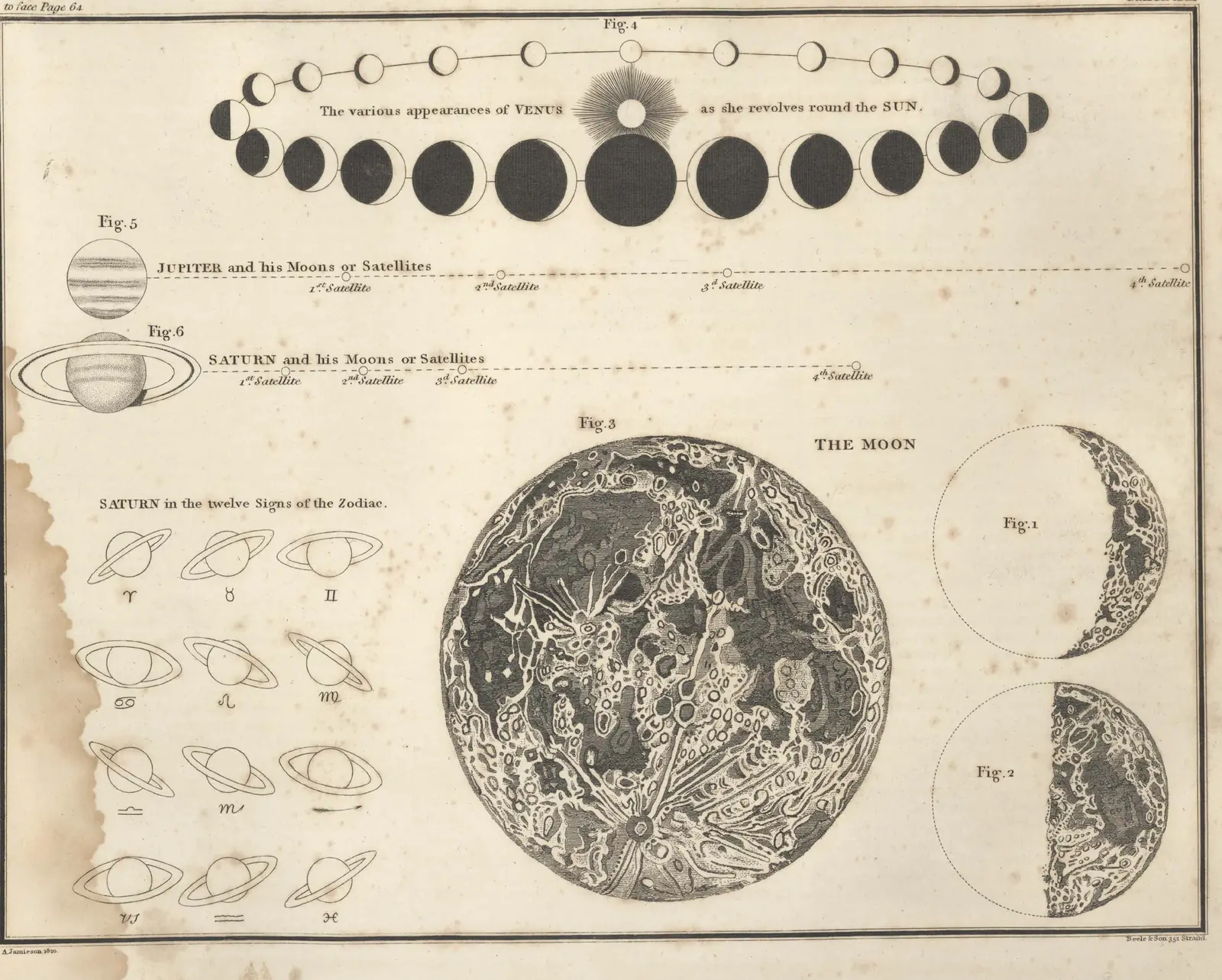
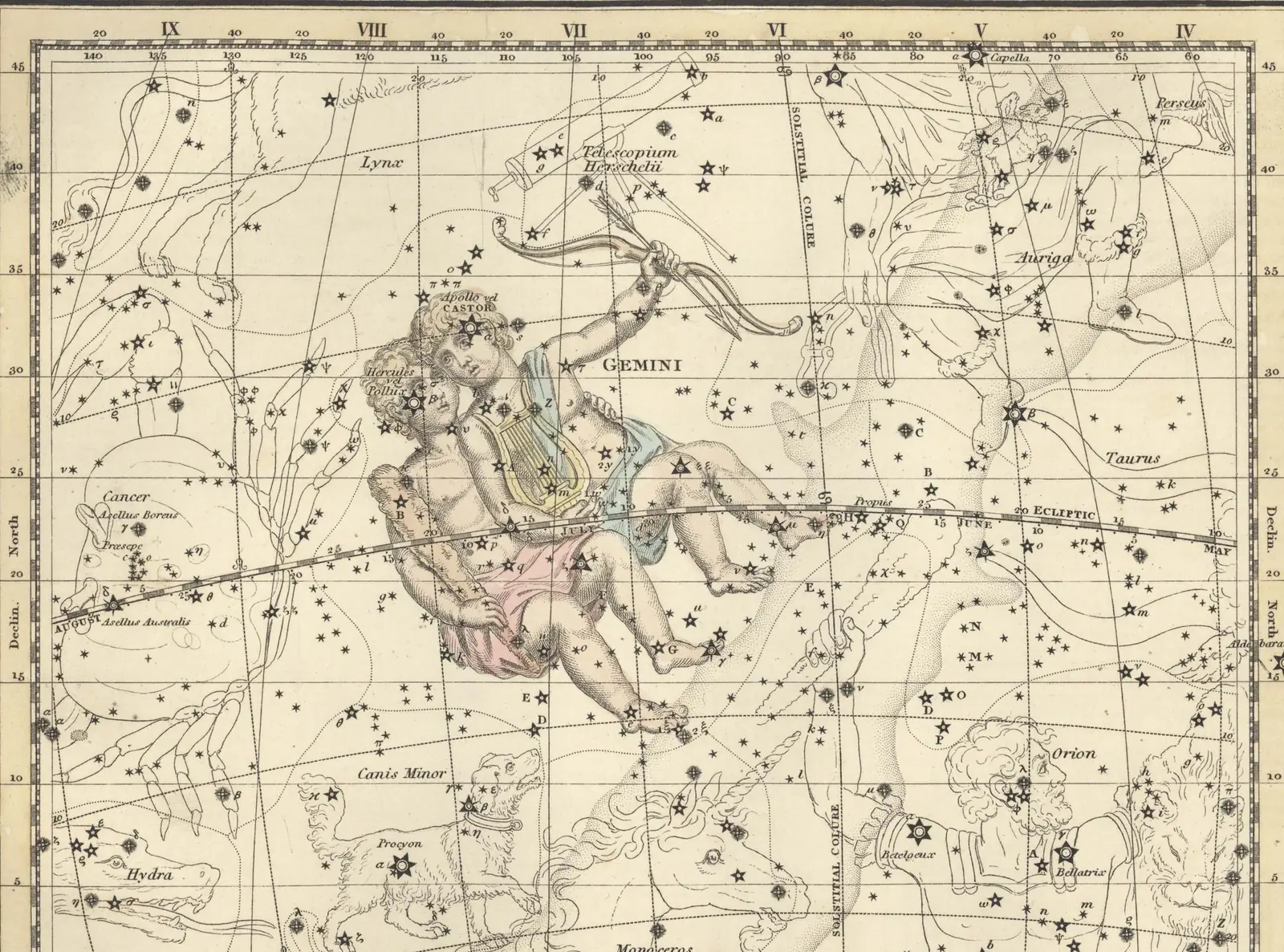
Alexander Jamieson, A Celestial Atlas, 1822 · US Naval Observatory Library
At a glance
A composite averages your planets; a Davison averages your birth moments and places. They share a Moon sign in only 42.9% of couples, and whether their Suns match depends on your age gap.
- Same Sun sign, even age gap
- 98.1%gap rounded to an even number of years
- Opposite Suns, odd age gap
- 99.4%150° or more apart
- Same Moon sign
- 42.9%close to a coin toss
- Same Pluto sign
- 95.6%slow planets nearly always agree
- Pairs tested
- 20,000seeded, reproducible
Make both chartsFree calculator, side-by-side view.
Two recipes
Same question, different maths
Try this today
- Run your own pair in the calculator and switch to side by side. Count how many of your ten planets agree.
- Notice which rows differ. It's almost always the fast movers.
Relationship astrology has two popular ways to turn two birth charts into one.
The composite does it planet by planet. Find the halfway point between your Sun and theirs, your Moon and theirs, all the way out to Pluto. John Townley wrote the first book on it in 1973 (The Astrology Podcast), and Robert Hand's Planets in Composite followed in 1975 (Wikipedia).
The Davison does it with the calendar and the map. Find the moment halfway between your births and the place halfway between your birthplaces, then cast an ordinary chart there. Ronald Davison set it out as the relationship horoscope in his book Synastry: Understanding Human Relations Through Astrology, late in his career (The Astrology Podcast).
They sound like they should give the same answer. Sometimes they do. Our invented sample couple (Sample A, born March 11, 1994, 8:40 am in London, UK; Sample B, born September 27, 1997, 9:15 pm in New York, US) get:
- Composite: Sun 27°44′ Sagittarius, Moon 2°45′ Gemini, rising 0°05′ Gemini
- Davison (December 19, 1995 at 4:57 PM UTC): Sun 27°18′ Sagittarius, Moon 23°41′ Scorpio, rising 29°39′ Taurus
Same Sun sign. Very different Moons. Rising signs a fraction of a degree apart but on opposite sides of a sign line. Of their ten planets, 7 land in the same sign in both charts. To see whether that's typical, we built 20,000 random couples and compared every planet.
The sky behind it
Test method: person A uniform 1965-2005 (UTC, any clock time); person B born 0-20 years before or after A (gap uniform); each born in one of 20 large cities on six continents. For each pair we computed the composite (nearer midpoints) and the Davison (UTC midpoint in time, mean latitude, midpoint longitude on the shorter arc). Planets from JPL DE442 via skyfield; Ascendants from the Swiss Ephemeris. Random seed 20261018.
The Sun rule
Your age gap decides whether the Suns match
Try this today
- Use the age-gap Sun test below with your two birthdays. It takes ten seconds.
- If your gap is near a half year (2.5, 3.5...), you're on the switch point: a few days either way flips the result.
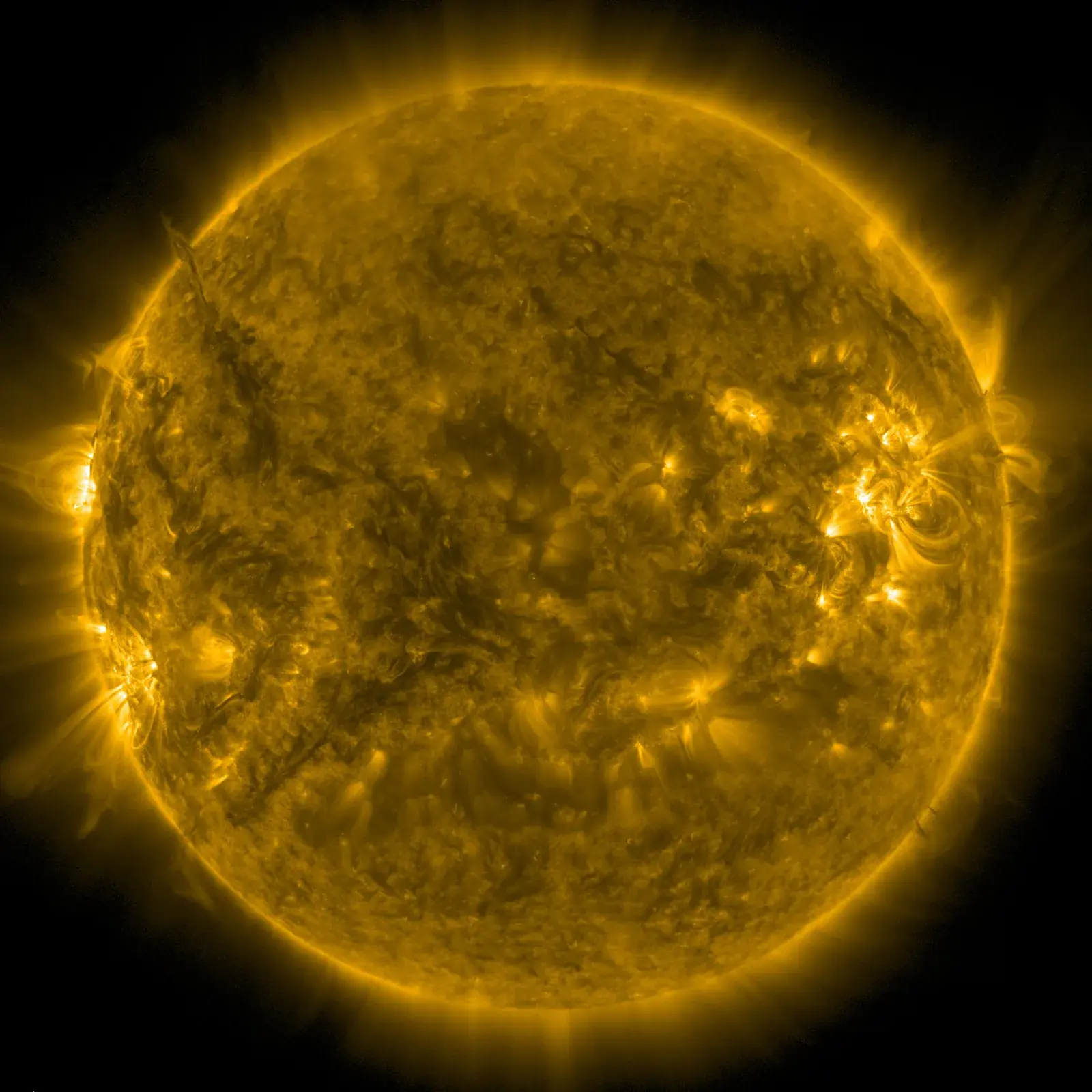
This was the surprise. Across all 20,000 pairs, the composite and Davison Suns shared a sign about half the time, which sounds random. It isn't. Split the couples by age gap and a clean rule falls out:
- When your age gap rounds to an even number of years (0, 2, 4...), the two Suns shared a sign 98.1% of the time. Median distance: 0.3°.
- When it rounds to an odd number (1, 3, 5...), the two Suns were 150° or more apart 99.4% of the time. Median distance: 177.9°.
Why? The Sun goes round the zodiac once a year. Halve a gap of, say, three years and you get a year and a half, so the Davison Sun gets an extra half lap and ends up on the far side. The composite only ever picks the midpoint on the shorter arc, so it never takes that extra half lap.
The sample couple were born 3.6 years apart, which rounds to 4. Even. So their Suns agree: 27°44′ Sagittarius and 27°18′ Sagittarius.
Neither Sun is wrong. They're answering slightly different questions. But if your two Suns sit in opposite signs, now you know it's your birthdays doing it, not a deep message from the relationship.
The coin toss
The Moon is where the two methods split
Try this today
- Read both Moon lines in the calculator to the other person and let them pick.
- For a simpler emotional read, compare your two natal Moons directly with Moon sign compatibility.
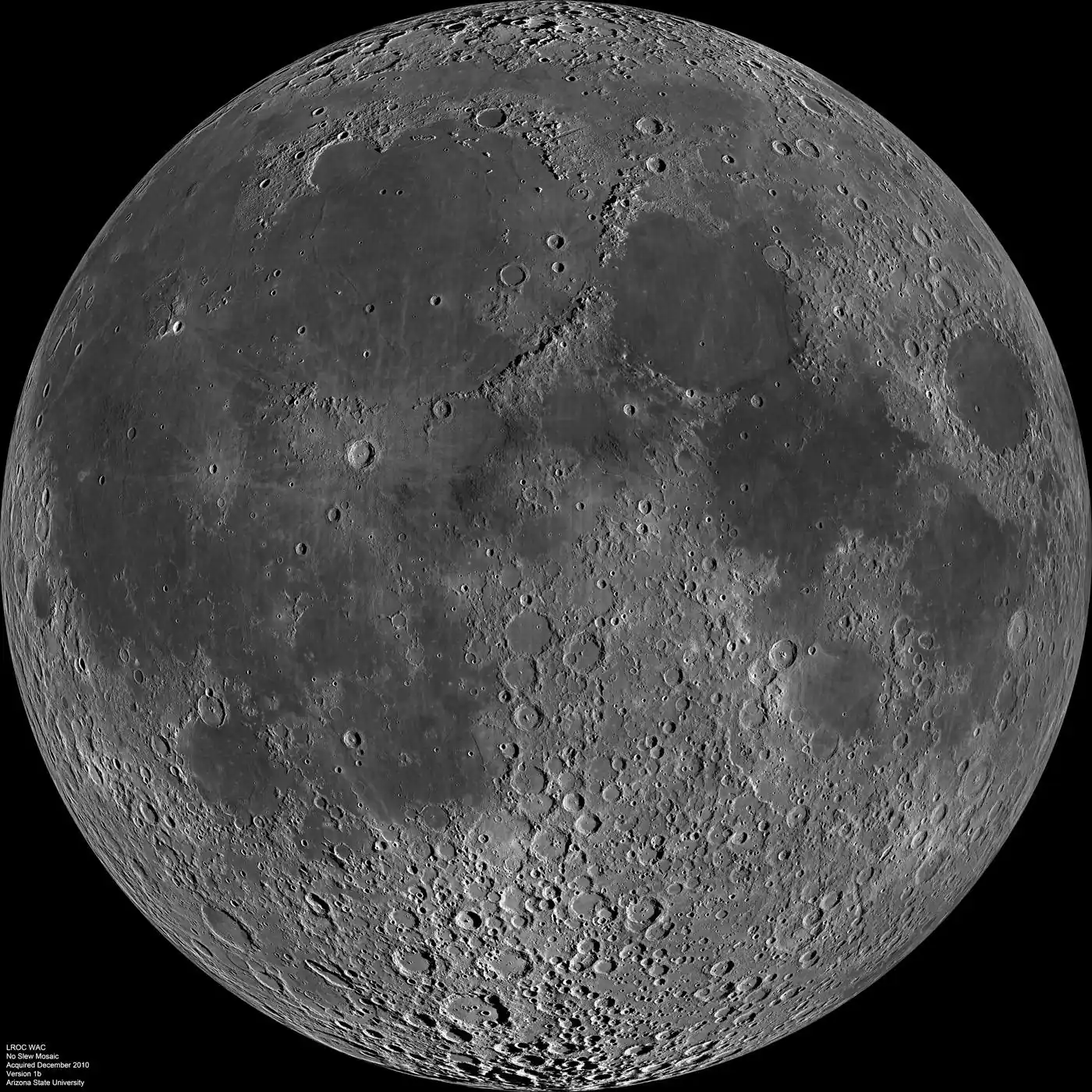
The same mechanism works on the Moon, only faster. The Moon laps the zodiac in about 27 days, so the Davison Moon depends on how many lunar laps fit into half your age gap, down to the day. That number is effectively random from couple to couple.
The result: the composite and Davison Moons shared a sign in 42.9% of our pairs. And look at the distances: the two Moons were within 30° of each other in 49.4% of pairs and 150° or more apart in 50.6%. Almost nothing in between. They are either neighbours or across the room.
That matters, because the Moon is the emotional read of a relationship chart. If your composite Moon says "cosy homebody" and your Davison Moon says "restless adventurer," you're not doing it wrong. You've hit the most common disagreement between the two methods.
What do astrologers do with it? Read both. Ask which one sounds like the two of you on an ordinary Tuesday. That one is usually the more useful mirror.
Real sky vs maths
The composite can do things no sky can
Try this today
- If your composite Mercury or Venus sits opposite your composite Sun, check the Davison. It will be back near the Sun.
Mercury and Venus orbit inside Earth's orbit, so from here they never stray far from the Sun. In our sample of real birth charts, Mercury never got more than 27.8° from the Sun and Venus never more than 47.2° (NASA).
Davison charts are real skies, so they keep to the same limits: 27.8° and 47.1° at most across all 20,000 Davisons.
Composites don't. When two Suns are far apart, the shorter-arc midpoint of the Suns and the shorter-arc midpoint of the Mercurys can fall on opposite sides of the circle. In our test:
- the composite Mercury landed farther from the composite Sun than any real Mercury can in 5.4% of pairs, every time with the two Suns at least 131° apart
- the composite Venus did the same in 10.4% of pairs
This is the strongest argument Davison fans make. Composite fans answer that the composite was never meant to be a sky; it's a diagram of the relationship, and Hand's book reads these placements as written. Both positions are fair.
Age gaps and slow planets
Where the two charts usually agree

Try this today
- Check the age-gap table below for your band, then look at your side-by-side view to see if your pair follows the pattern.
Uranus, Neptune and Pluto barely move over a few years, so both methods put them in nearly the same spot: same sign in 93.1%, 96.1% and 95.6% of pairs.
The middle planets follow the same pattern as the Sun, tied to their own orbits (NASA fact sheet):
- Mars takes about 1.9 years to go round. For couples born 1 to 3 years apart, the composite and Davison Mars shared a sign only 1.4% of the time, against 60.7% for gaps under a year.
- Jupiter takes about 12 years. With a 7 to 12 year gap, the two Jupiters shared a sign in 0% of pairs.
- Saturn takes about 29 years. It agreed in most pairs until the gap passed 12 years, when agreement fell to 28.1%.
So if you and your partner are close in age, your Saturn, Jupiter and outer planets will look the same in both charts, and the debate is mostly about the Moon, Mercury, Venus and the angles. With a bigger gap, more of the chart is up for discussion.
Quick tools
Pick a chart, then test your Suns
First, tap the question you're actually asking and we'll tell you which chart answers it. Then put in two birthdays to see whether your composite and Davison Suns land together or apart.
Which chart answers my question?
Use
Composite
The composite Sun's sign and house are the classic read for a bond's purpose. It's the method's home turf.
The age-gap Sun test
Two birthdays, no times needed. We find your composite Sun and your Davison Sun and tell you whether they land together or opposite.
Pick both dates to see your result. Noon UTC is used for each birthday, which is plenty for the Sun.
More to read
Shorter reads. Each opens in place.
So which one?
When to use each
Use synastry for chemistry and for who feels what. Use the composite for the relationship's purpose and for most published interpretations. Use the Davison when you want a real sky, an honest Moon and Mercury, and a second set of transits. The picker below matches common questions to a chart.
Continue readingShow less
Birth times
Which method is fussier about time?
Both need two birth times for the Ascendant and houses. With unknown times, the composite keeps every planet but the Moon, and so does the Davison. The Davison's angles also depend on the halfway place, so a small error in either birthplace moves them a little too. More on that in the calculator.
Continue readingShow less
Going deeper
Beyond the relationship chart
Want the synastry side? Start with house overlays, then synastry aspects. For the "fated" read, try the karmic synastry calculator.
Continue readingShow less
20,000 couples, compared
How often the composite and the Davison put each planet in the same sign, and the typical distance between them. person A uniform 1965-2005 (UTC, any clock time); person B born 0-20 years before or after A (gap uniform); each born in one of 20 large cities on six continents.
| Point | Same sign | Within 30° | 150° or more apart | Median distance |
|---|---|---|---|---|
| Sun | 49.2% | 49.9% | 50.1% | 176.2° |
| Moon | 42.9% | 49.4% | 50.6% | 166.8° |
| Mercury | 28.2% | 41.6% | 41.1% | 133.7° |
| Venus | 22.6% | 29% | 28.6% | 72.7° |
| Mars | 20.6% | 28.7% | 28.4% | 67° |
| Jupiter | 30.5% | 41% | 58.8% | 163.6° |
| Saturn | 62.5% | 73.2% | 26.8% | 5.7° |
| Uranus | 93.1% | 100% | 0% | 1.5° |
| Neptune | 96.1% | 100% | 0% | 0.9° |
| Pluto | 95.6% | 100% | 0% | 1° |
| Ascendant | 41.6% | - | - | - |
| Age gap | Pairs | Sun | Moon | Venus | Mars | Jupiter | Saturn | Ascendant |
|---|---|---|---|---|---|---|---|---|
| Under 1 year | 1034 | 48.9% | 46.1% | 35.2% | 60.7% | 77.4% | 88.2% | 45.5% |
| 1 to 3 years | 2011 | 47.3% | 46.1% | 12.1% | 1.4% | 76% | 87.3% | 39.7% |
| 3 to 7 years | 3970 | 49.5% | 39.9% | 26% | 27.9% | 53% | 87.4% | 41% |
| 7 to 12 years | 4921 | 49% | 39.7% | 18% | 23.2% | 0% | 83.4% | 41.8% |
| 12 to 20 years | 8064 | 49.7% | 45.1% | 24.7% | 15.2% | 20.8% | 28.1% | 41.8% |
| Age gap rounds to | Pairs | Same Sun sign | Suns within 30° | Median distance |
|---|---|---|---|---|
| Even number of years | 9,971 | 98.1% | 99.4% | 0.3° |
| Odd number of years | 10,029 | 0.6% | 0.6% | 177.9° |
| Chart | Mercury | Venus |
|---|---|---|
| Real birth charts (all 40,000 births) | 27.8° | 47.2° |
| Davison charts | 27.8° | 47.1° |
| Composite charts beyond those limits | 5.4% of pairs | 10.4% of pairs |
| Birth | Body | DE442 | Swiss Ephemeris | Difference |
|---|---|---|---|---|
| Sample A | Sun | 350.5446° | 350.5446° | 0″ |
| Sample A | Moon | 340.0581° | 340.0580° | 0.4″ |
| Sample A | Venus | 3.4333° | 3.4333° | 0″ |
| Sample B | Sun | 184.9551° | 184.9551° | 0″ |
| Sample B | Moon | 145.4642° | 145.4645° | 1″ |
| Sample B | Venus | 228.3747° | 228.3747° | 0.1″ |
| Point | Composite | Davison | Gap |
|---|---|---|---|
| Sun | 27°44′ Sagittarius | 27°18′ Sagittarius | 0.4° |
| Moon | 2°45′ Gemini | 23°41′ Scorpio | 170.9° |
| Mercury | 8°28′ Sagittarius | 11°45′ Capricorn | 33.3° |
| Venus | 25°54′ Capricorn | 27°27′ Capricorn | 1.6° |
| Mars | 16°13′ Capricorn | 14°37′ Capricorn | 1.6° |
| Jupiter | 28°22′ Sagittarius | 26°40′ Sagittarius | 1.7° |
| Saturn | 26°24′ Pisces | 18°40′ Pisces | 7.7° |
| Uranus | 0°04′ Aquarius | 28°40′ Capricorn | 1.4° |
| Neptune | 25°00′ Capricorn | 24°14′ Capricorn | 0.8° |
| Pluto | 0°43′ Sagittarius | 1°31′ Sagittarius | 0.8° |
| Ascendant | 0°05′ Gemini | 29°39′ Taurus | 0.4° |
| Midheaven | 2°53′ Aquarius | 2°50′ Aquarius | 0.1° |
All times are UTC. In the Americas the local date can be a day earlier; in Asia and Australia a day later.
Quick answers
Which is more accurate, a composite or a Davison chart?
Neither can be tested for accuracy the way a measurement can. They are two traditions for describing a relationship. The Davison has the advantage of being a real sky, so every position in it is physically possible. The composite has far more published interpretation, going back to Robert Hand's 1975 book. You can read both and compare.
What is the difference between a composite and a Davison chart?
A composite chart averages each pair of planets: your Venus and their Venus make one composite Venus. A Davison chart averages time and place instead, then casts an ordinary chart for that halfway moment and halfway location. Same goal, different maths.
Synastry vs composite vs Davison: what's the difference?
Synastry overlays the two birth charts to show how each person affects the other. Composite and Davison charts merge the two into one chart for the relationship itself. Synastry is for chemistry and direction; composite and Davison are for the bond's purpose and timing.
Why are my composite and Davison Suns in opposite signs?
Because of your age gap. In our test of 20,000 pairs, when the gap rounded to an even number of years the two Suns shared a sign 98.1% of the time; when it rounded to an odd number they sat at least 150° apart 99.4% of the time. Try the age-gap Sun test above with your two birthdays.
Why is my composite Moon different from my Davison Moon?
The Moon circles the zodiac in about 27 days, so the Davison Moon depends on exactly how many lunar laps fit between your births. In practice it's close to a coin toss: the two Moons shared a sign in 42.9% of our test pairs.
Can a composite chart have Mercury opposite the Sun?
Yes. In a real sky Mercury never gets more than about 28° from the Sun, but composite midpoints can flip to the other side of the zodiac. It happened in 5.4% of our test pairs, always when the two Suns were at least 131° apart. Davison charts never do it.
Do I need birth times for a Davison chart?
For the planets, not really: noon is fine for everything except the Moon, which can be several degrees off. For the Ascendant, Midheaven and houses you need both times, because the halfway moment and place decide them.
Is there a Davison chart calculator?
Yes. Our composite chart calculator builds the Davison at the same time, with its own reading and today's transits, and has a side-by-side view so you can see where the two charts agree.