Placements · Planets in houses
What house is my Sun in? Start with the time you were born
Your sign says how. Your houses say where: which corner of your life each planet keeps busy. Here is how to find yours, and what all 69 of the most-searched placements mean.
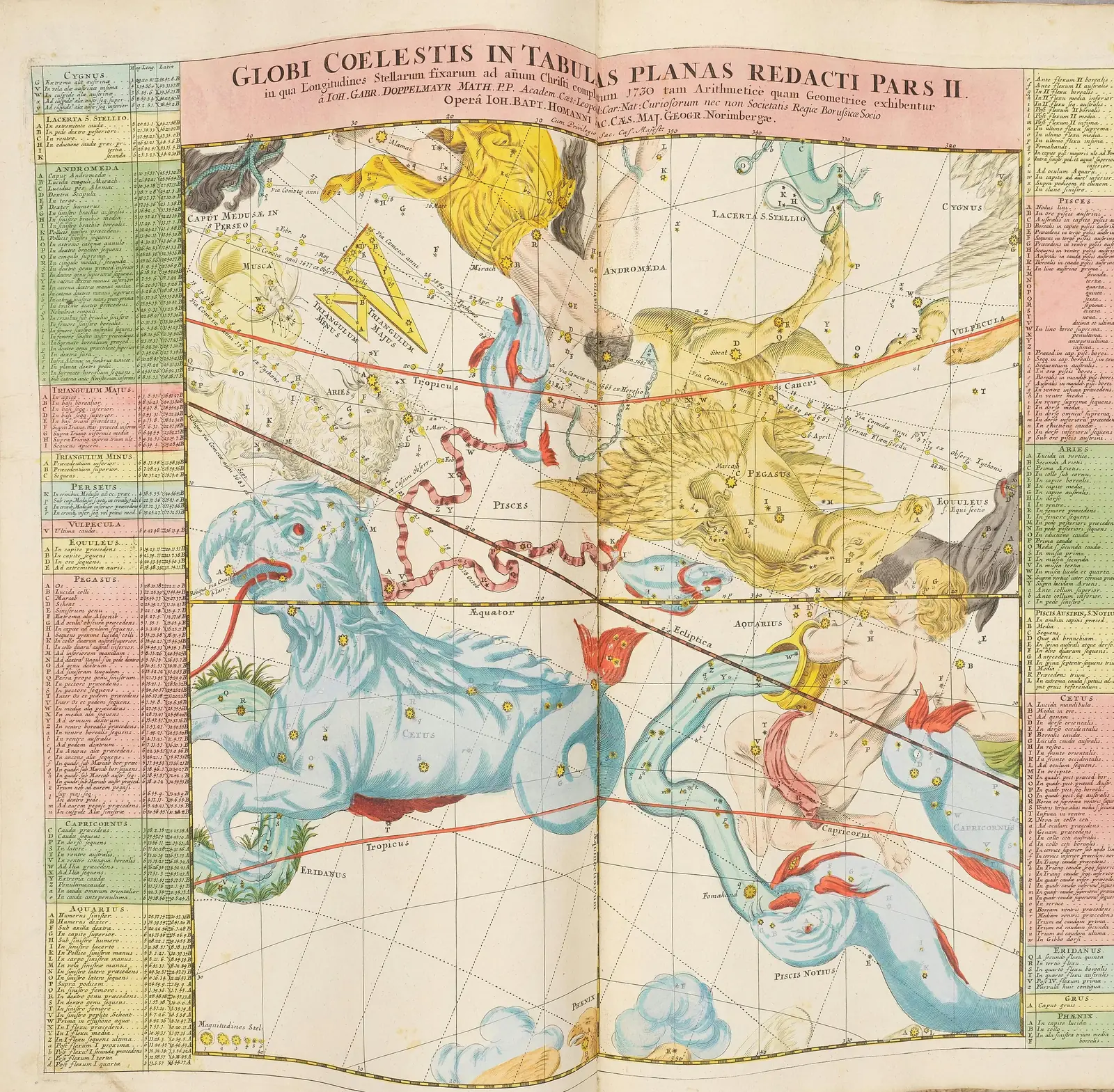
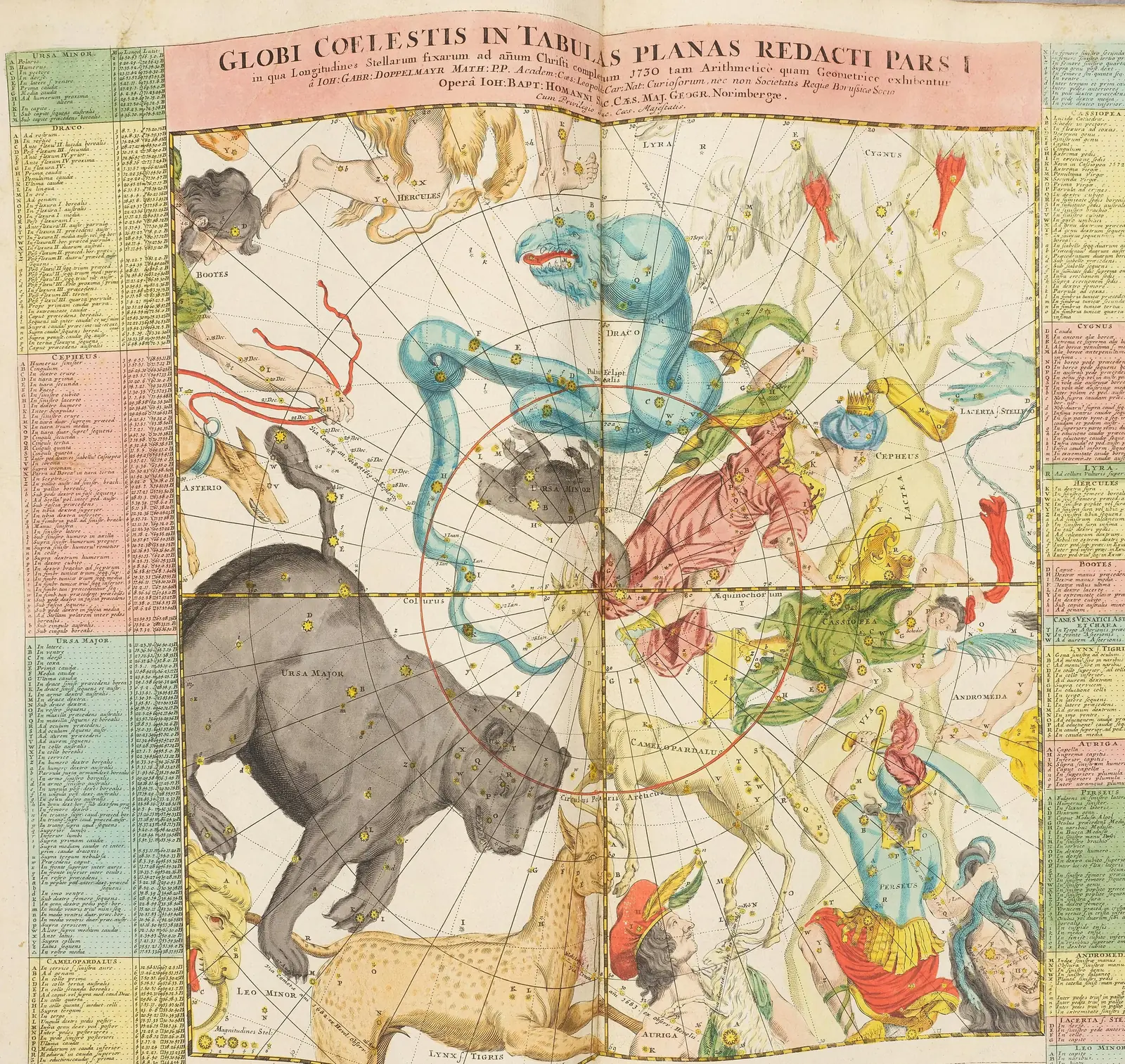
Johann Gabriel Doppelmayr, Atlas Novus Coelestis, 1742
At a glance
Your Sun's house is set by the time of day you were born. Around local noon it sits in the 10th or 9th; at sunrise, the 12th or 1st; at sunset, the 7th or 6th; around midnight, the 4th or 3rd. Your exact house needs your birth time and place.
- Sunrise births
- 12th housemedian 06:57 solar time
- Midday births
- 10th housemedian 10:59 solar time
- Two systems agree
- 46% of placementsPlacidus vs Whole Sign
- One hour off
- 50% move house13% with 15 minutes
- Pages to explore
- 69 placementsSun, Moon, Venus, Mars, Saturn, more
Find every planet's houseBirth date, time and place in; ten planets, two house systems out.
The short version
Signs are the costume. Houses are the room.
You already know your Sun sign. Maybe your Moon and rising too, the big three. Houses are the next layer, and honestly the one that makes a chart feel like yours instead of everyone born that month.
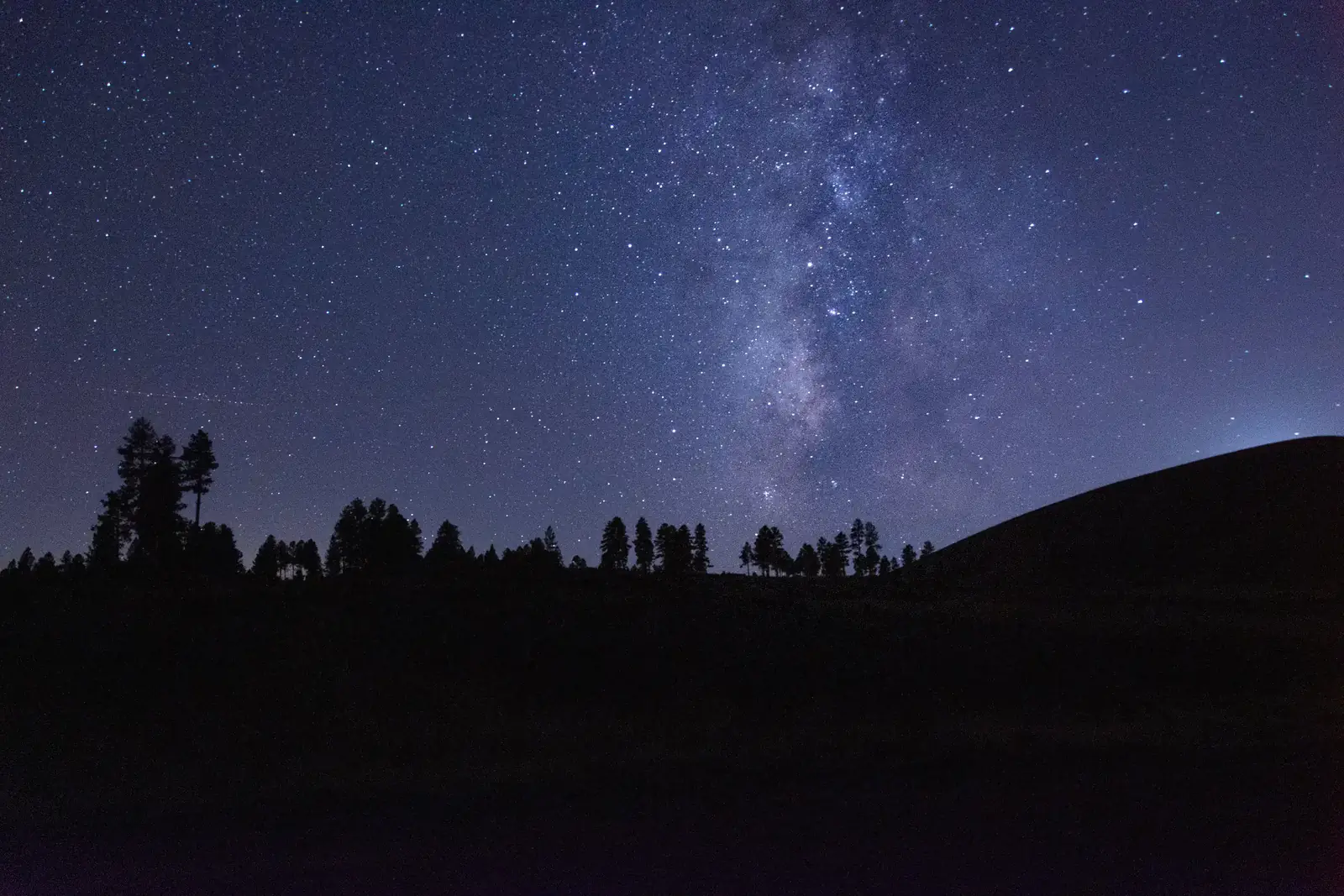
Picture the sky at the moment you were born, sliced into twelve wedges like a pizza, starting at the eastern horizon. Each wedge is a house, and each house is an area of life: the 2nd is money and self-worth, the 7th is partners, the 10th is career and reputation. Whatever planet sat in a wedge sends its energy into that part of your life.
So Venus in Leo tells you how you love (loudly, generously, with a bit of theatre). Venus in the 10th house tells you where it shows up: in your work, your public image, the way people see you from a distance.
The catch: houses spin once a day. The sign a planet is in barely changes over a few hours, but its house changes roughly every two. That is why the time on your birth certificate matters so much, and why two friends with the same birthday can have very different charts.
What house is my Sun in?
The Sun's house is a clock you can read

Try this today
- Find your birth time on your birth certificate or ask whoever was there. Even 'early morning' narrows it to two or three houses.
- Check whether daylight saving was on that day where you were born.
- Then run the full calculator with your birth place for the exact house.
Here is the neat part. The houses are counted from the eastern horizon, going down under the Earth first and then back up over the west. The Sun travels the other way through them every day. So the Sun's house is basically what time of day it was.
Born just after sunrise? The Sun had just climbed over the horizon into the 12th house. Born mid-morning, the 11th. Around noon, it peaks at the top of the chart in the 10th, then slides down the afternoon through the 9th and 8th, sets into the 7th around sunset, and spends the night in the 6th through the 1st.
We checked this against 150,000 computed births. People with the Sun in the 12th were mostly born between 05:37 and 08:05 local solar time; 10th-house Suns between 10:06 and 11:48; 4th-house Suns between 22:07 and 23:48.
One wrinkle: solar time is not clock time. Daylight saving pushes the clock an hour ahead, and if you were born on the eastern edge of a wide time zone the sun runs early compared with the clock. The finder below lets you adjust for both.
Why two answers?
Placidus and Whole Sign disagree a lot. That's normal.
If you have ever put your birth details into two different apps and got two different houses, nothing is broken. They are using different house systems.
Placidus (the default on most Western sites, including our free birth chart) divides the sky by time: each house is how far a point travels in a set fraction of the day. Houses end up uneven, some narrow and some wide. At New York's latitude the widest Placidus house, the 1st, can stretch to 48.1°.
Whole Sign is the oldest system still in use. Your rising sign becomes the whole 1st house, the next sign the whole 2nd, and so on. Every house is exactly one sign, 30° wide.
In our 150,000 computed births, the two systems put a planet in the same house only about 46% of the time. That is not a reason to distrust astrology's houses; it just means a planet near a house line has a foot in two rooms. Our calculator shows both so you can read both pages and see which one sounds like you.
How sure can you be?
Your birth time is doing a lot of work
The houses turn fast, so a small error in your birth time can move a planet to the next house. In our computed sample, 14% of planets sat within 2° of a house line, and about 50% changed house when the birth time shifted by an hour. Even 15 minutes moved about 13%.
Hospital records rounded to the nearest quarter hour are common, and family memories ("it was just after lunch") are often the only thing people have. That is fine. It just means you should treat a planet near a cusp as a blend, and read the page for the house next door too.
No birth time at all? You can still use solar houses (your Sun sign as the 1st house). They are a stand-in, not your real chart, and we label them that way.
The sky behind it
Method: 150,000 random births, seed 9520261018: dates uniform 1970-01-01 to 2005-12-31 UTC, clock time uniform, one of 20 large cities on six continents. Planets JPL DE442 via Skyfield (geocentric apparent, tropical); Placidus cusps from the Swiss Ephemeris; Whole Sign counted from the Ascendant's sign. Cusp window 2 degrees. Solar time = local mean solar time (UTC + longitude/15), not clock time. Wider houses catch more planets, which is why the shares on each placement page are not a flat 8.3%.
No chart needed
What house is my Sun in? Find it from your birth time
Type the time you were born and we will turn it into local solar time, then show where the Sun landed for people born in that hour across 150,000 computed births. It is a quick estimate; the full calculator gives the exact answer.
Most likely the 12th house (70.9%)
That is about 07:30 local solar time. In our computed births, a Sun born in the 07:00 to 07:59 solar hour landed in:
- Sun in the 12th house: 70.9%
- Sun in the 11th house: 23.6%
- Sun in the 1st house: 5.5%
Why a spread and not one answer? House sizes change with the season and your latitude. For the exact house, use the full calculator with your birth place.
More to read
Shorter reads. Each opens in place.
Which pages exist
How we picked the 69 placements
We built pages for the planet-in-house pairs people actually search for, based on Google search suggestions checked in October 2026: all twelve houses for the Sun, Moon, Venus, Mars and Saturn, plus the most-asked Mercury and Jupiter houses. More will follow.
Continue readingShow less
No planets there?
An empty house is not a missing piece
With ten planets and twelve houses, at least two houses are always empty. It does not mean that area of life is blank; it means you look to the sign on the cusp and its ruling planet instead. Read about empty houses.
Continue readingShow less
All planet-in-house pages, and the Sun's daily clock
Every placement we have written up, plus the usual local solar time for each Sun house (10th to 90th percentile of 150,000 computed births).
| Planet | 1st | 2nd | 3rd | 4th | 5th | 6th | 7th | 8th | 9th | 10th | 11th | 12th |
|---|---|---|---|---|---|---|---|---|---|---|---|---|
| Sun | 1st | 2nd | 3rd | 4th | 5th | 6th | 7th | 8th | 9th | 10th | 11th | 12th |
| Moon | 1st | 2nd | 3rd | 4th | 5th | 6th | 7th | 8th | 9th | 10th | 11th | 12th |
| Mercury | 1st | · | · | · | · | · | 7th | 8th | · | 10th | 11th | 12th |
| Venus | 1st | 2nd | 3rd | 4th | 5th | 6th | 7th | 8th | 9th | 10th | 11th | 12th |
| Mars | 1st | 2nd | 3rd | 4th | 5th | 6th | 7th | 8th | 9th | 10th | 11th | 12th |
| Jupiter | · | · | · | · | · | · | · | 8th | · | 10th | · | 12th |
| Saturn | 1st | 2nd | 3rd | 4th | 5th | 6th | 7th | 8th | 9th | 10th | 11th | 12th |
| House | Area of life | Usual time | Median |
|---|---|---|---|
| Sun in the 3rd | talk, siblings and the daily commute | 00:13 to 01:53 | 01:01 |
| Sun in the 2nd | money, values and self-worth | 02:07 to 04:05 | 02:59 |
| Sun in the 1st | self, body and first impressions | 03:55 to 06:23 | 05:03 |
| Sun in the 12th | rest, solitude and the hidden life | 05:37 to 08:05 | 06:57 |
| Sun in the 11th | friends, groups and hopes | 07:55 to 09:51 | 08:00 |
| Sun in the 10th | career, reputation and public life | 10:06 to 11:48 | 10:59 |
| Sun in the 9th | travel, study and beliefs | 12:12 to 13:54 | 12:59 |
| Sun in the 8th | intimacy, trust and shared money | 14:07 to 16:08 | 15:01 |
| Sun in the 7th | partners and one-to-one relationships | 15:55 to 18:24 | 17:05 |
| Sun in the 6th | work days, routines and health habits | 17:37 to 20:07 | 18:57 |
| Sun in the 5th | romance, play and creativity | 19:54 to 21:54 | 20:00 |
| Sun in the 4th | home, family and roots | 22:07 to 23:48 | 23:00 |
All times are UTC. In the Americas the local date can be a day earlier; in Asia and Australia a day later.
Quick answers
What house is my Sun in?
It depends on the time you were born. Roughly: sunrise puts the Sun in the 12th house, noon in the 10th, sunset in the 7th, and midnight in the 4th. For the exact house you need your birth time and place; our calculator gives it in both Placidus and Whole Sign.
What house is my Venus in?
Venus's house also depends on your birth time and place. Venus is never far from the Sun, so it is often in the same house as your Sun or the one next to it. Use the calculator to see it exactly.
Can I find my houses without a birth time?
Not accurately. Without a time you can use solar houses, which count your Sun sign as the 1st house. They are a rough stand-in. Even an approximate time, like 'morning', narrows things down a lot.
Why do different apps put my planets in different houses?
Most likely they use different house systems. Placidus and Whole Sign agree on only about 46% of placements in our computed sample. Neither is wrong; they divide the sky in different ways.
Which house system is most accurate?
There is no measured answer. Placidus is the most common in modern Western astrology; Whole Sign is the oldest and is popular with traditional and Hellenistic astrologers. Many people read both and keep what fits.
Do houses matter more than signs?
They answer different questions. The sign describes how a planet behaves; the house describes where in life it shows up. Houses are also the most personal part of a chart, because they change every couple of hours.
Is Moon in the 8th house bad?
No placement is good or bad by itself. The Moon in the 8th is read as deep, private feelings and a need for real trust. It is one of the most searched placements, and you can read the full page here.