Other systems · Human Design
Human Design vs astrology: one sky, read twice
Astrology reads the sky at your birth. Human Design, a 1987 system, reads it twice: at birth and when the Sun stood 88° earlier, about 89 days before.
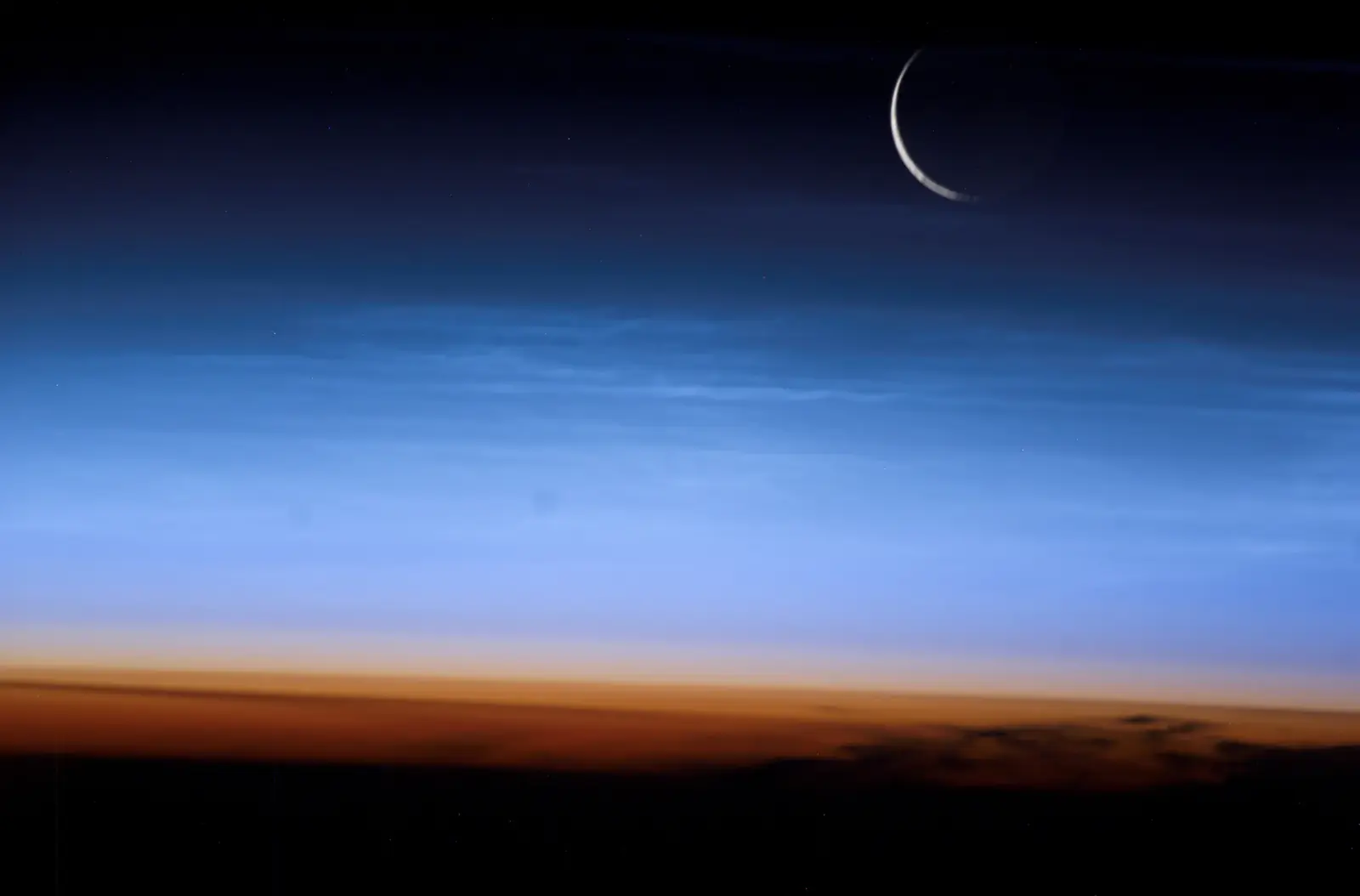
Photo: NASA (International Space Station crew)
At a glance
Human Design is not traditional astrology but it is built on it: a 1987 system by Ra Uru Hu that adds a second "Design" chart from when the Sun was 88° before birth, 86.61 to 91.99 days earlier for 2026 births.
- Astrology
- One chartthe sky at your birth
- Human Design
- Two chartsbirth + the 88° moment
- Design date, 2026 births
- 86.61 to 91.99 days beforeaverage 89.31
- Example: born Oct 18, 2026
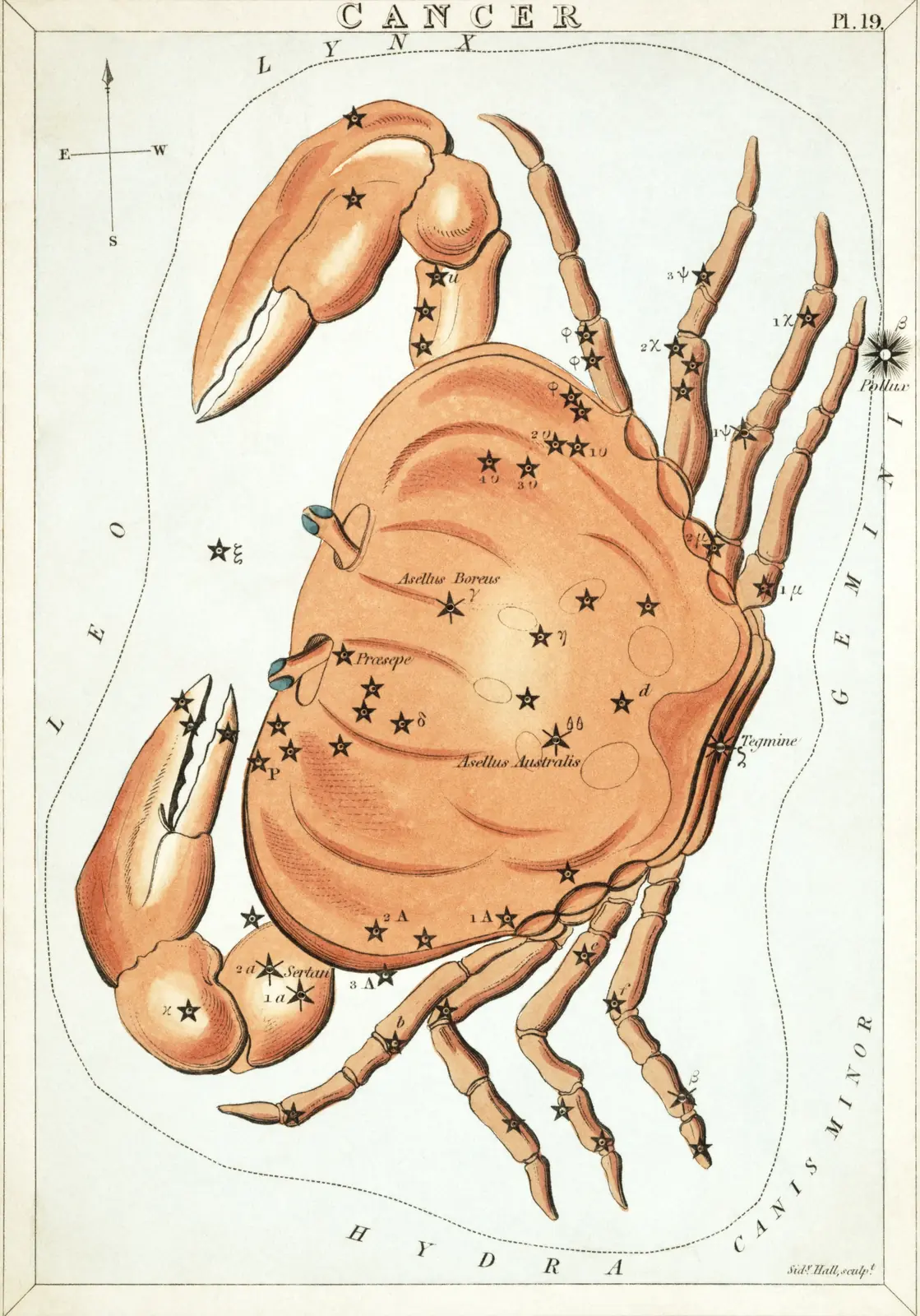
- July 19, 2026Sun 26°38′ Cancer, 90.73 days earlier
- Origin
- 1987, Ra Uru Huastrology much older
See your full birth chart firstFree: Sun, Moon, rising, houses and aspects.
The short answer
Same planets, one extra moment

Try this today
- Write down your Sun, Moon and rising. That is the core of what astrology hands you.
- Then find your design date with the tool below. That is the extra layer Human Design adds.
Someone on your feed says they are a "projector," and someone else says they are a "Scorpio rising," and both are talking about the sky on the day they were born. So are they the same thing? Not quite.
Astrology is old. It runs back through Hellenistic and Babylonian practice (Britannica), and Western astrology reads one moment: where the Sun, Moon and planets stood in the zodiac when you were born, and which houses they fell in from your birthplace.
Human Design is new. Ra Uru Hu (born Alan Robert Krakower) said he received it during an experience on Ibiza in January 1987, and published it from there (Wikipedia). It blends astrology with the 64 hexagrams of the I Ching, the Kabbalah tree of life, the Hindu chakra system and language borrowed from physics.
The part that makes it its own system is the second moment. Human Design casts a "Personality" chart for your birth and a "Design" chart for the instant the Sun stood exactly 88° earlier in the zodiac. Both are mapped onto a body diagram, the BodyGraph, and the combination decides your Type.
The astronomy
The 88° design date, computed properly

Try this today
- If an app gave you a design date, check it against the calculator below. A difference of a few hours is normal; a difference of days means someone counted days instead of degrees.
- Born near the December solstice? A birth at the exact 2026 solstice (Dec 21, 2026, 20:50 UTC) has its design moment on Sep 25, 2026, 01:08 UTC, with the Sun at 2°00′ Libra.
A lot of explainers say the Design chart is "about three months before birth" or "88 days before." Both are close, neither is the definition. The rule is 88 degrees of solar arc, and the Sun does not move at a steady pace.
Earth's orbit is slightly oval. We are closest to the Sun in early January (perihelion Jan 3, 2026 in 2026, 0.983302 AU) and farthest in early July (aphelion Jul 6, 2026, 1.016644 AU). Near perihelion the Sun appears to move a little over a degree a day; near aphelion a little under.
So we ran it. For every birth date in 2026, the design moment falls 86.61 days before birth at the shortest (birth Feb 16, 2026) and 91.99 days at the longest (birth Aug 21, 2026). That is a spread of 5.4 days. Across every third day from 1950 to 2030 (9,862 samples) the range barely moves: 86.6 to 92.01 days.
The quickest gaps belong to February births (about 86.64 days), whose 88° arc runs back through the fast winter Sun. The longest belong to August births (about 91.96 days), whose arc runs back through the slow early-summer Sun.
The sky behind it
Method: skyfield with the JPL DE442 ephemeris, geocentric apparent Sun on the true ecliptic and equinox of date (tropical). The design moment is found by bisection to well under a second. Births sampled at 00:00 UTC. Spot checks of the same pipeline against published almanacs: 2026 March equinox Mar 20, 2026, 14:45 UTC, June solstice Jun 21, 2026, 08:24 UTC, September equinox Sep 23, 2026, 00:05 UTC, December solstice Dec 21, 2026, 20:50 UTC.
The vocabulary
Signs and houses vs gates, centers and Types
Try this today
- Find your Personality and Design Sun gates with the tool below and note the two line numbers. Together they are your profile.
- Compare that to your Sun sign. They come from the same degree, cut two different ways.
Here is where the two systems really part ways.
Astrology divides the ecliptic into 12 signs of 30° each, then lays 12 houses over it from your birth time and place. Planets get meaning from their sign, their house and the angles (aspects) between them.
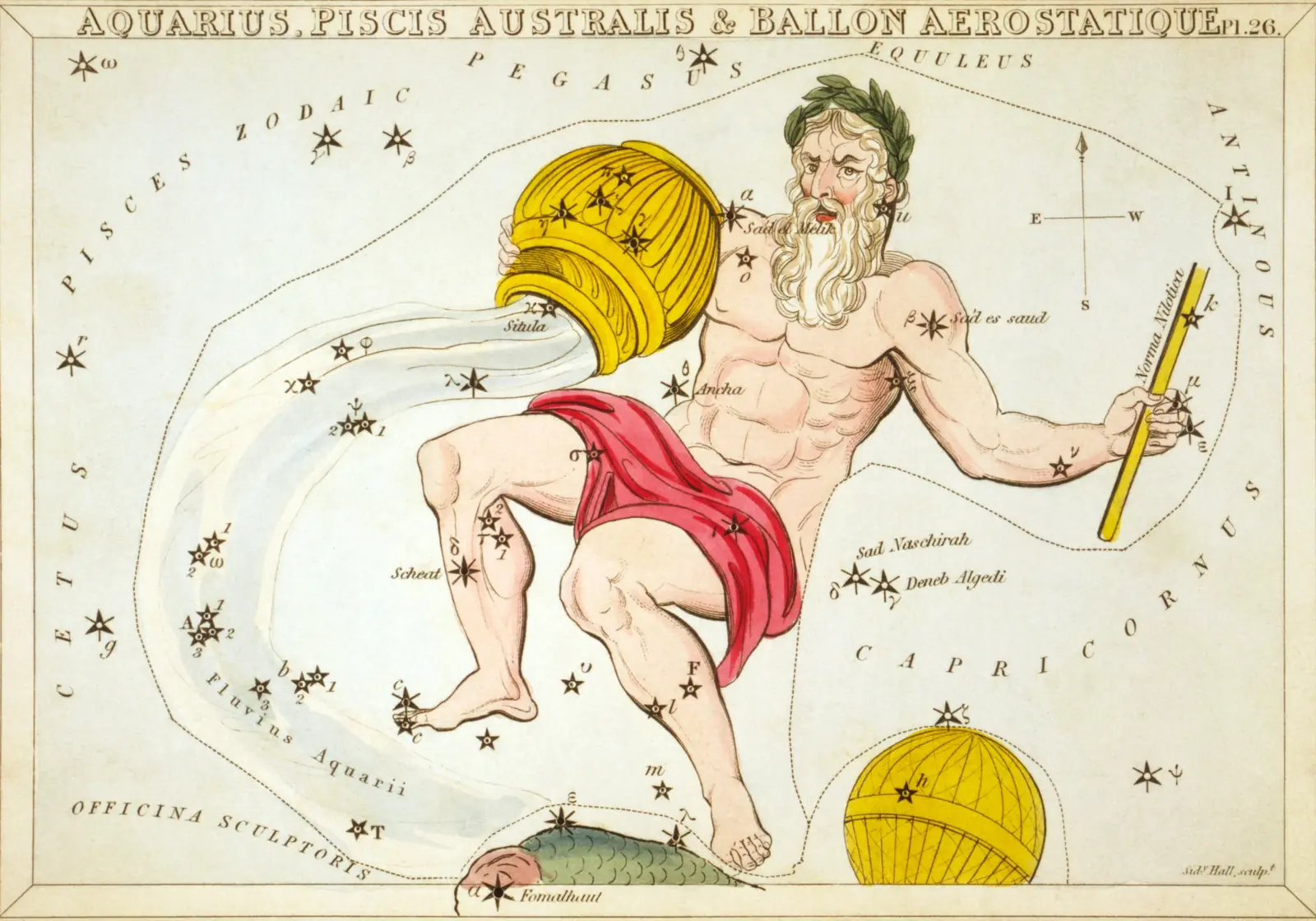
Human Design divides the same wheel into 64 gates of 5.625° each, one for each I Ching hexagram, and each gate into 6 lines. The wheel starts with Gate 41 at 2° Aquarius, not at 0° Aries. Every planet in both charts lands on a gate.line, and those gates switch on parts of a BodyGraph with 9 centers and 36 channels. Which centers end up "defined" sets your Type: Manifestor, Generator, Manifesting Generator, Projector or Reflector.
Your profile, like 5/1 or 2/4, is just the line of your Personality Sun over the line of your Design Sun. That is why the design date matters so much: half your profile comes from the 88° moment.
None of this is a sign of better or worse. It is a different grid laid on the same sky.
The sky behind it
Example from the data: a birth on Oct 18, 2026, 00:00 UTC has the Sun at 24°38′ Libra (gate 32.5). The design moment is Jul 19, 2026, 06:32 UTC, Sun at 26°38′ Cancer (gate 56.1), giving profile 5/1. Gate order and the 302° starting point are Human Design's own published convention, reproduced to show what it assigns.
In real life
What each one is actually good for

Try this today
- Pick one decision this week and try your Human Design Strategy on it, then check what your current transits say about the same week. Notice which one felt more useful.
- Keep a two-line note for a month. Patterns you actually saw beat any system's promises.
Ask yourself what you want the system to do, because they do different jobs.
Astrology shines at timing. The sky keeps moving after you are born, so astrologers watch transits, retrogrades, eclipses and returns. If your question is "why does this month feel heavy" or "when is my Saturn return," astrology has a whole toolkit for it.
Human Design shines at decisions. Its signature advice is a Strategy for each Type (Generators "wait to respond," Projectors "wait for the invitation") and an Inner Authority that tells you which inner signal to trust. People who feel stuck in overthinking often find that simple rule the most useful part.
Both are frameworks, not proof. Neither has held up as a predictive science. Shawn Carlson's 1985 double-blind test, published in Nature, found astrologers could not match charts to personality profiles better than chance (Nature), and Human Design has no peer-reviewed support at all. What they offer is language to reflect with. Use that honestly and both can be good company.
Try it
Find your 88° design date
Enter your birth date, time and place. We find the exact instant the Sun stood 88° behind its birth position, then show what astrology reads from your birth and what Human Design adds. Or switch to the sorter and see which system answers the question you are really asking.
More to read
Shorter reads. Each opens in place.
Using both
Can you use Human Design and astrology together?
Yes, and many people do. The overlap is real: your Personality Sun gate sits in your Sun sign, and your Design Sun is a real solar position you can look up in an ordinary ephemeris. If you want a third lens with the same honesty about what it is, read how Vedic and Western astrology differ.
Continue readingShow less
A detail
Tropical zodiac, like Western astrology
Human Design positions use the tropical zodiac, the one tied to the equinoxes, so its 2° Aquarius is the same point Western astrologers use. The Sun reached it on Jan 22, 2026, 00:54 UTC in 2026 and reaches it on Jan 22, 2027, 06:40 UTC in 2027.
Continue readingShow less
Design dates for 2026 births, computed
Births at 12:00 UTC on the 1st and 15th of each month. The day count drifts with the Sun's changing speed.
| Born (12:00 UTC) | Birth Sun | Design moment | Design Sun | Days before | Sun gates |
|---|---|---|---|---|---|
| Jan 1, 2026 | 11°05′ Capricorn | Oct 6, 2025, 01:54 UTC | 13°05′ Libra | 87.42 | 38.2 / 48.4 |
| Jan 15, 2026 | 25°21′ Capricorn | Oct 20, 2025, 11:44 UTC | 27°21′ Libra | 87.01 | 61.5 / 50.2 |
| Feb 1, 2026 | 12°38′ Aquarius | Nov 6, 2025, 19:15 UTC | 14°38′ Scorpio | 86.70 | 19.6 / 1.2 |
| Feb 15, 2026 | 26°48′ Aquarius | Nov 20, 2025, 21:16 UTC | 28°48′ Scorpio | 86.61 | 30.3 / 14.5 |
| Mar 1, 2026 | 10°54′ Pisces | Dec 4, 2025, 19:34 UTC | 12°54′ Sagittarius | 86.68 | 37.6 / 5.2 |
| Mar 15, 2026 | 24°54′ Pisces | Dec 18, 2025, 14:11 UTC | 26°54′ Sagittarius | 86.91 | 36.3 / 11.5 |
| Apr 1, 2026 | 11°46′ Aries | Jan 4, 2026, 03:23 UTC | 13°46′ Capricorn | 87.36 | 21.3 / 38.5 |
| Apr 15, 2026 | 25°32′ Aries | Jan 17, 2026, 15:33 UTC | 27°32′ Capricorn | 87.85 | 42.6 / 60.2 |
| May 1, 2026 | 11°08′ Taurus | Feb 1, 2026, 23:46 UTC | 13°08′ Aquarius | 88.51 | 24.4 / 19.6 |
| May 15, 2026 | 24°40′ Taurus | Feb 15, 2026, 08:49 UTC | 26°40′ Aquarius | 89.13 | 8.1 / 30.3 |
| Jun 1, 2026 | 11°01′ Gemini | Mar 3, 2026, 14:29 UTC | 13°01′ Pisces | 89.90 | 16.6 / 63.2 |
| Jun 15, 2026 | 24°25′ Gemini | Mar 17, 2026, 00:14 UTC | 26°25′ Pisces | 90.49 | 12.2 / 36.5 |
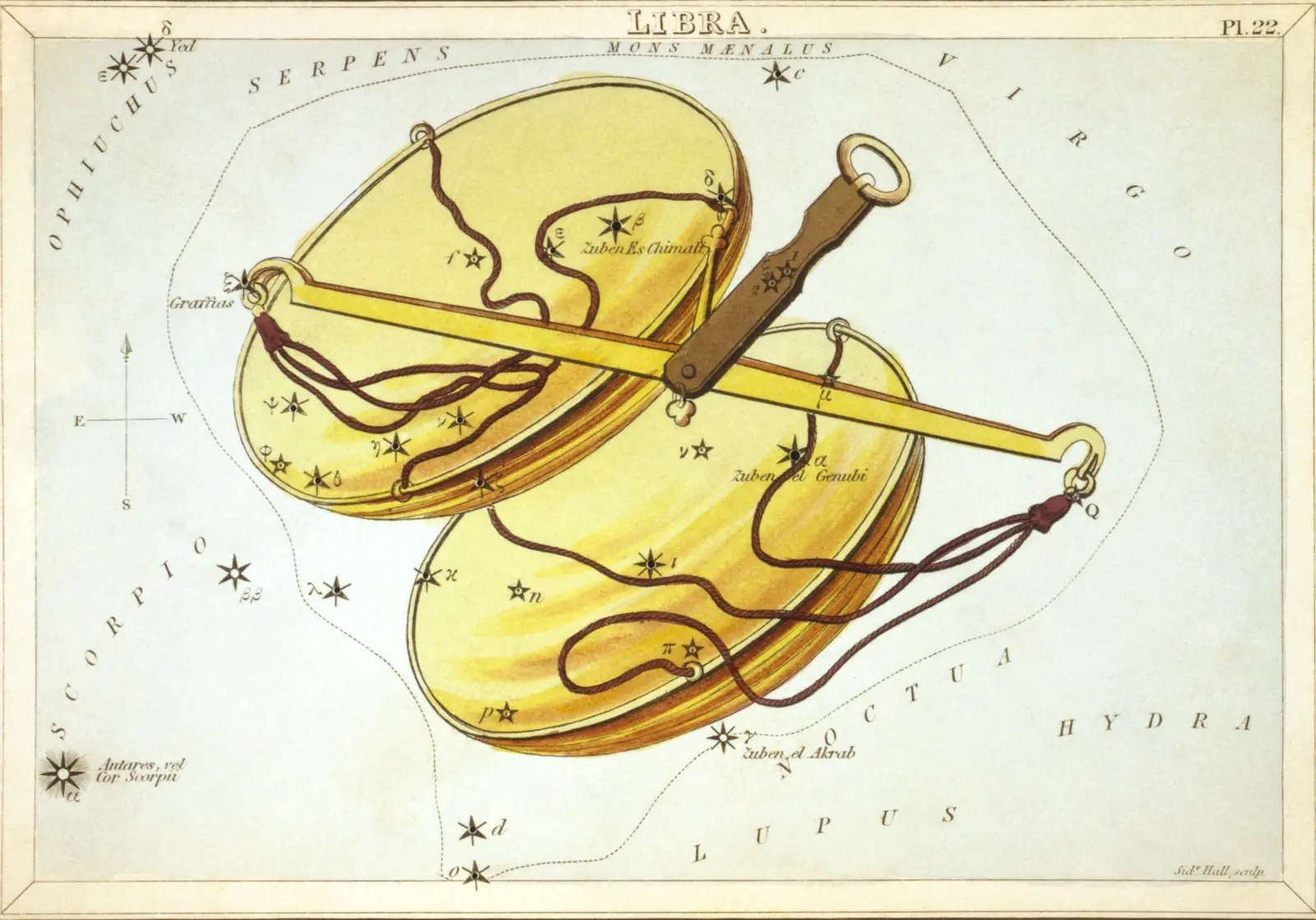
| Jul 1, 2026 | 9°41′ Cancer | Apr 1, 2026, 09:48 UTC | 11°41′ Aries | 91.09 | 39.1 / 21.3 |
| Jul 15, 2026 | 23°02′ Cancer | Apr 14, 2026, 23:46 UTC | 25°02′ Aries | 91.51 | 62.3 / 42.5 |
| Aug 1, 2026 | 9°16′ Leo | May 1, 2026, 15:24 UTC | 11°16′ Taurus | 91.86 | 33.2 / 24.4 |
| Aug 15, 2026 | 22°41′ Leo | May 15, 2026, 12:23 UTC | 24°41′ Taurus | 91.98 | 4.5 / 8.1 |
| Sep 1, 2026 | 9°05′ Virgo | Jun 1, 2026, 13:29 UTC | 11°05′ Gemini | 91.94 | 40.4 / 16.6 |
| Sep 15, 2026 | 22°40′ Virgo | Jun 15, 2026, 18:32 UTC | 24°40′ Gemini | 91.73 | 6.1 / 12.3 |
| Oct 1, 2026 | 8°20′ Libra | Jul 2, 2026, 04:22 UTC | 10°20′ Cancer | 91.32 | 18.5 / 39.1 |
| Oct 15, 2026 | 22°09′ Libra | Jul 16, 2026, 16:11 UTC | 24°09′ Cancer | 90.83 | 32.2 / 62.4 |
| Nov 1, 2026 | 9°05′ Scorpio | Aug 3, 2026, 09:24 UTC | 11°05′ Leo | 90.11 | 44.2 / 33.4 |
| Nov 15, 2026 | 23°08′ Scorpio | Aug 18, 2026, 01:00 UTC | 25°08′ Leo | 89.46 | 43.5 / 29.1 |
| Dec 1, 2026 | 9°18′ Sagittarius | Sep 3, 2026, 19:04 UTC | 11°18′ Virgo | 88.71 | 9.4 / 40.6 |
| Dec 15, 2026 | 23°31′ Sagittarius | Sep 18, 2026, 10:01 UTC | 25°31′ Virgo | 88.08 | 11.1 / 6.4 |
| Birth month | Average days | Shortest | Longest |
|---|---|---|---|
| January | 87.03 | 86.72 | 87.44 |
| February | 86.64 | 86.61 | 86.70 |
| March | 86.95 | 86.68 | 87.31 |
| April | 87.87 | 87.34 | 88.44 |
| May | 89.16 | 88.49 | 89.83 |
| June | 90.48 | 89.87 | 91.04 |
| July | 91.50 | 91.07 | 91.84 |
| August | 91.96 | 91.85 | 91.99 |
| September | 91.70 | 91.36 | 91.94 |
| October | 90.79 | 90.18 | 91.33 |
| November | 89.46 | 88.77 | 90.13 |
| December | 88.08 | 87.48 | 88.73 |
| Western astrology | Human Design | |
|---|---|---|
| Origin | Ancient (Babylonian, Hellenistic roots) | 1987, Ra Uru Hu |
| Moments read | Birth only | Birth + Sun 88° earlier |
| Divides the wheel into | 12 signs, 12 houses | 64 gates, 6 lines each |
| Main output | Signs, houses, aspects | Type, Strategy, Authority, Profile |
| Birth time needed for | Rising sign, houses | Moon gates, Type, Authority |
| Ongoing use | Transits, returns, timing | Mostly the fixed chart |
All times are UTC. In the Americas the local date can be a day earlier; in Asia and Australia a day later.
Quick answers
Is Human Design astrology?
Partly. Human Design uses astronomical positions of the Sun, Moon, nodes and planets, the same raw data a birth chart uses, but it reads them through its own map of 64 gates borrowed from the I Ching, nine centers and a set of Types. It was created in 1987 by Ra Uru Hu, so it is a modern system that contains astrology rather than a branch of traditional astrology.
What is the difference between Human Design and astrology?
Astrology reads one moment, your birth, as signs, houses and aspects. Human Design reads two moments, your birth and the moment the Sun stood 88° earlier, and turns them into a BodyGraph with a Type, Strategy and Authority. Astrology is mostly descriptive; Human Design is more prescriptive about how to make decisions.
What is the Human Design design date?
It is the moment the Sun was exactly 88° of longitude behind its position at your birth. Because the Sun's speed changes through the year, that is not a fixed number of days. For births in 2026 it falls between 86.61 and 91.99 days before birth, 89.31 on average (computed from JPL DE442).
Why 88 degrees and not 88 days?
The system defines it by the Sun's arc, not the calendar. In early-year births the Sun is moving faster (Earth is near perihelion in early January), so 88° goes by in about 86.61 days. In late-summer births the arc covers the slower summer stretch, so it takes up to 91.99 days.
Do I need my birth time for Human Design?
For the design date itself, not much: the Sun moves about one degree a day, so a missing time shifts it by at most a day. For the full BodyGraph, yes. The Moon moves about 13° a day and can change gates within hours, so Type and Authority can change with the time. Astrology needs the time for your rising sign and houses.
Is Human Design scientifically proven?
No. There are no peer-reviewed studies supporting it, and its descriptions of neutrinos imprinting a person are not accepted physics. Astrology has also not held up in controlled tests such as Shawn Carlson's 1985 double-blind study in Nature. Both are best used as reflective frameworks, not as facts about you.
Which is more accurate, Human Design or astrology?
Neither has been shown to be more accurate in any measurable way. People who like clear instructions often enjoy Human Design's Strategy and Authority; people who like timing, transits and rich symbolism often stay with astrology. Plenty use both. Try the question sorter on this page to see which one actually addresses what you want to know.