Astrology systems · The Maya count
Your Mayan sign is a day, not a month
Type your birth date and get your real Tzolk'in day sign: a number and one of 20 signs, counted from the Maya start date on the GMT 584283 correlation. The Aztec name comes with it.
Photo: National Park Service, Arches National Park
At a glance
Your Mayan sign is your Tzolk'in birth day: a number from 1 to 13 plus one of 20 day signs. On October 18, 2026 the count stands at 9 Muluk, 9 Toj in K'iche' and 9 Atl in the Aztec count.
- October 18, 2026
- 9 MulukHaab' 2 Sak
- Long Count
- 13.0.14.0.9Lord of the Night G9
- Next new round (1 Imix)
- Jun 27, 2027252 days away
- Next 8 B'atz'
- Mar 9, 2027the K'iche' new cycle
- Correlation
- GMT 584283matches the living K'iche' count
Find your Mayan sign nowBirth date only. Nothing is stored or sent.
How it works
Two wheels, 13 and 20, turning together
Try this today
- Enter your birthday in the calculator, then a parent's. See how many signs apart you are.
- Mark your next Tzolk'in birthday. The current round began on 1 Imix, Oct 10, 2026, so anyone counting from scratch can start there.
- Read your sign's page in the day sign meanings guide: the K'iche' name often means something different from the Yucatec one.
Picture two gears. The small one has 13 teeth, numbered 1 to 13. The big one has 20, each with a name: Imix, Ik', Ak'bal and on to Ajaw. Every day both gears click forward one step. Each pair is a day: 9 Muluk on October 18, 2026, then 10 Ok the next day, and so on.
Because 13 and 20 share no factor, the gears only line up again after 13 × 20 = 260 days. That cycle is the Tzolk'in, the "count of days" the Maya used for ritual, naming and divination. The Aztecs kept the same structure as the tonalpohualli.
So a Mayan sign is not a slice of the year like Scorpio. It is a single day, and it repeats every 260 days. If you were born on 4 Ajaw, your Tzolk'in birthday comes round again about every eight and a half months. In K'iche' Maya daykeeping, the day sign you were born on is your nawal, a companion that colours your character.
To find your day, you need a fixed point where both calendars are known. That point is the start of the Maya Long Count, which scholars place at Julian Day 584283. Everything on this page is arithmetic from there.
The sky behind it
Method: days = JDN − 584283. Number = (days + 3) mod 13 + 1. Sign = (days + 19) mod 20, counting Imix as the first. Haab' position = (days + 348) mod 365, since the start date was 8 Kumk'u. Lord of the Night = days mod 9, with 0 read as G9. Dates use the proleptic Gregorian calendar, so dates before October 1582 are converted the same way.
| What | Dates |
|---|---|
| New 260-day round (1 Imix) | Oct 10, 2026 · Jun 27, 2027 · Mar 13, 2028 · Nov 28, 2028 |
| 8 B'atz', the K'iche' new cycle | Jan 18, 2025 · Oct 5, 2025 · Jun 22, 2026 · Mar 9, 2027 · Nov 24, 2027 · Aug 10, 2028 |
| Haab' new year (0 Pop) | Mar 30, 2025 · Mar 30, 2026 · Mar 30, 2027 · Mar 29, 2028 · Mar 29, 2029 |
| Wayeb', the five closing days | Mar 25, 2026 to Mar 29, 2026 · Mar 25, 2027 to Mar 29, 2027 · Mar 24, 2028 to Mar 28, 2028 · Mar 24, 2029 to Mar 28, 2029 |
The anchor
Why one number, 584283, decides your sign
Try this today
- Press "Try Dec 21, 2012" in the calculator. You should see 4 Ajaw, Haab' 3 K'ank'in, Long Count 13.0.0.0.0.
- Check a site you used before against that date. If it does not say 4 Ajaw, it is not on the GMT count.
Maya monuments carry Long Count dates, but nothing carved in stone says "this is 11 August 3114 BCE." Linking the two calendars took a century of work. The result, credited to Joseph Goodman, Juan Martínez Hernández and Eric Thompson, is the GMT correlation. Thompson settled on it in 1935, and most Maya researchers accept it today (Maya calendar).
In numbers, the Long Count start, 13.0.0.0.0 4 Ajaw 8 Kumk'u, is Julian Day 584283: 11 August 3114 BCE in the proleptic Gregorian calendar (Long Count). Run the count forward and the famous 2012 date lands on December 21, 2012: 4 Ajaw 3 K'ank'in, the same Calendar Round carved on Tortuguero Monument 6 and listed in the Smithsonian's glossary.
Two independent checks back it up. In 2013 a team led by Douglas Kennett radiocarbon-dated a carved wooden lintel from Tikal and reported that the result strongly supports GMT (Penn State). And the living count agrees: Guatemala's Academia de Lenguas Mayas lists 8 B'atz' on January 18, 2025, June 22, 2026 and March 9, 2027. Our arithmetic gives the same three days.
A close cousin, 584285 (a variant of Thompson's, associated with Floyd Lounsbury), moves every day two signs along. If another site puts you two signs off ours, that is probably why.
The sky behind it
| Date | Long Count | Tzolk'in | Haab' | Published as |
|---|---|---|---|---|
| Aug 11, 3114 BCE | 13.0.0.0.0 | 4 Ajaw | 8 Kumk'u | 4 Ajaw 8 Kumk'u (Wikipedia) |
| Jan 1, 2000 | 12.19.6.15.2 | 11 Ik' | 10 K'ank'in | 12.19.6.15.2 (published converters) |
| Dec 21, 2012 | 13.0.0.0.0 | 4 Ajaw | 3 K'ank'in | 13.0.0.0.0 4 Ajaw 3 K'ank'in (Smithsonian NMAI) |
| Jun 22, 2026 | 13.0.13.12.11 | 8 Chuwen | 4 Sek | 8 B'atz' (Academia de Lenguas Mayas) |
Why sites disagree
Three websites, three different Mayan signs

Try this today
- If a result shows a colour plus a name (Blue Hand, White Wizard), label it Dreamspell in your notes.
- If the sign is two places off ours, it is likely the 584285 correlation. Count two signs back to compare.
You type the same birthday into three sites and get three answers. It is not you. Here is what is going on.
Dreamspell. In 1987 José and Lloydine Argüelles began a system they later released, in 1990, as a board game called Dreamspell (Wikipedia). It borrows the idea of a 260-day count but keeps its own: its "solar seals" are colour-coded (Red Dragon, White Wind, Blue Night, Yellow Seed) and leap days are set aside as "0.0 Hunab Ku," outside the count. The traditional count never skips a day, so the two drift apart. Dreamspell is a modern spiritual system. It is not the calendar Maya daykeepers keep.
A different anchor. A site on the 584285 correlation will be two signs off for every date.
Month-sign lists. Some sites do not count days at all. They hand you an animal for a date range. More on that below.
Where the day starts. When exactly a Maya day began is not settled from the inscriptions, so if you were born late at night, glance at the next day's sign too. We use your civil calendar date.
Myth check
The 13 'Mayan zodiac' animal signs are modern
Try this today
- If someone sends you your 'Mayan animal sign,' send back your real day sign from the calculator.
- Notice the Wayeb', the five closing days of the Haab'. In 2027 they run Mar 25, 2027 to Mar 29, 2027. Those days are documented as a time people stayed close to home.
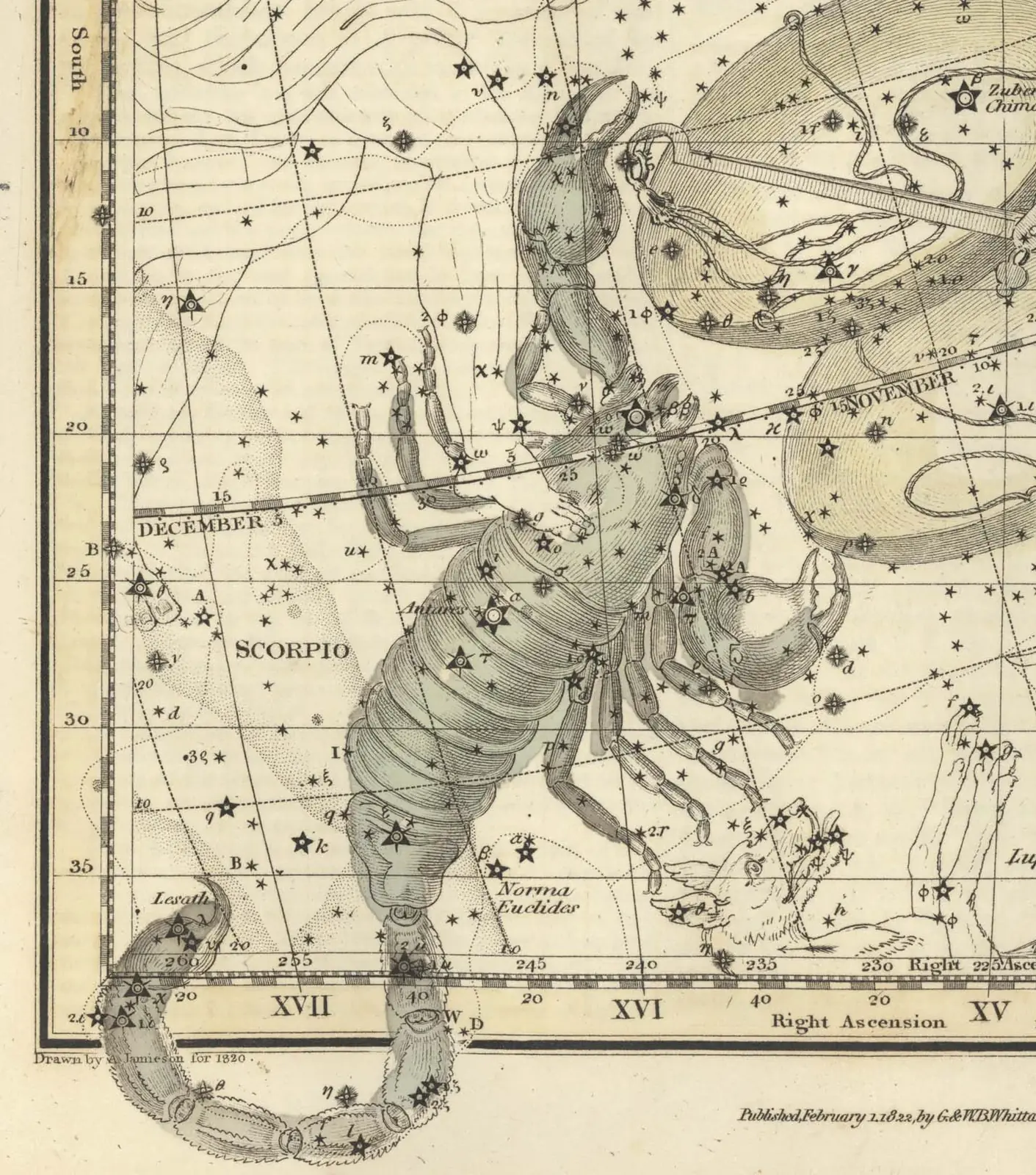
You have probably seen the list: Bat, Scorpion, Deer, Owl, Peacock and so on, each with tidy dates like "July 26 to August 22." It looks like a zodiac. It is not from the Maya.
Here is the problem in one line of arithmetic. The Maya solar year, the Haab', has 18 months of 20 days plus 5 closing days, 365 in all, with no leap day. Our calendar adds one every four years, so the two slide apart. On the GMT count, the Haab' new year (0 Pop) fell on March 30, 2025, falls on March 30, 2027 and moves to March 29, 2028. Over a lifetime that is weeks of drift. A Maya "month sign" with fixed Gregorian dates is impossible.
So where does a Maya zodiac come from at all? From one real, puzzling page. Pages 23 and 24 of the Paris Codex show 13 animal figures, a scorpion, a turtle, a rattlesnake among them, hanging from a sky band above a table of dates (Paris Codex). Herbert Spinden proposed in 1916 that it was a zodiac, and scholars still debate what it records. None of it assigns animals to birthdays.
The Aztec calculator
Your Aztec sign is the same day, in Nahuatl

Try this today
- Find your Aztec day in the calculator result, then look up its English name in the table below.
- Compare a Maya and an Aztec name for your sign. Where they differ, you get two images to think with.
Searching "Aztec zodiac calculator"? Good news: the calculator above already does it. The Aztec tonalpohualli uses the same 13 numbers and 20 signs, with Nahuatl names: Cipactli (crocodile), Ehecatl (wind), Calli (house), on to Xochitl (flower) (Aztec calendar).
The question is whether the two counts ran in step. The widely used reconstruction by Alfonso Caso anchors the Aztec count on a single recorded day: the fall of Tenochtitlan, 13 August 1521 in the Julian calendar, recorded as 1 Coatl (1 Serpent). Run our Maya arithmetic on that same date and you get 1 Chikchan, the serpent day, number 1. The two counts line up sign for sign.
So if your Maya day is 9 Muluk, your Aztec day is 9 Atl. A few images differ (Maya Ak'bal is night, Aztec Calli is a house), and the meanings guide walks through each pair.
The Aztec solar year, the xiuhpohualli, worked like the Haab': 18 periods of 20 days plus 5 nemontemi, days that were thought to be unlucky.
The sky behind it
13 August 1521 in the Julian calendar is 23 August 1521 in the proleptic Gregorian calendar, Julian Day 2276828. Days since the GMT start: 1692545, giving 1 Chikchan (Long Count 11.15.1.9.5, Haab' 3 Wo').
| # | Maya | Aztec | Aztec in English |
|---|---|---|---|
| 1 | Imix | Cipactli | Crocodile |
| 2 | Ik' | Ehecatl | Wind |
| 3 | Ak'bal | Calli | House |
| 4 | K'an | Cuetzpalin | Lizard |
| 5 | Chikchan | Coatl | Serpent |
| 6 | Kimi | Miquiztli | Death |
| 7 | Manik' | Mazatl | Deer |
| 8 | Lamat | Tochtli | Rabbit |
| 9 | Muluk | Atl | Water |
| 10 | Ok | Itzcuintli | Dog |
| 11 | Chuwen | Ozomahtli | Monkey |
| 12 | Eb' | Malinalli | Grass |
| 13 | B'en | Acatl | Reed |
| 14 | Ix | Ocelotl | Jaguar |
| 15 | Men | Cuauhtli | Eagle |
| 16 | Kib' | Cozcacuauhtli | Vulture |
| 17 | Kab'an | Ollin | Movement |
| 18 | Etz'nab' | Tecpatl | Flint |
| 19 | Kawak | Quiahuitl | Rain |
| 20 | Ajaw | Xochitl | Flower |
Calculator
Find your Mayan and Aztec day sign
Enter a birth date. You get the Tzolk'in day sign and number, its K'iche' and Aztec names, your trecena, Haab' date, Long Count and Lord of the Night, plus your next Tzolk'in birthday. The card underneath maps all 260 days.
Pick a date to see its day sign.
The tool reads the date only. Nothing leaves your browser.
The whole count on one card
Thirteen columns of 20 days, read top to bottom, left to right: that is all 260 days, from 1 Imix to 13 Ajaw.
More to read
Shorter reads. Each opens in place.
The 52-year cycle
When your full Maya birthday comes back
Pair the Tzolk'in day with the Haab' date and you get a Calendar Round date, like 9 Muluk 2 Sak for October 18, 2026. That exact pair returns only every 18,980 days, 52 Haab' years. The next 9 Muluk 2 Sak is October 5, 2078.
Continue readingShow less
Next milestones
The Long Count did not end in 2012
It rolled over to a new b'ak'tun and kept counting. The next tun (360 days) completes on October 4, 2027: 13.0.15.0.0, 9 Ajaw. The next k'atun (7,200 days) completes on September 7, 2032: 13.1.0.0.0, 2 Ajaw. Period endings always fall on an Ajaw day.
Continue readingShow less
Living calendar
8 B'atz', the new cycle
K'iche' daykeepers begin a new 260-day ceremonial cycle on 8 B'atz' (8 Chuwen), when new daykeepers are initiated. The last fell on June 22, 2026. The next two are March 9, 2027 and November 24, 2027.
Continue readingShow less
Quick answers
What is my Mayan zodiac sign?
It is the Tzolk'in day you were born on: a number from 1 to 13 with one of 20 day signs, like 9 Muluk (the day this page was reviewed, October 18, 2026). Enter your birth date in the calculator above. In K'iche' Maya practice the sign of your birth day is called your nawal.
How do I calculate my Mayan sign by birthday?
Count the days from the start of the Maya Long Count to your birthday, then take the number on a 13-day cycle and the sign on a 20-day cycle. The start is fixed by the GMT correlation: Julian Day 584283, the day 4 Ajaw. The calculator does this arithmetic for you, with no lookup tables.
What is my Aztec zodiac sign?
The Aztec tonalpohualli is the same 260-day structure with Nahuatl names, and the standard reconstruction runs in step with the Maya count. So your Aztec sign is your Maya number with the matching Nahuatl day: 9 Muluk is 9 Atl (Water). The calculator shows both.
Why do Mayan sign calculators give different answers?
Usually for one of three reasons. Some use Dreamspell, a modern system by José and Lloydine Argüelles that keeps its own count and skips February 29. Some use a different correlation constant, such as 584285, which moves every day by two signs. And some sell a list of 13 animal 'month signs' that is not in any Maya source. This page uses the traditional count, which matches the one daykeepers keep in Guatemala today.
Are the 13 Mayan zodiac animal signs real?
No. Lists like "Bat, Scorpion, Deer" with Gregorian date ranges are a modern invention. The Maya 365-day year had no leap day, so it slid against our calendar: its new year, 0 Pop, fell on Mar 30, 2025 and on Mar 29, 2028. A fixed date range could never have matched it.
What Mayan day is it today?
On October 18, 2026 it is 9 Muluk (9 Toj in K'iche'), Haab' 2 Sak, Long Count 13.0.14.0.9. The calculator shows today's date for wherever you are, before you type anything.
What is the Mayan sign for 2026 or 2027?
Years do not have a sign in the Tzolk'in: every day has its own. For the record, January 1, 2026 was 5 Kawak and January 1, 2027 is 6 K'an. A new 260-day round starts on 1 Imix, June 27, 2027, and the K'iche' ceremonial new cycle, 8 B'atz', falls on March 9, 2027.
Is the Mayan calendar still used today?
Yes. The 260-day count is still kept by several Maya communities in the Guatemalan highlands, where daykeepers (ajq'ijab') use it for ceremonies and counsel. The Long Count is what ended a cycle on December 21, 2012, and it simply kept going.