The Moon · 2026 to 2027
Supermoon 2027: Jan 22, and the full list
One full moon comes inside 360,000 km in 2027, 2 pass the looser Nolle rule, and Dec 24, 2026 opens the run. Here is every full moon with its distance, both supermoon rules, and the truth about blue moons.
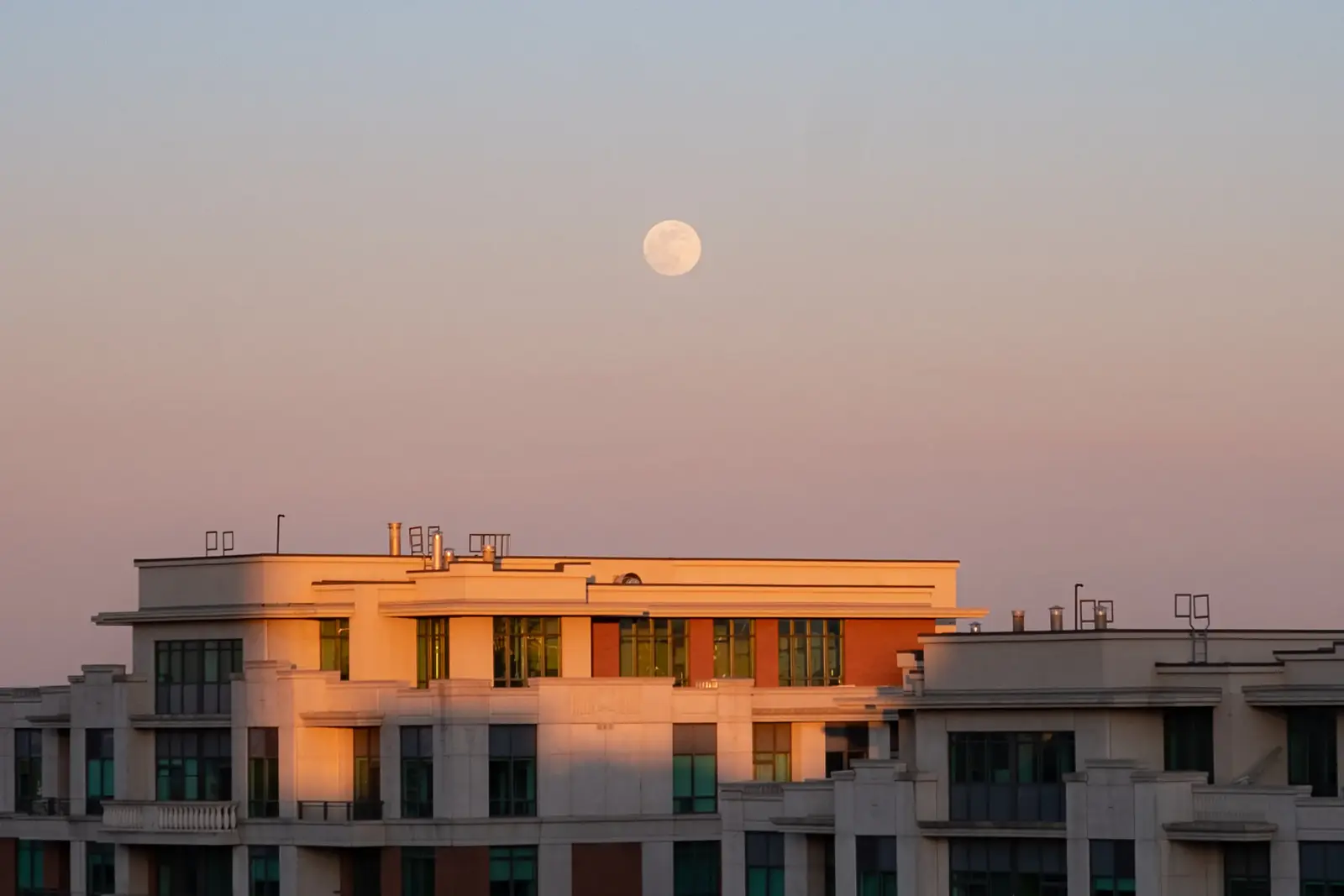
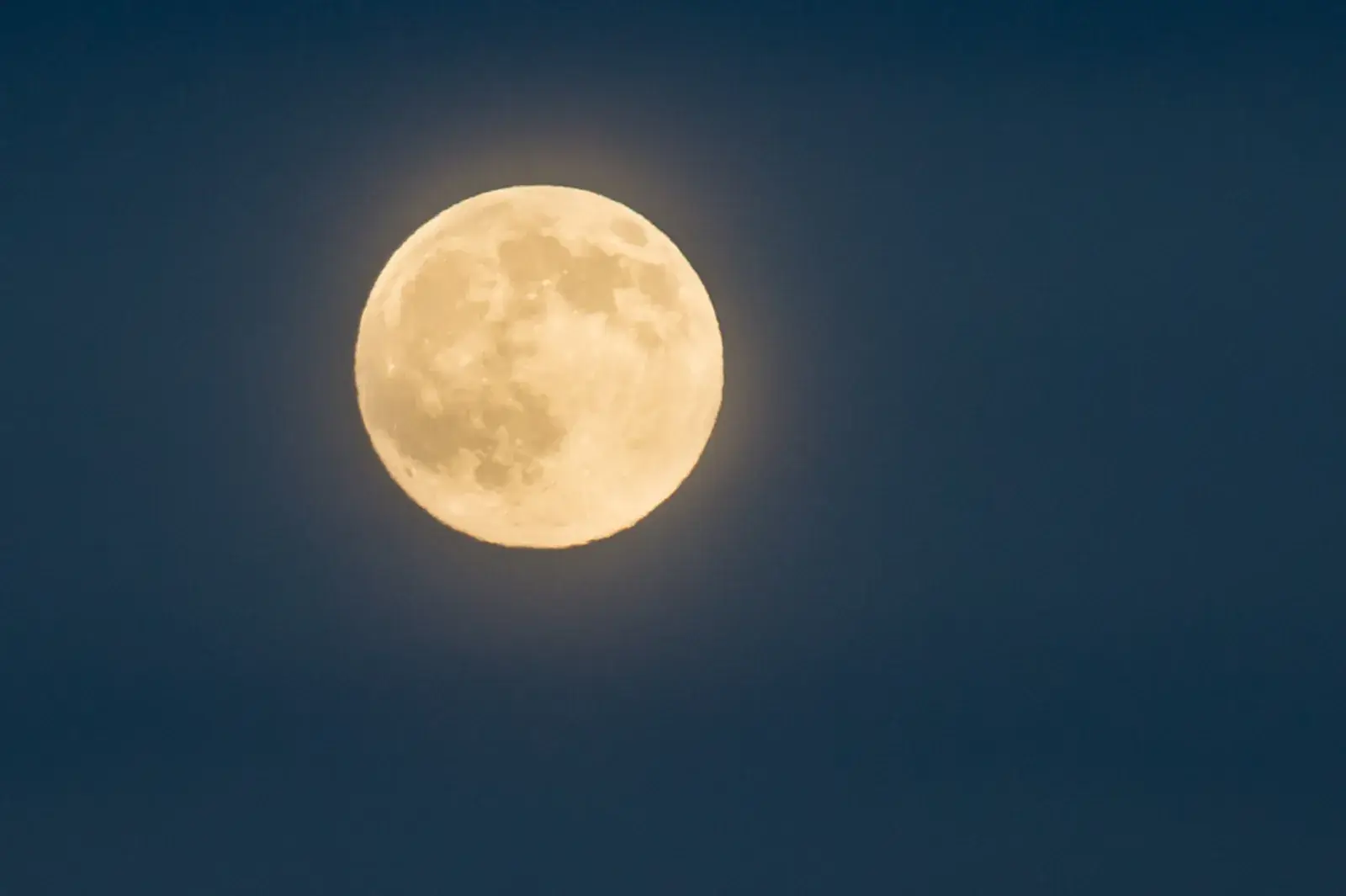
Photo: Scott Murdoch / Burst
At a glance
The 2027 full supermoon is Jan 22, 2027 (under 360,000 km), with Feb 20 added by the Nolle 90% rule. The closest peaks Jan 22, 2027 · 12:17 UTC.
- Closest full moon 2027
- Jan 22, 2027 · 12:17 UTC357,644 km · 2°14′ Leo
- Last supermoon of 2026
- Dec 24, 2026 · 01:28 UTC356,738 km · 2°14′ Cancer
- Nolle 90% rule adds
- Feb 202027 full moons that pass only the looser rule
- Blue moon 2027
- Seasonal, May 20no monthly blue moon in 2027
- Smallest full moon 2027
- Jul 18, 2027micromoon, 405,979 km
See which house these full moons light upFree birth chart: find where Cancer and Leo fall for you.
The dates
Two big full moons, back to back, across the new year
Try this today
- Put Dec 24 and Jan 22 in your calendar for moonrise, not the exact full-moon minute.
- Find a spot with a low eastern horizon: a beach, a field, a top-floor window.
- Shoot it next to a building or tree. A bare Moon in a phone photo always looks small.
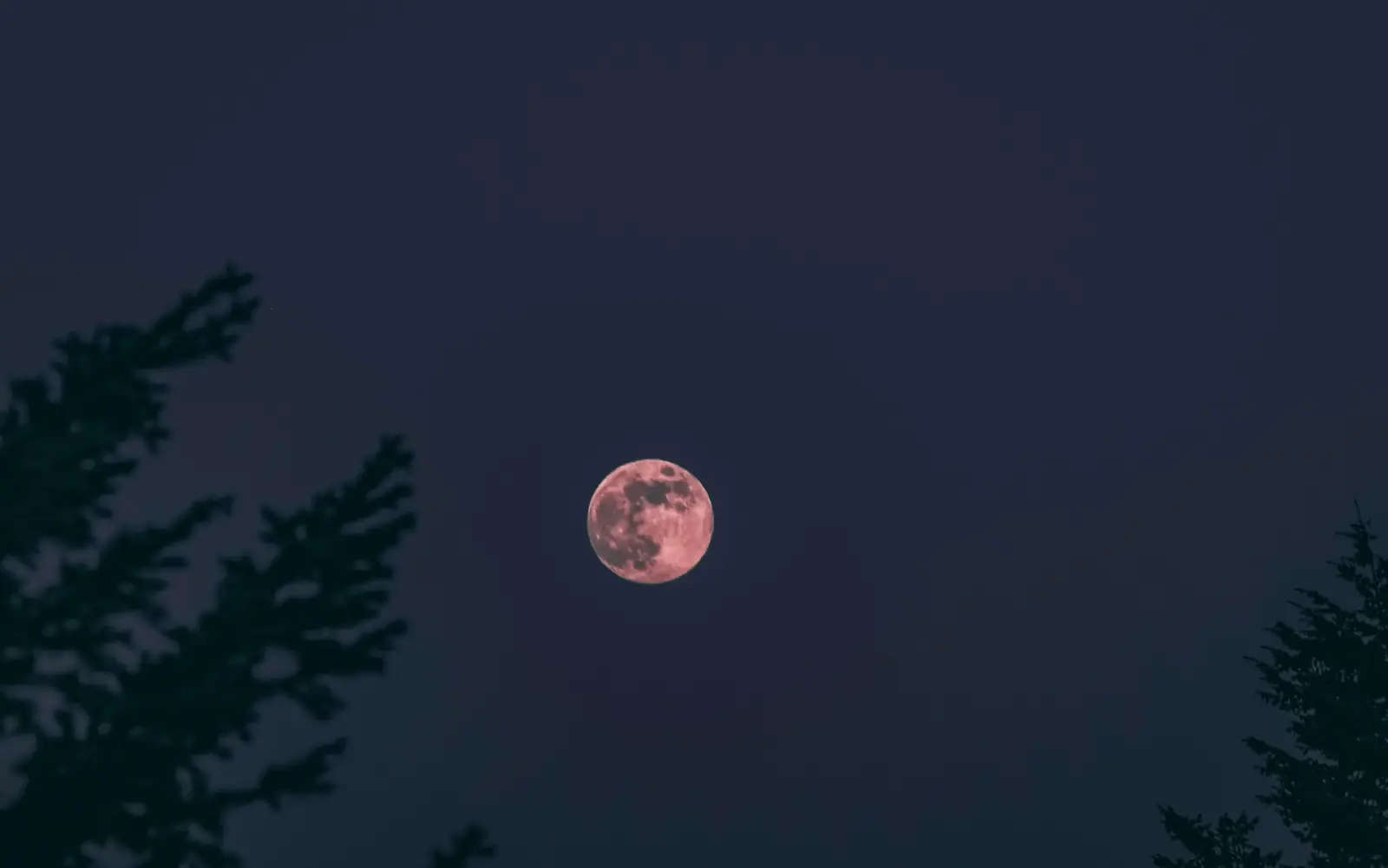
Christmas Eve, 2026. You step outside to take the bins down or walk the dog, and the Moon is sitting low and fat over the rooftops. That is the closest full moon of 2026, peaking Dec 24, 2026 · 01:28 UTC at 356,738 km (221,667 mi), in 2°14′ Cancer.
One lunar month later it happens again. The full moon of Jan 22, 2027 · 12:17 UTC comes in at 357,644 km, in 2°14′ Leo. It is the closest full moon of 2027, and it is the headline answer to "supermoon 2027 dates."
After that the full moons drift outward. By Jul 18 the Moon is full at 405,979 km, the smallest full moon of the year. The closest approach of all in 2027 is a perigee on Jan 21, 2027 · 21:54 UTC, at 357,288 km, but the Moon is not full then, so it does not count.
If you only plan one night of moon-watching this winter, plan both. The weather gets a vote, and two chances beat one.
The rule
What counts as a supermoon? We state the rule
There is no official supermoon. The word was coined by the astrologer Richard Nolle in 1979, for a new or full moon that happens when the Moon is within 90% of its closest approach to Earth in a given orbit. NASA uses the word too, but it has never set a single cutoff.
So this page uses two rules and tells you which one each date passes.
Our primary rule: under 360,000 km. A full moon whose centre is less than 360,000 km from Earth's centre. It is strict and easy to check. In 2027 only Jan 22 pass it.
The Nolle 90% rule. Take the nearest perigee and the neighbouring apogee. If the full moon falls inside the closest 10% of that range, it counts. This is looser, which is why lists online are longer. In 2027 it also lets in Feb 20.
Neither is wrong. When a headline says "three supermoons" and another says "two," they are usually just using different rules.
The sky behind it
Distances are geocentric, centre of Earth to centre of the Moon, at the instant of full moon from JPL DE442. From your actual spot on the surface the Moon can be up to about 6,400 km closer or farther, depending on where it is in your sky. Perigee thresholds for the Nolle rule are computed orbit by orbit.
Blue moons
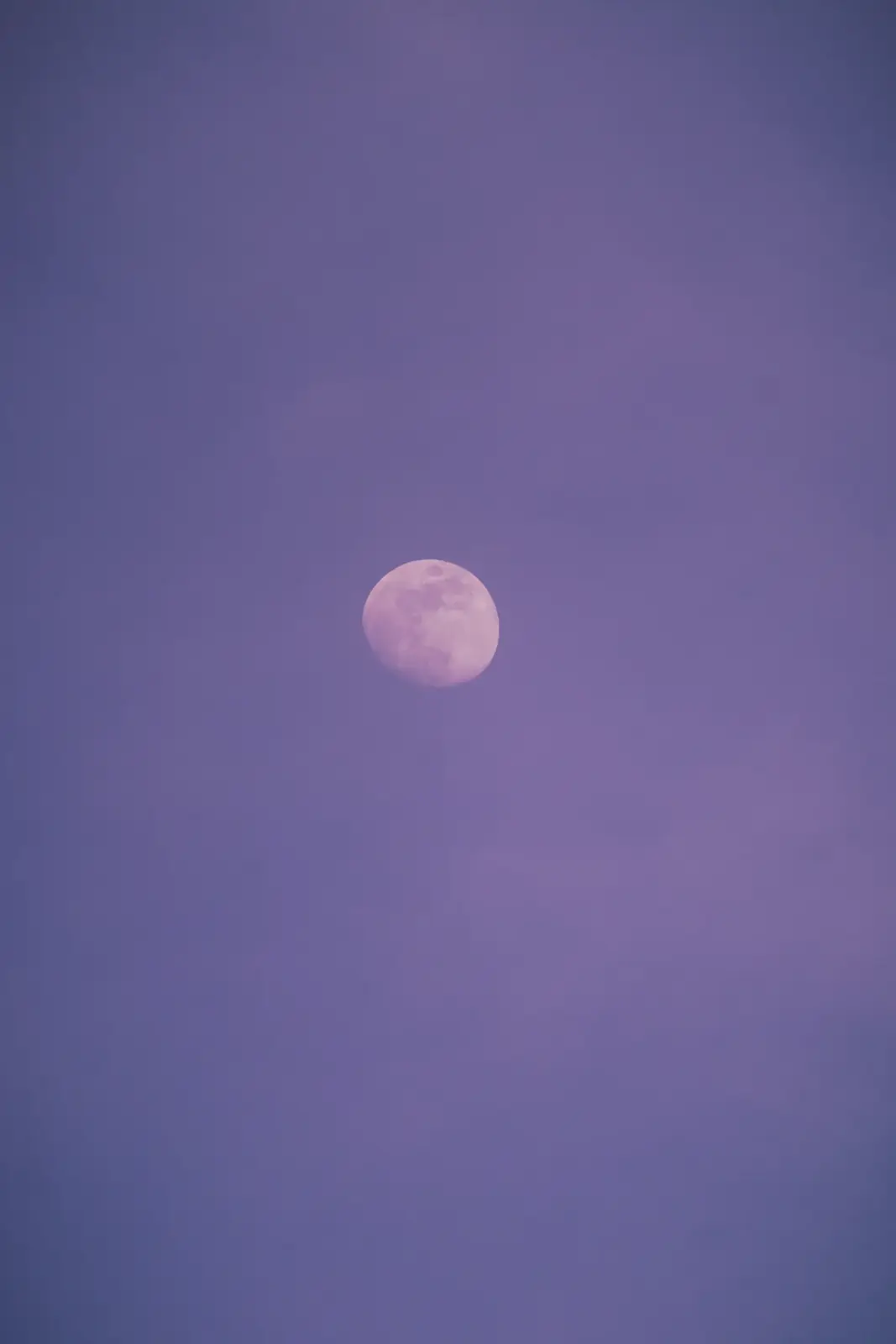
Is there a blue moon in 2027? Yes and no
Try this today
- Want a blue moon for a wedding date or a party? May 2027 is your seasonal one.
- Settle the group chat: ask which rule they mean before you argue about the date.
There are two blue moon rules, and 2027 splits them.
Monthly blue moon: the second full moon in a calendar month. 2027 has none. We checked in UTC and in US Eastern time, because a full moon near midnight can flip months depending on your clock. The most recent one was May 31, 2026 · 08:45 UTC, the second full moon of May 2026.
Seasonal blue moon: the older rule, from the Maine Farmers' Almanac. A season between an equinox and a solstice usually holds three full moons. When it holds four, the third is the blue one. In 2027 that happens in spring: the full moon of May 20, 2027 · 10:59 UTC, at 29°14′ Scorpio, is the third of four between the March equinox and the June solstice.
The monthly rule actually came from a misreading of that almanac, in a 1946 Sky & Telescope article. The magazine later owned up to it, and both rules stayed in use.
And no, it will not look blue. Like any full moon low on the horizon it will look warm and golden.
Honest numbers
How much bigger, really?
Try this today
- Take the same photo, same zoom, on the supermoon and the micromoon nights. Compare them in a split view.
- Watch the Moon clear the horizon, then look again an hour later. Notice it seem to shrink, even though it has not.
Put the closest full moon of 2027 next to the farthest, and the close one is about 13.5% wider and about 29% brighter. That is a real difference, the kind you see in side-by-side photos.
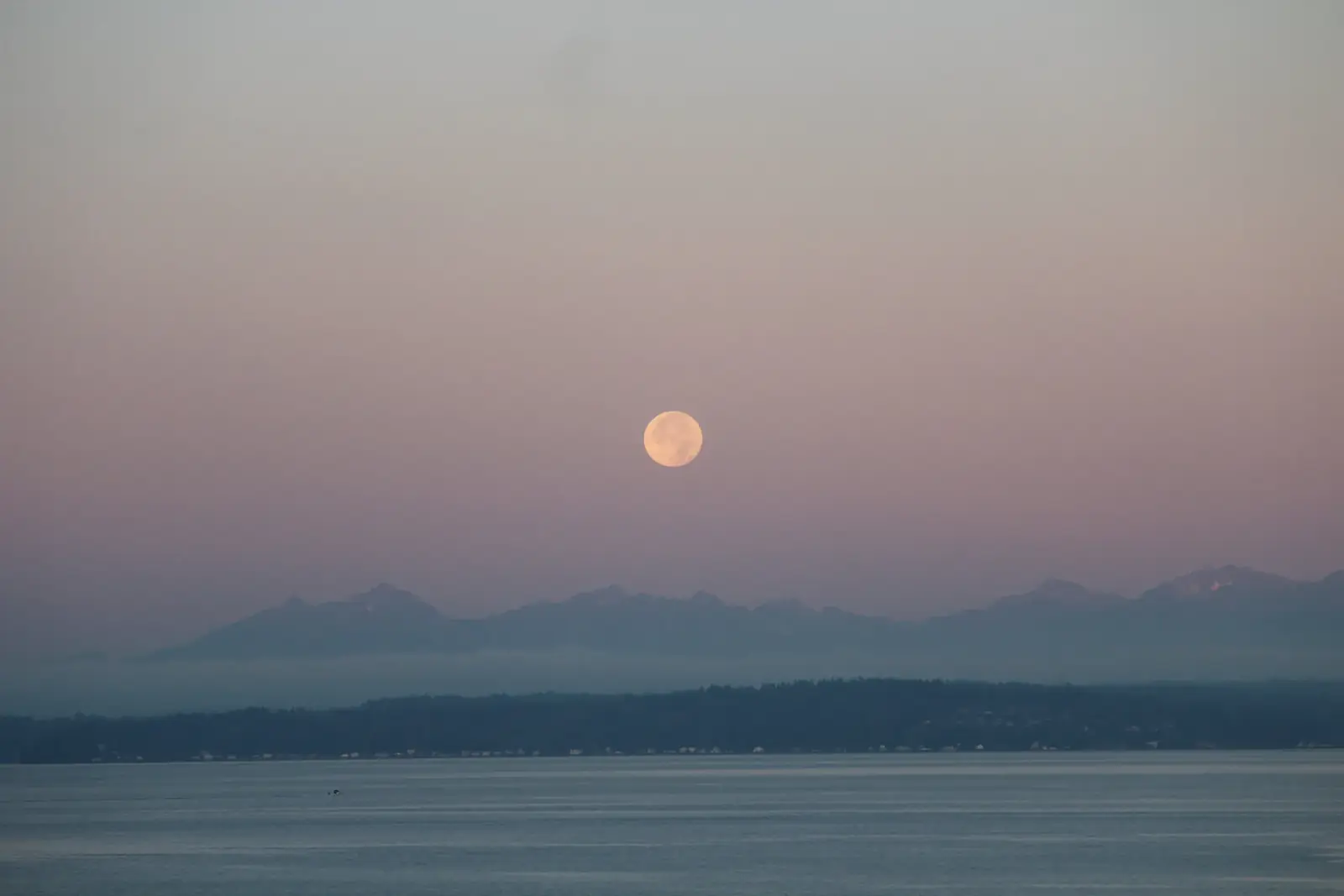
Next to a normal full moon, though, a supermoon is only a few percent bigger. Your eyes will not measure that. What makes a moon look huge is the horizon: a low Moon beside trees and roofs looks enormous, and nobody fully agrees why. It is called the Moon illusion, and it works every month, super or not.
So treat the supermoon as an excuse, not a spectacle. It is a good reason to go outside on a cold night and look up.
Your sky
Size up any full moon
Tap a full moon of 2026 or 2027. You will see which supermoon rule it passes, when it peaks in your time zone, and how big it looks next to the smallest full moon of the two years, drawn to scale. Stars mark supermoons.
Pick a full moon
Supermoon on the Nolle 90% rule only
Peaks Sat, Jan 3, 2026, 10:02 AM UTC, at 13°02′ Cancer.
Distance 362,312 km. Next to the farthest full moon of the two years (406,135 km, the dashed ring) it looks 12.1% wider and about 26% brighter.
More to read
Shorter reads. Each opens in place.
The coast
Supermoons and tides
A close full moon nudges tides a little higher. Storms and wind matter far more.
When the Moon is full or new, its pull lines up with the Sun's and tides run a bit higher than usual: these are spring tides. When that lines up with perigee too, NOAA calls the result perigean spring tides, a little higher again.
Continue readingShow less
NOAA puts the extra height at a few inches (several centimetres) at most, and on most beaches you would not notice. Where it does matter is low-lying coast with an onshore wind. Local tide tables are the place to check, not the Moon.
Also worth knowing: the close new moons of 2027 (Jul 4 and Aug 2) bring the same kind of tides, even though you cannot see the Moon on those nights.
In the chart
Reading a supermoon astrologically
A big Moon is a nudge to notice what is full in your life.
In astrology a full moon is a culmination, the point in the month when what you started at the new moon shows its face. Many astrologers read a supermoon as the same thing with the volume up.
Continue readingShow less
The two big full moons sit at 2°14′ Cancer and 2°14′ Leo, so the axis is home and family (Cancer) then creativity and being seen (Leo). Check which houses those degrees fall in for you, and you have your themes. It is a lens for reflection, not a forecast.
Every full moon, with its distance
Times are UTC. Hours from perigee: negative means the full moon comes before the Moon's closest approach. Supermoon = under 360,000 km; Nolle = within 90% of that orbit's perigee.
| Full moon (UTC) | Degree | Distance | From perigee | Verdict |
|---|---|---|---|---|
| Jan 22, 2027 · 12:17 UTC | 2°14′ Leo | 357,644 km | +14 h | Supermoon (both rules) |
| Feb 20, 2027 · 23:23 UTC | 2°06′ Virgo | 363,306 km | +40 h | Supermoon (Nolle only) |
| Mar 22, 2027 · 10:43 UTC | 1°35′ Libra | 372,527 km | +78 h | - |
| Apr 20, 2027 · 22:27 UTC | 0°37′ Scorpio | 383,429 km | +166 h | - |
| May 20, 2027 · 10:59 UTC | 29°14′ Scorpio | 393,901 km | +255 h | - · blue moon |
| Jun 19, 2027 · 00:44 UTC | 27°33′ Sagittarius | 401,952 km | +298 h | - |
| Jul 18, 2027 · 15:44 UTC | 25°49′ Capricorn | 405,979 km | +331 h | Micromoon |
| Aug 17, 2027 · 07:28 UTC | 24°12′ Aquarius | 405,081 km | -320 h | Micromoon |
| Sep 15, 2027 · 23:03 UTC | 22°53′ Pisces | 399,353 km | -285 h | - |
| Oct 15, 2027 · 13:47 UTC | 21°59′ Aries | 389,939 km | -232 h | - |
| Nov 14, 2027 · 03:25 UTC | 21°31′ Taurus | 378,766 km | -117 h | - |
| Dec 13, 2027 · 16:08 UTC | 21°25′ Gemini | 368,142 km | -58 h | - |
| Full moon (UTC) | Degree | Distance | From perigee | Verdict |
|---|---|---|---|---|
| Jan 3, 2026 · 10:02 UTC | 13°02′ Cancer | 362,312 km | +36 h | Supermoon (Nolle only) |
| Feb 1, 2026 · 22:09 UTC | 13°04′ Leo | 371,386 km | +72 h | - |
| Mar 3, 2026 · 11:37 UTC | 12°54′ Virgo | 382,612 km | +156 h | - |
| Apr 2, 2026 · 02:11 UTC | 12°21′ Libra | 393,595 km | +255 h | - |
| May 1, 2026 · 17:23 UTC | 11°21′ Scorpio | 402,000 km | +299 h | - |
| May 31, 2026 · 08:45 UTC | 9°56′ Sagittarius | 406,135 km | +331 h | Micromoon · blue moon |
| Jun 29, 2026 · 23:56 UTC | 8°15′ Capricorn | 405,254 km | -320 h | Micromoon |
| Jul 29, 2026 · 14:35 UTC | 6°30′ Aquarius | 399,618 km | -285 h | - |
| Aug 28, 2026 · 04:18 UTC | 4°54′ Pisces | 390,398 km | -232 h | - |
| Sep 26, 2026 · 16:49 UTC | 3°37′ Aries | 379,436 km | -124 h | - |
| Oct 26, 2026 · 04:11 UTC | 2°46′ Taurus | 368,873 km | -62 h | - |
| Nov 24, 2026 · 14:53 UTC | 2°20′ Gemini | 360,765 km | -30 h | Supermoon (Nolle only) |
| Dec 24, 2026 · 01:28 UTC | 2°14′ Cancer | 356,738 km | -7 h | Supermoon (both rules) |
| New moon (UTC) | Degree | Distance |
|---|---|---|
| Jul 4, 2027 · 03:02 UTC | 11°57′ Cancer | 358,804 km |
| Aug 2, 2027 · 10:05 UTC | 9°55′ Leo | 357,384 km |
| Full moon (UTC) | Degree | Distance |
|---|---|---|
| May 31, 2026 · 08:45 UTC | 9°56′ Sagittarius | 406,135 km |
| Jun 29, 2026 · 23:56 UTC | 8°15′ Capricorn | 405,254 km |
| Jul 18, 2027 · 15:44 UTC | 25°49′ Capricorn | 405,979 km |
| Aug 17, 2027 · 07:28 UTC | 24°12′ Aquarius | 405,081 km |
All times are UTC. In the Americas the local date can be a day earlier; in Asia and Australia a day later.
Quick answers
When are the supermoons in 2027?
Using the strict 360,000 km rule, the full supermoons of 2027 are Jan 22, 2027. Using Richard Nolle's looser 90% rule, Jan 22, 2027, Feb 20, 2027 all qualify. The closest is Jan 22, 2027 · 12:17 UTC, at 357,644 km.
Is there a blue moon in 2027?
There is no monthly blue moon (two full moons in one calendar month) in 2027, in UTC or US Eastern time. There is a seasonal blue moon: May 20, 2027 · 10:59 UTC, the third of four full moons between the march equinox and the June solstice.
What was the last supermoon of 2026?
Dec 24, 2026 · 01:28 UTC, at 356,738 km. It is also the closest full moon of 2026 and the only 2026 full moon under 360,000 km.
Was there a blue moon in 2026?
Yes. May 31, 2026 · 08:45 UTC was the second full moon of May 2026, a monthly blue moon. It was also the farthest full moon of the year, a micromoon at 406,135 km.
How much bigger does a supermoon look?
The closest full moon of 2027 (Jan 22) looks about 13.5% wider and 29% brighter than the farthest (Jul 18). Next to an average full moon the difference is roughly half that, too small to notice without a side-by-side photo.
Why do different websites list different supermoons?
Because there is no official definition. Astrologer Richard Nolle coined the word in 1979 for a new or full moon within 90% of its closest approach in a given orbit; others use a fixed cutoff such as 360,000 km. We compute both and label which rule each date passes.
Is the August 2, 2027 solar eclipse a supermoon?
The new moon behind it is a "super new moon": 357,384 km away at Aug 2, 2027 · 10:05 UTC. A close Moon looks bigger, which is one reason that eclipse has such a long totality. You cannot see a new moon, so it is not a supermoon you can look at.