Wheel of the Year · Imbolc
Imbolc 2027: February 1, and the Sun at 15° Aquarius on Feb 4
The festival begins at sunset on Sunday, January 31. The sky's own halfway point to spring arrives 3 days later, at 01:46 UTC.
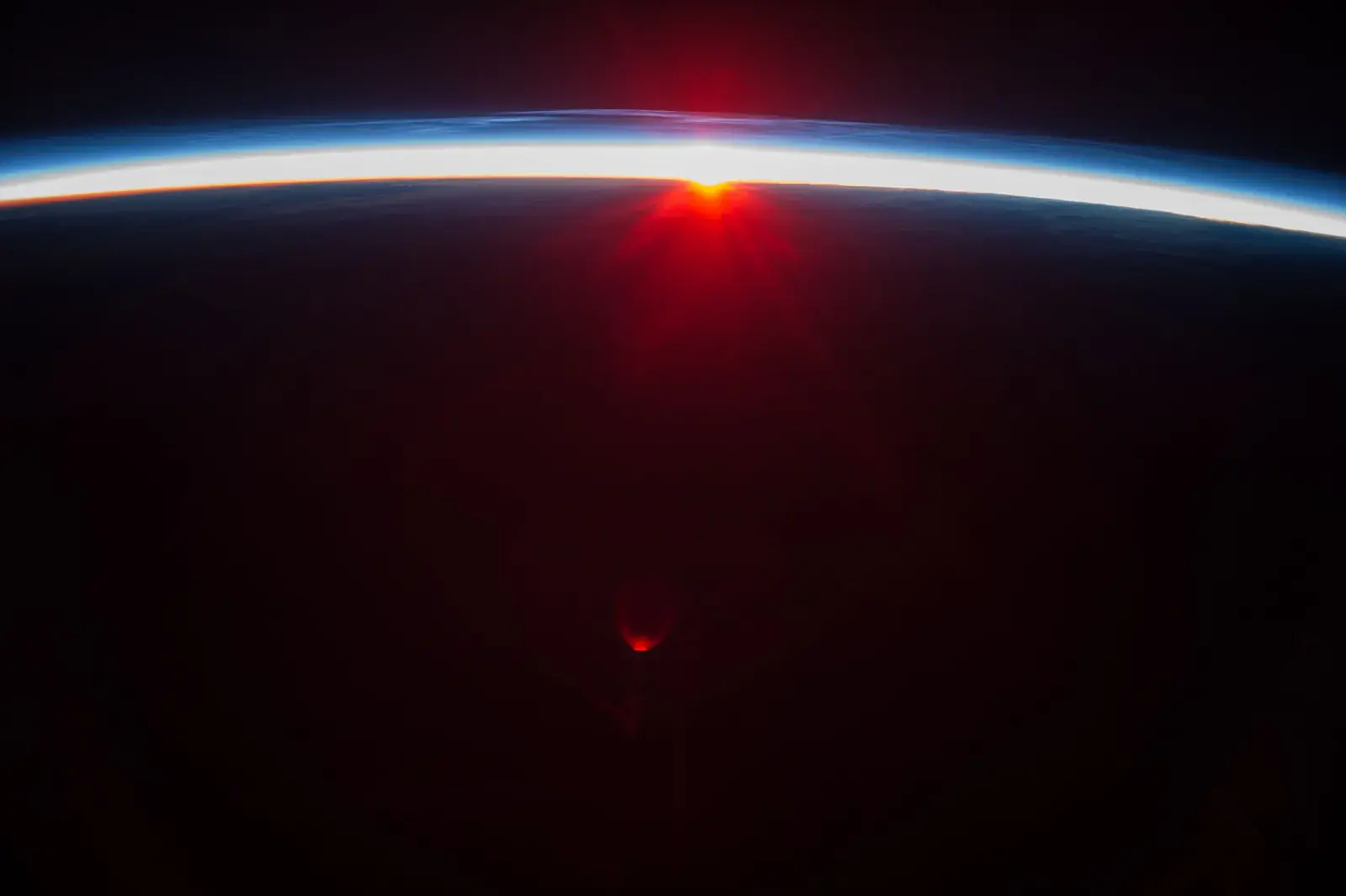
Photo: NPS / Bill Bjornstad
At a glance
Imbolc 2027 is Monday, February 1, beginning at sunset on January 31. Astronomical Imbolc, the Sun at 15°00′ Aquarius, is Feb 4, 2027 · 01:46 UTC.
- Traditional
- Sunday Jan 31 to Monday Feb 1sunset to sunset
- Astronomical
- Feb 4, 2027 · 01:46 UTCSun at 15°00′ Aquarius
- St Brigid's Day holiday (Ireland)
- Monday, Feb 1public holiday since 2023
- Moon at the moment
- Waning Crescent, 6% litin Capricorn
- Next new moon
- Feb 6, 2027 · 15:56 UTC17°38′ Aquarius, an annular eclipse
Find where 15° Aquarius sits in your chartFree birth chart: see the house the Sun crosses at Imbolc.
The dates
Imbolc 2027 has a calendar night and a sky moment

Try this today
- Set two reminders: sunset on Sunday, January 31, and Feb 4, 2027 at 01:46 UTC.
- Use the light checker below to see exactly how many minutes of daylight your town has won back since midwinter.
It is the first week of February. The tree has been out on the curb for a month, the heating bill just landed, and then one afternoon you look up from your desk and the light outside is still gold. That small surprise is Imbolc.
The traditional date is set by custom. Early Irish reckoning counted the day from sunset, so Imbolc begins on the evening of Sunday, January 31, 2027 and runs through Monday, February 1. February 1 is also St Brigid's Day.
The astronomical date is set by the Sun. Imbolc is the cross-quarter day halfway between the December solstice and the March equinox, and measured along the Sun's path that halfway point is 15°00′ Aquarius. The Sun gets there on Thursday, Feb 4, 2027, at 01:46 UTC. In the Americas that is still the evening of February 3.
Use whichever suits you, or both. Plenty of people light a candle on the 1st and save a quieter check-in for the 4th.
The sky behind it
The Sun's geocentric apparent ecliptic longitude reaches 315° (15°00′ Aquarius, tropical) at Feb 4, 2027 · 01:46 UTC, computed with the JPL DE442 ephemeris. The December 2026 solstice is Dec 21, 2026 · 20:50 UTC and the March 2027 equinox Mar 20, 2027 · 20:24 UTC, so Imbolc sits 44.2 days after one and 44.8 days before the other.
How halfway works
Why Imbolc is 3 days after February 1

Try this today
- Step outside at the same clock time on December 21 and February 4. Take one photo each time. The difference is the whole point of Imbolc.
Zodiac seasons with exact ingress timesZodiac sign dates 2026 and 2027
Here is the quick version. Halfway between two things can mean halfway in distance or halfway in time, and for the Sun those are not quite the same.
Halfway in degrees is the Sun at 15°00′ Aquarius, 45° past the solstice. That is Feb 4, 2027 · 01:46 UTC.
Halfway in time splits the clock time between the solstice and the equinox. In 2027 that lands at Feb 4, 2027 · 08:37 UTC, about 6.9 hours later, when the Sun is at 15°17′ Aquarius. The difference comes from Earth's slightly oval orbit: we are closest to the Sun in early January, so the Sun's apparent motion is quickest right around now.
Either way, the sky's Imbolc lands on February 3 or 4 in recent and coming years, not February 1. The festival dates were fixed long before anyone was measuring the Sun to the minute, and nobody needs to move them. For context, the Sun enters Aquarius on Jan 20, 2027 · 07:29 UTC and leaves for Pisces on Feb 18, 2027 · 21:33 UTC, about 30 days in all, and Imbolc sits right at the centre.
Brigid's day
Brigid, ewes' milk and a cross made of rushes

Try this today
- Make a simple Brigid's cross from drinking straws or strips of paper if you have no rushes. There are plenty of step-by-step guides; it takes about ten minutes.
- Leave a scarf or ribbon on the windowsill overnight on January 31. Wear it on February 1.
- Clean one corner of your home properly. Spring-cleaning is the most practical Imbolc custom there is.
Imbolc is one of the four seasonal festivals of the Gaelic calendar, with Beltane, Lughnasadh and Samhain, and it marked the beginning of spring (Britannica). It is mentioned in early Irish literature, but the details of how it was first kept are thin (Wikipedia).
The name is debated. One common explanation is Old Irish i mbolc, "in the belly", for pregnant ewes. A medieval gloss links it to oimelc, "ewe's milk". Either reading points at lambing season.
The festival is tied to Brigid, a goddess in Irish myth associated with poetry, healing and smithcraft, and to Saint Brigid of Kildare, whose feast is February 1 (Brigid; Brigid of Kildare). How the saint and the goddess relate is a long scholarly argument, and we will not pretend to settle it.
The customs are well recorded in Irish and Scottish folklore: weaving Brigid's crosses from rushes, leaving a cloth or ribbon outside overnight for Brigid to bless, carrying a doll-like brídeóg from house to house, and visiting holy wells (Wikipedia). In 2023 Ireland made St Brigid's Day a public holiday, and in 2027 it falls on Monday, February 1 (Citizens Information).
February 2
Candlemas, a groundhog, and the same question

February 2 is Candlemas, the Christian feast of the Presentation of Jesus at the Temple, when candles are blessed (Candlemas). In 2027 it is a Tuesday.
Old European weather lore attached itself to Candlemas: if the day is bright and clear, winter has a second act coming. That rhyme travelled with German immigrants to Pennsylvania, where it became Groundhog Day, held at Punxsutawney since 1887 (Groundhog Day).
So when Punxsutawney Phil looks for his shadow on February 2, 2027, he is, in a roundabout way, keeping Imbolc. We find that delightful.
The modern eight-festival Wheel of the Year, which puts Imbolc alongside the solstices and equinoxes, was popularized by British neopagans in the mid-20th century. Today many Wiccans and other Pagans keep Imbolc as one of their sabbats.
The sky that week
A thin Moon at Imbolc, then an eclipse two days later
Try this today
- Write down one plan on Imbolc (Feb 4, 2027) and revisit it at the new moon on Feb 6, 2027.
- Never look at a solar eclipse without certified eclipse glasses, even an annular one.
At the Imbolc moment the Moon is a waning crescent in Capricorn, only 6% lit. On the traditional night it is brighter: at 00:00 UTC on February 1 the Moon is in Sagittarius, 26% lit.
Then, 2.6 days after astronomical Imbolc, the new moon arrives at 17°38′ Aquarius on Feb 6, 2027 · 15:56 UTC. It is also an annular solar eclipse, a "ring of fire" for those on the narrow path; NASA lists greatest eclipse at 16:00 UT (NASA GSFC). The few minutes between that and our new-moon time are the difference between the Moon and Sun lining up in ecliptic longitude and the moment the shadow is deepest on Earth.
Astrologers read an Aquarius eclipse so close to the Imbolc point as a strong signal for fresh starts in whatever part of your chart holds mid-Aquarius: groups, friendships, plans for the future. That is a reading to reflect with, not a promise. The eclipse page has the full path and timing.
The sky behind it
Full moons either side: Jan 22, 2027 · 12:17 UTC at 2°14′ Leo, and Feb 20, 2027 · 23:23 UTC at 2°06′ Virgo. Moon positions geocentric, DE442.
Check your light
How much light has come back where you live?
Imbolc is about the light returning, so let's measure it. Pick your town and see sunrise, sunset and daylight on the December solstice, on February 1, on astronomical Imbolc and on the March equinox, all computed in your browser.
More to read
Shorter reads. Each opens in place.
Below the equator
Imbolc 2027 in the southern hemisphere
In Australia, New Zealand and South Africa, February is late summer, so many Pagans there keep Lughnasadh on February 1 and move Imbolc to August 1. Their astronomical Imbolc is the Sun at 15°00′ Leo: Aug 7, 2027 · 17:26 UTC.
Continue readingShow less
Other years
Astronomical Imbolc 2026, 2027 and 2028
Feb 3, 2026 · 20:02 UTC in 2026, Feb 4, 2027 · 01:46 UTC in 2027 and Feb 4, 2028 · 07:31 UTC in 2028. The moment slides about six hours later each year, then jumps back after a leap day.
Continue readingShow less
Imbolc 2027, computed
All times UTC, from the JPL DE442 ephemeris.
| What | When (UTC) | Detail |
|---|---|---|
| Imbolc eve (traditional) | Sunset, Sunday Jan 31, 2027 | local sunset, wherever you are |
| Imbolc / St Brigid's Day | Monday, Feb 1, 2027 | calendar date |
| Candlemas and Groundhog Day | Tuesday, Feb 2, 2027 | calendar date |
| Astronomical Imbolc | Feb 4, 2027 · 01:46 UTC | Sun at 15°00′ Aquarius |
| Halfway in time | Feb 4, 2027 · 08:37 UTC | Sun at 15°17′ Aquarius |
| When (UTC) | What happens |
|---|---|
| Dec 21, 2026 · 20:50 UTC | December solstice (Sun at 0° Capricorn) |
| Jan 7, 2027 · 20:24 UTC | New moon at 17°18′ Capricorn |
| Jan 20, 2027 · 07:29 UTC | The Sun enters Aquarius |
| Jan 22, 2027 · 12:17 UTC | Full moon at 2°14′ Leo |
| Feb 4, 2027 · 01:46 UTC | Astronomical Imbolc: the Sun at 15°00′ Aquarius |
| Feb 6, 2027 · 15:56 UTC | New moon at 17°38′ Aquarius (annular solar eclipse) |
| Feb 18, 2027 · 21:33 UTC | The Sun enters Pisces |
| Feb 20, 2027 · 23:23 UTC | Full moon at 2°06′ Virgo |
| Mar 8, 2027 · 09:29 UTC | New moon at 17°35′ Pisces |
| Mar 20, 2027 · 20:24 UTC | March equinox (Sun at 0° Aries) |
| Year | Sun at 15° Aquarius (UTC) | Days after Feb 1 | Moon |
|---|---|---|---|
| 2026 | Feb 3, 2026 · 20:02 UTC | 2 | Waning Gibbous, 96% |
| 2027 | Feb 4, 2027 · 01:46 UTC | 3 | Waning Crescent, 6% |
| 2028 | Feb 4, 2028 · 07:31 UTC | 3 | Waxing Gibbous, 55% |
All times are UTC. In the Americas the local date can be a day earlier; in Asia and Australia a day later.
Quick answers
When is Imbolc 2027?
Traditionally Imbolc 2027 is Monday, February 1, starting at sunset on Sunday, January 31. Astronomical Imbolc, when the Sun reaches 15°00′ Aquarius, is Thursday, Feb 4, 2027 · 01:46 UTC.
What time is astronomical Imbolc 2027?
01:46 UTC on Feb 4, 2027. In New York, Chicago and Los Angeles that is still the evening of February 3. In Dublin and London it is the small hours of February 4. The finder on our cross-quarter page converts it to any time zone.
Is St Brigid's Day a holiday in Ireland in 2027?
Yes. Since 2023 Ireland has a public holiday for St Brigid's Day: the first Monday in February, or February 1 when that falls on a Friday. In 2027 February 1 is a Monday, so the holiday is Monday, February 1.
When is Imbolc in the southern hemisphere in 2027?
Many Pagans in Australia and New Zealand keep Imbolc on August 1, six months on. The astronomical point there is the Sun at 15°00′ Leo, which is Aug 7, 2027 · 17:26 UTC. On February 1 they mark Lughnasadh instead.
Is Imbolc the same as Candlemas and Groundhog Day?
They share the season but not the story. Imbolc and St Brigid's Day are February 1. Candlemas, the Christian feast of the Presentation, is February 2 (a Tuesday in 2027). Groundhog Day, also February 2, grew from European Candlemas weather lore and has been held at Punxsutawney, Pennsylvania since 1887.
Why is astronomical Imbolc on February 3 or 4?
Because the Sun only reaches the true halfway point between the December solstice and the March equinox a few days after the calendar date. In 2026 it came on Feb 3, 2026 · 20:02 UTC, in 2027 on Feb 4, 2027 · 01:46 UTC, and in 2028 it comes on Feb 4, 2028 · 07:31 UTC.
What does Imbolc mean?
The origin is debated. A common explanation links it to Old Irish i mbolc, "in the belly", referring to pregnant ewes; a medieval gloss connects it with oimelc, "ewe's milk". Either way it points at lambing season and the first stirrings of spring.